


NOEX® Oil Drilling Cuttings Pump
The NOEX oil-drilling cuttings pump is built for demanding rig-waste applications, featuring an open rotor and wide clearances to move high-viscosity slurries and stone-laden cuttings without clogging. It handles solids up to 12 inches in diameter, supported by a reinforced seal system and recirculation capability that maintain continuous operation, reduce maintenance needs, and improve overall efficiency for drill-cuttings and mud-handling systems.
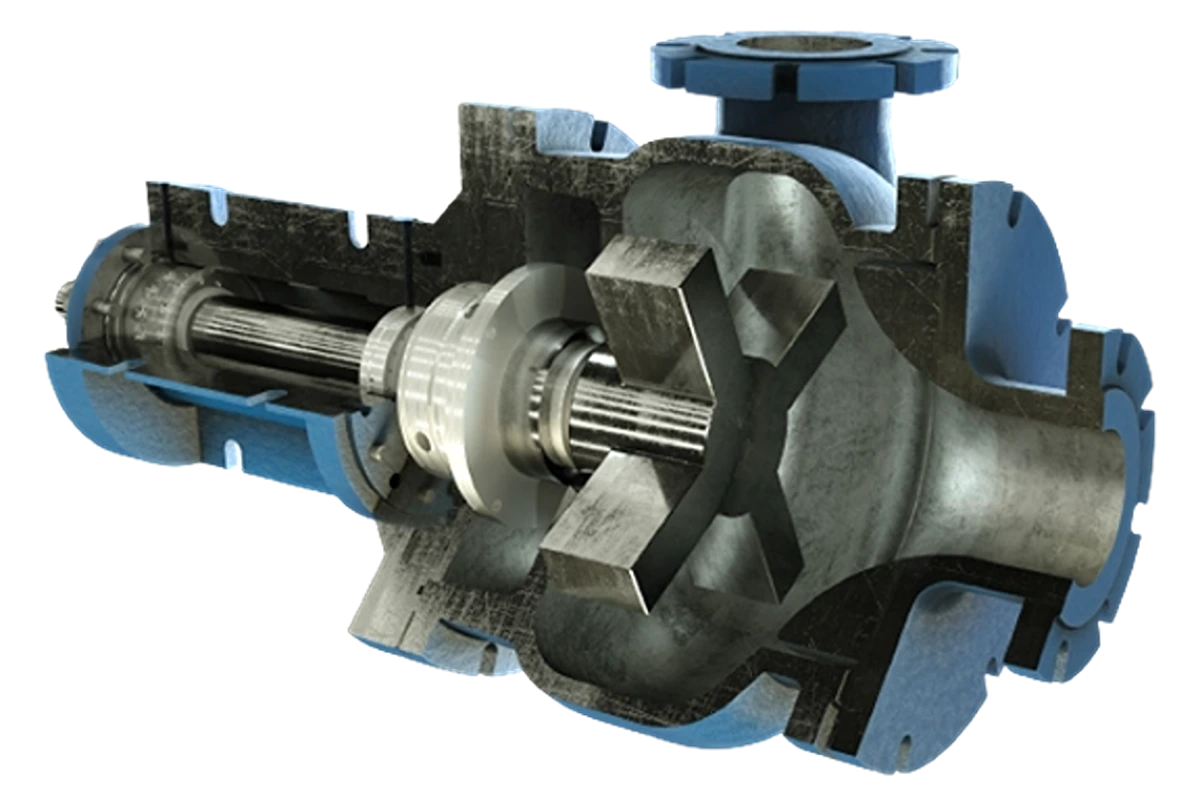
Primary System Benefits
- Efficient Handling of Drilling Fluids: Engineered to move a wide spectrum of drilling mud types, including oil-based and water-based fluids, while maintaining stable flow and consistent hydraulic performance
- Broad Performance Envelope: Supports operational flows from 1 to 7300 GPM with head capabilities reaching 240 feet, enabling precise alignment with a wide range of industrial process demands.
- Optimized Fluid Passage Design: The recessed rotor and open internal geometry maintain smooth hydraulic movement, minimize turbulence, and reduce NPSH sensitivity when handling difficult fluids.
- High-Density Slurry Compatibility: Moves abrasive, corrosive, viscous, and high-specific-gravity slurries efficiently, outperforming conventional centrifugal pumps under heavy solids loading.
- Expanded Solids Clearance Capacity: Internal pathways accommodate solids from 0.75 to 12 inches, enabling uninterrupted operation in continuous-duty applications without frequent clogging.
- Durable Metallurgy Options: Constructed in high chrome, stainless steel, and duplex stainless variants to withstand severe abrasion, chemical exposure, and erosion-heavy environments.
- Consistent Power and Torque Profile: Stable load characteristics reduce mechanical strain on motors and drive systems, ensuring smooth performance during variable process conditions.
- Versatile System Fit: Model configurations spanning 1 to 12 inch discharge sizes and operating speeds from 900 to 3600 RPM allow seamless integration into diverse industrial workflows.
- Stable Operation Under Variable Loads: Consistent torque behavior and smooth motor load response allow the pump to adapt to fluctuating viscosities and solids densities without operational disruptions.
The NOEX Drill Cuttings Removal System
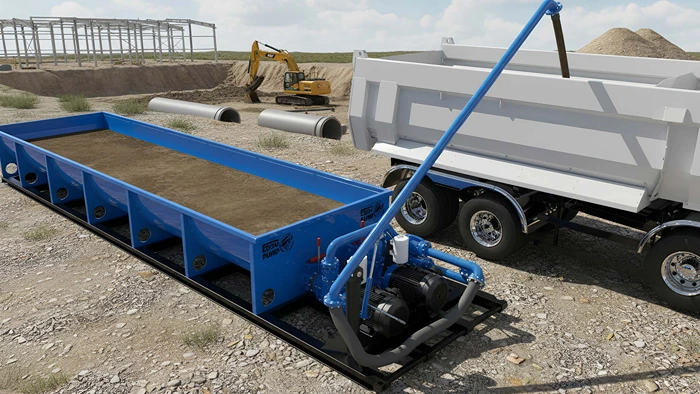
The NOEX Drill Cuttings Removal System is engineered to streamline drilling waste management by reducing workforce needs and improving overall site safety. The combined NOEX Pump and Tank delivers a major operational advantage, achieving production rates up to five times those of traditional excavator-based removal.

Continuous Uptime and Optimized Material Flow
Each NOEX Tank includes a dual-motor, dual-pump setup that maintains continuous operation. Optional recirculation and water jet systems keep cuttings, mud, and drilling fluids in constant suspension, preventing settling and ensuring smoother, more consistent pumping.

Flexible Installation Options
The NOEX Pump can be mounted externally as a flooded suction unit or installed fully submerged within the cuttings tank. This adaptability allows the system to fit a wide range of rig layouts, flow requirements, and drilling waste conditions.

Advanced EDDY Pump Technology
At the core of the system is EDDY Pump technology, which generates a high-energy eddy current within an open rotor housing. This flow pattern efficiently moves dense, abrasive slurries while minimizing wear, reducing clogging, and lowering downtime. The result is dependable cuttings transfer with significantly reduced spare part consumption and overall maintenance cost.

Direct Pumping From Tank to Transport
The NOEX System enables direct transfer of material from the tailings tank into haul trucks, removing the need for excavators or manual handling. This closed-loop pumping method reduces equipment costs, improves site safety, and accelerates material removal by eliminating time lost to repositioning or mechanical scooping.
NOEX® Oil Drilling Cuttings Pump


Technical Specifications

Hydraulic Performance
- Flow Capacity: 1 to 7300 GPM
- Head Range: Up to 350 feet across standard and high head models
- Hydraulic Design: Patented recessed rotor with open volute geometry designed to minimize clogging and maintain stable flow under variable slurry conditions
- Pressure Behavior: Supports consistent pressure output across a broad range of viscosities, solids loading, and pipeline distances

Pump Configuration
- Discharge Range: 1 to 12 inches
- Suction Range: 1.5 to 14 inches
- Application Profile: Engineered for abrasive, corrosive, high-density, and high-viscosity slurries, including drilling waste, mining tailings, dredge solids, and industrial sludge
- Internal Geometry: Oversized flow passages and non-restrictive internal profiles that maintain throughput and efficiency

Solids and Slurry Handling
- Solids Passage: 0.75 to 12 inches, depending on model
- Flow Path: Large open clearances that prevent clogging, reduce wear, and allow transport of irregular solids
- Compatibility: Designed for high viscosity, high specific gravity, and abrasive slurry environments

Operating Parameters
- Speed Range: 900 to 3600 RPM, depending on model class and application
- Load Characteristics: Delivers stable torque output under fluctuating material densities and solids concentrations
- Duty Cycle: Built for continuous operation in heavy industrial, dredging, and drilling environments

Construction Materials
- Housing and Wetted Parts: High Chrome 28 percent, Ductile Iron, 316 Stainless Steel, Duplex Stainless
- Performance Environment: Suitable for high abrasion, corrosive chemical exposure, and erosive slurry transport
- Service Life: Metallurgy selected to match extreme wear conditions and extend operational lifespan
Component Materials
- Rotor: High Chrome 28 percent, Ductile Iron, Stainless Steel, Duplex Stainless
- Volute Casing: High Chrome 28 percent, Ductile Iron, Stainless Steel, Duplex Stainless
- Shaft Sleeve: Stainless Steel
- Mechanical Seal: Tungsten Carbide or Silicon Carbide with enclosed seal support system
- Motor Mount: Ductile Iron or Stainless Steel
Comparison Table
| Model | Discharge Size | Suction Size | Min Flow (GPM) | Max Flow (GPM) | Head Range | Solids Handling | Motor Speed | Percent Solids | Production Rate |
|---|---|---|---|---|---|---|---|---|---|
| 1 inch | 1.5 inch | 1 | 200 | Up to 170 ft | 0.75 inch | 1800 or 3600 RPM | Up to 40–70 percent | 0–15 yd³/hr | |
| 2 inch | 3 inch | 100 | 600 | Up to 350 ft | 1.75 inch | 2250 RPM | Up to 40–70 percent | 25-60 yd³/hr | |
| 2 inch | 3 inch | 50 | 390 | Up to 90 ft | 1.75 inch | 1800 RPM | Up to 40–70 percent | 15–45 yd³/hr | |
| 3 inch | 4 inch | 100 | 780 | Up to 130 ft | 2 inches | 1800 RPM | Up to 40–70 percent | 45–75 yd³/hr | |
| 4 inch | 6 inch | 250 | 1200 | Up to 160 ft | 3 inches | 1800 RPM | Up to 40–70 percent | 75–150 yd³/hr | |
| 5 inch | 6 inch | 400 | 1800 | Up to 225 ft | 4 inches | 1800 RPM | Up to 40–70 percent | 100–175 yd³/hr | |
| 5 inch | 6 inch | 400 | 1800 | Up to 225 ft | 4 inches | 1800 RPM | Up to 40–70 percent | 100–175 yd³/hr | |
| 6 inch | 8 inch | 450 | 2500 | Up to 200 ft | 5 inches | 1800 RPM | Up to 40–70 percent | 150–200 yd³/hr | |
| 8 inch | 10 inch | 1400 | 3600 | Up to 200 ft | 7 inches | 1200 RPM | Up to 40–70 percent | 250–300 yd³/hr | |
| 10 inch | 12 inch | 1600 | 5000 | Up to 240 ft | 9 inches | 1200 RPM | Up to 40–70 percent | 300–350 yd³/hr | |
| 12 inch | 14 inch | 2600 | 7300 | Up to 180 ft | 11 inches | 1200 RPM | Up to 40–70 percent | 500–600 yd³/hr |

Understanding Drill Cuttings Management in Oil and Gas Operations

Role of Solids Control in the Drilling Process
As drilling fluid returns to the surface, it passes through the blowout preventer and across the flowline into shale shakers equipped with fine-mesh screens that separate particles in the 50 to 74 micron range. The remaining fluid is further processed through hydrocyclones and centrifuges before being recirculated into the mud system.
Because smaller cuttings hold more drilling fluid on their surface, excessive fines can thicken the mud and disrupt its rheological properties. Effective solids control and proper dilution ensure consistent viscosity, stable fluid behavior, and reliable overall drilling performance.

Function and Importance of Drill Cuttings Pumps
- A drill cuttings pump transfers rock fragments, debris, and fluid-laden cuttings from the surface to containment or treatment systems. By quickly and efficiently moving cuttings away from the rig, the pump prevents waste buildup, supports cleaner site conditions, and maintains drilling fluid stability.
- Maintaining proper cutting removal helps preserve the mud’s density, viscosity, and chemical composition. This contributes to improved drilling performance, better wellbore stability, and reduced operational risks.

Types of Drilling Fluids and Their Applications
- Drilling muds are formulated to support lubrication, cooling, pressure control, and cuttings transport.
- Water-based fluids offer cost efficiency and environmental compatibility and are suitable for sensitive formations or regulated environments.
- Oil-based fluids provide superior lubrication and thermal stability, making them ideal for high-temperature wells or reactive formations.
- Synthetic-based fluids balance the advantages of both systems, offering strong lubrication, thermal performance, and environmental considerations.
- Selecting the proper fluid ensures wellbore integrity, optimal penetration rates, and stable solids management throughout the drilling operation.
Maintaining Drilling Fluid Stability in High-Density Shale Formations
Case Study

Problem
A land-based drilling operation encountered a highly reactive shale interval, generating large volumes of ultra-fine cuttings. As these fines accumulated in the return system, the drilling fluid began to thicken rapidly due to increased surface area and fluid adsorption on the cuttings. This led to unstable rheology, elevated pump pressures, and significant reductions in penetration rate. The solids control system struggled to keep up, resulting in repeated interruptions in drilling.

Solution
The operator deployed a high-solids drill cuttings pump to remove fines immediately after the shale shakers, transferring them directly to a closed-loop containment system. Fast evacuation prevented fines from recycling back into the mud tanks and eliminated excessive buildup in the cuttings catch tank. Continuous pumping supported stable viscosity and density levels, allowing the rig to maintain targeted mud properties throughout the interval.

Result
The drilling fluid remained stable, with reduced fluctuations in viscosity and gel strength. Rate of penetration improved as pump pressures normalized, and the rig avoided unplanned dilution and cleanup events. Overall, nonproductive time decreased, wellbore stability improved, and the operator completed the shale section without fluid-related failures or costly interventions.
Call for sales or support
If you need assistance with pump selection, sales or engineering support, call 619-404-1916.
Talk to us about any pump questions
Frequently Asked Questions
What does a drill cuttings pump do?
A drill cuttings pump is responsible for moving the rock fragments, fines, and slurry that return with the drilling mud from the wellbore. Instead of allowing these solids to accumulate in tanks or requiring manual handling, the pump transfers them directly to containment, treatment, or transport systems. This continuous movement helps maintain a clean rig site, reduces manual intervention, and supports consistent drilling fluid management throughout the operation.
Why is rapid cutting removal important during drilling?
Drilled solids affect fluid rheology, density, and lubricity. When cuttings are not removed quickly, they recirculate back into the mud system, increasing the fluid’s viscosity and creating unstable pressure conditions. Rapid evacuation prevents this buildup, stabilizes mud properties, increases penetration rate, and reduces the likelihood of stuck pipe or wellbore instability. Effective solids removal is central to safe, efficient drilling operations.
What types of drilling fluids can the pump handle?
The pump is designed to work with all major drilling fluid systems, including water-based, oil-based, and synthetic-based muds. These fluids vary widely in viscosity and density, especially during high solids loading. The recessed rotor and open volute design maintain smooth flow even when handling thick, gelled, or oil-rich muds, making the pump adaptable to different geological and environmental conditions.
How does the pump handle large or abrasive solids?
The internal clearances in the pump are engineered to accommodate substantial solids without clogging. Depending on the model, it can pass solids ranging from fine particles to large chunks up to 12 inches in size. Combined with high chrome and duplex stainless steel construction, the pump resists abrasion and erosion from sharp, heavy, or high-density solids. This durability supports long service life in aggressive drilling environments.
Can the pump operate continuously under heavy load?
Yes. The pump is purpose-built for continuous heavy-duty cycles. Its stable torque characteristics allow it to handle fluctuations in density and viscosity without sudden spikes in mechanical load. This prevents strain on motors and drive systems, enabling round-the-clock operation and ensuring uninterrupted solids removal even during demanding drilling intervals.
What makes this technology better than traditional centrifugal pumps?
Unlike conventional centrifugal pumps that rely on tight tolerances and high rotational speeds, the recessed rotor design creates a non-clogging, low-shear flow path that excels at handling high solids concentrations. The open geometry minimizes restrictions, reduces wear points, and eliminates the frequent clogging issues common in centrifugal systems. This results in lower maintenance, less downtime, and more reliable solids transport.
Where can the pump be installed on a drilling site?
The pump can be adapted to various installation layouts. In flooded suction configurations, it is mounted externally to draw material directly from the tank. Alternatively, it can be fully submerged within the cuttings tank for direct pickup of heavy solids. This flexibility allows operators to integrate the pump into existing solids control systems or create new workflows based on site constraints.
How does the pump reduce downtime and maintenance?
Several design elements contribute to reduced downtime. The wide internal clearances prevent clogging, which often shuts down pumping operations. The wear-resistant metallurgy slows erosion in abrasive environments, extending the lifespan of critical components. Because the pump handles dense slurries without needing constant adjustments or cleaning, operators experience fewer interruptions and lower maintenance costs.
Can the pump support environmentally sensitive drilling operations?
Yes. The pump’s ability to move cuttings directly into sealed containers or treatment systems minimizes the risk of spills, runoff, or ground contamination. This is especially valuable in remote or highly regulated regions where environmental compliance is strictly monitored. The closed-loop handling approach also reduces the footprint of the solids management process, contributing to cleaner, safer operations.
How does the pump integrate with existing solids control systems?
The pump is designed to fit seamlessly into standard solids control workflows. Once shale shakers, hydrocyclones, and centrifuges separate solids from the drilling fluid, the pump transfers those solids away from the tanks before they can accumulate. Rapid removal prevents fines from cycling back into the mud system, stabilizes fluid properties, and ensures the solids control equipment operates at peak efficiency.
HD (Heavy Duty) Slurry Pumps / Dredge Equipment
Related Products
For assistance Call 619-404-1916 and let us help match your project
with the right pump.