



Self-Priming Slurry Mixing and Transfer Pump
Engineering Advantages for Slurry Transfer
- Handles up to 70 percent solids, allowing direct pumping of thick slurries without dilution, reducing water use and downstream processing costs.
- Integrated slurry mixing keeps heavy solids in suspension, preventing settling in tanks, pits, and sumps during transfer operations.
- Self-priming capability eliminates manual priming and external vacuum systems, enabling fast startup even in dry or fluctuating suction conditions.
- Non-clog design allows large solids to pass without impellers or narrow clearances, minimizing blockages and unplanned shutdowns.
- High flow and long-distance transfer capacity support continuous movement of abrasive material across large sites with fewer pump stations.
- Abrasion-resistant internal components extend service life in sand, tailings, sludge, and slurry environments.
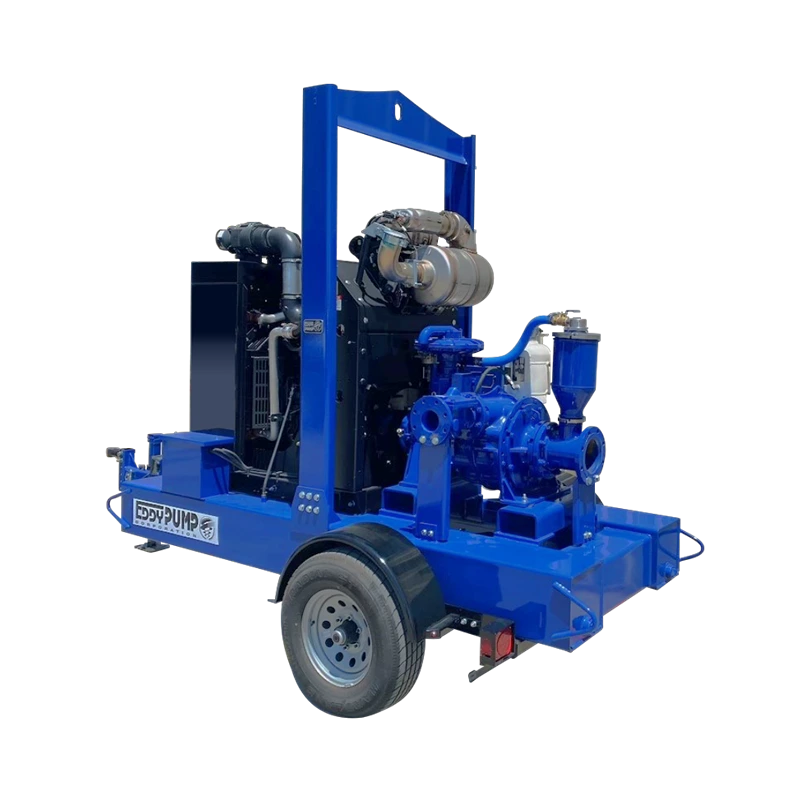
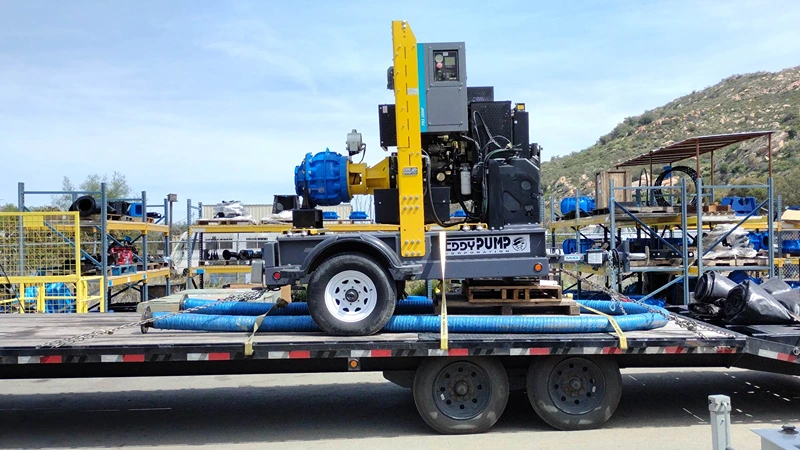
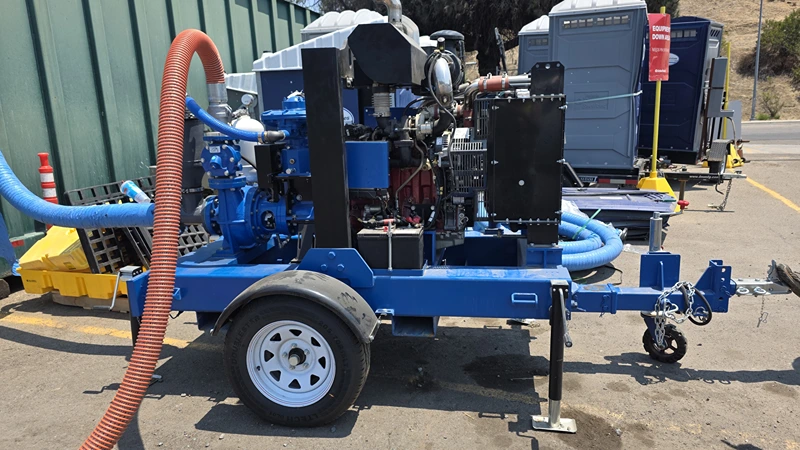
- Trailer or skid-mounted configurations provide true mobility for changing job sites and temporary operations.
- Compatible with a diesel power option to match site infrastructure and operational constraints.
Gallery
Self-Priming Slurry Mixing and Transfer Pump Images
Technical Specifications

Performance Range
- Flow capacity: 100 to 7,300 GPM
- Total dynamic head: Up to 240 ft
- Percent solids: Up to 40 to 70 percent by weight
- Solids handling: Up to 12 in, model dependent
- Maximum transfer distance: Over 3,500 ft


Transfer Pump Design
- Type: Self-priming slurry mixing and transfer pump
- Priming method: Integrated vacuum-assisted self-priming
- Hydraulic design: Patented non-clog rotor with wide internal clearances
- Mixing system: Built-in agitation to keep heavy solids in suspension
- Operating speed: Up to 1,800 RPM, varies by model

Construction & Materials
- Wear components: High-chrome abrasion-resistant alloys
- Casing and rotor: Heavy-duty cast construction for slurry service
- Seals: Industrial mechanical seal options for abrasive fluids
- Frame: Structural steel skid or DOT-compliant trailer

Power Options
- Diesel engine Tier IV (Tier III international) from 43 to 700 HP

Mounting & Mobility
- Skid-mounted for fixed installations
- Trailer-mounted for mobile and temporary sites
- Forklift pockets and lift points standard on skid frames

Operating Conditions
- Dry suction lift with self-priming capability
- Handles viscous, abrasive, and high-solids slurries
- Continuous-duty rated for 24/7 operation
- Suitable for mining, dewatering, wastewater, and industrial transfer

Controls & Accessories
- Automatic priming control
- Discharge pressure and vacuum gauges
- Emergency shutdown and safety interlocks
- Optional remote monitoring and telemetry
- Hose kits, piping manifolds, and sound-attenuated enclosures available


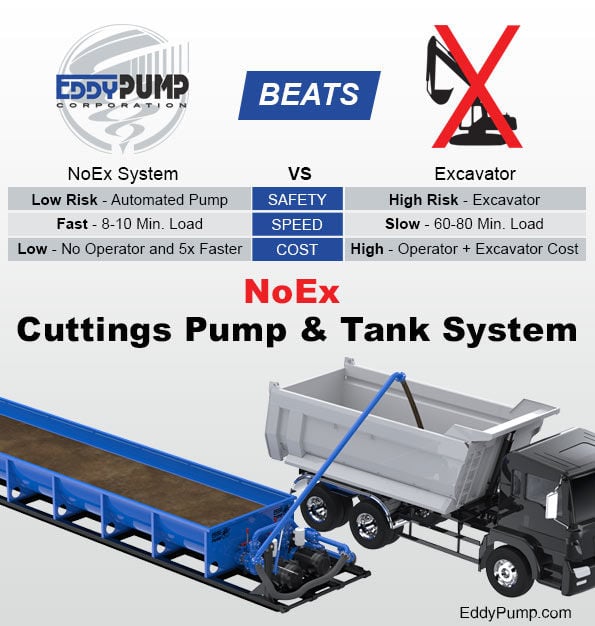
The NOEX® System
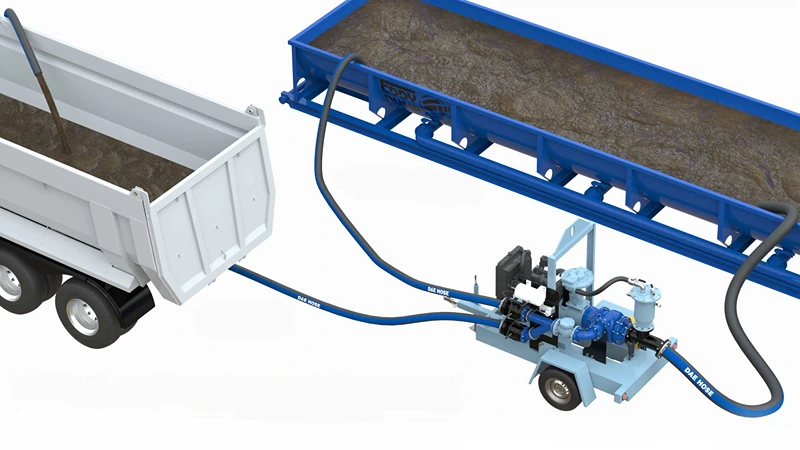
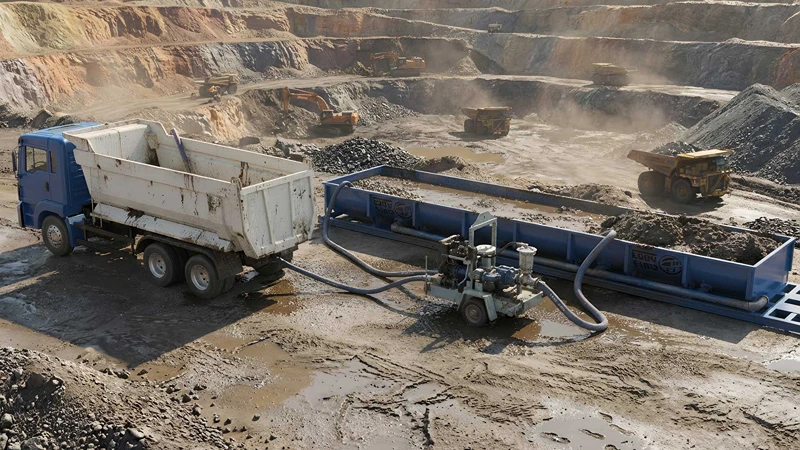
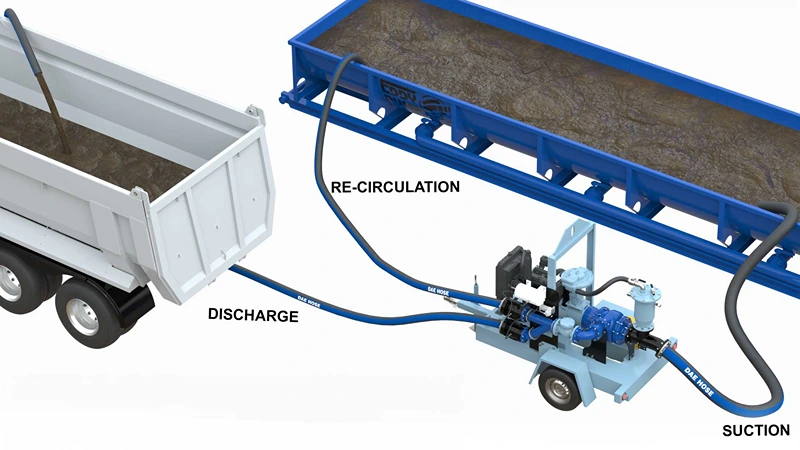
The NOEX® System pairs the Self-Priming Slurry Mixing and Transfer Pump with a purpose-built cuttings tank to move material directly from tailings into transport trucks. This eliminates the need for excavators, reduces handling steps, and removes personnel from hazardous pit-side work. Designed for drilling fluids, mud, and cuttings, the NOEX® Cuttings Pump & Tank delivers up to five times higher production rates than traditional excavation-based removal while significantly improving on-site safety.
Each NOEX® tank features a redundant motor and pump configuration to support continuous operation and true 100 percent uptime. Optional recirculation and water jet systems keep material in constant motion, preventing settling and improving pumpability. NOEX® pumps can be installed as a flooded suction outside the tank or fully submerged within the cuttings tank, providing flexibility across site layouts and operating conditions.
Self-Priming Slurry Mixing and Transfer Pump Comparison
| Specification | 3" – 43 HP (DSP/HD 3000) | 4" – 43 HP (DSP/HD 4000) | 4" – 115 HP (DSP/HD 4000) | 6" – 115 HP (DSP/HD 6000) | 6" – 173 HP (DSP/HD 6000) | 8" – 550 HP (DSP-8000) | 10" – 550 HP (DSP-10000) | 12" – 700 HP (DSP-12000) |
|---|---|---|---|---|---|---|---|---|
| Min Flow (GPM) | 100 | 250 | 250 | 450 | 450 | 1400 | 1600 | 2600 |
| Max Flow (GPM) | 780 | 1200 | 1200 | 2000 | 2000 | 3600 | 5000 | 7300 |
| Head Range | Up to 130 ft | Up to 200 ft | Up to 200 ft | Up to 200 ft | Up to 200 ft | Up to 230 ft | Up to 240 ft | Up to 180 ft |
| Discharge Size | 3 in | 4 in | 4 in | 6 in | 6 in | 8 in | 10 in | 12 in |
| Suction Size | 4 in | 6 in | 6 in | 8 in | 8 in | 10 in | 12 in | 14 in |
| Solids Handling | Up to 3 in | Up to 3 in | Up to 3 in | Up to 5 in | Up to 5 in | Up to 8 in | Up to 10 in | Up to 12 in |
| Max Speed | 1800 RPM | 1800 RPM | 1800 RPM | 1800 RPM | 1800 RPM | 1800 RPM | 1200 RPM | 900 RPM |
| Percent Solids | Up to 40–70% | Up to 40–70% | Up to 40–70% | Up to 40–70% | Up to 40–70% | Up to 40–70% | Up to 40–70% | Up to 40–70% |
| Engine Power | 43 HP | 43 HP | 115 HP | 115 HP | 173 HP | 550 HP | 550 HP | 700 HP |
| Configuration | Trailer or Skid | Trailer or Skid | Trailer or Skid | Trailer or Skid | Trailer or Skid | Trailer or Skid | Trailer or Skid | Trailer or Skid |
Applications Across Heavy Industry

Mining & Mineral Processing
From tailings transfer to thickener underflow and pit dewatering, mining operations rely on pumps that can move dense, abrasive slurries without constant intervention. The Self-Priming Slurry Mixing and Transfer Pump keeps high-solids material in suspension, enabling direct pumping of tailings, sand, and ore fines while reducing dilution water, downtime, and wear-related failures.

Dredging & Sediment Management
Dredging projects demand continuous movement of heavy sediment over long distances. This pump supports canal, harbor, and reservoir work by transferring sand, silt, and sludge at high volumes while preventing settling in pits and barges. Its self-priming capability allows rapid redeployment across changing work zones.
Wastewater & Sludge Handling
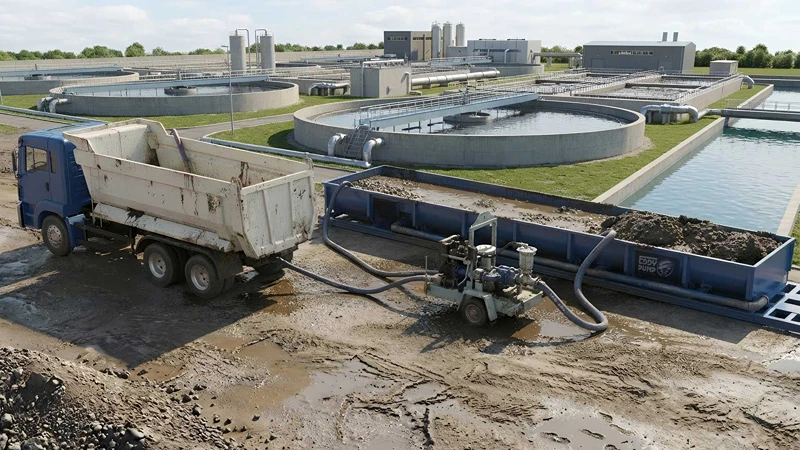
Municipal and industrial treatment plants use this system for sludge transfer, grit removal, and biosolids movement. The non-clog design handles rags, grit, and organic debris without impellers, minimizing blockages and keeping lift stations and holding tanks operational during peak loads.

Construction & Site Dewatering
Excavation sites, tunneling projects, and foundation work often involve thick mud and debris-laden water. This pump moves slurry directly from pits and sumps without pre-screening, maintaining dry work areas and reducing reliance on multiple pump stages or manual priming.

Oil, Gas & Energy Infrastructure
Refineries, power plants, and energy facilities use the system for tank cleaning, waste slurry transfer, and ash or byproduct handling. Its ability to move viscous, abrasive fluids over long distances supports continuous operations in environments where shutdowns are costly.

Industrial Manufacturing
Steel mills, chemical plants, and heavy manufacturing facilities generate abrasive process slurries that settle quickly. Integrated mixing keeps solids suspended during transfer, preventing buildup in pits and tanks while reducing maintenance labor and unplanned outages.

Agriculture & Biogas Operations
Digestate, manure slurry, and organic waste streams require pumps that can handle fibrous, high-solids material. This system enables reliable transfer between lagoons, digesters, and storage tanks without clogging, supporting continuous nutrient recovery and energy production.

Environmental Remediation
Cleanup projects involving contaminated sediment, ash ponds, or industrial waste rely on precise, controlled slurry movement. The pump’s long-distance transfer capability and resistance to abrasion make it effective for relocating hazardous material while maintaining containment and process stability.
Rapid Sediment Removal for a Municipal Reservoir
Case Study

The Problem
A municipal water authority was losing critical storage capacity in its primary reservoir due to heavy silt buildup in shallow zones. Seasonal inflows deposited dense sediment that settled quickly, reducing usable volume and threatening water availability during peak demand months. Existing pumps required frequent priming and stalled whenever solids accumulated in the pits, forcing repeated shutdowns and making continuous dredging impractical.

The Solution
The project team deployed EDDY Pump’s Self-Priming Slurry Mixing and Transfer Pump to move sediment from excavation zones to a distant disposal area. Integrated mixing kept heavy solids suspended in the pit, while the vacuum-assisted self-priming system maintained flow despite fluctuating water levels and changing suction conditions. The pump transferred thick slurry over long distances without dilution, simplifying containment and reducing the need for excess water handling.

The Result
Dredging operations ran continuously across shifts, eliminating stoppages caused by settling and priming delays. The project finished weeks ahead of schedule, restoring reservoir capacity before the monsoon season. Emergency water trucking was avoided, and the municipality established a predictable annual maintenance program, shifting sediment management from crisis response to planned infrastructure.
Call for sales or support
If you need assistance with pump selection, sales or engineering support, call 619-404-1916.
Questions? Talk to an Engineer
Slurry Mixing & Transfer Pump FAQs
What makes this pump different from a conventional centrifugal slurry pump?
This system combines self-priming, active slurry mixing, and a non-clog pumping core. Conventional centrifugal pumps rely on tight clearances and impellers, which struggle with high solids and require external priming. This pump keeps heavy material suspended at the source, draws slurry without manual priming, and passes large solids without choking, allowing direct transfer of dense, abrasive mixtures that would stall standard pumps.
How high can the solids concentration be during operation?
Depending on material type and configuration, the pump can handle slurry concentrations ranging from roughly 40 percent up to 70 percent solids by weight. This allows operators to move thick material directly, reducing dilution water, lowering downstream treatment volume, and improving overall process efficiency.
Does the pump require a flooded suction to start?
No. The vacuum-assisted self-priming system allows the pump to start dry and pull slurry from pits, sumps, or tanks without manual priming or external vacuum equipment. This is critical for mobile jobs, fluctuating water levels, and remote sites where flooded suction cannot be guaranteed.
How does the integrated mixing system improve performance?
In many slurry applications, solids settle rapidly in pits and tanks, causing inconsistent feed and frequent blockages. The integrated mixing keeps heavy particles in suspension at the intake point, ensuring a uniform slurry enters the pump. This stabilizes flow, reduces wear spikes, and prevents repeated shutdowns caused by settled material.
What types of solids can it handle?
The non-clog design allows the pump to pass large, irregular solids such as sand, gravel, tailings, sludge, rags, organics, and debris without impellers or narrow clearances. Solids handling capability scales with pump size, making it suitable for everything from fine sludge to coarse dredged sediment.
How far can material be pumped?
The system is designed for long-distance slurry transfer, supporting thousands of feet of pipeline depending on configuration, material density, and elevation change. This makes it practical for moving sediment from remote excavation zones to centralized disposal or processing areas without intermediate pump stations.
What power options are available?
The pump is offered in a diesel configuration, making it well suited for remote or temporary sites where grid power is unavailable. Diesel-powered units provide reliable, self-contained operation and are available in both trailer-mounted and skid-mounted formats to suit different deployment and mobility requirements.
How does it reduce maintenance compared to traditional slurry pumps?
The internal geometry avoids tight tolerances and high-speed impellers, which are primary wear points in conventional pumps. Abrasion-resistant components and the non-clog flow path reduce blockages, seal damage, and impeller erosion. Fewer stoppages and simpler internal design translate into lower labor costs and longer service intervals.
Can the pump be redeployed across different projects?
Yes. Trailer and skid-mounted configurations allow the system to move easily between sites or across large facilities. This mobility is valuable for dredging programs, construction dewatering, and multi-zone industrial operations where pumping locations change frequently.
What industries benefit most from this pump?
The system is used across mining, dredging, wastewater treatment, construction dewatering, industrial manufacturing, energy infrastructure, agriculture, and environmental remediation. Any operation that must move thick, abrasive, high-solids slurry reliably and over a distance can benefit from its self-priming, mixing, and non-clog capabilities.
HD (Heavy Duty) Slurry Pumps / Dredge Equipment