
CHEMICAL SLURRY HANDLING
Chemical Slurry Pumps for Abrasive & Corrosive Solids
Select the pump from the chemistry, solids, temperature, and duty point, not the fluid name alone.
Chemical process streams can carry abrasive crystals, precipitates, and sludge in aggressive chemistry at elevated temperature. EDDY Pump supplies non-clog slurry pumps for the solids-laden side of chemical processing: sumps, tank bottoms, settled solids, and process waste. Wet-end materials and seals are reviewed against your actual chemistry before a pump is selected.

BEST FIT FOR
Chemical sumps & pits
Viscous sludge and process solids collected below grade.
Tanks & settled solids
Tank bottoms, clarifiers, and thickeners with settled material.
Abrasive process slurries
Crystals and precipitates that contribute to wear or clogging.
Chemical waste streams
Neutralization sludge and compatible slurry sent to treatment.
Chemical and industrial process streams where suspended or settled solids cause clogging or abrasion, and where materials and seals can be engineered for the actual chemistry.
Solids handling in chemical processing
Chemical sludge, abrasive crystals, and settled process solids call for a slurry pump selected around the full application. Corrosive service also requires review of the wet-end materials and seals at the actual concentration and temperature.
Watch coal ash pumping for remediation and processing in Indonesia. The video shows solids handling in an industrial application; chemical compatibility is reviewed separately for each process stream.
COMMON APPLICATIONS
Common chemical slurry applications
01
Chemical manufacturing sumps
Remove sludge buildup and solids from manufacturing sumps and collection pits.
02
Semiconductor-industry sludge
Review corrosive sludge duty against the exact chemistry, solids, and seal requirements.
03
Cement plant process slurry
Evaluate abrasive process slurry and sludge against the required flow and head.
04
Pulp and paper sludge
Move compatible chemical sludge from pulp and paper production to the next process step.
05
Tank bottoms & clarifiers
Remove settled solids from tanks, clarifiers, and thickeners.
06
Neutralization & waste transfer
Transfer compatible waste slurry and sludge to treatment or disposal.
07
Leaching & reagent slurry
Review leaching and reagent-slurry transfer where wet-end materials and seals are compatible.
08
Solids-laden mixing loops
Evaluate slurry transfer and recirculation within mixing and blending processes.
09
Slurry transfer to filtration
Review solids-bearing transfer to filtration with the process flow and head requirements.
Each use requires a review of chemistry, temperature, solids, and the duty point. Precise dosing and metering require a purpose-built metering pump.
APPLICATION CHALLENGES
Challenges in chemical slurry pumping
A chemical slurry pump must address corrosion, wear, and the installation conditions together. The fluid name alone is not enough to select the pump.
01
Corrosion
pH, chlorides, solvents, and other chemicals can attack standard pump materials and seals.
02
Abrasive solids and crystals
Slurries can be corrosive and erosive at the same time, so a material chosen for one can fail on the other.
03
Viscous, settled sludge
Sump and tank-bottom sludge is often thick, packed, and slow to flow toward a pump intake.
04
Temperature and crystallization
Heat changes material compatibility, seal life, viscosity, and suction conditions; cooling can form solids in lines.
05
Hazardous service
Containment, area classification, seals, and compliance can control the whole package.
CHEMICAL PROCESS SLURRY
Review the chemistry and the complete pumping duty.
WHY EDDY PUMP?
Why EDDY Pump for Chemical Slurry?
Match solids handling with the right materials, seals, and installation. Application review brings those decisions together before a chemical slurry pump is selected.
01
Open internal flow path
Patented non-clog design for crystals, precipitates, and process solids.
02
Metallurgy reviewed for the slurry
High Chrome, stainless, and duplex stainless options are reviewed for both abrasion and corrosion.
03
Three starting configurations
Submersible, flooded suction, and self-priming arrangements suit different sump, tank, and temporary-work layouts.
04
Optional chopper
Review the chopper option when rags, rope, or other stringy solids are present.
05
Application review
Chemistry, temperature, solids, specific gravity, and duty point are considered together.
RECOMMENDED EQUIPMENT
Recommended EDDY Pump equipment for Chemical Industry
Start with the installation and the slurry. Confirm the selected configuration, wet-end materials, seals, and duty point in application review.
Submersible Slurry Pump
Best for compatible sumps, pits, and basins where the pump can sit in the sludge.
Flooded Suction Process Pump
Best for installed, gravity-fed process transfer from a tank.
Self-Priming Slurry Pump
Best for mobile or remote suction transfer and temporary tank cleanup where materials are compatible.
High-Head / High-Viscosity Pump
Best for thick sludge or long, high-head transfer. Confirm fit in application review.
Custom metallurgy and seal package
Required when chemistry, temperature, or hazardous service dictates.
CORROSIVE SLUDGE SUMP CLEANOUT
Example: corrosive sludge sump cleanout
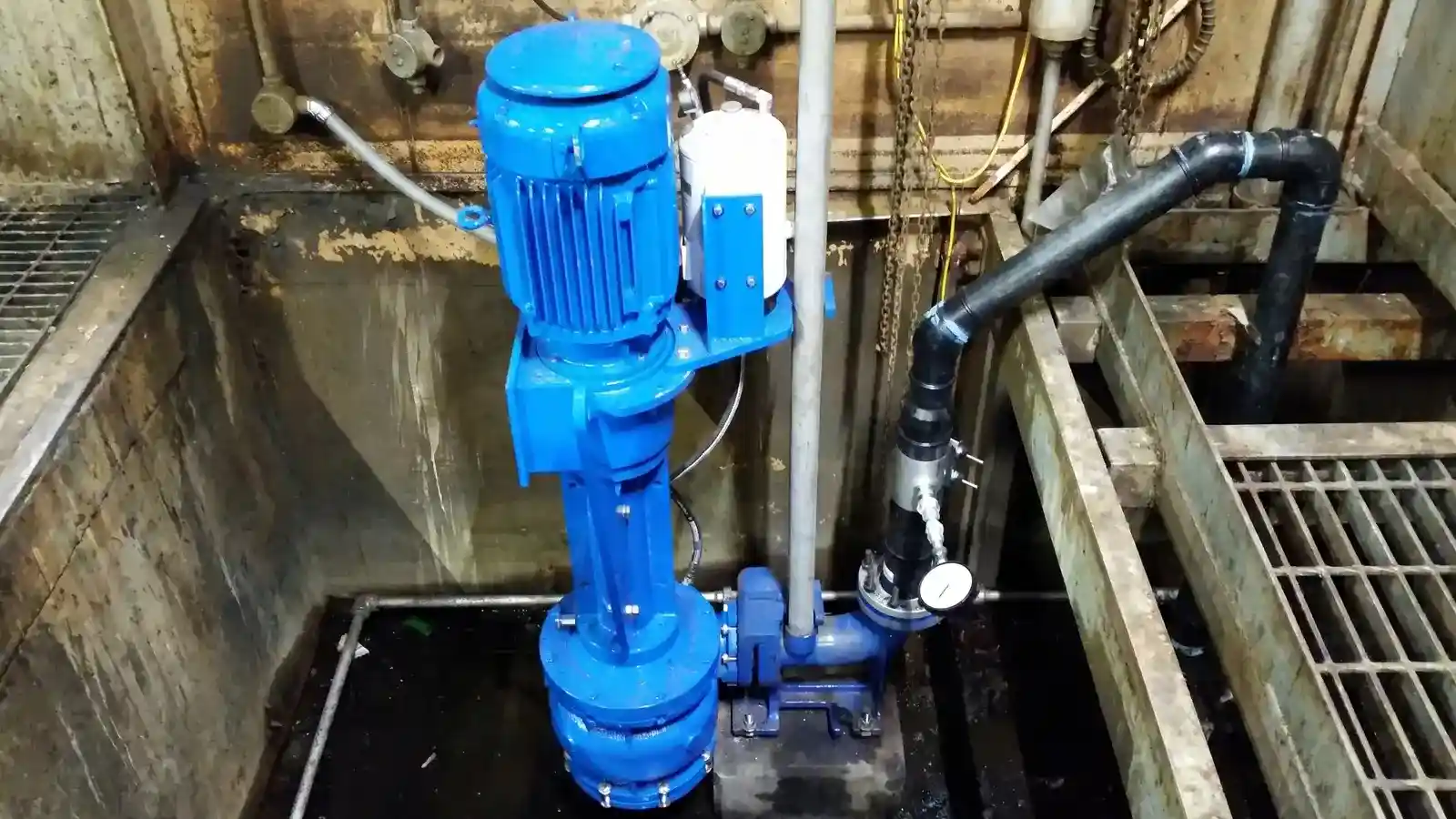
A submersible EDDY Pump mounted in a compatible chemical sump or collection tank removes viscous, corrosive, and abrasive sludge without a separate suction line. An optional chopper can help handle rags, rope, and other stringy solids and reduce clogging risk downstream.
This is one commonly seen configuration, not a performance guarantee. Final selection depends on the pump curve for your exact numbers.
Swipe or scroll horizontally to view all example details.
Example parameter
Illustrative value
Selection review
Discharge distance
1,500 ft
Supply the full pipe route and internal diameter.
Vertical rise
50 ft
Include elevation change in the duty-point review.
Flow
600 GPM
Confirm flow and total dynamic head on the selected curve.
Equipment
EDDY Pump 6-inch submersible sump pump
Illustrative equipment; final selection requires review.
Power
Electric or hydraulic, based on project requirements
Choose the drive for the project requirements.
Match materials to the actual chemistry
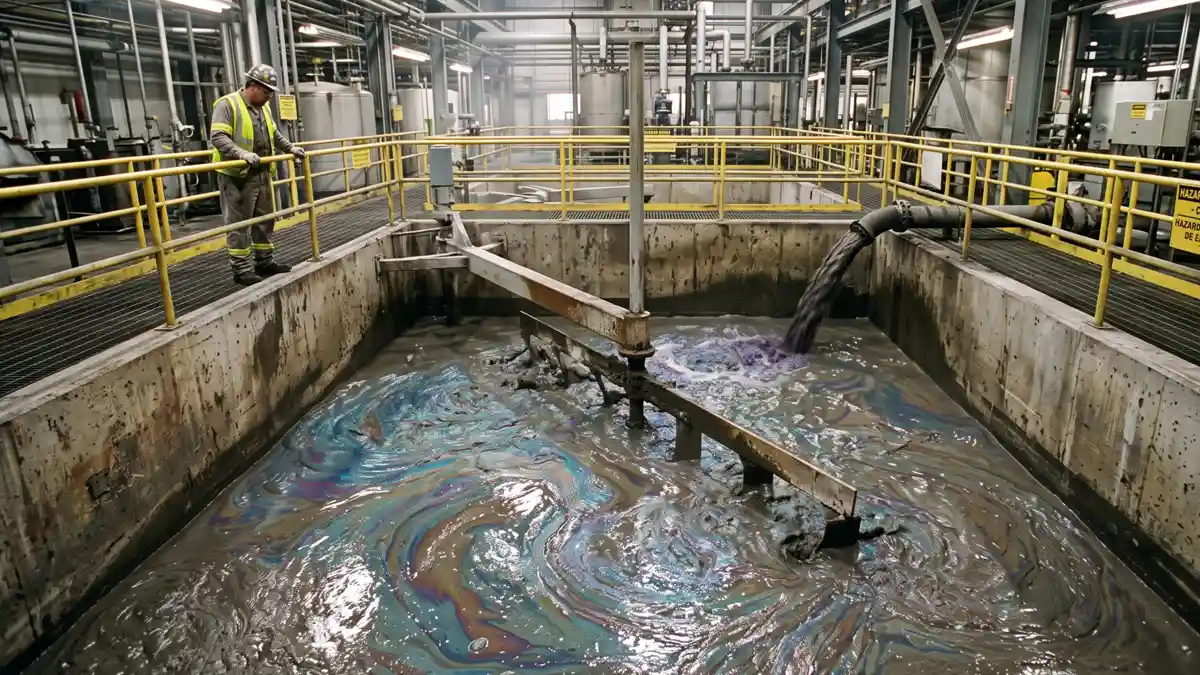
Start with the chemical names and concentrations, pH, operating temperature, and any changes expected during the duty. Share the safety data sheet where relevant. A general label such as “chemical waste” does not describe the conditions that the wet end and seals will encounter.
Describe abrasion and corrosion together. High Chrome, stainless, and duplex stainless options are starting points for review, not blanket compatibility statements. Include abrasive crystals, precipitates, and other process solids when asking engineering to evaluate the material and seal package.
Match materials to the actual chemistry
Describe the sludge and settled solids
Provide solids concentration by weight, specific gravity, viscosity, and the typical and maximum particle or crystal size. Note whether the material remains suspended or collects as a thick tank-bottom or sump deposit. Include rags, rope, and other stringy material in the application description.
The inlet must be assessed against the material as it exists on site. Share sump depth and geometry, the location of settled solids, and access to the collection point. Where stringy solids are present, review the optional chopper and the downstream transfer path together.
Choose the installation around the source
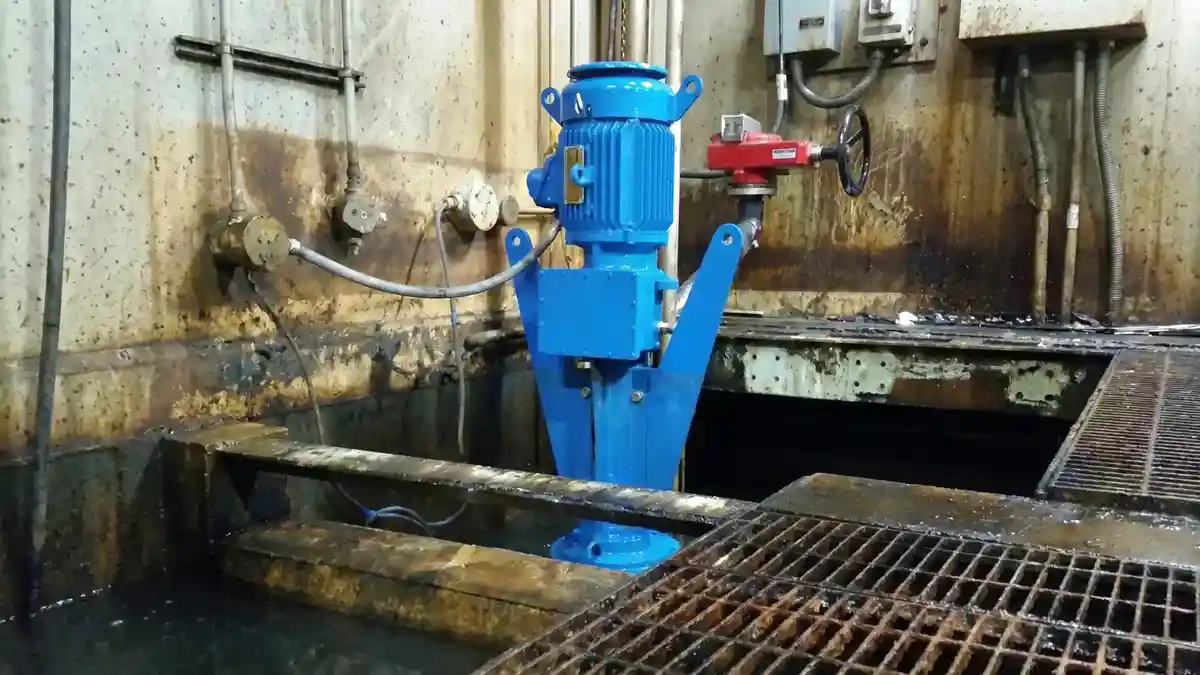
A submersible arrangement places the pump in a compatible sump, pit, or basin. A flooded suction arrangement is a starting point for a gravity-fed process tank. A self-priming arrangement can keep the pump on accessible ground for temporary or remote transfer.
Describe the available space, liquid levels, and suction condition before choosing among these options. Share how the pump will be installed, reached, and removed. Materials compatibility and the actual duty point still apply whichever installation is selected.
Choose the installation around the source
Define flow and the complete discharge route
State the required flow in GPM and total dynamic head if known. Include discharge-pipe length and internal diameter, the vertical rise, and the suction arrangement. These inputs allow the pump review to address the transfer system as well as the source material.
The 1,500 ft discharge distance, 50 ft rise, and 600 GPM shown in the example describe an illustrative duty. They do not establish a guaranteed operating point for another slurry or installation. Request a pump-curve review using the chemistry, solids, viscosity, and route for your job.
Identify containment and service requirements
State any hazardous-area classification, containment requirement, or seal requirement with the initial application data. Temperature and chemical exposure can control the package selection. Materials, seals, drive, controls, and compliance need confirmation before equipment is selected for hazardous service.
Keep the application scope clear. This review concerns moving solids-laden chemical slurry and sludge. An EDDY Pump is not a substitute for every ANSI chemical-process service, and precise chemical dosing or metering requires a purpose-built metering pump.
Complete the application review
Identify the available power source and whether electric or hydraulic drive is required. Bring the material data, tank or sump geometry, suction condition, pipeline route, flow target, and containment requirements into one application review so the equipment package can be evaluated together.
Use the configuration table below to begin that discussion. The final recommendation should address the selected pump curve, materials and seals, and the site requirements for the actual duty. Related chemical-transfer resources are available for further application context.
Related reading: Chemical transfer pump applications → and Chemical transfer pump considerations →.
SELECTION GUIDE
Choose the Starting Configuration
Use the site condition as the first filter, then confirm chemistry, materials, seals, and the duty point.
Swipe or scroll horizontally to view all columns.
Site / Application Condition
Start With
Why
Chemical sump, pit, or basin
Submersible
Puts the intake in the solids and removes suction lift.
Gravity-fed process tank
Flooded Suction
Stable, installed process duty.
Temporary or remote tank cleanup
Self-Priming
Keeps the pump on accessible ground above the source.
Rags, rope, or stringy solids in the sump
Submersible + chopper option
Reduces clogging risk downstream.
Aggressive chemistry or hazardous area
Engineering review
Materials, seals, drive, controls, and compliance must be confirmed first.
This table is a starting point for engineering review. It is not a final suitability guarantee; chemistry, temperature, solids, seals, and the complete duty point must be confirmed together.
SYSTEM SIZING
Information Needed to Size the Right System
Provide both the material data and the site details so engineering can review the complete chemical slurry duty.
01 / CHEMISTRY & MATERIAL
Define the chemical slurry
Chemical names and concentrations; pH; temperature; percent solids by weight; specific gravity; viscosity; particle or crystal size; abrasiveness; and SDS where relevant.
02 / SITE & INSTALLATION
Describe the source and route
Required GPM and TDH; suction condition; tank or sump geometry; pipe length and internal diameter; and elevation change.
03 / POWER & SERVICE
Confirm package requirements
Power source; area classification; containment requirements; and seal requirements. Include the chemistry, temperature, and solids data in the same review.
FREQUENTLY ASKED QUESTIONS
Chemical slurry pump FAQs
Answers about chemical compatibility, pump selection, sump cleanout, and the information needed for a quote.
Can EDDY Pump Handle Corrosive Chemicals?
Some corrosive slurry applications can be handled with stainless, duplex stainless, or other application-specific materials. Compatibility must be reviewed for the exact concentration, temperature, solids, and seal materials.
Is EDDY Pump an ANSI Chemical Process Pump?
No. EDDY Pump is not a substitute for every ANSI chemical-process service. Its strongest fit is difficult, solids-laden slurry where non-clog handling and abrasion resistance matter.
What Information Is Required to Quote a Chemical Slurry Pump?
Provide the chemical name and concentration, pH, temperature, specific gravity, viscosity, particle size, percent solids by weight, abrasiveness, required flow and head, and any hazardous-area requirements.
Can One Material Handle Both Abrasion and Corrosion?
Usually it is a tradeoff. High Chrome is strong for many abrasive slurries, while stainless or duplex options may suit certain corrosive conditions. Engineering selects the wet-end material from both wear and chemistry.
Can EDDY Pump Clean a Chemical Sump or Tank Bottom?
Yes, where materials are compatible. A submersible pump placed in the sump handles settled, viscous sludge, and an optional chopper helps with rags and rope. Layout and discharge distance set the final configuration.
Can EDDY Pump Be Used for Dosing or Metering?
No. EDDY Pump moves solids-laden slurry and sludge. Precise chemical dosing and metering need a purpose-built metering pump.
LET’S PUT YOUR PROJECT IN MOTION
Tough material?
Bring it to EDDY.
Tell us what you’re pumping, where it needs to go, and what your
operation needs to achieve.
Talk it through
with our team.
Equipment selection, project planning, or an existing pump—we’ll help you find the right next step.
CALL SALES & ENGINEERING
+1 619-404-1916
EMAIL YOUR PROJECT DETAILS
info@eddypump.com