

Wastewater System Blockages
The Problem With Pumping Sewage & Wastewater
The most common issues are wastewater system pumps being clogged by flushable wipes, baby wipes, and feminine products.
Dealing with a clogged pump or pipe is never fun. When the blockages involve sewage and other forms of hazardous waste, routine cleaning chores can become a health hazard. Keeping sewage pump stations and treatment plants running smoothly not only saves money, but it also results in higher job satisfaction among the maintenance team, in addition, to help keep the city running smoothly.

It’s not just the unusually large size of solids that make sewage pumping and wastewater treatment handling so challenging. The nature of the solids in question also plays a role in the likelihood of the formation of clogs. Sewage from toilet facilities is particularly likely to form clogs due to the use of toilet paper and flushable wipe and feminine products. While most toilet papers break down by the time the material reaches a sewage pump, flushable wipes tend to clump together due to their long, thin shape and tough fibrous texture.
Combine these easy to snag solids with malleable mixtures that act like clay when caught against another item and you can easily understand why sewage pumps can bind up so quickly and completely. Even with care, many sewage pumping stations find themselves replacing their primary pumps annually or even every few months due to the intense amounts of wear and tear on the equipment. If the pumps manage to run for a few years without replacement, it’s usually due to extensive cleaning routines that involve many hours of extra labor per month. Chopper pumps are ideal for sewage processing applications because the internal chopping mechanism breaks up large solids before they reach the pump. Add smaller solids to the large internal capacity of the EDDY pump design and you have a winning combination for avoiding sewage clogs in even the most challenging systems.
Currently, EDDY Pump only deals with municipal and industrial clients, as we focus on heavy-duty and high volume industrial applications.
Commercial Sewage Pumps
Sewage Pumps No-Clog Design
Commercial Sewage Applications
The majority of sewage pumps are installed at wastewater treatment plants and similar facilities, but they have many other uses. Large facilities like hotels, campgrounds, and amusement parks often rely on these cast iron sewage pumps to move sewage to a distant holding tank or far-off sewer connection point. Cast iron sewage pumps with a motor are also used to transfer untreated raw sewage from a catch tank to either the septic system or directly to the city sewer.
Any bathroom facility located below the sewage connection or septic tank will require some kind of powerful cast iron pump connected to a motor to lift the slurry to its intended destination (sump pumps also work). Receiving stations that handle deliveries from septic tanks and portable toilet trucks also need these sewage pumps to distribute the raw sewage to the various storage or processing areas.
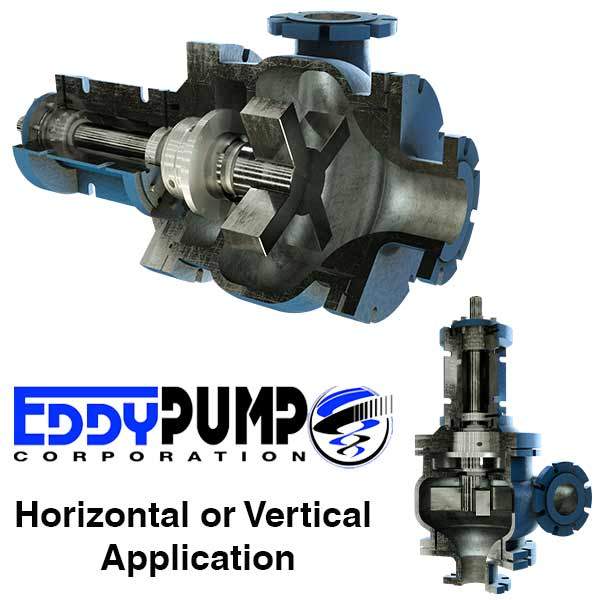
How EDDY Slurry Pumps Work as Sewage Pumps
These sewage pumps are also required for other types of effluent and sewage that aren’t generated by human or residential sources. The same well designed cast iron slurry pumps used for bathroom facilities work well for moving valuable manure slurries around, water which often features solids even larger and more challenging to pump than those commonly found in sewage water.
Manure processing can yield valuable fertilizer products while protecting local waterways from toxic runoff water, but only if the treatment facility has the right slurry pumps for separating and moving the various raw materials. The extensive line of pumping products also includes sump pumps, which are known for their reliability, efficiency, and versatility in various water and wastewater removal scenarios.
EDDY Pump Advantage
Why EDDY Pumps Work for Sewage and Wastewater Facilities
EDDY Pump has a tested and multi-decade proven solution. The sewage systems of the US Navy have been using EDDY Pumps in service for many years. Read about the newest Ford Class using EDDY Pump. Based on the EDDY Pump design, which has a large and non-critical tolerance between the rotor and volute, it makes for the ideal sewage pump. The EDDY Pump can pass an object without any issue that is 1-inch smaller than the intake of the pump model. For example, a 4-inch EDDY Sewage Pump model can operate and handle a 3-inch solid without clogging or having any negative effect on the pump. Another advantage of this extreme tolerance is reduced wear and tear because fewer solids come in contact with the rotor.

EDDY Pumps for Sewage and Effluent Applications
The EDDY Slurry Pump isn’t like other pump products or designs created for effluent, water and sewage handling. Only this pump is designed to harness the power of the eddy current to create a strong flow and plenty of suction with a small and open rotor. Since there’s no need for the rotor to pass close to the internal walls to generate pressure, very large solids (and raw sewage) can flow through without getting caught and causing a clog.
Performance in High-Viscosity Sewage Applications
The EDDY pump’s ability to handle a slurry with up to 70 percent solids and a high viscosity makes it ideal for handling sewage from bathrooms featuring ultra-low flow fixtures. Even with low levels of water, sewage pumps manage to move the same amount of solids of distances up to one mile. With the right design, solids of up to 11 inches can pass without clogging the pumps. There’s no need to deal with constant unclogging, fussy filters, or regular replacements due to abrasion or corrosion when you choose the EDDY pump.
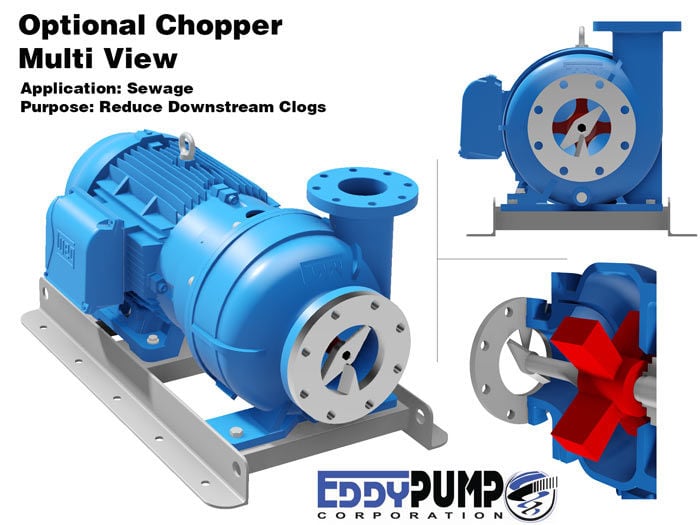
Chopper Pump Upgrade
Chopper Pump Option for Sewage Applications
Optional Chopper Pump Upgrade
A chopper upgrade can be fitted for use in sewage pumping applications. Unlike most other pump applications the EDDY Pump works without comminutors, macerator or grinders because the tolerance is large enough to pass all material without any issues. But for large scale municipal use, we recommend cutter to break down flushable wipes and other non-organics.
When Should You Use a Chopper Pump for Sewage?
EDDY Pumps can easily pass objects such as large waste and non-organic material on its own, but without a chopper addon, clogs can potentially happen downstream. For sewage applications, we recommend using a chopper addon to prevent clogs in your downstream applications. Call us to discuss.
How EDDY Pumps Can Reduce Sewage Pump Operating Costs
The EDDY Pump has been utilized by the US Navy for over 20 years on almost all classes of Navy ships for grit, waste transfer and sewage pumping. The reason is that this pump design saves the Navy tens of millions of dollars every year in corrective action, overhaul, and downtime. To see a Total Cost Analysis done by Lockheed Martin on the cost savings of 25 EDDY Pumps versus the leading centrifugal pump over 4 years, please click HERE to View the Analysis. Also see our resources section for white papers and more education.
Enjoy less clogging, lower maintenance costs, more uptime and a happy project manager. Call us to match the right sized pump to your job. View the pump page here.
High Solids Pumping
How Do EDDY Pumps Move High Solids and Sewage?
Our patented pump technology outperforms all centrifugal, vortex and positive displacement pumps in a variety of the most difficult sewage pumping applications. Our pump design allows for longer intervals between maintenance, which translates to increased output, more uptime and higher profits.
Sewage Pumps and Options for Wastewater Management
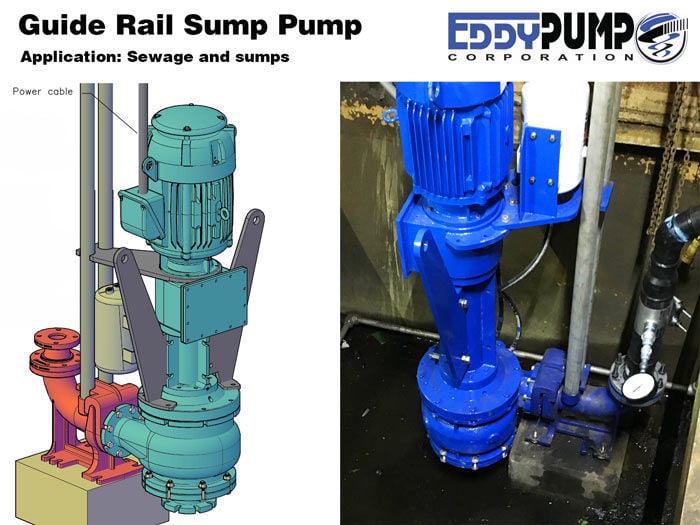
Wastewater Pumps for Sewage Transfer and Treatment Plant Solids
Municipal and industrial wastewater pumps move sewage and process streams that can contain rags, grit, organic solids, and sludge. Those materials create different operating problems. Fibrous debris can snag or form bundles, while mineral grit contributes to abrasive wear. Wastewater pump selection should begin with the solids reaching the pump and the way the station operates. Treating every stoppage as a simple flow-capacity problem can leave the underlying cause unresolved.
Identify Whether the Pumping Problem Is Ragging or Wear
A maintenance history is useful evidence when evaluating wastewater solids handling. Record what operators remove during a blockage, where it collects, and whether the problem follows a particular operating pattern. Photographs of recovered debris can reveal more than a general description such as dirty water.
Non-clog sewage pumps are designed to accommodate difficult solids, but the term does not promise freedom from every obstruction. EDDY Pump also offers a chopper option for suitable wastewater applications. Review whether passing the solids or reducing their size best addresses the problem in the complete system, including downstream restrictions.
Select a Sewage Pump for the Lift Station Operating Range
Sewage lift station pumps must suit changing inflow and liquid levels. Define the required flow and total dynamic head across the expected range, then consider starts, stops, and access for service. A station's peak requirement matters, but so does how the equipment behaves during more common operating conditions.
Check the discharge arrangement alongside the pump. Valves, bends, and other restrictions can create problems even when material passes through the pumping element. If operators repeatedly clear a blockage at the same point, investigate that location before attributing the fault to pump size.

Treat Grit and Sludge as Distinct Pumping Duties
Grit handling calls for attention to abrasion and settled deposits. Sludge transfer calls for an understanding of concentration and flow behavior, which may vary between treatment stages. A pump selected for incoming sewage should not automatically be assumed suitable for every concentrated sludge stream at the plant.
Describe the material at the actual transfer point. Include solids concentration, temperature, expected debris, and any industrial chemicals that could affect compatibility. Where the plant's process changes during the day, provide an operating range rather than one sample that happens to be easy to pump.

Sewage and Wastewater Pumping FAQs
What is a non-clog sewage pump?
A non-clog sewage pump is designed to pass challenging wastewater solids while reducing blockage risk. The term does not mean that every object or fibrous bundle will pass. Review the expected debris and the restrictions throughout the pumping system.
When should a wastewater facility consider a chopper option?
Consider it when fibrous or bulky material contributes to recurring blockages and size reduction suits the process. Assess the waste stream and downstream equipment first. Chopping solids does not remove them from the wastewater or eliminate every maintenance requirement.
Are sewage pumps and sludge pumps the same?
The duties can overlap, but they are not automatically interchangeable. Raw sewage and concentrated treatment sludge can differ substantially in solids content and flow behavior. Match the pump to the specific stream, required flow, and discharge conditions.
Why do wipes cause sewage pump problems?
Wipes and similar fibrous items can snag, gather into bundles, or combine with other debris. Their shape and behavior matter as well as size. Review the actual recovered material when investigating ragging instead of relying only on a nominal solids-passage rating.
Can the same pump handle grit and fibrous wastewater solids?
Potentially, if the selected configuration suits both. Grit raises wear concerns, while fibrous solids raise snagging and blockage concerns. Evaluate material selection and solids handling together, using representative wastewater conditions and the expected duty cycle.
Does EDDY Pump supply residential sewage ejector pumps?
This application range is intended for municipal, commercial, and industrial wastewater duties, rather than household sewage ejector installations. For a facility project, provide the required flow, head, waste characteristics, and operating conditions so the appropriate equipment can be assessed.
What information is needed to assess a wastewater pump replacement?
Provide current pump details, station levels, flow and head requirements, discharge pipework, and maintenance records. Describe recurring blockages, wear, and the solids involved. These inputs help determine whether the issue is pump selection, system layout, or changing wastewater conditions.
LET’S PUT YOUR PROJECT IN MOTION
Tough material?
Bring it to EDDY.
Tell us what you’re pumping, where it needs to go, and what your
operation needs to achieve.
Talk it through
with our team.
Equipment selection, project planning, or an existing pump—we’ll help you find the right next step.
CALL SALES & ENGINEERING
+1 619-404-1916
EMAIL YOUR PROJECT DETAILS
info@eddypump.com