
Dredging Is Only Half the Job - Placement Is Where Projects Win or Lose
Removing sediment is only part of the challenge. Once slurry is dredged and pumped, contractors, engineers, and owners still need to control where that material goes, how thick each lift is, and whether the final placement meets project specifications.
Traditional placement methods can create mounding, uneven distribution, overplacement, missed zones, and costly rework. The EDDY Pump Automated TLP System is designed to solve that problem by combining high-solids pumping, automated movement, real-time thickness monitoring, and controlled placement sequencing into one integrated system.

What Is the EDDY Pump Automated TLP System?
The EDDY Pump Automated Thin-Layer Placement System is a patent-pending slurry and sediment placement system that distributes dredged material in controlled layer thicknesses across defined placement areas.
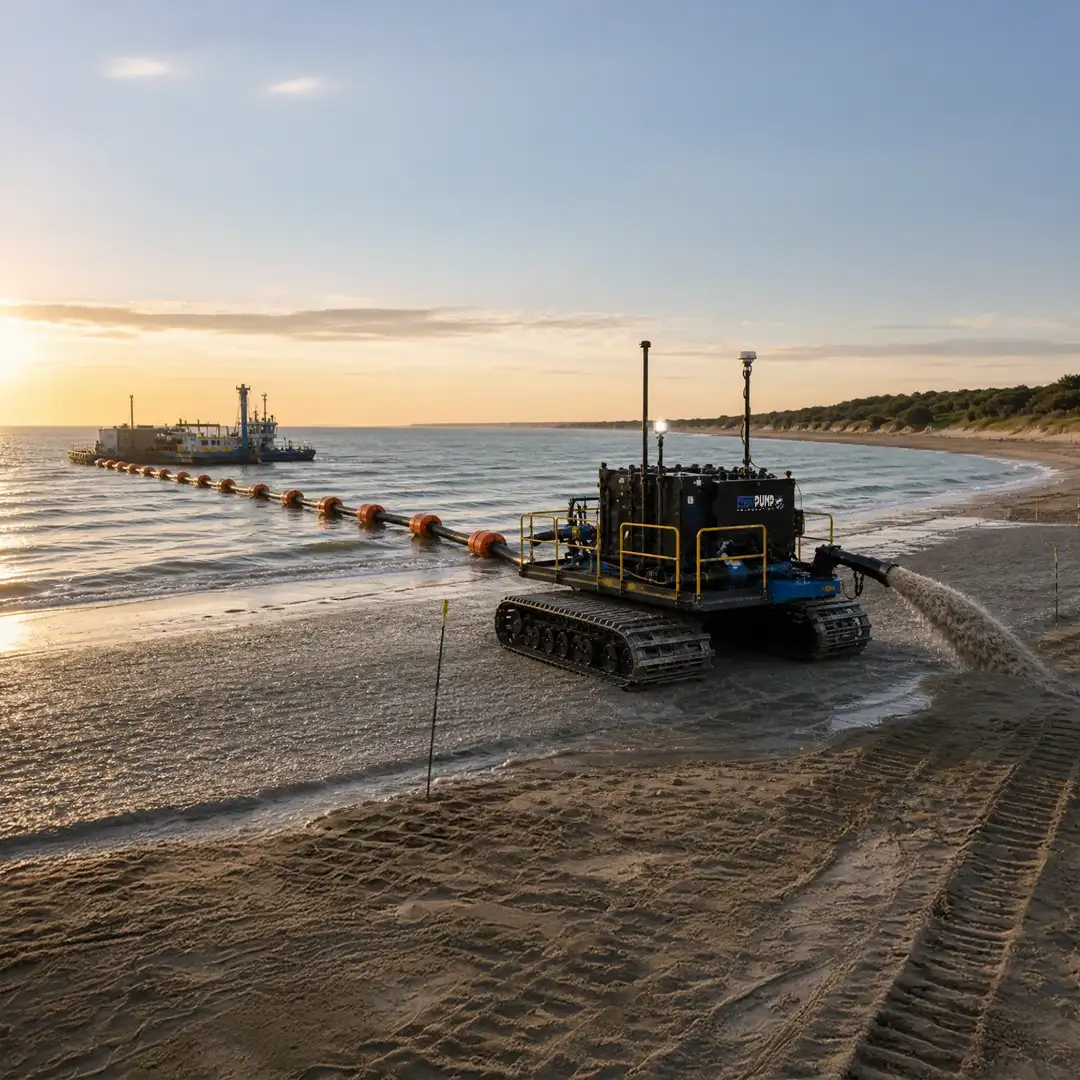
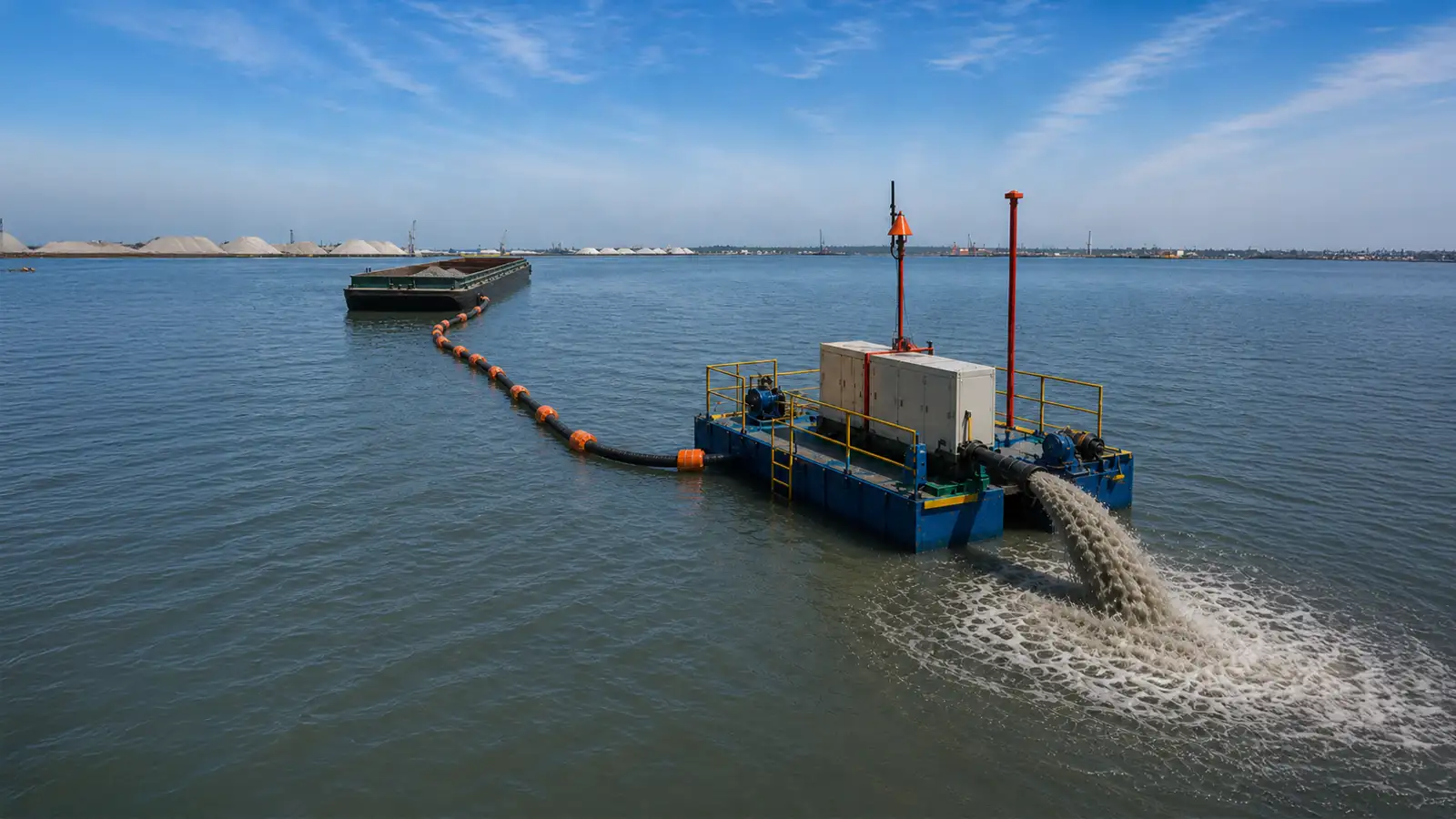
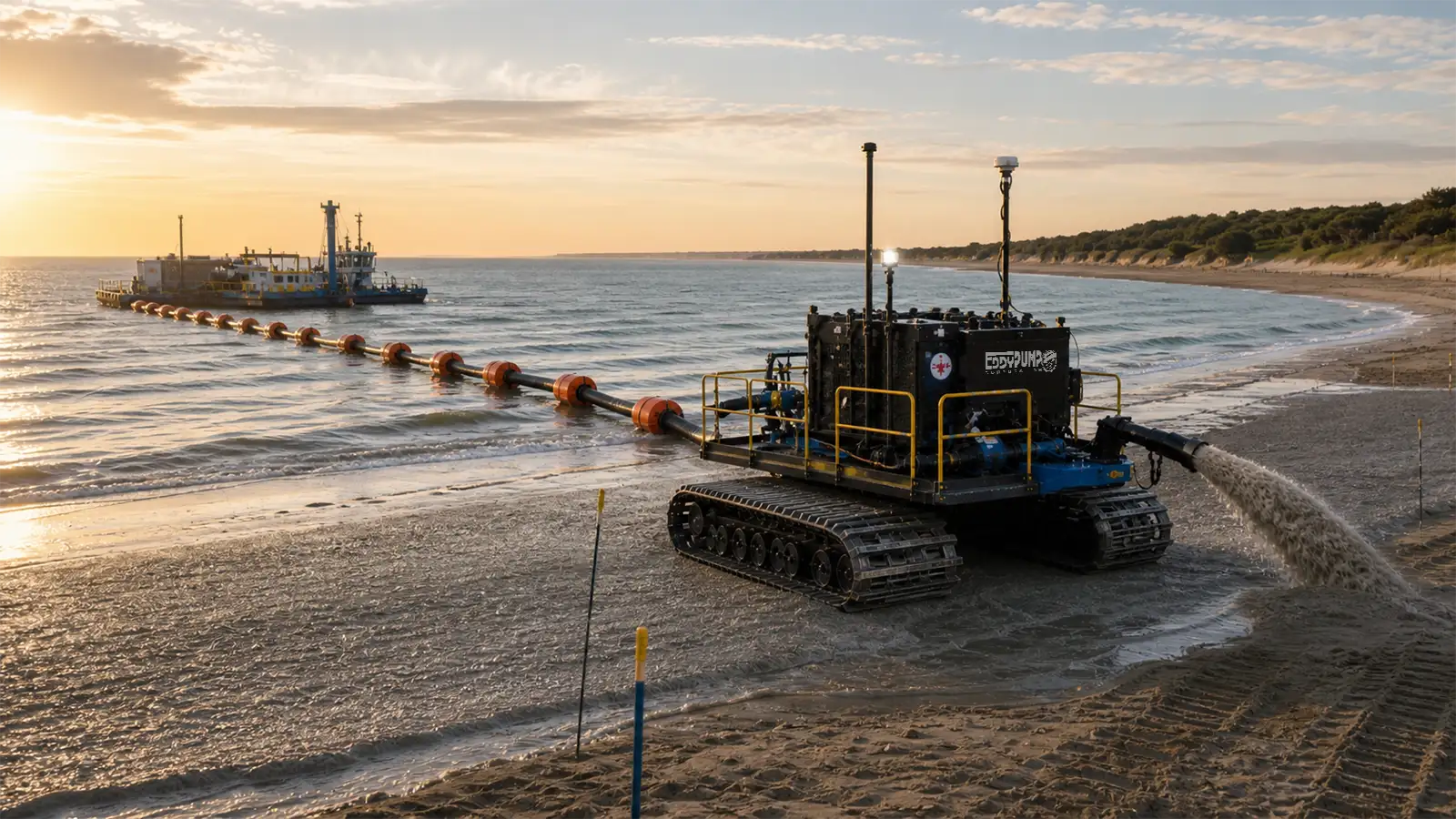
The system can be configured for water-based placement using a barge, winch, or spud system, or for land and shallow-water placement using a low-ground-pressure tracked platform. It is designed to help project teams place material more accurately, reduce overfilling, minimize rework, and improve documentation of where material has been placed.
The system is especially valuable when the end goal is not simply disposal, but engineered placement, restoration, remediation, containment, or beneficial use of dredged material.
How Automated Thin-Layer Placement Works
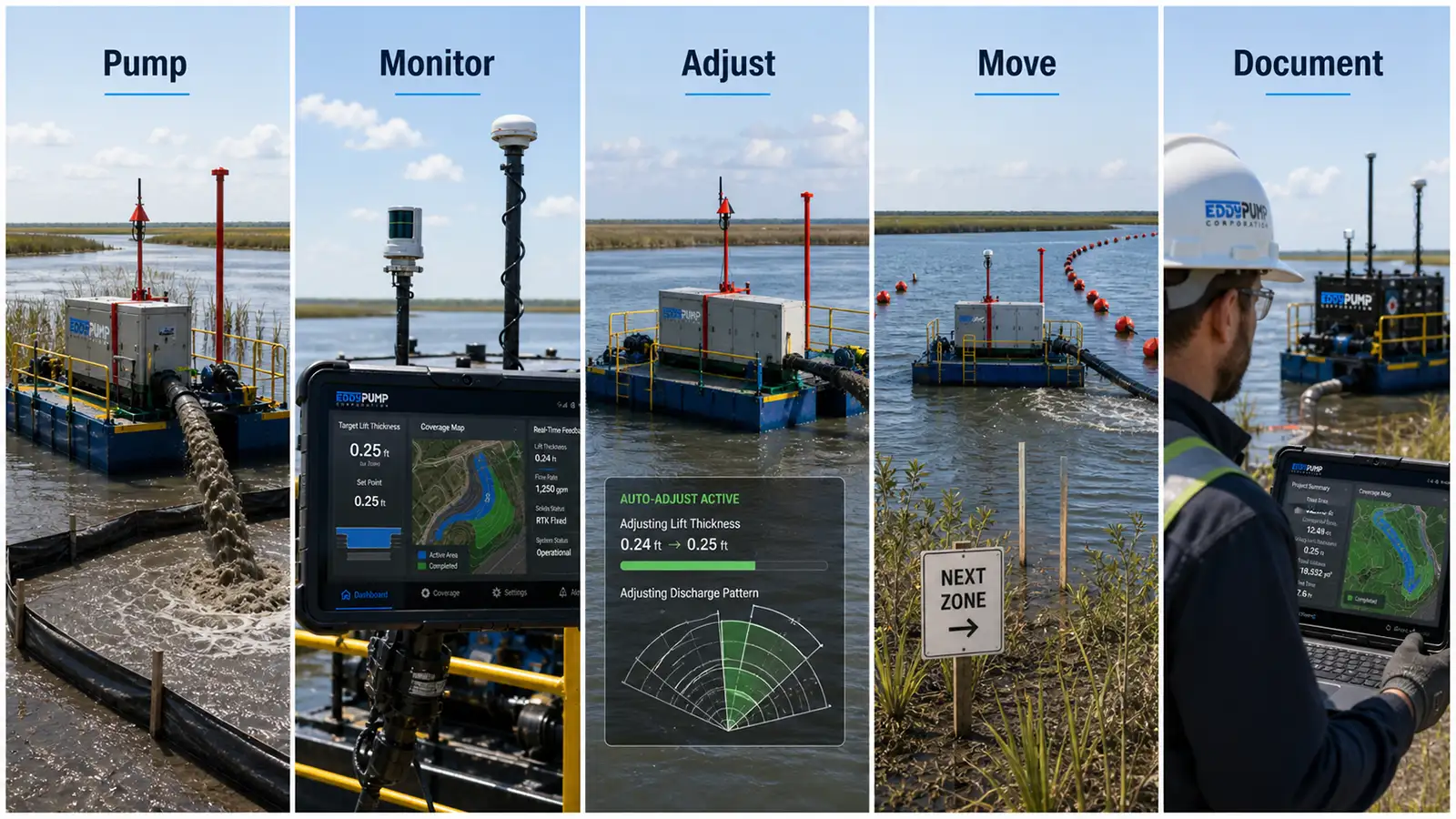
- Pump slurry to the placement area. EDDY Pump high-solids slurry pumps move sand, sediment, silt, tailings, organics, or dredged material to the target zone.
- Monitor placement thickness in real time. Sensors and positioning systems track elevation changes, sediment buildup, and placement progress.
- Adjust movement and discharge sequencing. The system controls movement patterns to distribute material evenly and reduce mounding.
- Advance when target lift thickness is reached. Once the programmed thickness is achieved, the system moves to the next placement area.
- Document coverage and placement progress. GPS, bathymetric feedback, and monitoring data can help support project reporting and quality control.

Closed-Loop Placement Control for More Consistent Results
The system is designed around a closed-loop placement process. As slurry is discharged, the system monitors the placement area and uses that feedback to control movement and sequencing. This helps reduce manual guesswork and improves consistency across the project area.
- Pumps slurry to the target placement zone
- Measures sediment thickness, elevation change, and placement uniformity
- Adjusts movement and flow sequencing based on target lift thickness
- Moves to the next placement zone once the target condition is reached
- Helps reduce overplacement, underplacement, missed zones, and rework
Two System Configurations: Water-Based and Land-Based TLP
Barge-Based Automated TLP System

The barge-based configuration is designed for water applications where sediment, slurry, or sand needs to be distributed across wetlands, shallow-water areas, restoration zones, open-water placement areas, or unloading zones.
- Wetlands restoration
- Coastal nourishment
- Hopper barge unloading
- Open-water sediment management
- Island creation and shoreline restoration
- Beneficial use of dredged material
Key options may include winch-controlled traversing, spud anchoring, automated sweep patterns, GPS positioning, and integrated thickness monitoring.
Tracked Automated TLP System

The tracked configuration is designed for land-based, marsh, pond, and shallow-water applications where a barge may not be practical. A low-ground-pressure tracked platform can help access soft or sensitive areas while supporting controlled material placement.
- Marsh restoration
- Mine tailings management
- Industrial pond cleanouts
- Contaminated sediment capping
- Ash ponds, lagoons, and settling basins
- Remote or restricted-access sites
Remote and autonomous operation options are available. Final configuration depends on project requirements, material conditions, and site access.

Automated Thickness Measurement & Control
The Automated TLP System can be engineered with monitoring and control options based on project requirements, material type, water depth, site access, and documentation needs.
Monitoring Options May Include
- Sonar or acoustic sensors
- GPS elevation tracking
- Laser or LiDAR systems
- Bathymetric survey integration
- Placement-area mapping and progress tracking
Automated Logic Can Help
- Identify when the target lift thickness has been reached
- Stop placement in completed zones
- Move the discharge pattern to the next section
- Reduce overfilling, underfilling, and manual guesswork
Final monitoring and control packages should be selected based on the site conditions, environmental requirements, and project specifications.
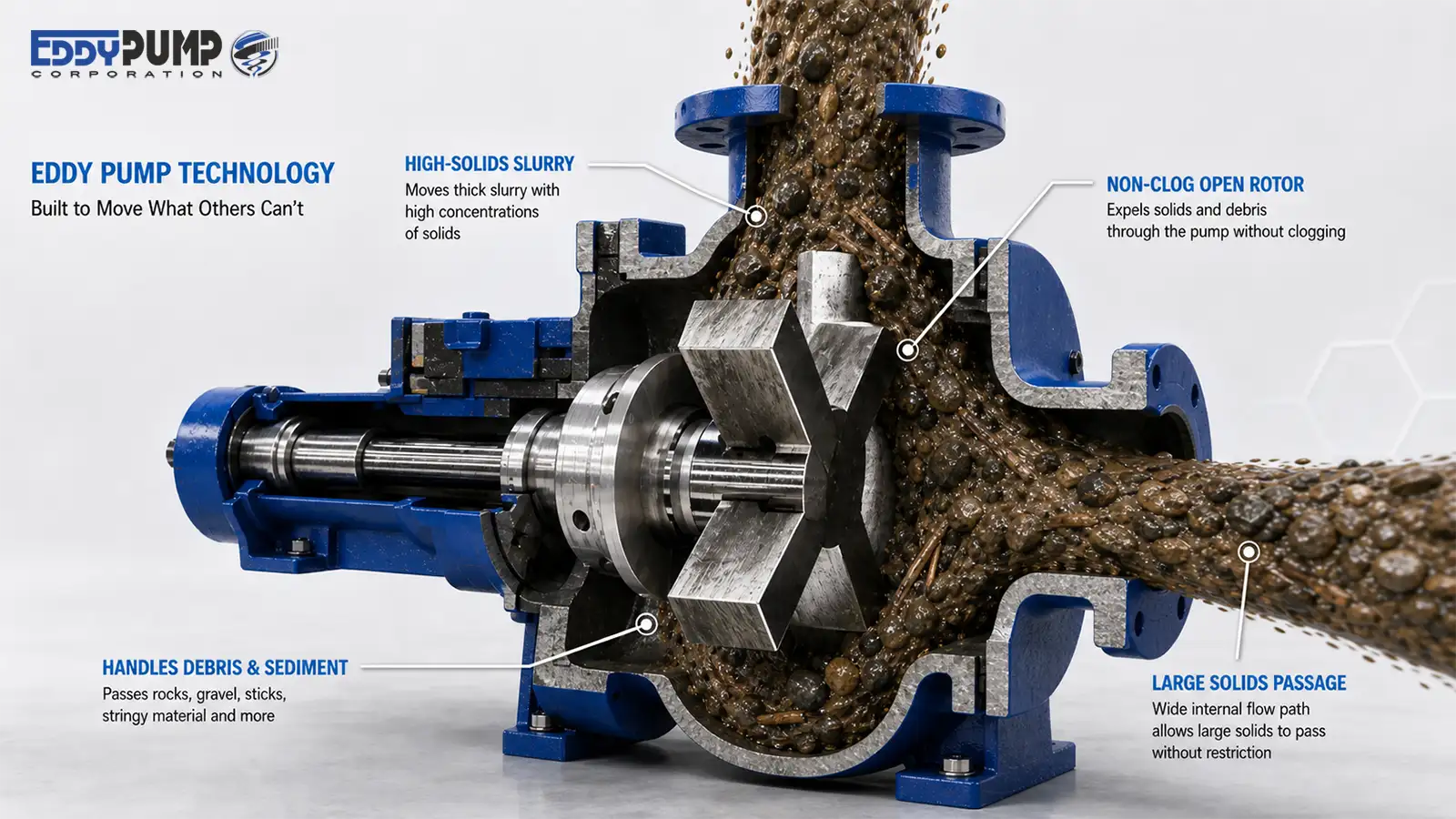
Why EDDY Pump Is Built for High-Solids Placement
Controlled placement depends on consistent slurry flow. Conventional pumps can struggle with abrasive solids, high solids concentration, vegetation, debris, and changing material conditions. EDDY Pump technology is designed for demanding slurry applications where clogging, wear, and inconsistent flow can disrupt production.
- Non-clog open rotor design
- Large solids passage for debris-laden slurry applications
- Designed to handle high-solids pumping applications
- Reduced clogging compared with conventional centrifugal pump designs
- Abrasion-resistant pump options for harsh dredging environments
- Consistent slurry movement to support more predictable placement
Applications for Automated Thin-Layer Placement

Environmental Restoration
- Wetland restoration
- Marsh nourishment
- Coastal resilience projects
- Living shoreline support
- Island creation and habitat restoration

Dredged Material Beneficial Use
- Reuse of dredged sand and sediment
- Navigation channel maintenance material placement
- Sediment distribution across shallow-water sites
- Hopper barge unloading and controlled placement

Contaminated Sediment & Capping
- Thin-layer capping
- Clean material placement
- Environmental remediation
- Sediment isolation support
- Post-dredge cap placement

Mining & Industrial Solids Management
- Mine tailings placement
- Industrial pond cleanouts
- Sludge and slurry distribution
- Ash pond or process pond management
- Settling basin maintenance

Construction & Shoreline Projects
- Beach nourishment
- Erosion-control sediment placement
- Canal and lagoon restoration
- Low-access site material distribution
Traditional Placement vs. EDDY Automated TLP

Traditional Placement Methods Can Be
- Operator-dependent
- Difficult to document
- Prone to mounding or uneven coverage
- Limited by pump clogging or solids-handling issues
- More likely to require rework when lift thickness varies

The EDDY Pump Automated TLP System Is Designed For
- Engineered placement control
- Repeatable lift-thickness targeting
- Automated movement and placement sequencing
- High-solids slurry handling
- Water-based and land-based project flexibility
- Lower rework risk and better project documentation
Get a Custom TLP System Design
Helpful Project Details Include:
- Material type: sand, silt, sediment, tailings, sludge, organics, or mixed slurry
- Target lift thickness or placement depth
- Placement footprint and site access
- Water-based, land-based, or shallow-water application
- Required pumping distance and elevation change
- Solids concentration and debris conditions
- Production target or project timeline
- Environmental, permitting, or documentation requirements
Every placement project is different. EDDY Pump can help configure an automated TLP system based on your material, site conditions, production goals, and required placement method.
Frequently Asked Questions
What is thin-layer placement?
Thin-layer placement is the controlled placement of dredged sediment, sand, or clean material in thin lifts to achieve a target elevation, thickness, or coverage area. It is commonly used in wetland restoration, marsh nourishment, beneficial use of dredged material, and sediment management projects.
What is an automated thin-layer placement system?
An automated thin-layer placement system is equipment that pumps and distributes dredged slurry, sand, sediment, tailings, or capping material in controlled layer thicknesses across a defined placement area. The system uses pumping, positioning, monitoring, and controls to improve placement consistency.
How is the EDDY Pump Automated TLP System different from traditional dredging?
Traditional dredging systems often focus on excavation and transport. The EDDY Pump Automated TLP System focuses on what happens after the material is pumped: controlled placement, thickness monitoring, repeatable distribution, and reduced rework.
Can the system be used on both water and land?
Yes. The system can be configured as a barge-based system for water applications or as a low-ground-pressure tracked system for land, marsh, pond, and shallow-water applications.
What materials can the system place?
The system can be designed for dredged sediment, sand, silt, slurry, mine tailings, organics, contaminated sediment cover material, and other high-solids materials depending on site conditions and project requirements.
How does automated thickness control help reduce project cost?
Automated thickness control helps reduce overplacement, underplacement, mounding, missed zones, and manual guesswork. This can reduce rework, improve placement accuracy, and help project teams meet engineered lift-thickness requirements more efficiently.
Is the EDDY Pump Automated TLP System patent-pending?
Yes. The EDDY Pump Automated TLP System is a patent-pending system from EDDY Pump designed for controlled slurry and sediment placement.
What industries can use automated TLP?
Automated TLP can support coastal restoration, wetlands restoration, beneficial use dredging, contaminated sediment remediation, mine tailings management, industrial pond cleanouts, hopper barge unloading, shoreline work, and environmental construction projects.