
INDUSTRIAL PUMPING APPLICATIONS
Slurry Pump & Dredging
Solutions by Industry
Start with the material. Match the complete system.
EDDY Pump helps move the solids that complicate industrial operations: abrasive slurry, dense sludge, fibrous waste, and settled sediment. Compare applications across mining, dredging, wastewater, and process industries to identify a practical equipment starting point.
FIND YOUR APPLICATION
Industries we serve
Start with your industry, then review the material, operating conditions, and equipment options on its application page.

SEDIMENT REMOVAL
Dredging & marine construction
Remove deposited sediment from ports, channels, lakes, and construction work areas. Match the dredge configuration to working depth, access, and the discharge route.
- Harbor and channel maintenance
- Construction excavation and remediation
MINERAL PROCESSING
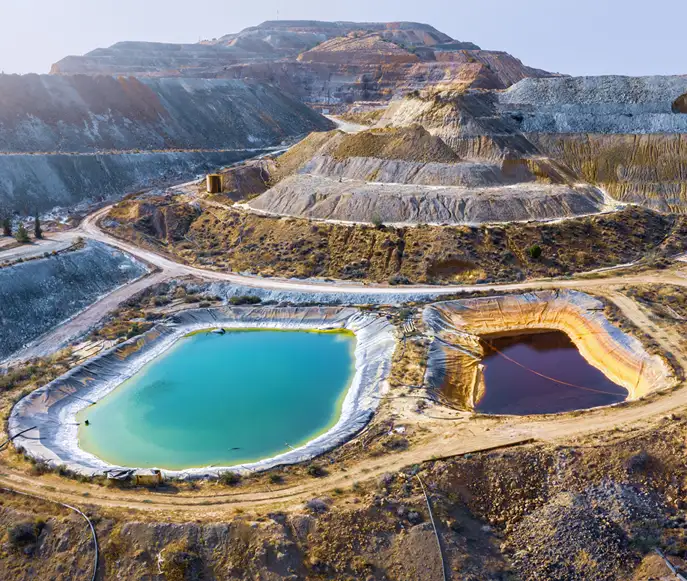
Mining & tailings
Move mineral slurry, clean mine sumps, and recover settled tailings. Abrasion, solids concentration, and pond geometry guide the pump and deployment method.
- Tailings ponds and mineral recovery
- Mine sumps and process slurry

ABRASIVE SOLIDS
Sand & aggregate
Transfer sand and gravel as a water-based slurry from the extraction area toward processing. Review particle size, feed consistency, and the receiving plant’s capacity.
- Pit-to-plant slurry transfer
- Wash-plant and settling-pond cleanout
MUNICIPAL & INDUSTRIAL
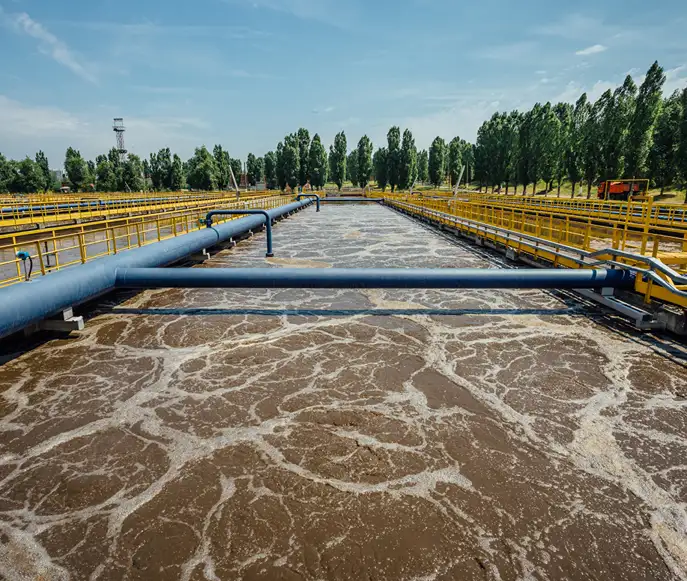
Sewage & wastewater
Handle sludge, grit, and solids-bearing wastewater in municipal and industrial systems. Review fibrous debris, access for maintenance, and downstream pipe restrictions.
- Sludge and grit handling
- Treatment basins, sumps, and lagoons

SOLIDS TRANSFER
Oil & gas
Transfer drilling mud, wet cuttings, and compatible tank-bottom slurry. Evaluate the actual fluid, solids, viscosity, and operating environment before configuring the equipment.
- Mud and wet-cuttings transfer
- Pit cleanout and tank-bottom removal

ASH SLURRY
Fly ash & power generation
Move abrasive ash slurry from ponds, sumps, and basins. Plan sediment removal together with liner protection, discharge routing, and the material receiving process.
- Ash pond and basin cleanout
- Fly ash transfer and remediation
WATERWAY MAINTENANCE
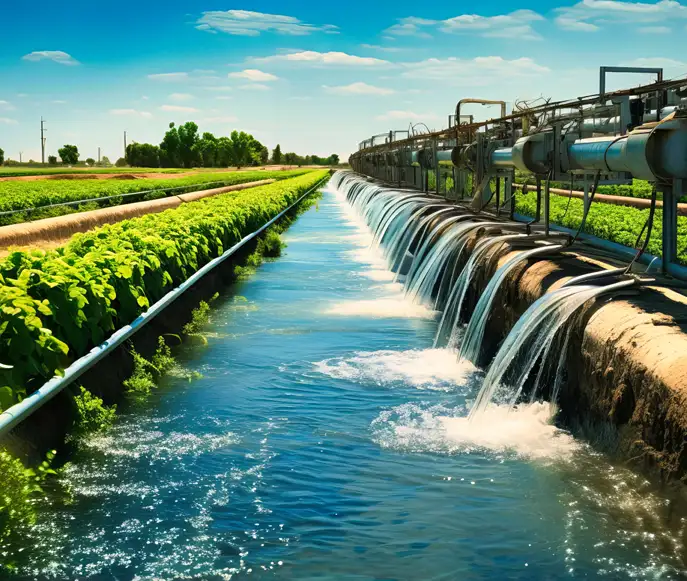
Agriculture & canals
Remove silt, manure slurry, and accumulated organic solids from agricultural waterways and ponds. Select the deployment around bank access, depth, and available power.
- Canal desilting and runoff ponds
- Dairy lagoon and manure handling

FIBROUS SLURRY
Paper & pulp
Transfer pulp slurry, wood-chip mixtures, and mill sludge. Fiber characteristics, process chemistry, temperature, and operating consistency all influence the system selection.
- Pulp transfer and digester duties
- Mill sludge and process residuals

CHEMISTRY & SOLIDS
Chemical processing
Handle solids-bearing process waste, abrasive crystals, and settled sludge. Wet-end materials and seals must be matched to the fluid chemistry, concentration, and temperature.
- Process sumps and tank bottoms
- Precipitates and neutralization sludge

BULK MATERIAL TRANSFER
Barge loading & unloading
Transfer suitable bulk material as slurry between a barge and a receiving system. Review hold access, material conditioning, water availability, and shore-side processing capacity.
- Slurry loading and unloading
- Sand, sediment, and compatible solids

PLANT OPERATIONS
Industrial process pumping
Move abrasive process slurry and remove accumulated solids from plant sumps. Define the required operating point and how the pump connects to the production process.
- Mill scale and foundry residuals
- Process transfer and sump cleanout

COASTAL MATERIAL HANDLING
Sargassum removal
Move collected sargassum and water through a planned transfer system. Match collection, intake conditioning, and discharge handling to the material and shoreline access.
- Collected seaweed transfer
- Coastal cleanup support
Find Your Industry or Application
Search by industry, material or task, or browse the groups below.
57 industry and application entries
Mining & Mineral Processing
Tailings, mine sumps, mineral recovery and abrasive process slurry.
Marine, Dredging & Bulk Transfer
Sediment removal, coastal work, barge transfer and vessel applications.
Energy, Oil & Gas
Drilling solids, oil sands, refinery slurry, ash and power-generation waste streams.
Water, Wastewater & Agriculture
Sludge, grit, lagoons, irrigation sediment and canal maintenance.
Pulp, Paper & Wood Products
Fibrous stock, mill sludge, rejects and recycling slurry.
Chemical, Manufacturing & Recycling
Process slurry, abrasive or corrosive solids, manufacturing sumps and recycling waste streams.
No matching industry found. Try another material or task, or talk to an application specialist.
A CLOSER APPLICATION MATCH
Specialized pumping duties
01 / SPECIALIST APPLICATION
Drilling mud & wet cuttings
Review viscosity, solids loading, recirculation needs, and transfer distance. This is a material-transfer duty, with equipment selected for the actual fluid and site.
02 / SPECIALIST APPLICATION
Oil sands & fine tailings
Consider abrasive sand, fine sediment, and variable-density mixtures. Pond access and material behavior help determine how the pump reaches and feeds the slurry.
03 / SPECIALIST APPLICATION
Frac sand transfer
Move proppant slurry during mining, processing, and blending. Transfer pumps serve a different duty from the high-pressure pumps used for downhole injection.
04 / SPECIALIST APPLICATION
Lagoon dredging
Remove settled sludge to recover useful lagoon capacity. Review liner conditions, depth, access, and the receiving or dewatering process before choosing a dredging method.
THE MATERIAL SETS THE DUTY
What do you need to move?
Similar pumping challenges appear in very different industries. Use the material’s behavior to narrow the equipment review.
Abrasive solids
Sand, grit, tailings, and ash
Particle size, hardness, and concentration affect wear and the usable operating range. Match the wet end and pipeline to the material.
Thick sludge
Tank bottoms, mud, and settled waste
Density and viscosity change how material enters the pump and moves through the line. Establish pumpability and the intended solids concentration.
Fibrous material
Pulp, organic matter, and wastewater
Long fibers and mixed debris can bridge at restrictions. Review the intake, solids passage, any conditioning option, and the downstream piping.
Settled sediment
Ponds, canals, basins, and waterways
Consolidated material may need agitation at the intake. Match excavation or conditioning to depth, access, and the required removal accuracy.
APPLICATION COMPARISON
Match the duty to a starting configuration
Use this guide to structure an equipment review. Final selection depends on the measured material properties, operating point, and complete installation.
On smaller screens, scroll the table horizontally.
| Site or duty | Typical material | Configuration to evaluate | Selection check |
|---|---|---|---|
| Pond or basin sediment | Tailings, ash, lagoon sludge | Submersible pump or dredging system | Depth, settled layer, access, and liner conditions |
| Reachable bank or pit | Sand, gravel, compacted sediment | Excavator pump attachment | Carrier reach, hydraulic supply, and intake conditioning |
| Continuous process feed | Mineral slurry, pulp, process solids | Flooded suction configuration | Feed level, slurry duty point, and materials compatibility |
| Mobile transfer duty | Mud, sump slurry, tank-bottom mixtures | Self-priming configuration | Suction lift, hose arrangement, fluid properties, and priming |
| Deep or restricted access | Submerged sediment and localized deposits | Cable-deployed pump | Lifting plan, positioning, hose support, and retrieval |
| Long discharge route | Dredged or process slurry | Primary pump with booster review | System head, friction, pipe rating, and duty point |
| Corrosive solids-bearing stream | Chemical sludge or abrasive precipitates | Compatible slurry-pump configuration | Chemistry, concentration, temperature, materials, and seals |

WHY EDDY PUMP
One system, from intake to discharge.
01 / SOLIDS-HANDLING PUMP TECHNOLOGY
The EDDY Pump recessed-rotor design is built for demanding slurry duties. Evaluate it where abrasive material, dense sludge, or mixed solids complicate the transfer.
02 / DEPLOYMENT AROUND THE WORK AREA
Submersible, self-priming, excavator-mounted, floating, and cable-deployed arrangements provide different ways to reach and feed the pump.
03 / A COMPLETE SYSTEM REVIEW
Consider the intake, pump, drive, discharge line, and receiving process together. Application data helps align the equipment with the actual operating conditions.
EQUIPMENT OPTIONS
Different ways to reach the material.
Choose the deployment method around feed conditions, access, and the operating point. Each configuration solves a different part of the application.
01 / CONFIGURATION
Submersible slurry pumps
Position the pump in the material for sumps, ponds, and submerged solids removal. Plan the power supply, lifting arrangement, and service access.
02 / CONFIGURATION
Flooded suction pumps
Use an available positive feed where the liquid level supplies the inlet. Suitable process duties still require review of slurry properties and the operating point.
03 / CONFIGURATION
Self-priming pumps
Keep the pump accessible above the liquid for appropriate mobile and fixed transfer duties. Suction lift, hose losses, and fluid behavior set practical limits.
04 / CONFIGURATION
Excavator pump attachments
Place and control the intake with an excavator. Check carrier compatibility, reach, hydraulic flow and pressure, and any cutterhead or jetting requirement.
05 / CONFIGURATION
Floating & cable-deployed systems
Reach material beyond the bank or operate across a pond or basin. Compare positioning, working depth, site access, and retrieval arrangements.
06 / CONFIGURATION
Booster pumps
Add pressure along a suitable discharge system when the hydraulic review supports it. Booster requirements come from the complete system, including slurry and pipe conditions.
01
Material & solids
Identify the fluid and solids, typical and maximum particle size, solids concentration by weight or volume, density, viscosity, temperature, and chemistry. Include debris and fiber content where relevant.
02
Production & operating point
State the required flow or solids production and its units. Distinguish slurry volume from dry-solids output, then describe run time, operating window, and expected variation in the feed.
03
Site, access & deployment
Record operating depth, available equipment, reach, lifting access, liner conditions, and power. The pump must be positioned, operated, recovered, and serviced within the actual site constraints.
04
Pipeline & receiving process
Map the discharge route, pipe diameter, length, elevation changes, fittings, and destination. Match pumping capacity to the receiving, separation, or dewatering process rather than treating it in isolation.
TECHNICAL RESOURCES
Build a better application brief.
Pump selection fundamentals
Understand the material, flow, and head information behind a slurry-pump selection.
Calculators & engineering tools
Review flow, pipe velocity, head, and other system inputs while preparing application data.
Application experience
Read project examples to understand how equipment has been applied in different operating conditions.
FREQUENTLY ASKED QUESTIONS
Industrial pumping FAQs
Practical answers about application fit, deployment, and system selection.
Which industries use slurry pumps and dredging equipment?
Mining, marine construction, sand and aggregate, wastewater treatment, oil and gas, power generation, agriculture, pulp and paper, and chemical processing all have solids-handling duties. The industry identifies the context; the material, operating point, and site conditions determine the equipment.
How do I choose between a slurry pump and a dredging system?
A slurry pump moves a mixture through the discharge line. A dredging system also positions and feeds the pump as sediment is removed. A process tank may need a fixed pump, while a pond or waterway may need an excavator attachment, floating system, or cable-deployed arrangement.
Can one pump configuration serve different industries?
The same pump family may be used across several industries, but the complete configuration still needs to match the duty. Wet-end materials, seals, drive, intake, solids passage, and pipeline conditions can differ substantially between applications.
Can these pumps move dry sand or dry bulk material?
These applications require a pumpable mixture with a liquid carrier. Dry sand, gravel, or other bulk solids must be evaluated with an appropriate material-handling and slurry-conditioning process before entering a slurry pump.
What determines the pump size and motor power?
Selection depends on the required flow, total dynamic head, slurry density and behavior, solids characteristics, and operating conditions. Pipe size, route, and receiving requirements matter alongside the pump. Production targets alone do not establish the required motor power.
Are chemical and corrosive applications automatically compatible?
No. Review the complete chemical composition, concentration, temperature, and solids together with the wet-end materials and seals. A pump that handles abrasive solids is not automatically suitable for every corrosive liquid or chemical process.
When does a slurry pipeline need a booster pump?
A booster may be needed when the primary pump cannot provide the pressure required at the intended operating flow. Evaluate static elevation, pipeline friction, slurry properties, and pipe pressure limits. Distance by itself does not establish the number or location of boosters.
How are lined ponds and sensitive sediment handled?
Liner condition, allowable contact, removal depth, positioning, and the material receiving plan must be reviewed together. Suitable deployment and intake options can then be evaluated. Environmental objectives and operating requirements remain specific to the project.
LET’S PUT YOUR PROJECT IN MOTION
Tough material?
Bring it to EDDY.
Tell us what you’re pumping, where it needs to go, and what your
operation needs to achieve.
Talk it through
with our team.
Equipment selection, project planning, or an existing pump—we’ll help you find the right next step.
CALL SALES & ENGINEERING
+1 619-404-1916
EMAIL YOUR PROJECT DETAILS
info@eddypump.com