
21 CALCULATORS / 3 ANALYSES & GUIDES
Calculators and Engineering Tools
Practical engineering tools and analyses to help you size slurry and dredging systems and keep operating costs under control. Use our interactive calculators to work through the numbers, then turn to our cost and lifecycle analyses to make decisions based on system behavior, not assumptions — so you can evaluate performance, reduce operational costs, and improve efficiency across applications.
Find the calculation you need
Compare the tool summaries, then open a calculator. Expand a card to see its best use, required inputs and outputs before you start.
01 / FLOW & HEAD
Total Dynamic Head (TDH) Calculator
Estimate the head your pump needs to overcome, from flow rate and pipe run to elevation change and fittings, in US or metric units. It breaks out static lift, pipe friction, fitting losses, and velocity head, with an optional suction-line calculation, so you get a defensible number in seconds instead of waiting on a quote.
Inputs, outputs & best fit
02 / FLOW & HEAD
Flow Rate & Pipe Velocity Calculator
Calculate flow rate, average pipe velocity, or the actual inside diameter needed for a selected velocity.
Inputs, outputs & best fit
03 / FLOW & HEAD
Pipe Friction Loss & Pressure Drop Calculator
Estimate straight-pipe and fitting losses with Darcy–Weisbach, including head loss, pressure drop, and flow regime.
Inputs, outputs & best fit
04 / VOLUME & WEIGHT
Pipe Volume Calculator
Calculate the internal capacity of a full circular pipe from its actual inside diameter and length.
Inputs, outputs & best fit
05 / FLOW & HEAD
Pressure Head Converter
Convert pressure to feet or meters of liquid head—or head back to pressure—while accounting for liquid specific gravity.
Inputs, outputs & best fit
06 / SLURRY & PRODUCTION
Slurry Density & Solids Concentration Calculator
Convert solids concentration by mass or volume into usable slurry density, specific gravity, and the equivalent concentration basis.
Inputs, outputs & best fit
07 / VOLUME & WEIGHT
Tank Volume & Pump Down Time Calculator
Find current volume, total tank capacity, and volume between liquid levels; estimate pump-down time using discharge flow and continuous inflow.
Inputs, outputs & best fit
08 / PUMP PERFORMANCE
Pump Power & Electric Motor Load Calculator
Calculate pump power from hydraulic output through motor electrical input.
Inputs, outputs & best fit
Electricity to Liquid
Ph = ρgQH
Pshaft = Ph ÷ ηpump
Pmotor = Pshaft ÷ ηdrive
Pelectric = Pmotor ÷ ηmotor
09 / PUMP PERFORMANCE
NPSH Available Calculator & Suction Margin
Calculate NPSH available and compare it with pump NPSH required to review cavitation margin.
Inputs, outputs & best fit
Adequate margin helps reduce cavitation risk. Check results across the full operating range, not only at one duty point.
10 / PUMP PERFORMANCE
Pump Affinity Laws Calculator
Compare a known pump operating point with the corresponding point at a new rotational speed.
Inputs, outputs & best fit
Q₂ = Q₁ × r
H₂ = H₁ × r²
P₂ = P₁ × r³
This estimates a corresponding point on a scaled pump curve; actual operation depends on the system curve.
11 / HYDRAULIC EQUIPMENT
Hydraulic Motor Torque & Speed Calculator
Estimate hydraulic motor running speed, shaft torque, power output, and estimated motor loss.
Inputs, outputs & best fit
T = ΔpDηm/(2π)
Pin = ΔpQ
Pout = Pin × ηv × ηm
Flow sets speed and pressure differential sets torque. Confirm manufacturer limits before applying the estimate.
12 / VOLUME & WEIGHT
Pipe Weight Calculator
Estimate empty and filled pipe weight for steel, HDPE, PVC and other materials.
Inputs, outputs & best fit
13 / FLOW & HEAD
Open Channel Flow Calculator
Calculate open-channel flow or normal depth using Manning’s equation for three channel shapes.
Inputs, outputs & best fit
14 / HYDRAULIC EQUIPMENT
Nozzle Flow Rate Calculator
Calculate nozzle flow, required pressure or bore size from the liquid duty.
Inputs, outputs & best fit
15 / HYDRAULIC EQUIPMENT
Hydraulic Cylinder Calculator
Estimate cylinder force, movement speed and cycle time in both directions.
Inputs, outputs & best fit
16 / HYDRAULIC EQUIPMENT
Valve Cv Calculator
Find liquid valve Cv, flow or pressure drop and convert between Cv and Kv.
Inputs, outputs & best fit
17 / PUMP PERFORMANCE
Pump Operating Point Calculator
Find the intersection of a supplied pump curve and a calculated system curve.
Inputs, outputs & best fit
18 / FLUID PROPERTIES
Viscosity Converter
Convert dynamic and kinematic viscosity using density at the same fluid condition.
Inputs, outputs & best fit
19 / FLOW & HEAD
Water Hammer Calculator
Estimate the pressure-rise benchmark for a rapid reduction in liquid velocity.
Inputs, outputs & best fit
20 / SLURRY & PRODUCTION
Slurry Dilution Calculator
Calculate the solids-free liquid addition needed to reach a lower slurry concentration.
Inputs, outputs & best fit
21 / SLURRY & PRODUCTION
Dredging Production Calculator
Estimate dry solids throughput, in-situ production and working days for a target quantity.
Inputs, outputs & best fit
HOW TO USE THESE TOOLS
Suggested order for sizing a pumping system
The calculators work best as a sequence, because each result feeds the next. This is a common order for a first-pass duty.
1Material→2Flow & pipe→3Losses→4Duty head→5Suction→6Drive
01
Describe the material
Turn a solids percentage into a mixture density and specific gravity.
YOU GET
Specific gravity Mixture density
↳ Feeds steps 4 & 6
CALCULATOR
02
Set the flow and pipe
Check velocity for your actual inside diameter, and the fill volume of the line.
YOU GET
Velocity Line volume
↳ Feeds step 3
CALCULATORS
03
Estimate the losses
Get friction and fitting losses for each pipe section.
YOU GET
Friction head Pressure drop
↳ Feeds step 4
CALCULATOR
04
Build the duty head
Add static lift and velocity head, and convert any pressure requirement into head.
YOU GET
Total dynamic head
↳ Feeds steps 5 & 6
CALCULATORS
05
Check suction
Compare the available suction margin with the pump's NPSH required.
YOU GET
NPSH available Cavitation margin
↳ Compare with the pump's NPSHr
CALCULATOR
06
Size the drive
Find shaft and electrical power, test a speed change, or match a hydraulic motor.
YOU GET
Shaft power Motor size Speed
↳ Completes the first-pass duty
CALCULATORS
These are clear-liquid, first-pass estimates. Confirm your duty point, slurry correction and NPSH with EDDY Pump engineering before purchasing or installing equipment.
COST / LIFECYCLE / PIPELINE REFERENCE
Engineering Analyses & Guides
In-depth analyses and reference guides — not calculators — to inform cost, lifecycle, and pipeline decisions.
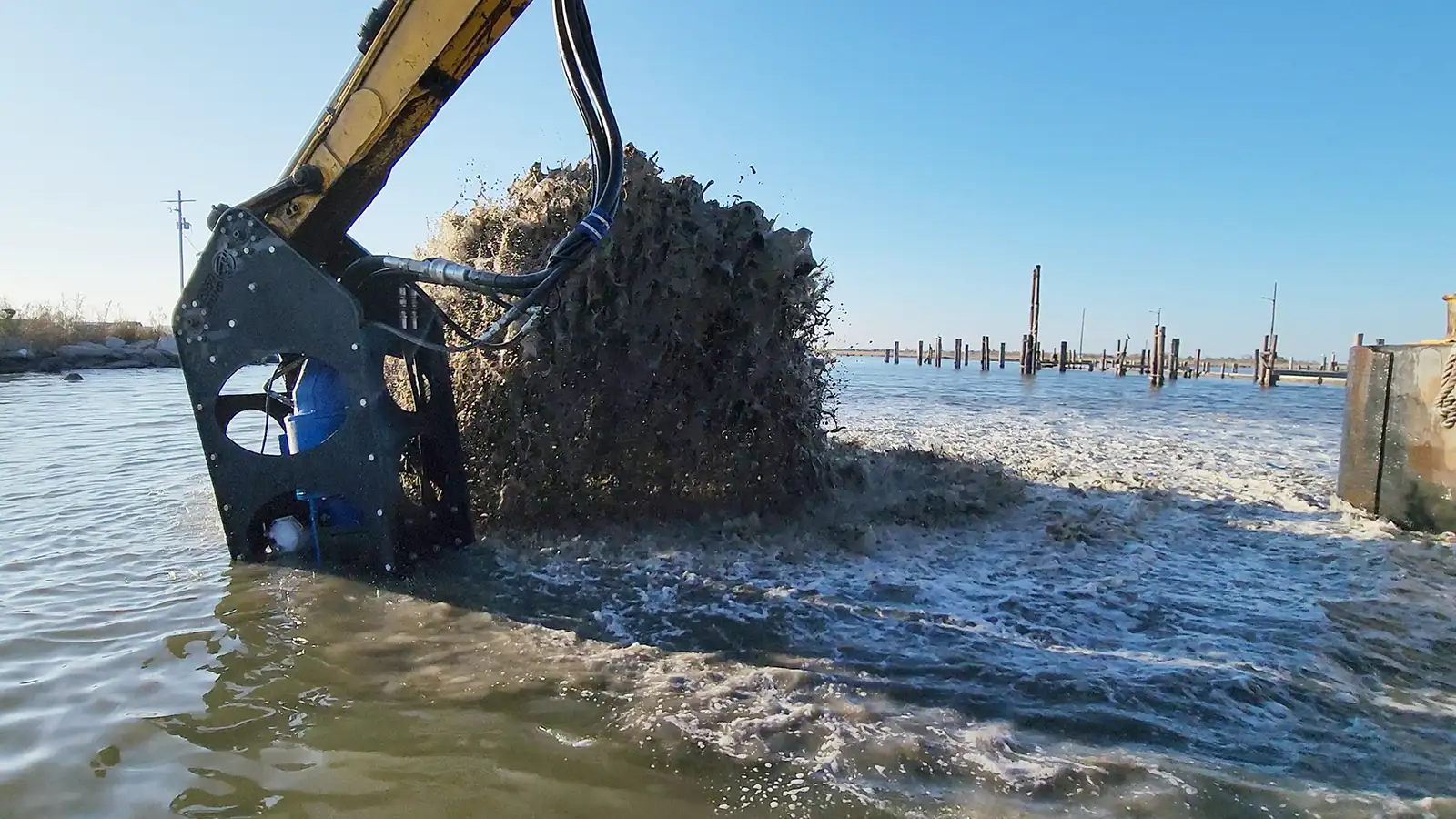
Dredge Production Cost Analysis
Evaluate the cost of dredging operations based on production rates, material handling, and system efficiency. Estimate operational expenses and identify cost drivers across dredging projects.
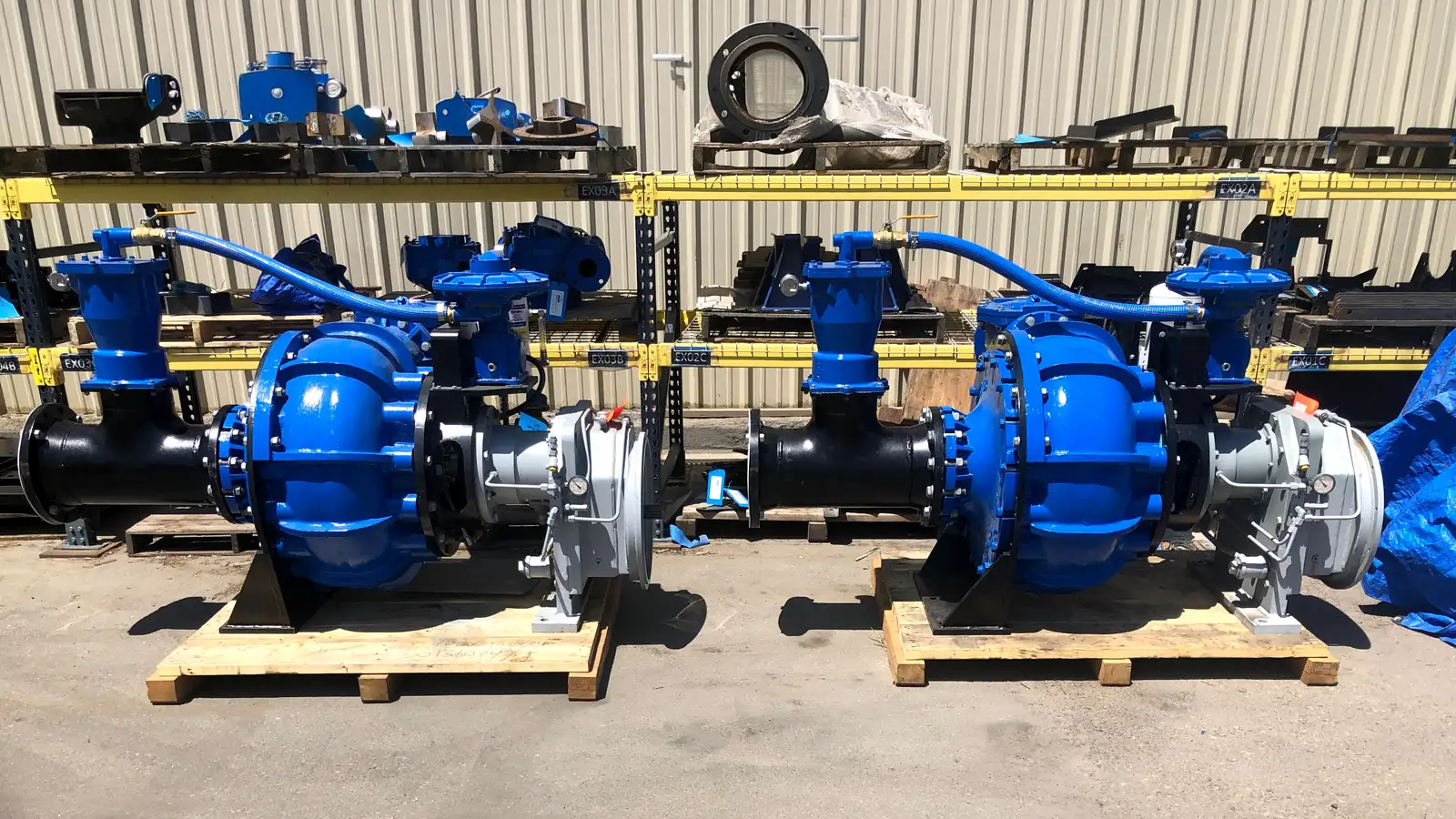
Pump Total Cost of Ownership Analysis
Understand the full lifecycle cost of a pump system, including energy usage, maintenance, and wear — a clearer picture of long-term operating costs beyond initial equipment investment.
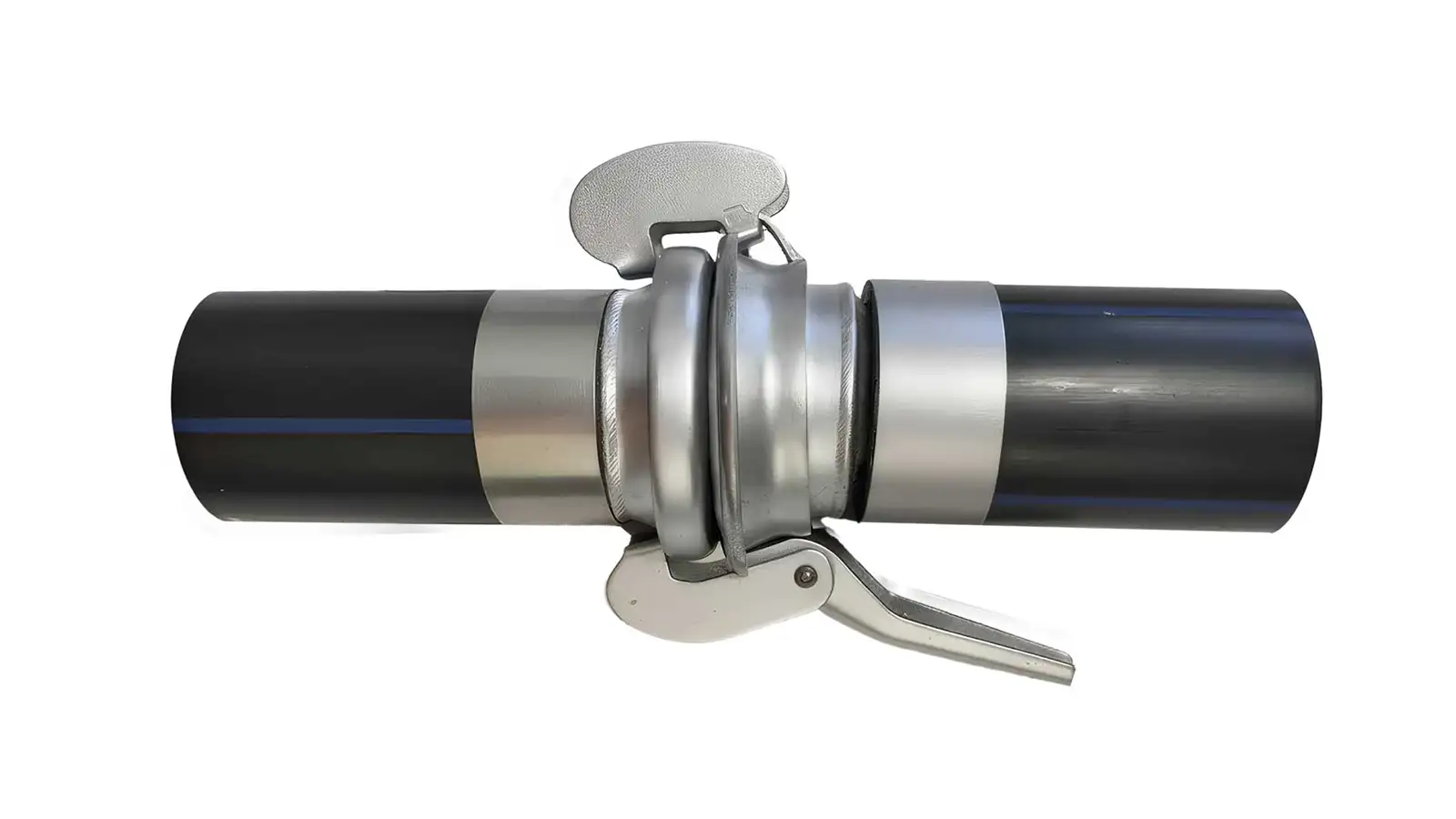
HDPE Pipe & Bauer Fittings Guide
See how Bauer fittings are used with HDPE pipelines for faster connection and disconnection in industrial systems — guidance for pipeline setup where flexibility and installation efficiency are critical.
CONNECT THE CALCULATIONS
Start with the question. Follow the quantities.
These three routes show how to use related tools together while keeping their assumptions visible.
01 / DEFINE A PIPELINE DUTY
Build the duty before comparing pumps.
Flow and velocity establish the flow basis. Add pipe friction and elevation through the TDH calculation. Then compare the supplied pump curve with the system operating point.
Carry the same flow, actual inside diameter and fluid basis through each calculation.
02 / PLAN A SOLIDS TARGET
Separate dry solids from added water.
Slurry density makes the concentration basis explicit. Use dilution to test water addition and dredging production to translate productive pumping into dry solids and in-situ output.
Mixture volume, true-particle volume and in-situ deposit volume are different quantities.
03 / CHECK THE OPERATING CONDITIONS
Look beyond a single head-and-flow result.
NPSH available reviews the suction side. Pump power estimates the power chain. The water hammer tool gives a stated rapid-change benchmark for a velocity reduction.
A steady operating point does not describe every suction, starting, stopping or transient condition.
BEFORE YOU CALCULATE
Better inputs make a useful comparison.
A quick estimate becomes easier to review when the dimensions, material data and operating conditions have a clear source.
Record the physical basis
Use actual pipe inside diameter, measured or specified lengths, and the relevant elevation change. State whether pressure is gauge or absolute where the calculator asks for that distinction.
For slurry, record whether concentration is by mass or volume. Keep particle density, carrier-liquid density and dry bulk density separate; they serve different parts of a material balance.
Keep the operating assumptions
Retain the pump curve, speed, fluid condition, efficiency assumptions and source of the flow estimate. For production planning, distinguish productive pumping time from scheduled time.
Where a tool provides a report, keep it with the project inputs. For a pump review, add the material description, particle information, suction conditions and full discharge route.
PRACTICAL QUESTIONS
Frequently Asked Questions
Who are these calculators and analyses for?
Engineers, project managers, and operators specifying or running slurry and dredging systems. They're built for quick, defensible scoping — whether you're planning a new installation, comparing options, or getting ready to talk to a pump specialist.
Do I need an account, and is there a cost?
No. Every calculator, analysis, and guide on this page is free to use, with no login or download required.
Do these tools replace a formal pump selection?
No. They're designed for fast, first-pass estimates and planning, not final selection. Confirm your duty point, slurry correction, and NPSH with EDDY Pump engineering before purchasing or installing equipment.
Can I use them for high-solids slurry?
Use the calculator whose model matches the question. Slurry density, dilution and production tools use solids concentration and material balances; several pipe-loss and liquid-flow tools use stated Newtonian-liquid assumptions. A clear-liquid loss calculation does not establish slurry transport performance. EDDY Pump equipment is designed for high-solids service, but the suitable concentration and pump duty depend on the material and system. Request a custom pump curve and engineering review for the application.
Which tool should I use first?
For a pipeline duty, begin with flow and actual pipe inside diameter, then estimate friction and total dynamic head. For a solids-production target, establish the concentration basis and densities first. The workflow section above links the relevant tools in those sequences.
Can I use US customary and metric units?
The calculators provide unit controls appropriate to their inputs and outputs. Check each displayed unit before entering a value. Where mass output is offered, distinguish metric tonnes from US short tons; do not treat them as the same quantity.
Can I use one result for every operating condition?
No. Flow, liquid level, material concentration, temperature, pump speed and the discharge route can change during operation. Calculate the relevant scenarios separately and keep their inputs with each result. A single calculated point does not describe the complete operating range.
Are the analyses and guides interactive calculators?
No. The three resources in the Engineering Analyses & Guides section are reading resources covering dredging cost, pump lifecycle cost and HDPE/Bauer connections. The calculator cards link to the interactive engineering tools.