

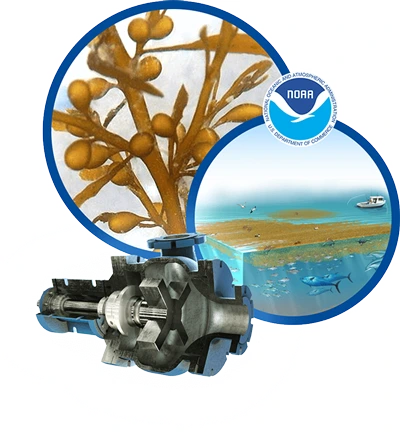
Slurry pumps
What Is Sargassum?
- Sargassum is a free-forming brown algae or seaweed represented by over 300 different species.
- It never attaches to the seafloor and can bloom into floating sargassum rafts that stretch for miles.
- Floating root networks provides habitat, food, refuge, and breeding grounds for fish, sea turtles, marine birds, crabs, shrimp, and other wildlife.
- Sargassum can be processed into many products such as biofuels, clothing and textiles, paper, fertilizers, construction materials, plastics, and more.
- Sargassum seaweed removal is an ongoing endeavor in several areas around the Caribbean and costal Mexico areas to control the rapid spread.

Death of Coral Reefs
Why Sargassum Accumulation Is a Problem
Aside from the loss of billions in tourism revenue, Sargassum can prevent sunlight from creating photosynthesis. This makes it possible for the local extinction of coral species. At-risk first is the Mexican Caribbean then later it could be the Mesoamerican Reef System (MAR).
Sargassum season is typically April – August
What Are the Seasonal Effects of Sargassum?
QUINTNA ROO, MEXICO
The Mexican NAVY has been in charge of controlling the unprecedented sargassum seaweed blooms since 2019.
In 2021 they removed 1,483 tonnes from the sea, a 173% increase compared to 2019, but still only a very small fraction of the total quantity of the weed that reaches the shore. This means that the majority of the removal work happens on shore, and is being done by manual labor.

Death of Coral Reefs
Is Sargassum Dangerous?
Decomposing sargassum releases H2S, Hydrogen Sulfide Gas, a colourless, poisonous gas with an unpleasant rotten-egg odor. This colorless gas can have lasting effects after prolonged exposure that can range from mild headaches or eye and skin irritation, to very serious respiratory symtoms.
Sargassum Removal Pump Systems
How to Remove Sargassum
- 4-Inch Self-Prime Pump
(118HP) with a Diesel motor Optional trailer tow or Skid - Intake Slurry Hose
(15-150 feet) - Discharge Slurry Hose
(Up to 1,000 feet recommended) - Floating Skimmer or Handle (optional)
- Hose Floats (optional)
- Custom Guide Rod (optional)


Death of Coral Reefs
Hydraulic Sargassum Removal Attachment (HSRA)
The EDDY Pump Hydraulic Sargassum Removal Attachment (HSRA) is a groundbreaking patented solution for efficiently managing sargassum seaweed in coastal areas. Designed to revolutionize sargassum cleanup operations, the HSRA can be seamlessly attached to small workboats or excavators, empowering you to combat the sargassum influx easily.


Sargassum Removal Pumps for Collection and Transfer
Sargassum removal pumps transfer collected seaweed with a liquid carrier to a receiving point. Their role is one part of a larger operation: gathering the material, feeding it into the system, separating excess water, and moving the recovered biomass onward. Coastal seaweed management works best when those steps are planned together. A pump with ample capacity can still spend much of a shift waiting for material at the intake or space at the discharge end.
Start With the Sargassum Collection Location
Nearshore sargassum removal presents different conditions from handling seaweed already gathered on land. Floating material moves with wind and current, while stranded accumulations can contain sand, litter, and compacted seaweed. Establish where collection will occur and describe the material as it will actually reach the intake.
Floating sargassum also provides habitat for marine life. The collection area and method need to account for local environmental requirements and wildlife considerations. Define the intended nuisance accumulation rather than treating all floating seaweed as waste. This gives the equipment team a more specific operating boundary and helps distinguish biomass collection from seabed sediment removal.
Keep Sargassum Feeding Consistently Into the Pump Intake
Sargassum collection is not simply a matter of placing a hose beside a floating mat. The arrangement must bring material to the intake at a workable rate while maintaining the liquid supply needed for transfer. Tangled masses, entrained air, and foreign objects should be considered during the application review.
EDDY Pump presents a self-priming system for this duty. Assess pump position, suction lift, hose length, and the proposed collection method as one arrangement. A short trial using representative material can show whether the feed remains consistent and whether adjustments are needed. Document the trial conditions so its results are useful when comparing them with the planned operation.
Plan a Destination for Biomass and Carrier Water
Seaweed transfer ends at a receiving system, not merely at the end of the hose. Sargassum dewatering, temporary storage, and onward transport need enough capacity to match collection. Establish how separated water will be managed and how workers or equipment will access the recovered material.
Do not assume that collected sargassum is ready for composting or another reuse. Its salt content, debris, and potential contaminants need assessment for the intended destination. Agree on acceptance requirements before starting removal. That decision can affect collection practices, the amount of sand tolerated, and whether different batches should be kept separate during handling.
Measure Sargassum Collection Performance Under Real Conditions
Track the quantity of seaweed recovered, pumping time, interruptions, and receiving-area delays. Use a consistent measurement basis: freshly collected wet material and partially dewatered biomass are not directly comparable. Record sea conditions and the amount of foreign material when evaluating a demonstration or daily production.
For an equipment assessment, give EDDY Pump the collection setting, expected accumulation, suction arrangement, discharge route, and available power. Include photographs of the seaweed and the receiving area. The aim is a sargassum removal system that fits the full handling sequence, with a practical way to adjust when the concentration or location of the incoming material changes. Plan hose access and storage around normal site activity so repositioning the collection point does not repeatedly interrupt other work.
Also record the condition of the biomass when it enters the system. Fresh floating seaweed, material collected behind a barrier, and older beach deposits can require different handling arrangements. Keep those categories visible in production records and equipment trials. A system demonstrated on one feed should be reassessed if the proposed work involves another, especially when the amount of sand, litter, or tangled material changes substantially between collection locations.
Sargassum Removal FAQs
How do Sargassum removal pumps work?
They transfer collected seaweed in a liquid mixture through a hose or pipeline to a receiving point. The system needs a practical way to gather and feed the seaweed, plus arrangements for dewatering, storage, and onward handling.
Can the pump remove dry seaweed directly from a beach?
A slurry pumping system needs sufficient liquid to move material. Dry or compacted beach accumulations may need a different collection method or conditioning before transfer. Assess sand and litter content as well as the seaweed itself.
Can a Sargassum pump handle ropes and plastic waste?
Do not assume that it can pass every foreign object. Identify likely debris and review the intake, pump, and hose restrictions. A collection or screening step may be needed to keep unsuitable objects out of the transfer system.
What happens to the water used for seaweed transfer?
It reaches the receiving point with the biomass and must be managed there. The site may need dewatering and water collection or treatment arrangements suited to its operating requirements. Include that capacity when establishing the collection rate.
Can collected Sargassum automatically be used as fertilizer?
No. Suitability depends on the material's properties and the intended use. Assess salt, contaminants, and other acceptance criteria before committing to a reuse route. Pumping or dewatering alone does not establish that the seaweed is suitable for agricultural application.
LET’S PUT YOUR PROJECT IN MOTION
Tough material?
Bring it to EDDY.
Tell us what you’re pumping, where it needs to go, and what your
operation needs to achieve.
Talk it through
with our team.
Equipment selection, project planning, or an existing pump—we’ll help you find the right next step.
CALL SALES & ENGINEERING
+1 619-404-1916
EMAIL YOUR PROJECT DETAILS
info@eddypump.com