

Slurry pumps
Paper and Pulp Pump Applications
- Transporting Wood Chips for Pulp Making
- Pulp Digester Tanks
- Pulp Bleaching Process
- Pulp Slurry Transfer

Paper & Pulp Pumping Problems
Wood chips and paper pulp are difficult materials to pump due to their viscous and abrasive nature. Centrifugal pumps quickly get worn down and lose their tolerances and suction capabilities. This results in significant downtime and costly spare parts.
The papermaking process utilizes several steps that will benefit from the advantages of the EDDY Pump. During the debarking and chipping process, trees are brought in, debarked and broken down into wood chips. The largest supply of wood chips for the papermaking process comes from the recycled cuttings from sawmills. From there, wood chips are fed by conveyor to a large digester tank where they are cooked in an acidic solution to dissolve the lingin and help separate the plant fibers. This process creates what is called wood-free pulp because the lingin has been dissolved. Finally, additives and dyes are added to the pulp solution, depending on the type of paper being manufactured. All of these steps include abrasive and corrosive slurries that need to be pumped from one location to another.
Transporting Wood Chips and Tree Bark is the first step of the papermaking process. Trees are stripped of their bark, and fed to woodchippers to break them down into small pieces that can be more easily turned to pulp.
Additionally, the abrasive nature of woodchips and bark will quickly destroy the impeller of centrifugal pumps and causes pump failures, costly repairs, and spare parts. Our pump has a high tolerance ultra-recessed rotor that withstands the destructive nature of abrasive pulp slurry.
Pulp Digester Tanks are used to break down the woodchips by removing lingin and separating fibers. This process incorporates abrasive slurries in addition to strong acids that are highly corrosive. These materials are difficult to pump and will quickly wear down pumps with critical tolerances.
The EDDY Pump does not require critical tolerances between the rotor and the volute, making the EDDY Pump the perfect solution for abrasive and corrosive paper and pulp applications. Moreover, the EDDY Pump will run continuously with significantly less spare parts needed and saving papermaking and production plants millions in total ownership cost over the life of the pumps.
The Pulp Bleaching Process involves moving the freshly separated pulp to large tanks for the injection of bleach, fillers, dyes and other materials required for the type of paper being produced. This process also removes any residual traces of lingin from the pulp. From here, the pulp is dried for use in the next step of the papermaking process.
Some industries, such as sugar production, produce large quantities of by-products, in this case, bagasse. Bagasse is the term for the leftover, crushed sugar cane material that is left behind after the sugar juice extraction process. This bagasse is used in some countries as pulp for papermaking.
Pulp Slurry Transfer is a constant process in the papermaking industry. At several stages of papermaking, pulp slurry is needed to be transported from one location to another. This slurry is often extremely viscous, heavy and abrasive which requires a pump built to withstand clogs, high solids content and corrosive materials.
EDDY Pump’s open rotor design promotes the passage of large solids such as woodchips, rocks, pulp and other fibrous material that easily clog centrifugal pumps.
Equipment Options For Job:
- Transporting Wood Chips: Submersible, EDDY Slurry Pump, Self-Priming Pump
- Pulp Digester Tanks: Submersible, EDDY Slurry Pump, Flooded Suction, Self-Priming Pump
- Pulp Bleaching Process: Submersible, EDDY Slurry Pump, Flooded Suction, Self-Priming Pump
- Pulp Slurry Transfer: Submersible, EDDY Slurry Pump, Self-Priming Pump
Heavy-Duty Pumping Performance
EDDY Pump Equipment for Paper & Pulp Production
The EDDY Pump can be deployed in various configurations to optimize the paper & pulp process. Some of the ideal deployments for paper and pulp pumping are Submersible, EDDY Slurry Pump, Flooded Suction, Self-Priming Pump
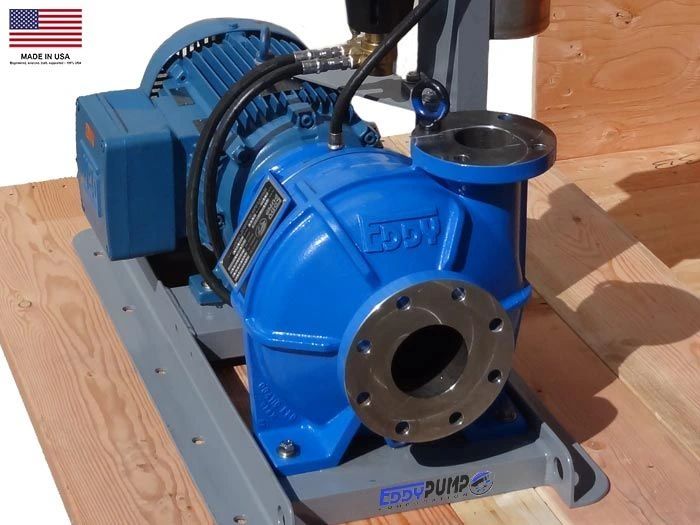
The workhorse behind all of our pump and dredge products. The EDDY Slurry pump is a non-clogging pump capable of pumping high viscosity, high specific gravity, high abrasives, and highly corrosive materials. The EDDY Pump’s open rotor design allows the passage of solids of up to 12 inches and capable of pumping 30-70% solids by volume. The EDDY Pump is highly versatile and able to be deployed for a wide variety of heavy duty applications.
Hydraulic dredging has versatile applications in the gold mining industry, facilitating underwater gold extraction, sediment and tailings removal, pond dredging, reclamation projects, and environmental remediation. Its efficiency in handling underwater deposits, versatility, and environmental friendliness make hydraulic dredging a valuable tool for gold mining companies seeking to optimize their extraction processes and minimize ecological impact.
Self-Priming Pump
Most EDDY Pumps are submersible, with a self-priming unit, the pump and power unit are not submerged. The suction house goes into the slurry and the unit acts like a super-sized wet vacuum. This type of pump can remove air on its own and continue operation without assistance, making it perfect for mounting on a trailer that can be wheeled from location to location. Becuase the pump is not submerged, both the operation and maintenance of self-priming slurry pumps are economical and relatively easy.
Effective Pulp Pumping Solutions
Paper & Pulp Pumping Scenario
Applications: Debarking and Wood Chipping, Pulp Lingin Separation, Pulp Washing, Pulp Bleaching Process, Pulp Slurry Transfer
The purpose of this page is to identify your application and learn more about an equipment solution to meet your needs. These are the most common paper and pulp pump applications that we work with. We are the OEM for the tools shown.
Application: Pulp Slurry Transfer
Material: Wood pulp, in slurry form


Common Pulp Pumping Scenario
The EDDY Slurry Pump is ideal for pumping large amounts of pulp slurry and aids with several stages of the papermaking process.
By mounting the submersible EDDY Pump to a chemical sump or pulp digester tank, you can handle the most difficult pump applications. The EDDY Pump allows you to pump slurry at distances over 2-miles at production rates of up to 600 tons of mud per hour or 5000 GPM.
Below are commonly distances we see, along with a pump curve to match the details. Contact us with your exact numbers.
Distance: 400 ft
Vertical Rise: 40 ft
Production: 1500 GPM
Equipment Used: EDDY Pump 6 Inch Submersible Sump Pump.
Power Options: EDDY Pump equipment can be powered by electric or hydraulic motor setups. The ideal option is based on your project requirements.
Paper and Pulp Pumps for Fiber Transfer and Mill Solids Handling
Paper and pulp pumps move process mixtures whose behavior depends on fiber content, liquid properties, and the other solids present. A mill can have several duties that look similar on a flow sheet but behave differently at the intake. Pulp slurry transfer, paper mill sludge pumping, and sump cleanout should each be described separately. That helps the equipment team distinguish a production feed requirement from a cleanup job with changing material conditions.
Start With Pulp Consistency and Fiber Characteristics
Pulp consistency expresses the dry solids content of a stock suspension, commonly on a mass basis. State the measurement basis used by the mill and provide the normal range. The same liquid flow can carry different amounts of fiber when consistency changes, so flow alone does not describe production.
Fibrous stock handling also depends on fiber type, length, contaminants, and air in the mixture. Provide representative operating data rather than describing the stream only as pulp. When higher consistency or entrained air requires specialized pumping features, assess that need explicitly. A pump suitable for a dilute fiber suspension is not automatically suitable for every stock duty.

Match Pulp Stock Transfer to the Receiving Process
Pulp stock transfer needs a delivery rate and consistency that the next stage can accept. Define the source vessel, operating level, discharge pressure, and any limits imposed by receiving equipment. Include process changes during startup, grade changes, or other normal operating transitions.
Review the intake arrangement at the same time. A suitable pump cannot correct every problem caused by inconsistent feed, an unsuitable suction layout, or uncontrolled air entry. Share the actual piping and vessel configuration when investigating unstable transfer. This lets the assessment address the source of the problem instead of treating every fluctuation as a reason to change pump size.
Separate Mill Sludge and Cleanup Duties
Paper mill sludge pumping may involve recovered fibers, mineral fillers, grit, and concentrated treatment solids. The mixture at a particular transfer point can differ considerably from stock intended for production. Identify the source and destination so equipment selection reflects both material handling and the receiving process.
Mill sump cleanout adds intermittent feed and possible foreign objects. Describe what operators normally find in the sump, including anything that has caused previous blockages. Establish an appropriate way to exclude unsuitable debris. Review whether the proposed pump will serve one installation or move between areas, because access, connections, and power arrangements may change.

Check Chemical Compatibility Alongside Solids Handling
Chemical compatibility remains important even when fibers are the most visible part of a stream. Provide the liquid composition, temperature, and expected changes in service when assessing wetted parts and seals. The mill process name alone does not establish which materials are suitable.
EDDY Pump identifies pulp slurry transfer and other fiber-bearing duties among its paper industry applications. Review each proposed installation against its own operating requirements. In particular, pressure-critical process duties and specialized stock services need confirmation from the responsible engineering team. Avoid carrying assumptions from a successful sump application into a different part of the production line.
Compare Pump Proposals Against a Defined Mill Duty
A useful specification brings together stock consistency, fiber characteristics, flow, head, source conditions, and the required operating schedule. Add existing pump information and maintenance records where the project involves replacement equipment. Photographs of deposits or recurring obstructions can make a troubleshooting discussion much more specific.
Send those details to EDDY Pump with the piping layout and the limits of the receiving process. Agree on what performance will be measured, such as stable transfer, delivered dry solids, or completion of a defined cleanout. Comparing proposals against that duty gives the mill a clearer basis for selection than a general claim that one pump can handle all paper and pulp applications.
During commissioning, record the material condition alongside flow and pressure readings. Repeat checks during representative operating changes rather than relying only on the first stable run. If the stream changes later, those records give the mill a reference for troubleshooting. They can also show whether a loss of delivery coincides with a process change before maintenance teams begin replacing otherwise serviceable components.
Paper and Pulp FAQs
What does pulp consistency mean for pump selection?
It describes the dry solids content of the stock suspension, commonly by mass. Confirm the mill's measurement basis and expected range. Consistency, fiber properties, and operating conditions together help establish the pumping duty; liquid flow alone is insufficient.
Can every slurry pump handle high-consistency pulp?
No. Higher-consistency stock can require specialized feeding, fluidization, or air-handling features. Review the actual stock and duty before choosing equipment. Do not extend a pump's suitability for dilute pulp to a substantially different consistency.
Why can air cause problems in pulp transfer?
Air in the stock can interfere with stable pumping and affect performance. Its source may involve the process, vessel arrangement, or intake conditions. Include expected air content and the feeding layout when assessing a pump or investigating unstable delivery.
Are pulp slurry and paper mill sludge the same?
No. Production stock and treatment sludge can contain different fibers, fillers, contaminants, and solids concentrations. Describe the material at the actual transfer point. A pump selected for one stream should be reviewed before use on the other.
Can a pulp pump handle plastic, wire, or other contaminants?
Do not assume unrestricted passage. Identify the expected contaminants and compare them with pump and piping limits. Appropriate screening or debris exclusion may be needed, especially for recovered-fiber streams and cleanup applications.
What should be included in a mill sump cleanout specification?
Include sump dimensions, liquid levels, deposit characteristics, recurring debris, and the required cleanout frequency. Add access, discharge routing, and available power. State whether the same equipment will be moved between different sumps.
Does chemical compatibility matter in fiber-bearing streams?
Yes. Fibers do not remove the need to assess liquid chemistry and temperature. Review wetted components, seals, and associated piping against the actual mixture and service conditions, including normal changes during operation or cleaning.
Why should the receiving process be included in pump selection?
It determines the delivery conditions that are useful to the mill. Excessive flow or an unsuitable consistency can disrupt the next stage even when the pump runs well. Define receiving pressure, capacity, and feed requirements alongside the source conditions.
How should pulp pumping performance be compared?
Use the same consistency basis, material properties, flow, and pressure conditions for each comparison. Where production matters, include delivered dry solids. Record operating variability and interruptions so a short stable test is not mistaken for full-duty performance.
What does EDDY Pump need to review a paper mill application?
Provide stream composition, consistency range, fiber characteristics, temperature, chemistry, and required flow and head. Add the vessel and piping layout, available power, and operating schedule. For replacements, include existing equipment details and the problem to be resolved.
LET’S PUT YOUR PROJECT IN MOTION
Tough material?
Bring it to EDDY.
Tell us what you’re pumping, where it needs to go, and what your
operation needs to achieve.
Talk it through
with our team.
Equipment selection, project planning, or an existing pump—we’ll help you find the right next step.
CALL SALES & ENGINEERING
+1 619-404-1916
EMAIL YOUR PROJECT DETAILS
info@eddypump.com