




Home / Products / Slurry Pumps /

Flooded Suction Pump for High-Solids Slurry, Abrasive Material & Mine Dewatering
The EDDY Pump flooded suction pump is engineered for continuous high-solids slurry transfer in mining, dredging, and wastewater applications. It handles 40–70% solids by weight, moves up to 7,300 GPM, and covers a 1-inch to 12-inch model range with a non-clog, abrasion-resistant design.
Flooded Suction Pump Snapshot
Pump Size

1 in to 12 in
Flow Range

250–7,300 GPM
Head Range

Up to 350 ft TDH
Solids Handling

Up to 15 in
% Solids By Weight

40–70%
Configuration

Flooded suction
Available Configurations
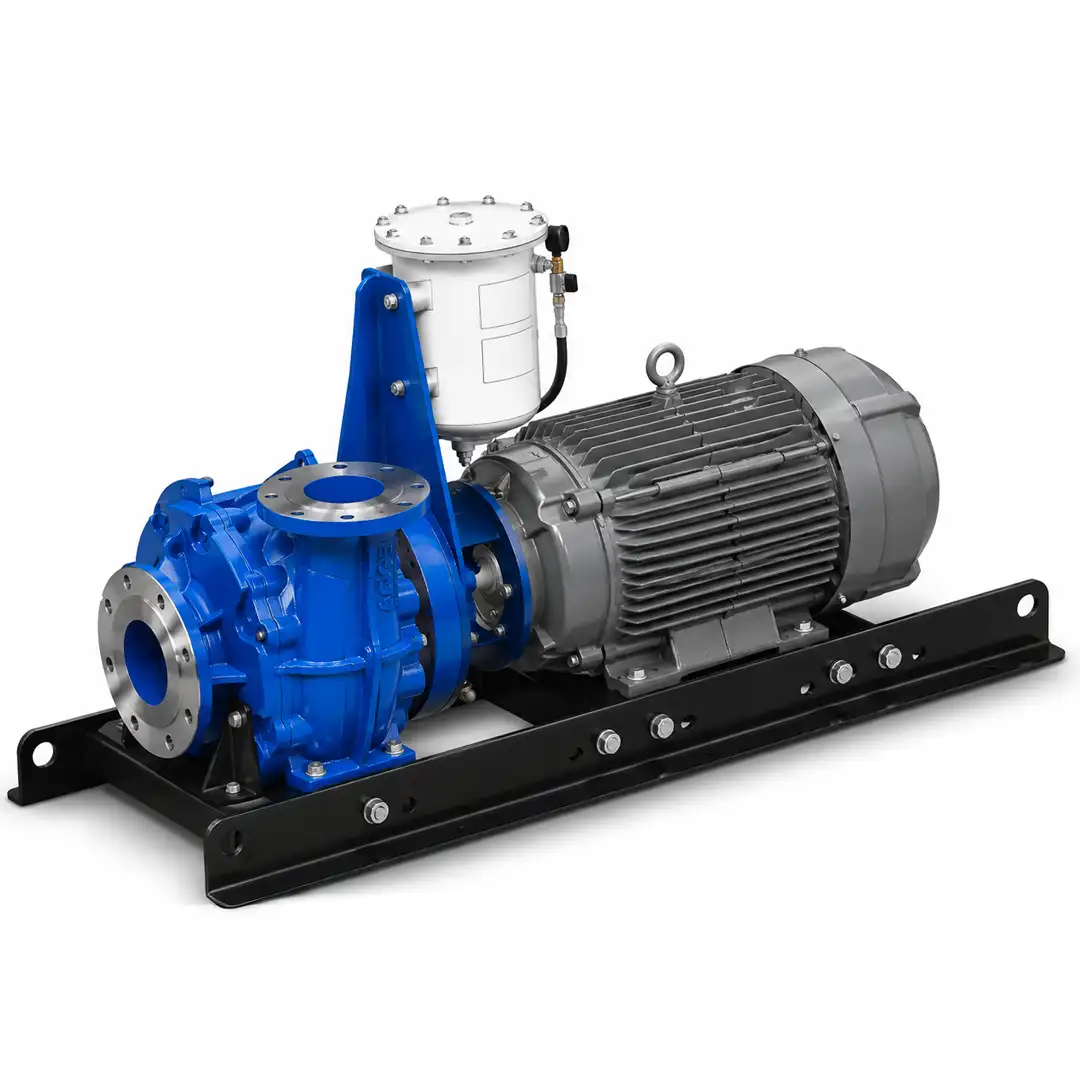
Direct-Drive Electric
Best for permanent, continuous-duty installations with reliable power.
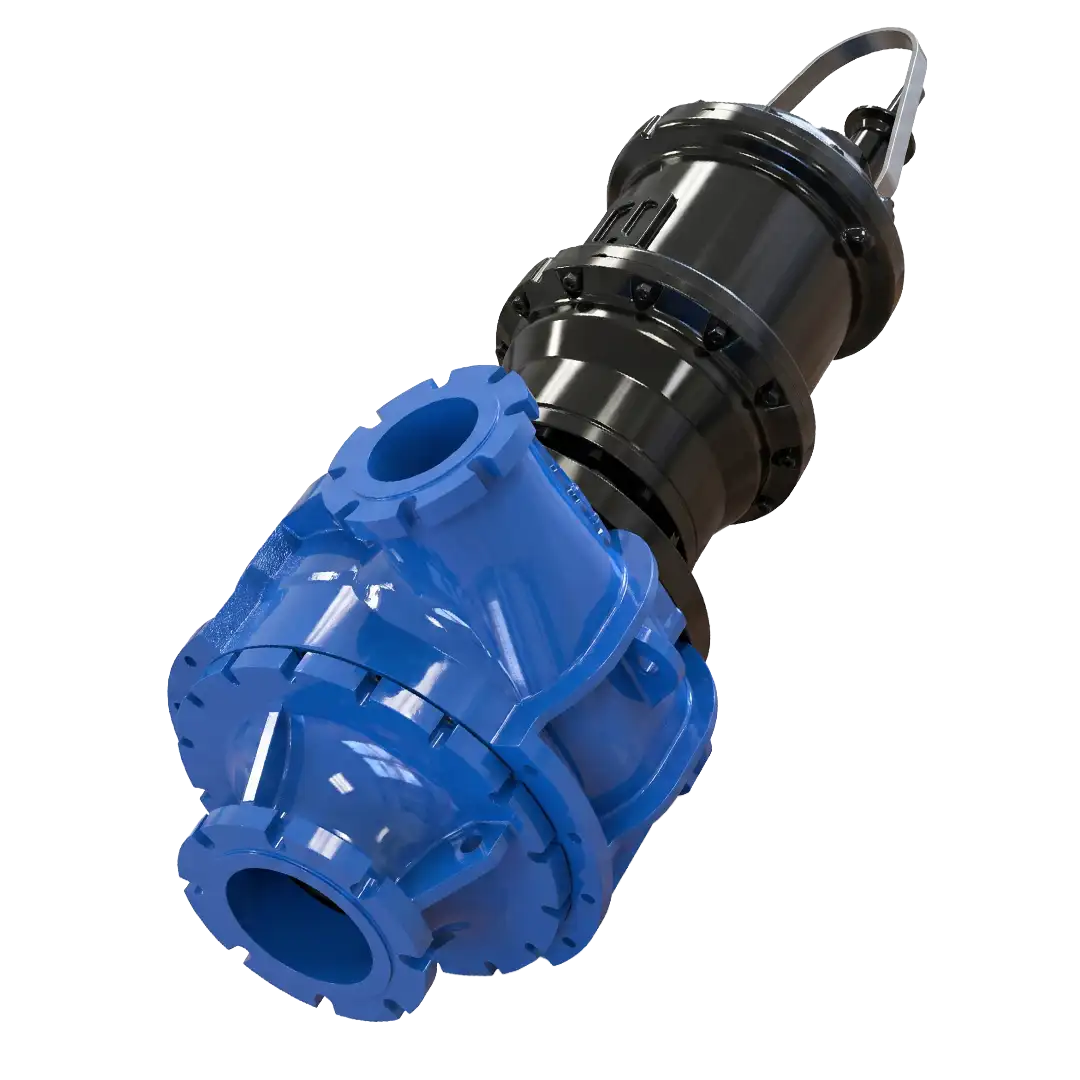
Submersible Electric
Best for dewatering pits, sumps, and wet environments with a flooded intake.
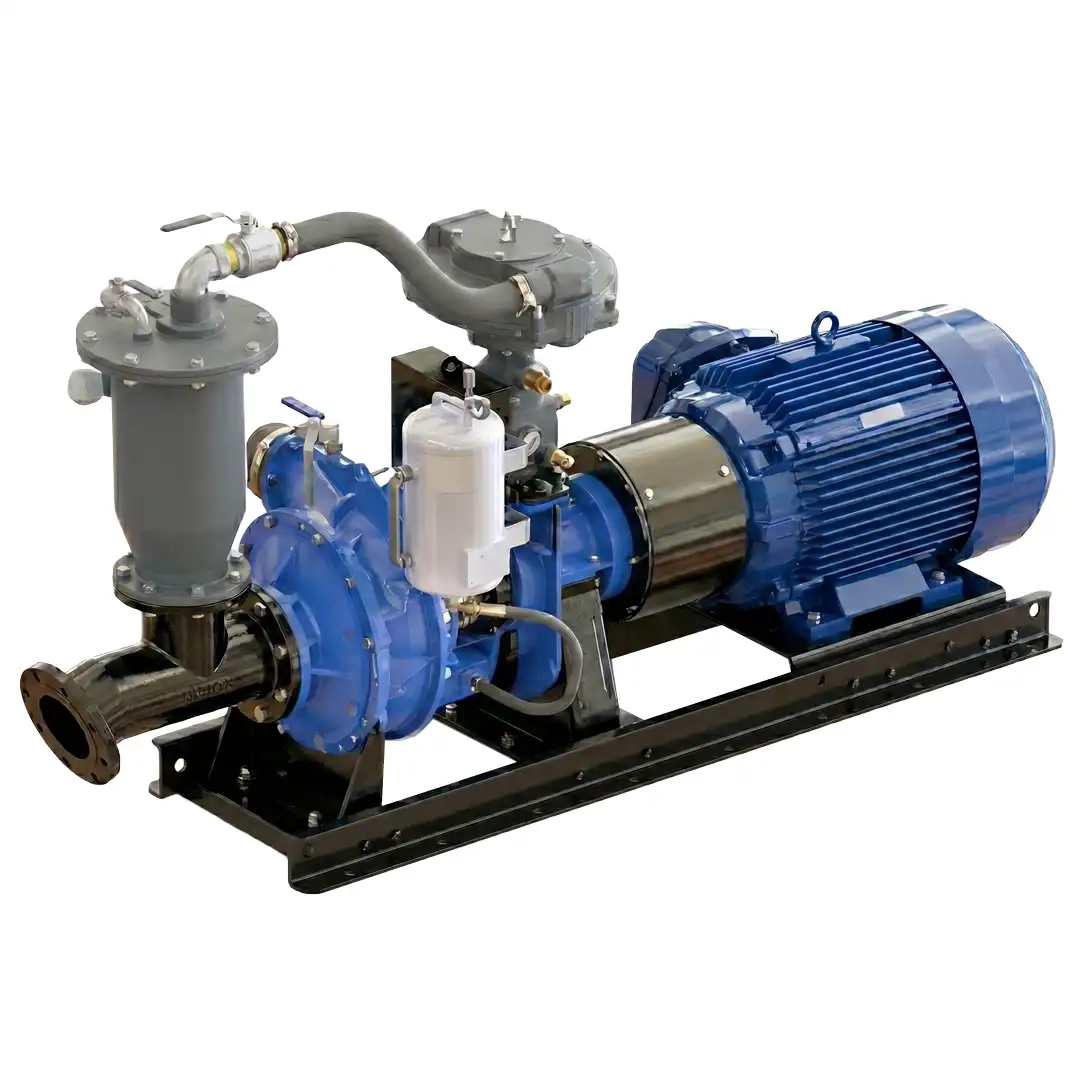
Self-Priming
Best for suction-lift setups and remote sites where the pump sits above the fluid.

What Is a Flooded Suction Pump?
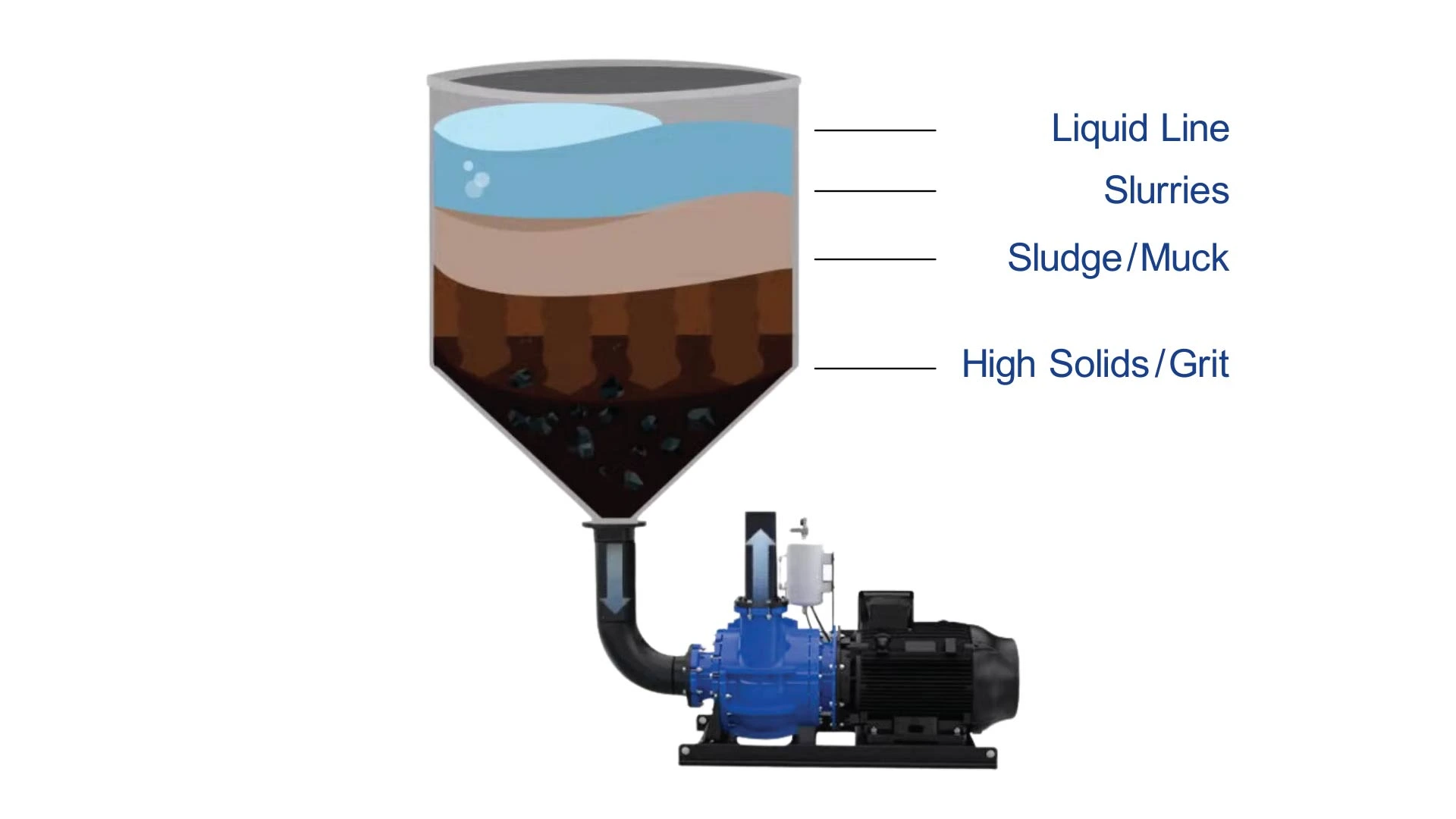
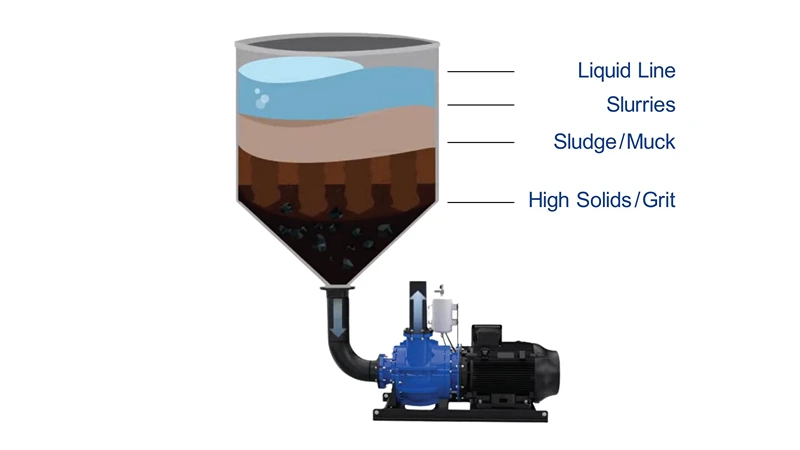
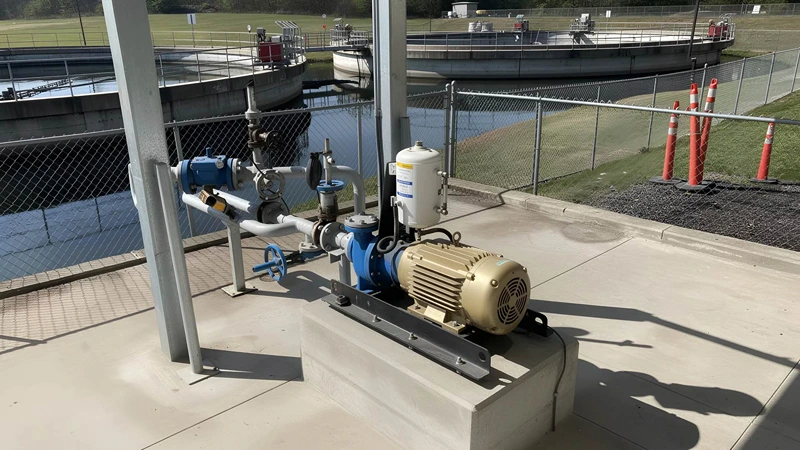
A flooded suction pump is a centrifugal pump installed below the fluid surface level, so the liquid flows into the pump inlet under positive pressure rather than being lifted by suction. Because the pump casing is always full of fluid at startup, it eliminates the priming step required by suction-lift configurations and removes the risk of cavitation caused by inadequate net positive suction head (NPSH).
In slurry and high-solids applications, a flooded suction configuration is preferred over suction-lift or self-priming arrangements because dense, abrasive material does not flow reliably upward into a pump under negative pressure. With flooded suction, the fluid head on the inlet side provides the positive pressure needed to fill the pump impeller continuously — enabling stable, uninterrupted flow even at high solids concentrations.
Flooded Suction Pump Advantages
- Designed as true flooded suction pumps to eliminate suction lift limitations common with dry self-priming pump and dry prime pump setups
- Flooded-suction pump design delivers stable flow, reduced cavitation risk, and consistent performance in continuous-duty slurry pumps.
- Available as horizontal flooded suction pump and vertical flooded suction pump configurations to suit fixed plant layouts and space constraints
- Handles abrasive slurries with high solids concentrations, making these heavy-duty slurry pumps ideal for mining, dredging, and industrial processing
- Supports both horizontal slurry pump and vertical slurry pump installations for pit, sump, and tank-based flooded suction pump systems
- Offered in electric slurry pumps and hydraulic slurry pumps to match site power availability and application demands
- Compatible with variable speed pump operation and automated pump controls for precise flow, head, and energy management
- Can be supplied as a skid-mounted pump or trailer-mounted slurry pump for semi-portable or permanent industrial use
- Built using wear-resistant pump materials, including high chrome slurry pump components, cast iron slurry pump housings, and stainless steel slurry pump options
- Heavy-duty industrial pump construction, with non-clog internals, enables reliable handling of large solids and abrasive media.
- Engineered for long service life and reduced maintenance compared to conventional industrial flooded suction pumps operating under similar conditions
- Ideal replacement or upgrade option where dry self-priming pump systems struggle with efficiency, wear, or solids handling limitations
Gallery
Flooded Suction Pumps
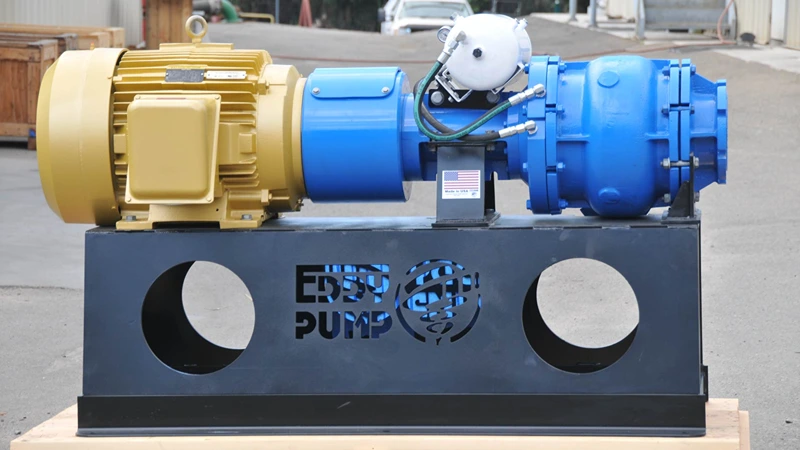
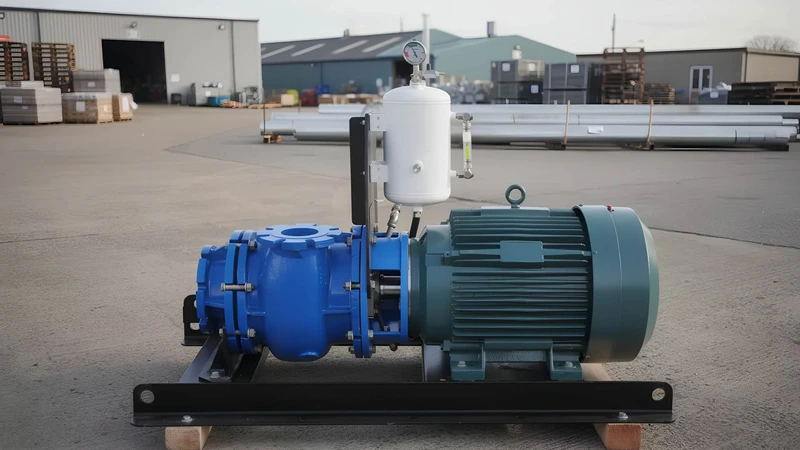
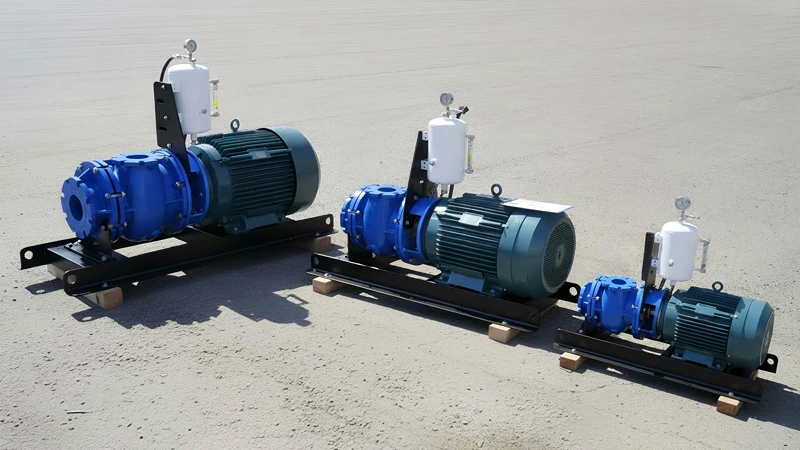
Technical Specifications

Performance and Capacity
- Flow range from 1 GPM up to 7,300 GPM
- Head capability up to 350 ft, depending on the model
- Handles abrasive slurries with 40–70 percent solids by volume
- Solids handling capability from 0.75 inch up to 11 inches
- Production rates from 0–15 yd³/hr up to 500–600 yd³/hr

Pump Design and Configuration
- Industrial flooded suction pump built for continuous slurry service
- Flooded suction slurry pumps are available in horizontal and vertical configurations
- Designed for fixed or mobile flooded suction pump systems in industrial environments

Pump Sizes and Installation
- Discharge sizes from 1 inch to 12 inches
- Suction sizes from 1.5 inches to 14 inches
- Horizontal slurry pump and vertical slurry pump layouts
- Base-mounted, skid-mounted pump, or trailer-mounted slurry pump options
- Designed for flooded intake applications where dry self-priming pump systems are not required

Drive, Controls, and Materials
- Electric slurry pumps and hydraulic slurry pumps are available
- Compatible with variable speed pump operation and automated pump controls
- Wear-resistant pump materials, including high chrome slurry pump alloys
- Cast iron slurry pump and stainless steel slurry pump construction options
- Heavy-duty industrial pump bearings and tungsten carbide or silicon carbide mechanical seals
Flooded Suction Pumps
Flooded Suction Slurry Pump Specifications
| Pump Platform | Discharge Size | Suction Size | Flow Range (GPM) | Head Range (ft) | Solids Handling | % Solids by Weight | Production Rate (yd³/hr) | Max Pump Speed (RPM) | Spec Sheet |
|---|---|---|---|---|---|---|---|---|---|
| HD-1000 | 1 in | 1.5 in | 1–200 | Up to 170 | Up to 0.75 in | 40–70% | 0–15 | 1,800–3,600 | Download  |
| HD-2000 | 2 in | 3 in | 50–390 | Up to 90 | Up to 1.75 in | 40–70% | 15–45 | 1,800 | Download Download  |
| HH-2000 | 2 in | 3 in | 100–600 | Up to 350 | Up to 1.75 in | 40–70% | 25–60 | 2,250 | Download |
| HD-3000 | 3 in | 4 in | 100–780 | Up to 130 | Up to 2 in | 40–70% | 45–75 | 1,800 | Download Download |
| HD-4000 | 4 in | 6 in | 250–1,200 | Up to 160 | Up to 3 in | 40–70% | 75–150 | 1,800 | Download Download |
| HD-5000 5×5 | 5 in | 5 in | 400–1,800 | Up to 225 | Up to 4 in | 40–70% | 100–175 | 1,800 | Download |
| HD-5000 6×5 | 5 in | 6 in | 400–1,800 | Up to 225 | Up to 4 in | 40–70% | 100–175 | 1,800 | Download |
| HD-6000 | 6 in | 8 in | 450–2,500 | Up to 200 | Up to 5 in | 40–70% | 150–200 | 1,800 | Download Download |
| HD-8000 | 8 in | 10 in | 1,400–3,600 | Up to 230 | Up to 7 in | 40–70% | 250–300 | 1,200 | Download Download |
| HD-10000 | 10 in | 12 in | 1,600–5,000 | Up to 240 | Up to 9 in | 40–70% | 300–350 | 1,200 | Download Download |
| HD-12000 | 12 in | 14 in | 2,600–7,300 | Up to 180 | Up to 11 in | 40–70% | 500–600 | 900 | Download Download |
| HD-16000 | 16 in | 18 in | 10,000–13,000 | Up to 180 | Up to 15 in | 40–70% | 700–1,000 | 700 | Download |
Driver / Power Package Options
| Pump Platform | Standard Wet-End Construction | Electric Direct-Drive Motor HP Options | Best-Fit Use |
|---|---|---|---|
| HD-1000 | High Chrome | 2.5 HP, 5 HP | Use for fixed, surface-mounted, gravity-fed installations. |
| HD-2000 | High Chrome | 5 HP, 10 HP, 20 HP | Use for fixed, surface-mounted, gravity-fed installations. |
| HH-2000 | High Chrome | 30 HP, 40 HP, 50 HP, 60 HP | Use for fixed, surface-mounted, gravity-fed installations. |
| HD-3000 | High Chrome | 20 HP, 30 HP, 40 HP | Use for fixed, surface-mounted, gravity-fed installations. |
| HD-4000 | High Chrome | 30 HP, 40 HP, 60 HP, 75 HP, 100 HP, 125 HP | Use for fixed, surface-mounted, gravity-fed installations. |
| HD-5000 5×5 | High Chrome | Application dependent — contact EDDY Pump | Use for fixed, surface-mounted, gravity-fed installations. |
| HD-5000 6×5 | High Chrome | Application dependent — contact EDDY Pump | Use for fixed, surface-mounted, gravity-fed installations. |
| HD-6000 | High Chrome | 75 HP, 100 HP, 150 HP, 200 HP, 250 HP | Use for fixed, surface-mounted, gravity-fed installations. |
| HD-8000 | High Chrome | 250 HP, 300 HP, 400 HP, 500 HP | Use for fixed, surface-mounted, gravity-fed installations. |
| HD-10000 | High Chrome | 250 HP, 300 HP, 400 HP, 500 HP | Use for fixed, surface-mounted, gravity-fed installations. |
| HD-12000 | High Chrome | 500 HP, 700 HP, 1,000 HP | Use for fixed, surface-mounted, gravity-fed installations. |
| HD-16000 | High Chrome | 1,000 HP, 1,500 HP, 2,000 HP | Use for fixed, surface-mounted, gravity-fed installations. |
Selection note: Final package selection should be confirmed against the pump curve, duty point, slurry density, total dynamic head, discharge distance, pipe size, solids size, percent solids by weight, viscosity, available power, and duty cycle.
Industrial Applications

Mining Dewatering
The EDDY Pump flooded suction design is the industry standard for mine dewatering — sitting below the water level for continuous prime while handling abrasive slurry like fine rock, grit, and tailings without the clogging that disables conventional centrifugal pumps.

Dredging
These slurry pumps are widely used in dredging projects to move sand, silt, and sediment. Flooded suction pump systems provide stable intake conditions for consistent material transport in rivers, harbors, and reclamation work.

Wastewater and Sewage
Industrial flooded suction pumps manage sludge, grit, and debris in wastewater treatment facilities. Their non-clog design and large solids passage reduce blockages and support reliable, continuous flow in demanding environments.

Oil and Gas
Heavy-duty slurry pumps support drilling mud circulation, the handling of produced water, and waste slurry transfer. Wear-resistant pump materials extend service life when operating with abrasive or chemically aggressive fluids.

Sand and Aggregates
Horizontal and vertical slurry pump installations efficiently transport sand mixtures and aggregate slurries. Flooded suction configurations improve performance in wash plants, stockpile recovery, and material processing systems.

Chemical Processing
Stainless steel slurry pump and high chrome slurry pump options support chemical processing applications where corrosion resistance and consistent flow control are required in flooded suction installations.

Paper and Pulp
Flooded suction pumps transport pulp stock, sludge, and fiber-laden fluids. Their steady intake and solids-handling capability help maintain production efficiency across the mill and recycling operations.

Power and Fly Ash
These heavy-duty industrial pumps move fly ash, bottom ash, and slurry waste from power generation facilities. High solids handling capability and abrasion resistance support long-term operation in ash-handling systems.
Flooded Suction vs. Self-Priming Pump: Which Is Right for Your Application?
The choice between a flooded suction pump and a self-priming pump comes down to site layout, material type, and operational reliability requirements. Both configurations eliminate manual priming under normal conditions — but they do so differently, with different trade-offs for high-solids slurry service.
| Factor | Flooded Suction Pump | Self-Priming Pump |
|---|---|---|
| Pump location | Below fluid source — pump is always filled | Can be installed above fluid level |
| Priming | No priming required — fluid gravity feeds the inlet | Self-primes on startup; may require initial fill |
| NPSH performance | Best NPSH available — lowest cavitation risk | NPSH limited by suction lift height |
| High-solids slurry | Preferred — dense material flows to pump under positive head | Risk of slugging and air ingestion with high-density slurry |
| Abrasive material | Excellent — no suction-lift stress on seals or impeller | Suitable for moderate solids; wear increases under abrasive load |
| Installation | Requires pump to be positioned below tank or sump | More flexible siting; above-grade installation possible |
| Best for | Mining slurry, tailings, abrasive sediment, high-volume continuous transfer | Intermittent duty, portable setups, moderate-solids applications |
Municipal Wastewater Sludge Handling Improvement
Case Study

The Problem
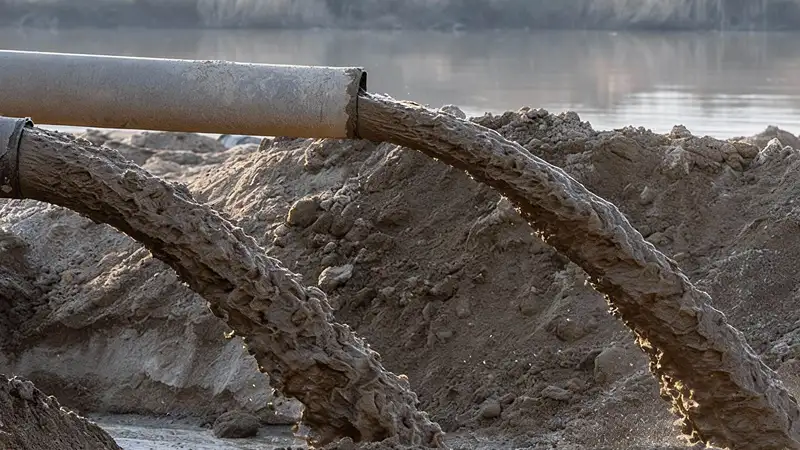
A municipal wastewater treatment plant was experiencing persistent clogging, seal wear, and inconsistent flow during the transfer of thick sludge from flooded sumps to downstream processing units. Conventional pumps could not reliably handle the high solids concentration, resulting in frequent shutdowns, increased maintenance labor, and reduced overall plant efficiency.

The Solution
The plant replaced its existing equipment with an EDDY Pump flooded suction slurry pump designed for continuous sludge handling. Installed in a flooded intake configuration, the pump utilized wear-resistant materials, a non-clog internal design, and automated pump controls. Variable-speed operation allowed operators to adjust performance in response to changing sludge density and flow requirements.
The Result
The upgraded system delivered stable, uninterrupted sludge transfer with significantly fewer blockages and longer seal life. Maintenance intervals were extended, downtime was reduced, and operators gained better control over process flow. The plant improved operational reliability while lowering long-term maintenance and operating costs.
Call for sales or support
If you need assistance with pump selection, sales or engineering support, call 619-404-1916.
Talk To About Any Question?
Frequently Asked Questions
What is a flooded suction pump?
A flooded suction pump is a centrifugal pump installed below the fluid source so liquid flows into the pump inlet under positive pressure rather than being drawn upward. This eliminates priming requirements, prevents cavitation caused by insufficient NPSH, and enables continuous stable flow — making it the preferred configuration for abrasive slurry, mine dewatering, and high-volume industrial transfer applications.
When should I use a flooded suction pump instead of a self-priming pump?
Use a flooded suction pump when handling dense, abrasive slurry at high solids concentration, when continuous uninterrupted flow is required, or when the pump site is below the fluid source level. Self-priming pumps are better suited for portable setups or installations above the fluid level with moderate solids. For mine dewatering, tailings transfer, and abrasive slurry applications, flooded suction is the more reliable choice.
What causes cavitation in a flooded suction pump, and how is it prevented?
Cavitation occurs when the pressure at the pump inlet drops below the fluid's vapor pressure, causing bubbles to form and collapse against the impeller. In flooded suction installations, cavitation is prevented by ensuring the available NPSH (net positive suction head) always exceeds the pump's required NPSH — achieved by maintaining adequate fluid level above the pump, minimizing suction piping losses, and avoiding high fluid velocities at the inlet.
What flow rates and heads does the EDDY flooded suction slurry pump handle?
The EDDY flooded suction slurry pump handles flow rates from 250 GPM to 7,300 GPM and total dynamic heads up to 350 feet across the model range. It moves slurry at 40–70% solids by volume and handles particle sizes up to 11 inches. Contact EDDY engineers with your flow, head, material density, and solids concentration for model-specific sizing.
What materials are used to improve wear resistance?
Wear-resistant pump materials include high-chrome slurry pump components, cast-iron slurry pump housings, stainless steel slurry pump options, and duplex stainless steel for corrosive environments. Material selection depends on abrasion level and fluid chemistry.
Are electric and hydraulic drive options available?
Yes. These industrial flooded suction pumps are available as electric or hydraulic slurry pumps. This allows compatibility with grid power, generators, or hydraulic power units in remote or mobile applications.
Can the pumps be speed-controlled?
The pumps are compatible with variable-speed operation via VFDs or hydraulic flow control. Variable-speed capability improves efficiency, reduces wear, and allows operators to adjust performance in response to changing slurry conditions.
Are mobile mounting options available?
Yes. Pumps can be supplied as a skid-mounted pump for fixed installations or as a trailer-mounted slurry pump for portable or temporary pumping operations. This flexibility supports both permanent and project-based use.
What type of applications are best suited for flooded suction slurry pumps?
These pumps are widely used in mining, dredging, wastewater treatment, power plants, sand and aggregates, chemical processing, and oil and gas. They perform best in applications with a continuous flooded intake and abrasive slurry.
How do these pumps improve reliability and maintenance life?
The flooded suction pump design reduces cavitation risk and suction losses. Combined with non-clog internals, automated pump controls, and heavy-duty industrial pump construction, this results in longer service life, fewer blockages, and lower maintenance requirements.
HD (Heavy Duty) Slurry Pumps / Dredge Equipment