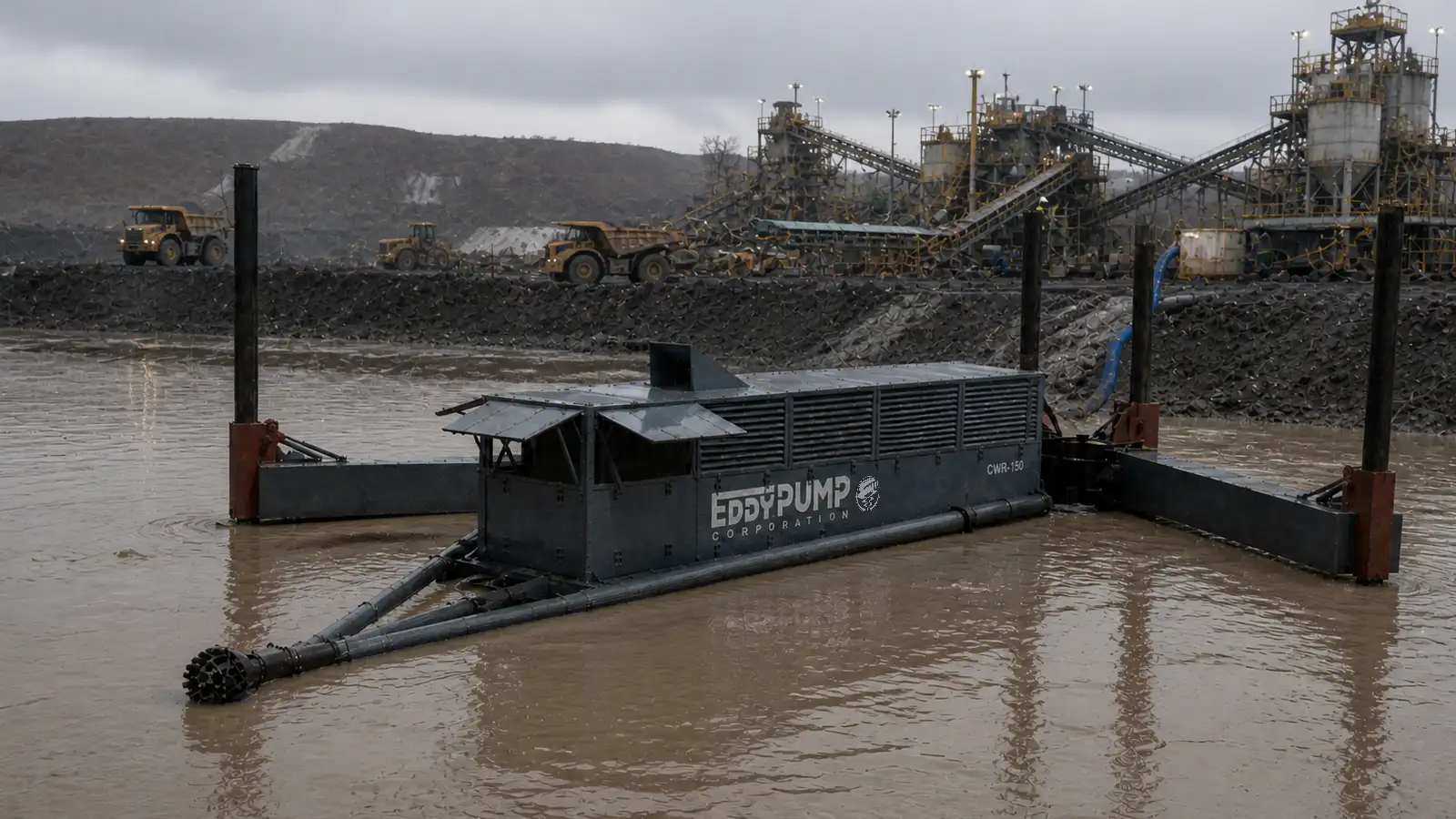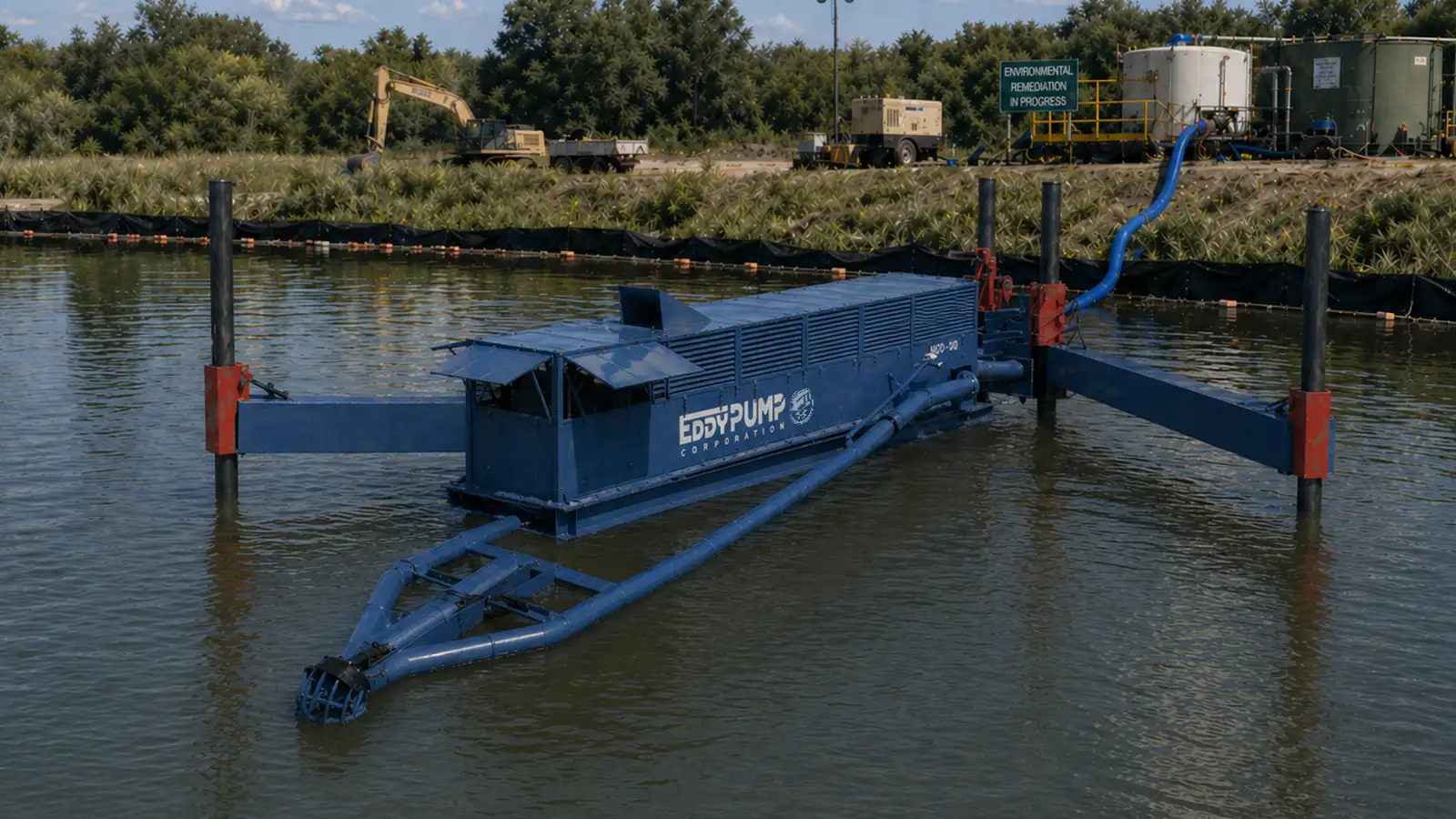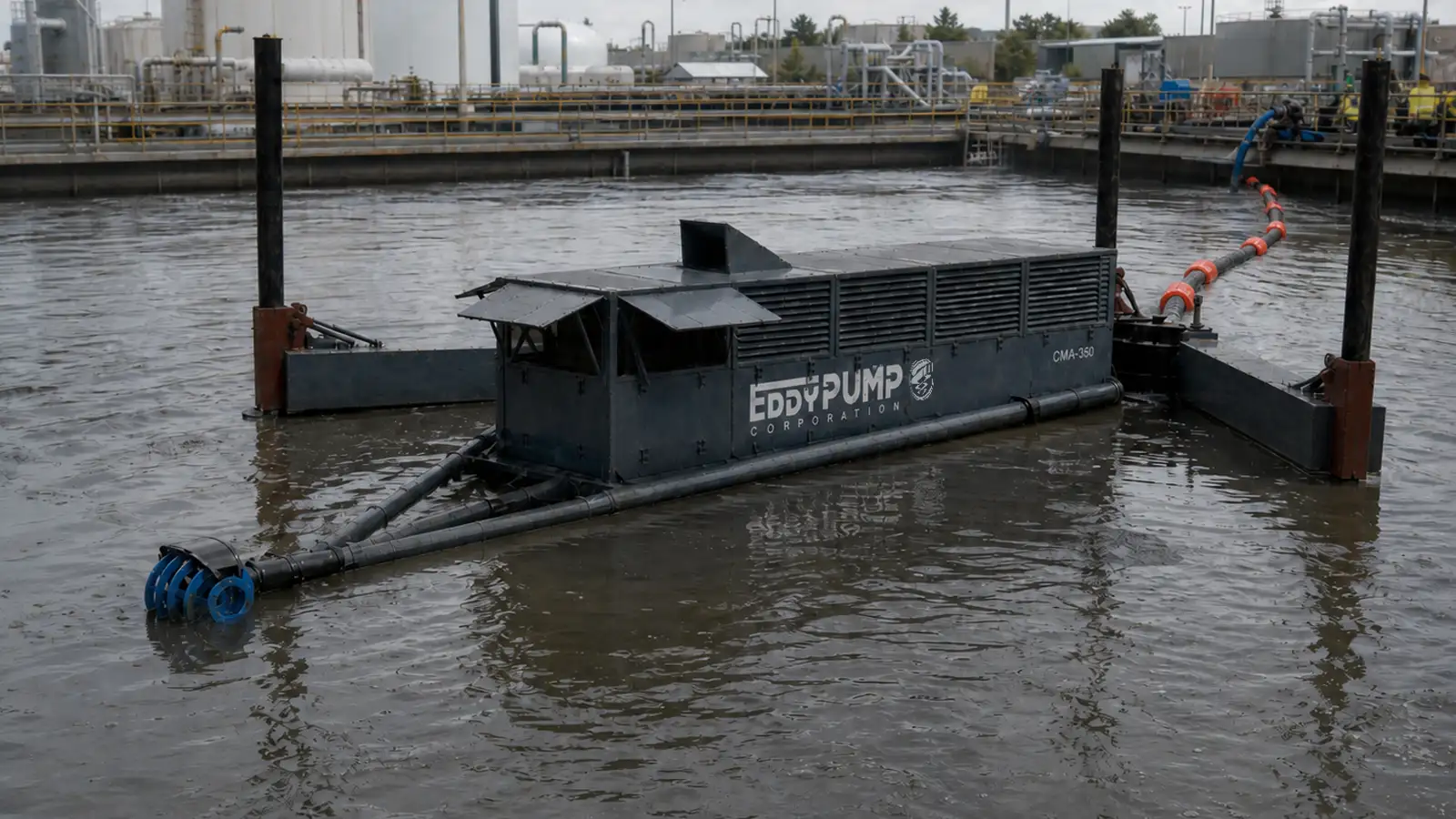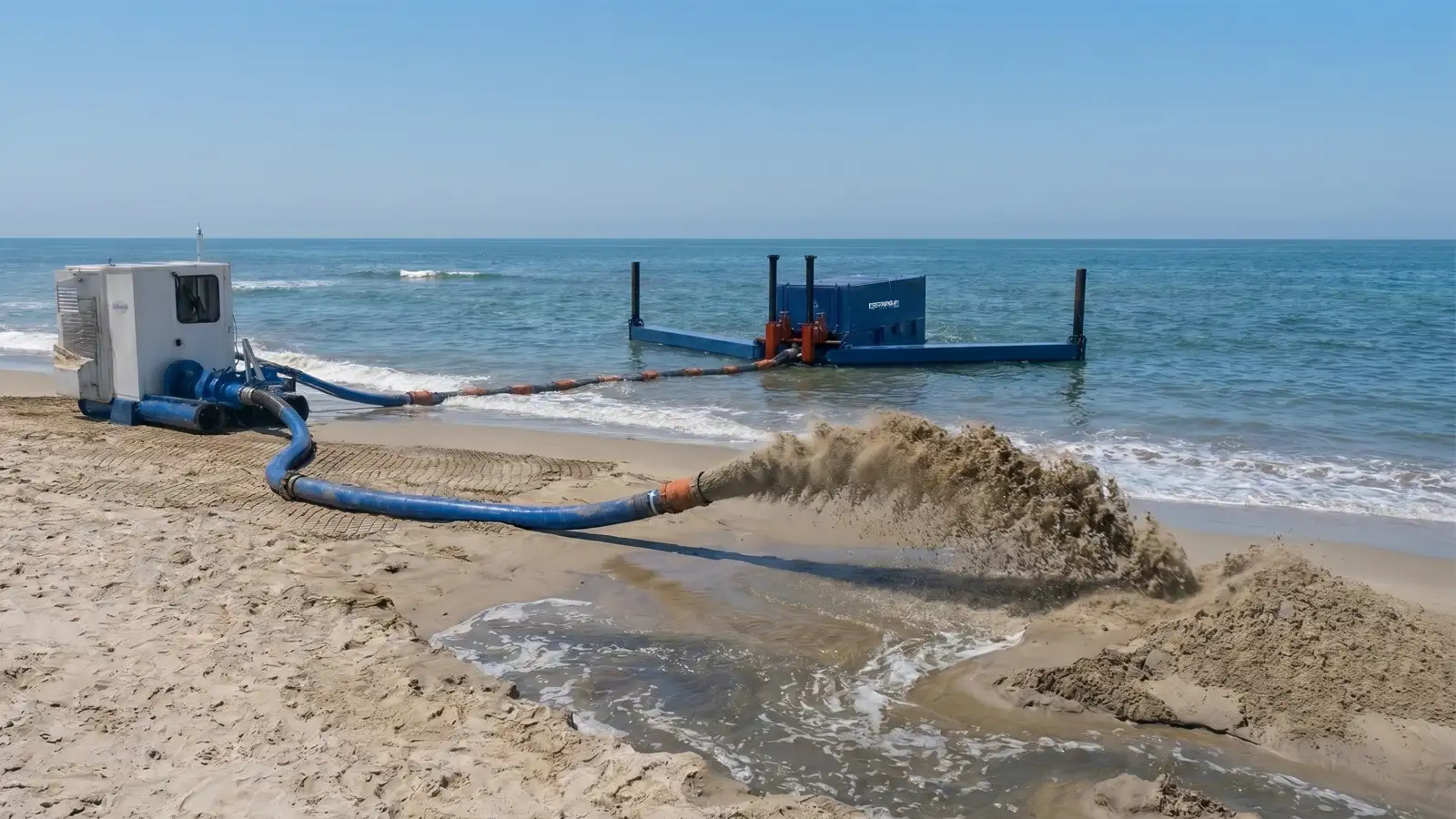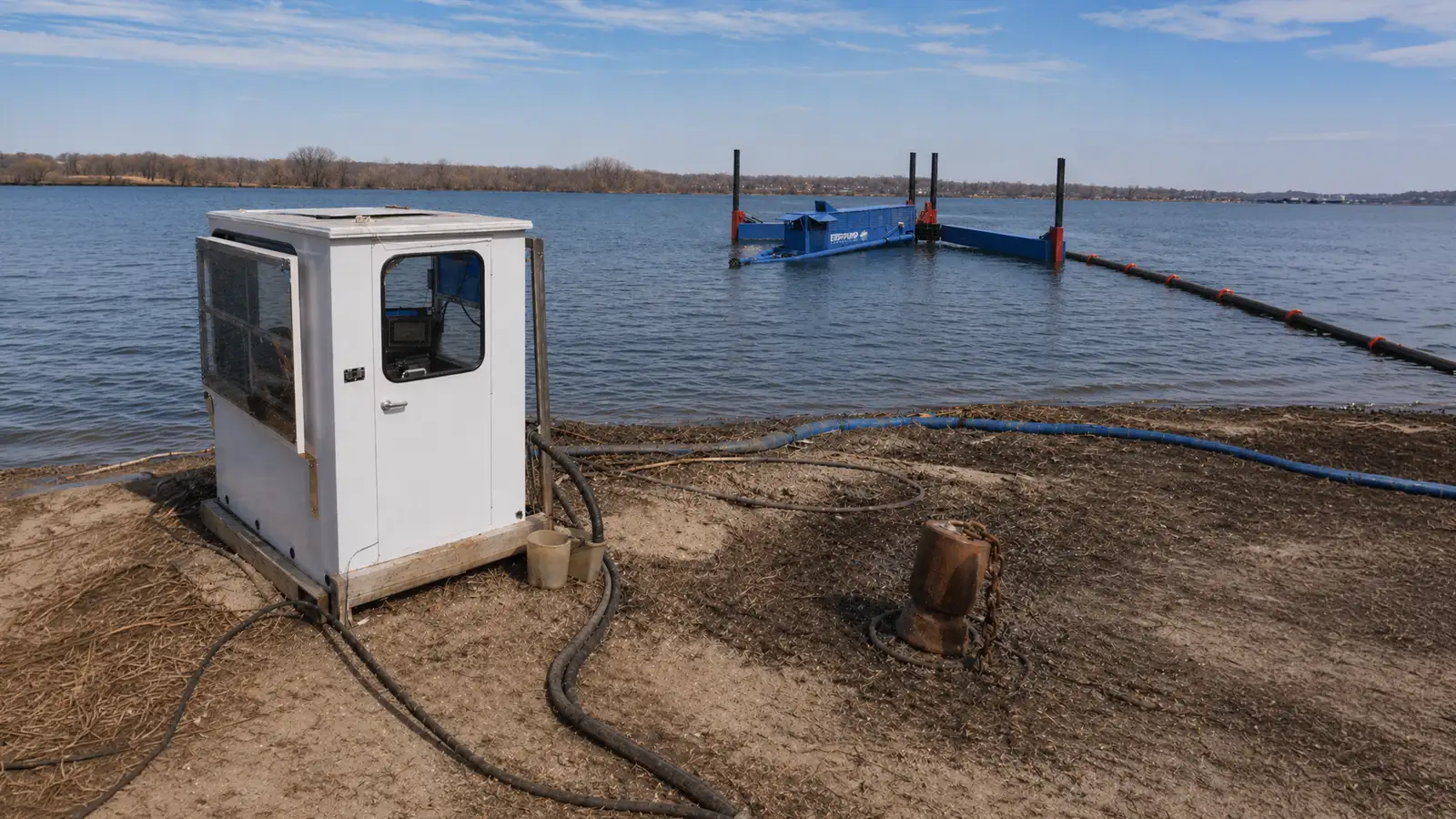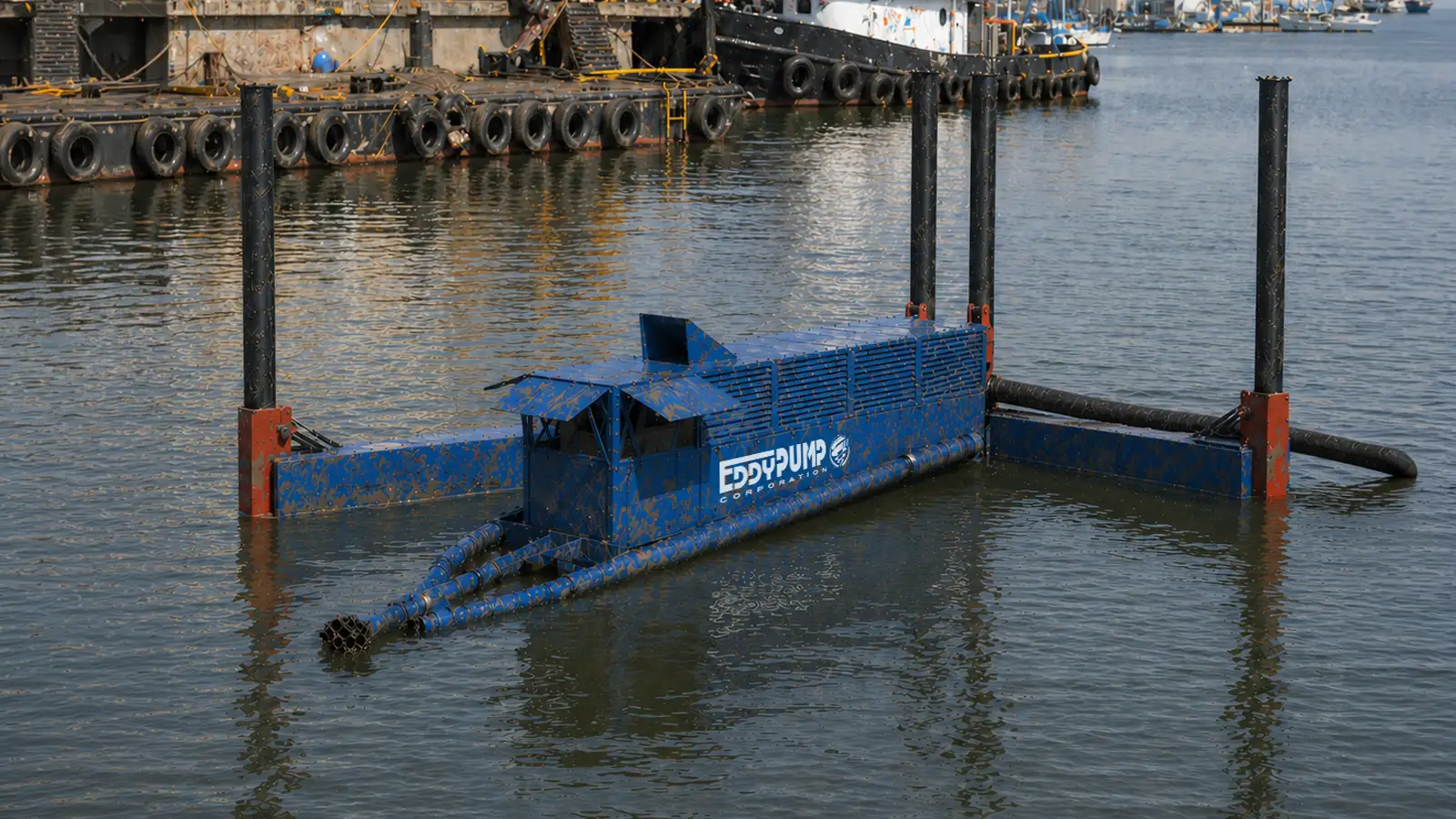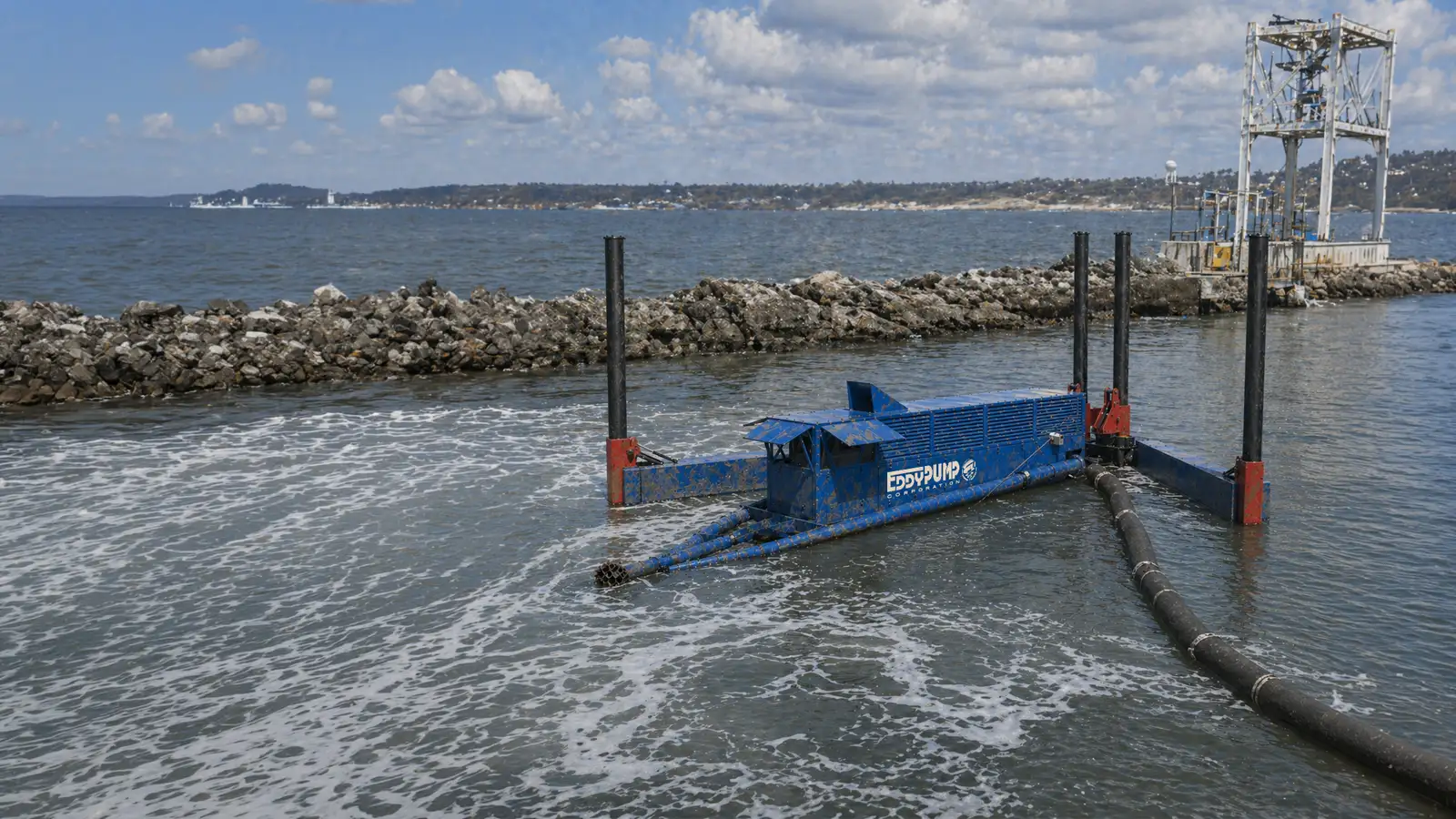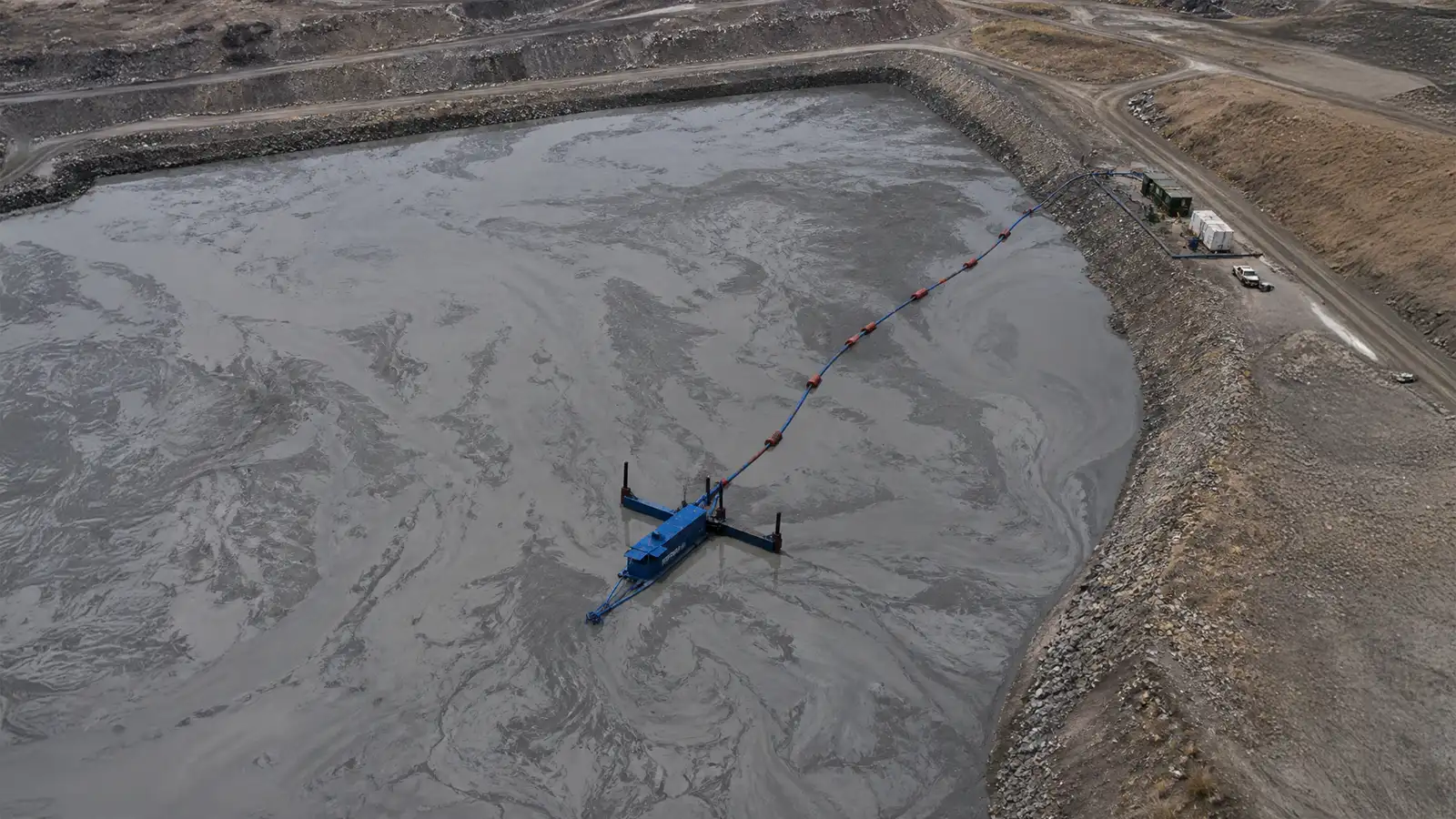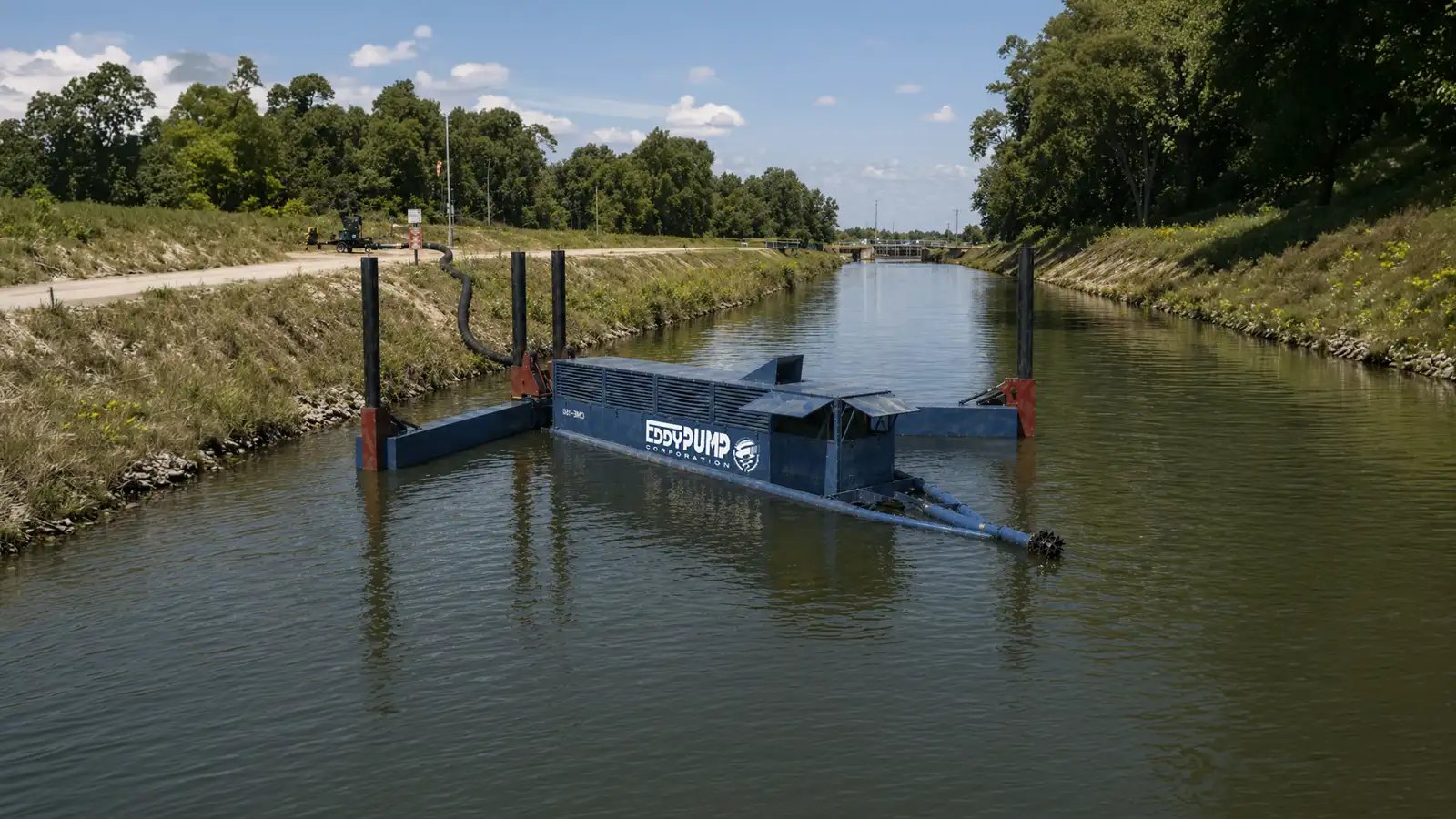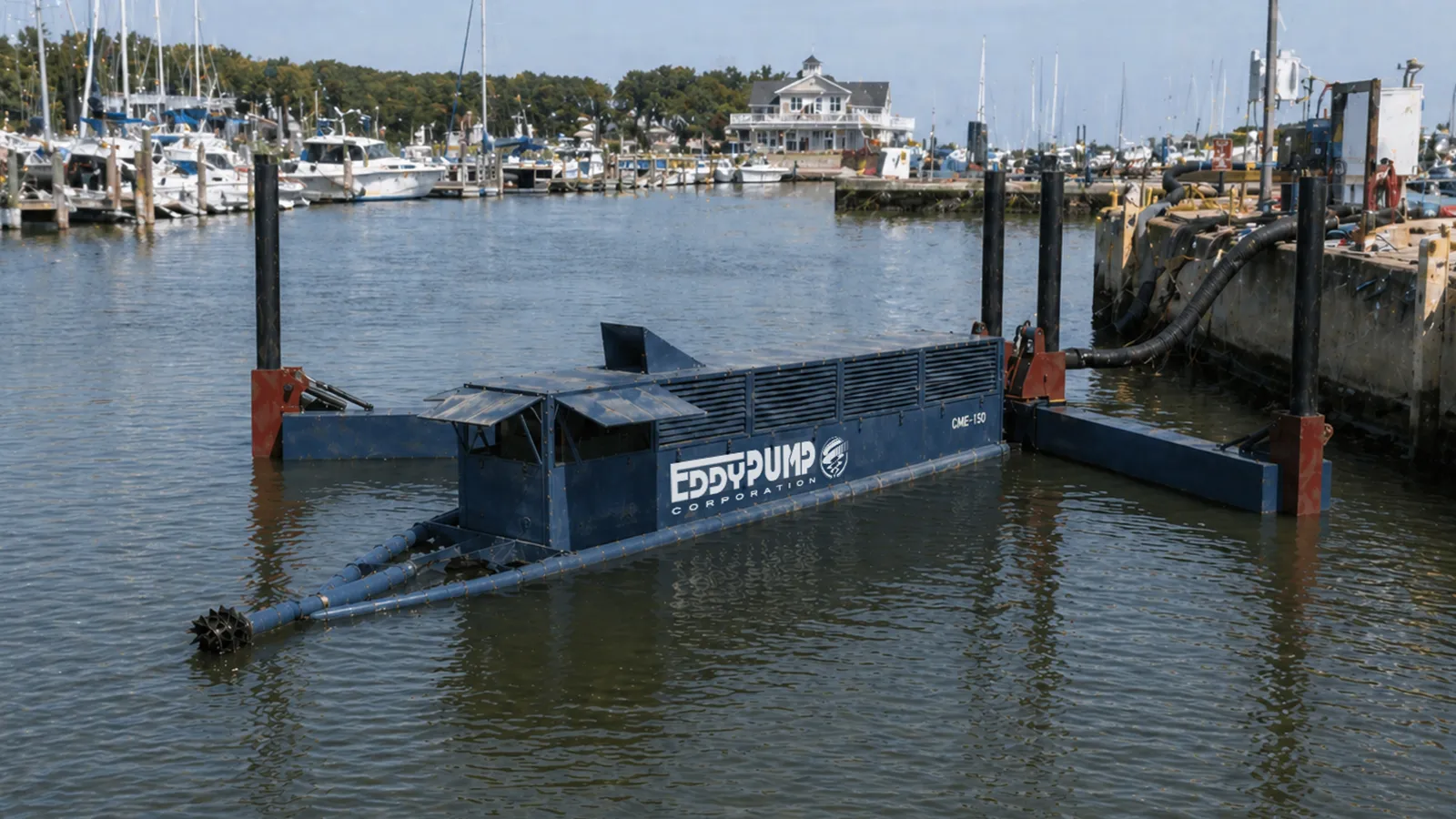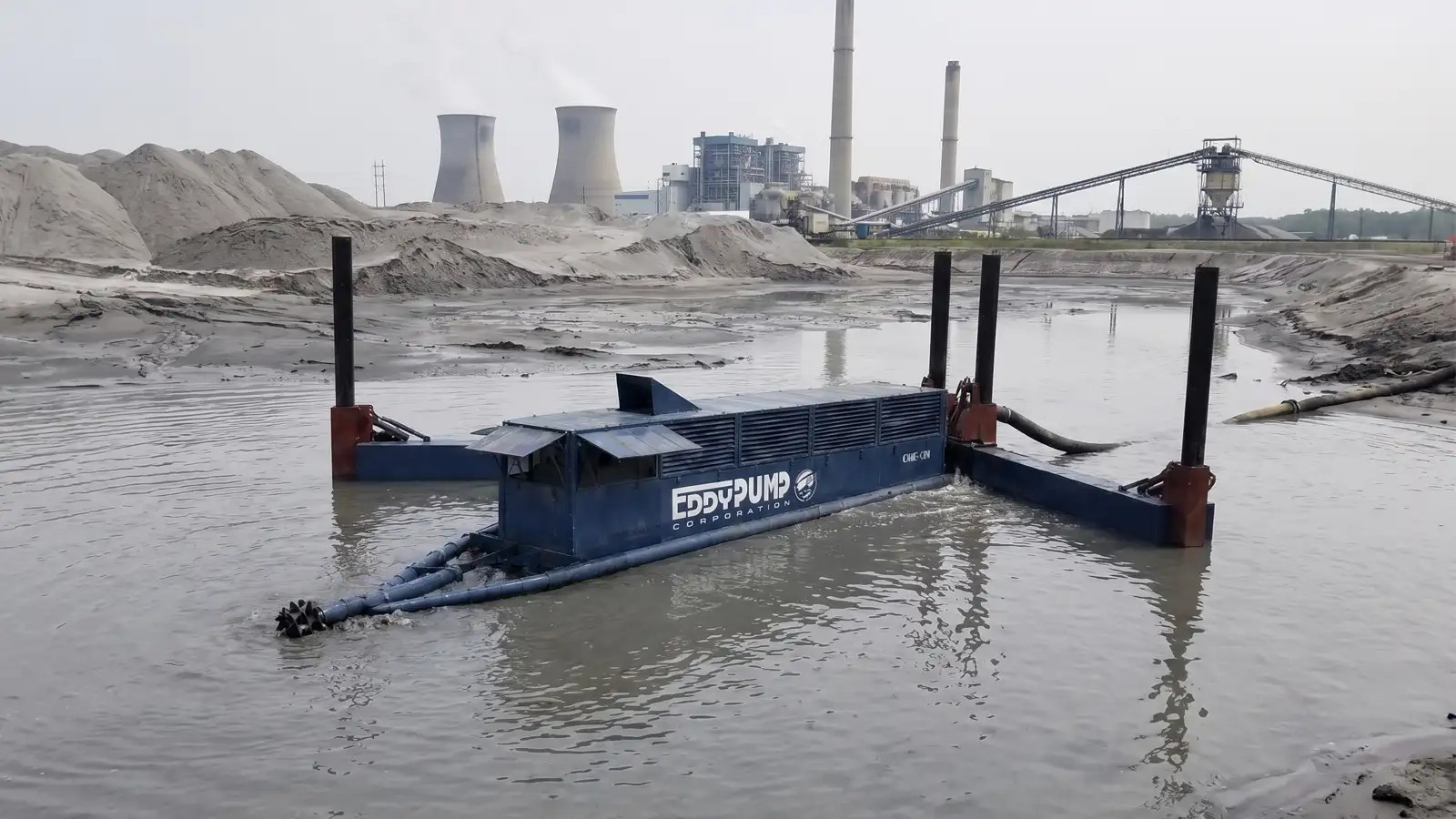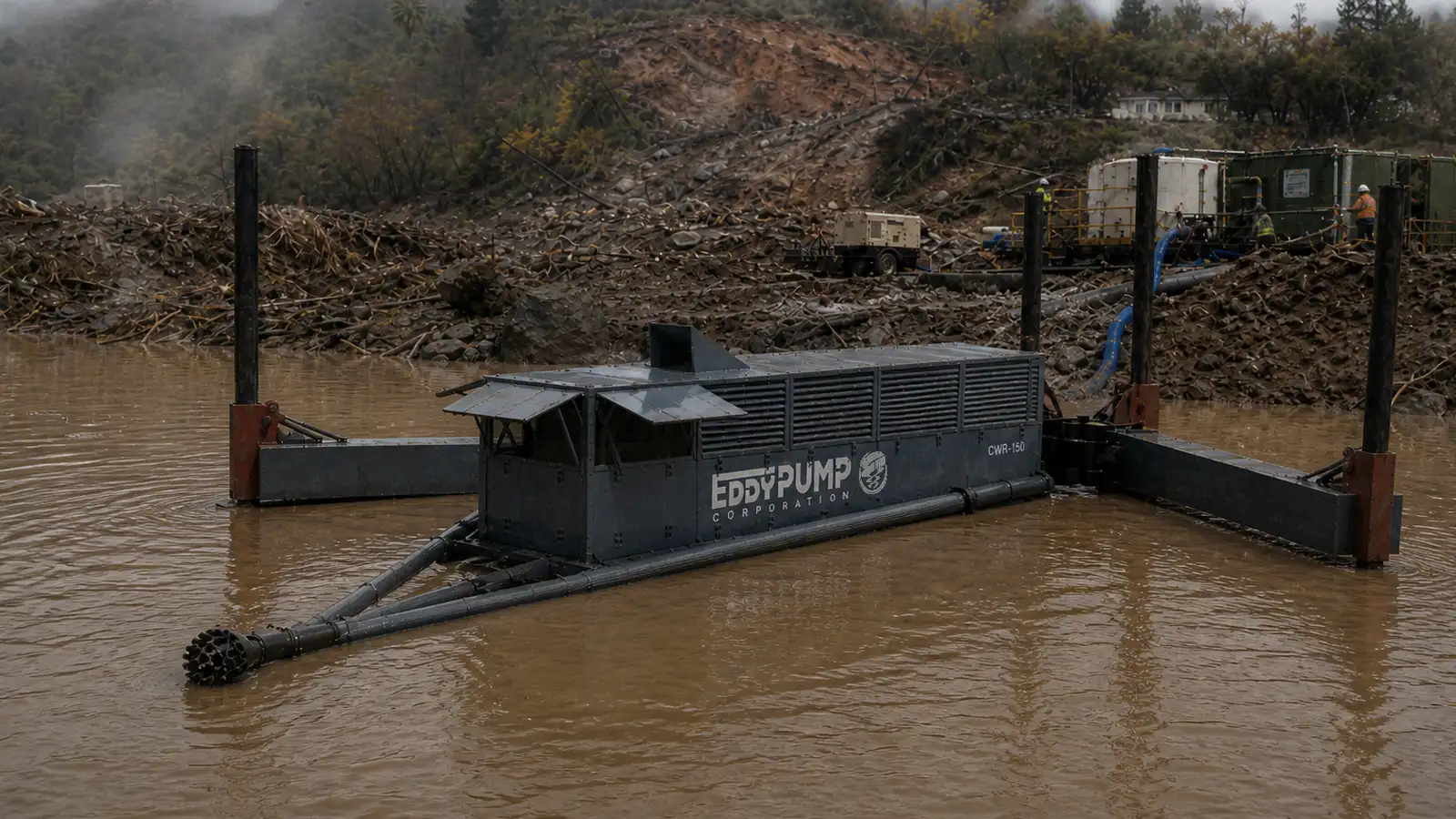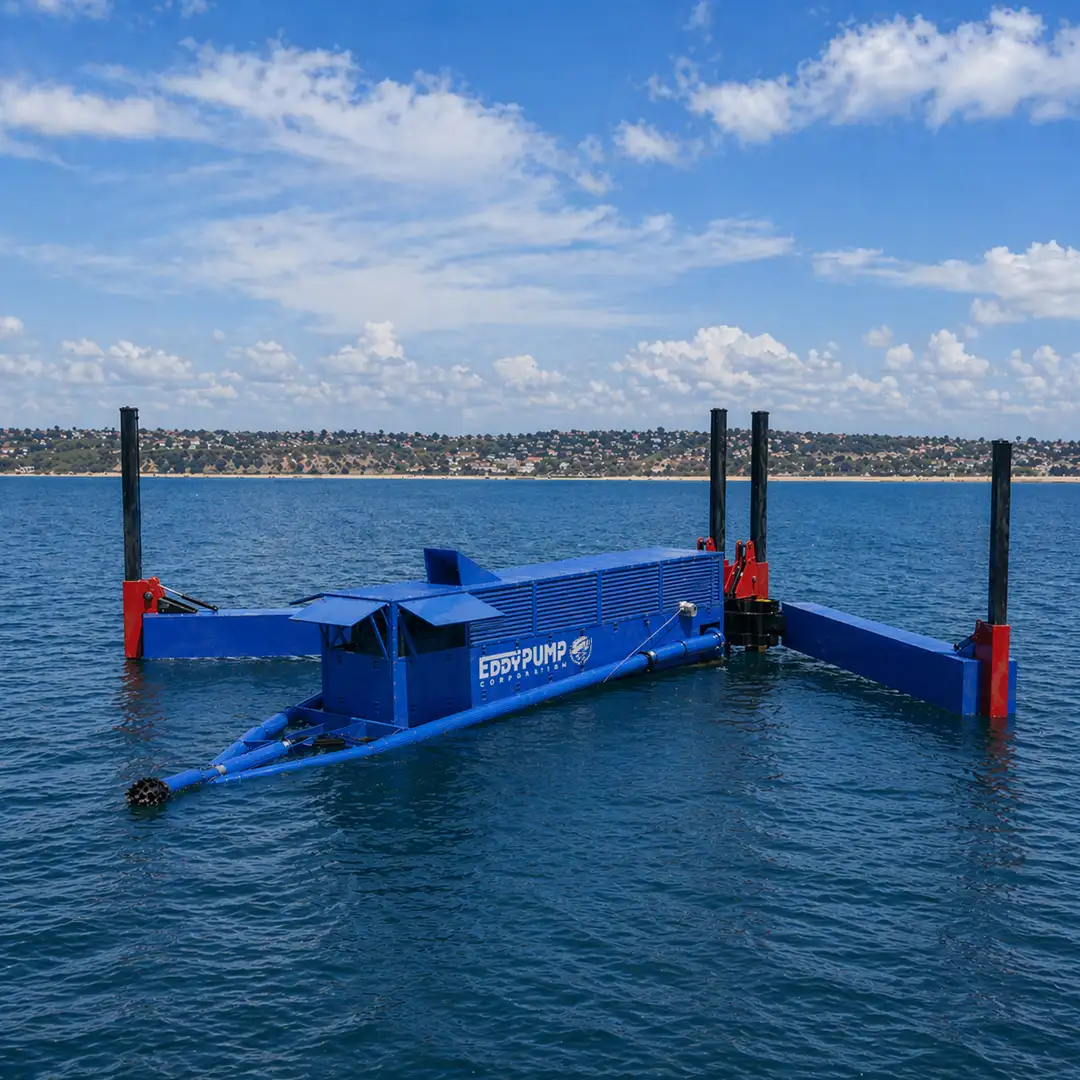
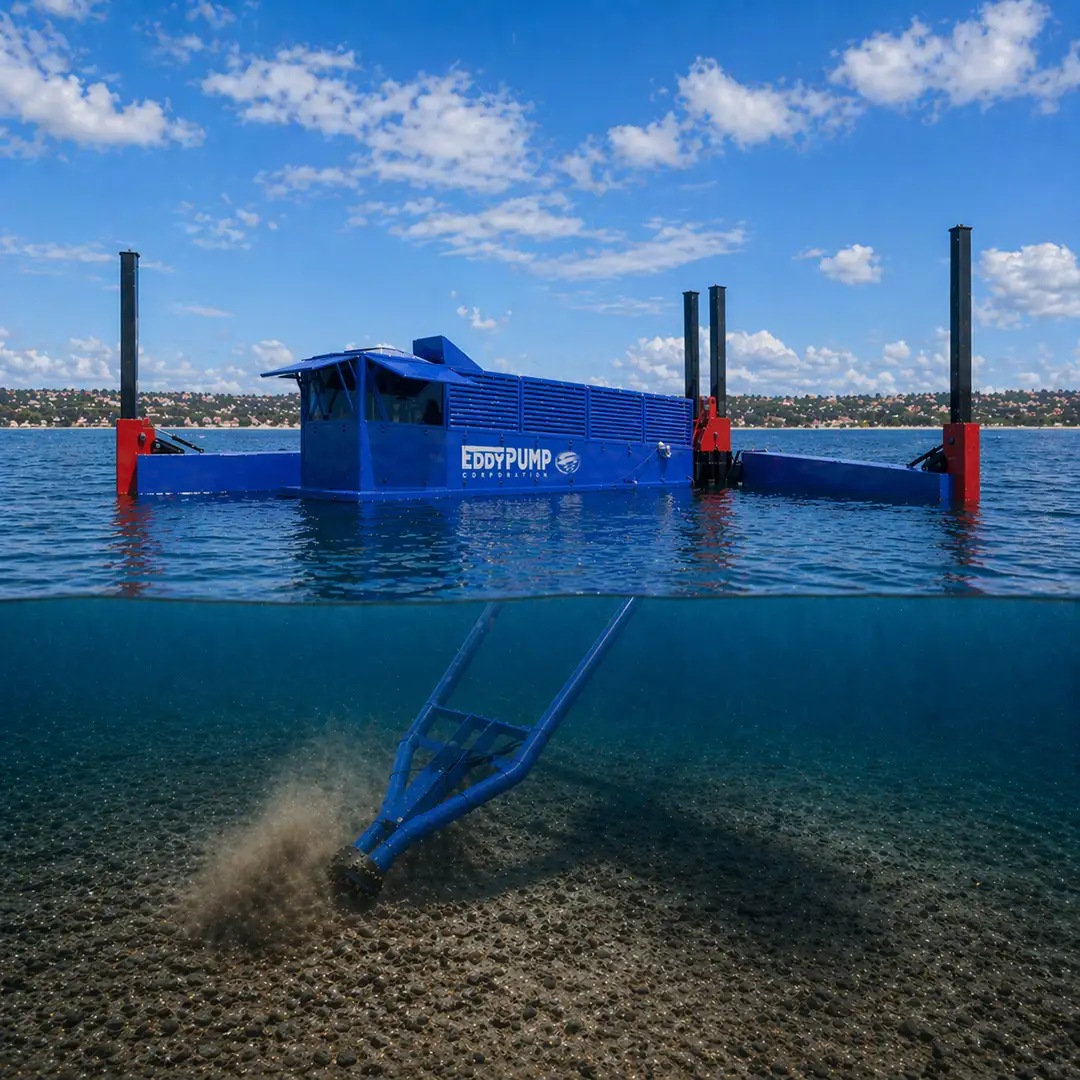
What Is the Autonomous ModDredge?
The system combines a modular dredge/barge platform, EDDY Pump high-solids pumping technology, spud or winch-based positioning options, diesel or electric power options, and remote operation capability. This gives contractors, mines, ports, industrial facilities, municipalities, and environmental teams a scalable dredging system that can be configured around the material, depth, distance, positioning requirements, and production needs of the job.
Unlike many conventional dredges that require oversized transportation, larger crews, more support equipment, and higher volumes of water to move material, the Autonomous ModDredge is designed to move more solids with less water, fewer operators, and faster deployment.
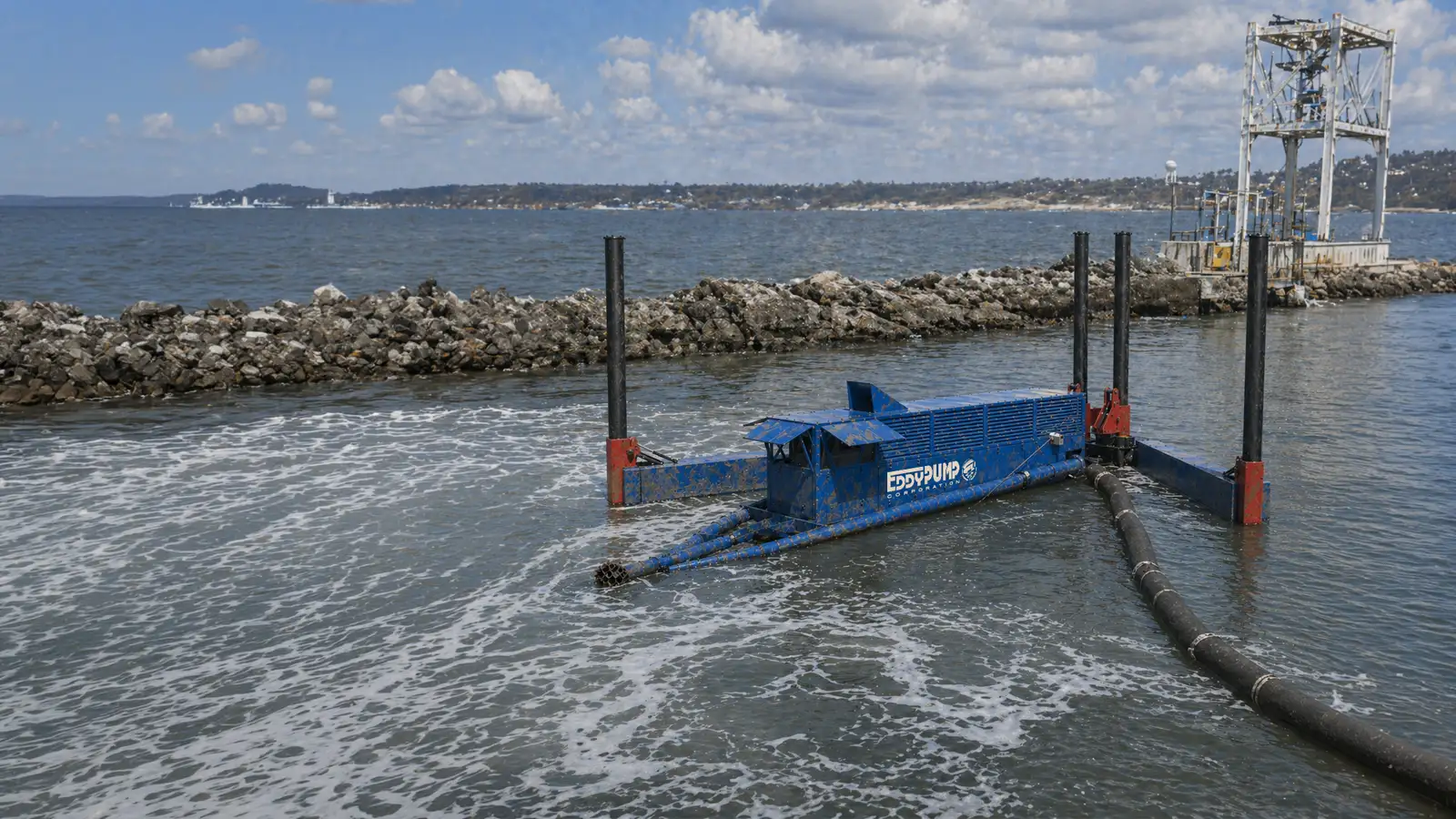
Why Choose the Autonomous ModDredge?
The Autonomous ModDredge is designed for customers who need serious dredging performance without the cost, labor, mobilization complexity, and configuration limits that can come with conventional dredging systems.
Key Benefits

High-solids pumping

Low mobilization footprint

Remote/unmanned operation

Fit for difficult or liner-sensitive sites

Configurable dredging tools
Autonomous ModDredge Models and Specifications
The ModDredge line includes six modular dredge models ranging from 4-inch to 16-inch pump sizes. This gives contractors, mines, industrial operators, ports, and environmental teams a scalable dredging platform based on the production needs of the job.

| Model | Pump Size | Pump Power | Hydraulic Power | Length | Width | Boom Length | Approx. Weight |
|---|---|---|---|---|---|---|---|
| ModDredge‑4 | 4-inch | 125 HP | 50 HP HPU | 20 ft | 16 ft | 20 ft | 7,500 lbs |
| ModDredge‑6 | 6-inch | 250 HP | 50 HP HPU | 20 ft | 16 ft | 20 ft | 10,000 lbs |
| ModDredge‑8 | 8-inch | 550 HP | 75 HP HPU | 40 ft | 16 ft | 30 ft | 20,000 lbs |
| ModDredge‑10 | 10-inch | 550 HP | 75 HP HPU | 40 ft | 16 ft | 30 ft | 20,500 lbs |
| ModDredge‑12 | 12-inch | 900 HP | 100 HP HPU | 40 ft | 16 ft | 30 ft | 27,500 lbs |
| ModDredge‑16 | 16-inch | 2000 HP | 150 HP HPU | 40 ft | 16 ft | 30 ft | 37,500 lbs |
Additional Performance Ranges
| Flow Rates | 600 - 12,000 GPM |
|---|---|
| Material Movement Rates | 50 - 2,000 yd³/hr |
| Solids Concentration | 30 - 70% solids by weight (application dependent) |
| Dredging Depth | 20 - 60 ft (depending on configuration) |
| Discharge Distance | Over 5,000 ft (extended distances achievable using booster pumps) |
| Power Options | Diesel or Electric |
| Operation | Remote-operated and automation-ready |
| Positioning Options | Powered spuds, walking spud option, or winch-based positioning |
| Liner-Sensitive Configuration | Available with engineering review |
| Dredging Head Options | Cutterhead, roller-supported cutterhead, water jetting ring, or no-cutter hydraulic entrainment configuration (application dependent) |
Higher Percent Solids Means More Material Moved Per Hour
Traditional cutter suction and centrifugal dredges typically operate around 10-20% solids by weight. The ModDredge routinely achieves 30-70% solids by weight, depending on the application and material.
What That Means in the Real World

More solids, less water

Fewer truckloads / less disposal volume

Faster removal of actual material
By moving a higher concentration of solids, the Autonomous ModDredge helps reduce the hidden costs that come from pumping too much water. Less water means less rehandling, smaller containment requirements, faster sediment removal, and more productive dredging cycles.
Higher Production Rates with Configurable Pumping Power
The Autonomous ModDredge is engineered for high-production dredging across a wide range of materials and site conditions. Pump size, power package, dredging depth, hose and pipe configuration, booster requirements, and platform layout can be matched to the production needs of the project.

Production Advantages
- Up to 2-3x production versus similarly sized cutter suction dredges
- Consistent output even with debris, trash, rocks, or variable material
- Stable performance at varying depths and densities
- Configurable pump size based on target flow, solids, distance, and production rate
- Compatible with booster pumps for longer discharge distances
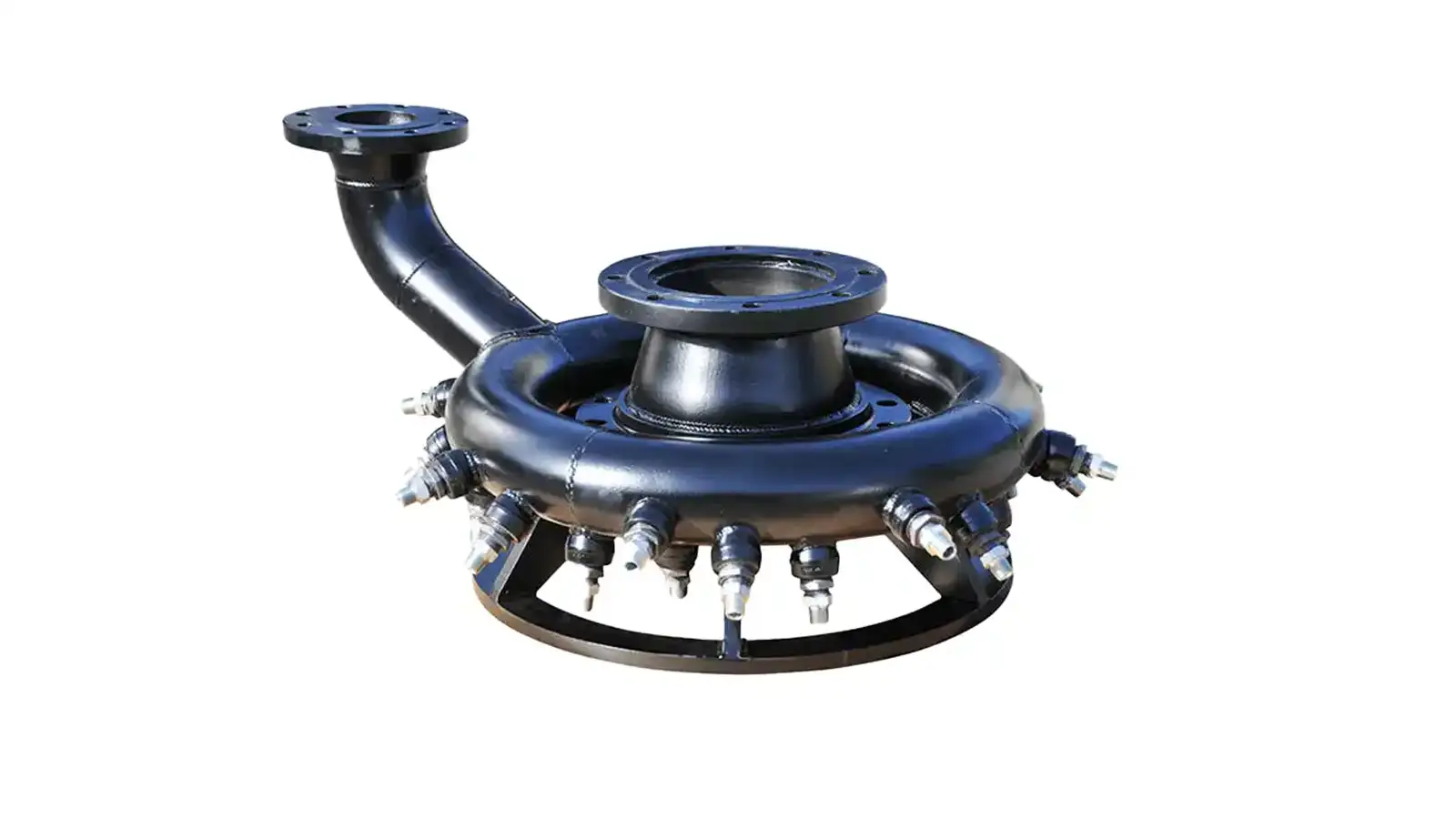
The EDDY Pump non-clog pump design allows the ModDredge to handle abrasive slurry, sludge, sand, silt, tailings, organics, rocks, and debris more effectively than many conventional centrifugal dredging systems.
Remote-Operated and Automation-Ready Dredging
The Autonomous ModDredge is designed for remote and unmanned operation, reducing personnel exposure while improving control, consistency, and jobsite safety.

Remote Operation Benefits
-
Reduced personnel exposure on hazardous or remote sites
-
Shore-based control eliminates the need to place operators on the water
-
Lower labor requirements through remote operation
-
Improved safety for tailings ponds, industrial basins, and contaminated areas
What is an autonomous dredge?
An autonomous dredge is a dredging system designed for remote operation, reduced onboard labor, and integration with control, monitoring, and automation systems. The EDDY Pump Autonomous ModDredge combines modular dredge construction, high-solids pumping, spud or winch-based positioning options, and remote-operation capability to support safer and more efficient dredging in tailings ponds, liner-sensitive basins, canals, ports, and industrial water systems.
Powered Spuds for Faster, Stronger Positioning
This dual-action design allows for faster repositioning, reduced cycle times, and significantly stronger anchoring force during dredging operations. By actively pushing the spud into the material – rather than relying on gravity alone – the dredge maintains a more secure hold, improving stability, accuracy, and overall production.

Positioning Advantages
Liner-Sensitive Dredging Configurations Available
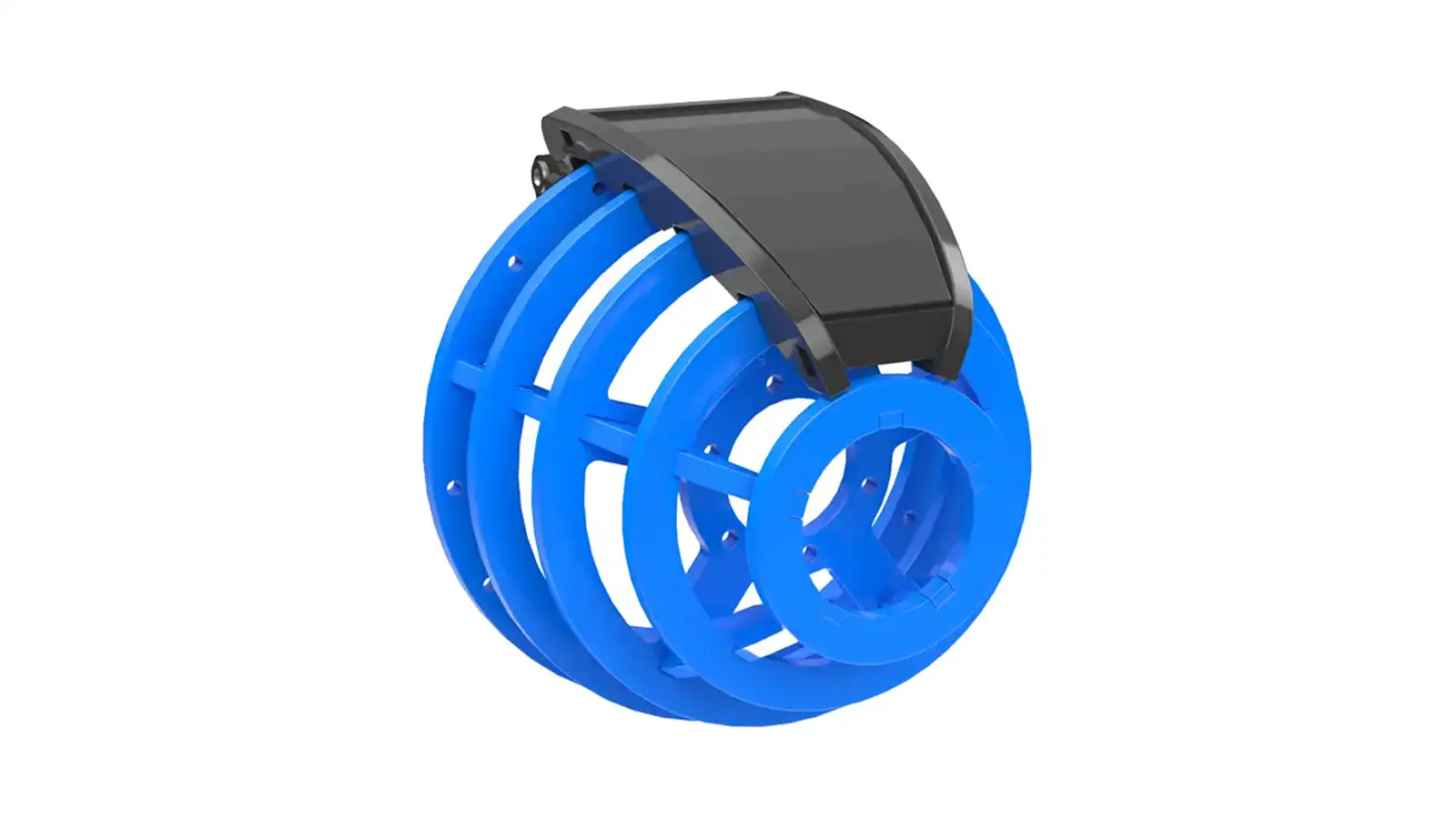
For these applications, the system can be designed with spud shoes/elastomeric pads. This helps avoid driving spuds into the liner while still giving operators controlled movement and precise station-keeping across the dredging area.
Each model supports multiple configuration options including dredging heads, positioning systems, and power setups, allowing the dredge to be adjusted for different material types, site conditions, and operational demands while maintaining consistent production and control.

Liner-Sensitive Configuration Options
- Spud shoe/elastomeric pad to protect the liner.
- Roller-supported cutterhead options where appropriate
- Water jetting ring options for hydraulic agitation
- No-cutter configurations for applications where mechanical cutting is not preferred
- Controlled intake zone for careful sediment removal
- Application-specific engineering review based on liner type, sediment depth, material, and site conditions
Best-Fit Lined Applications
- HDPE and geomembrane-lined ponds
- Clay-lined settling ponds and canals
- Concrete-lined basins, waterways, and reservoirs
- Process-water ponds
- Reclaim-water ponds
- Environmental containment facilities
Remove Sediment While Reducing Liner-Related Risk
For lined or sensitive-bottom applications, the Autonomous ModDredge helps reduce those risks by pairing controlled sediment removal with the right positioning and dredging-head configuration. Final setup should be reviewed by engineering based on liner type, sediment depth, material, and project requirements.
Key Benefits for Lined and Sensitive-Bottom Environments
Lower Operating Cost Per Cubic Yard Moved
The ModDredge reduces total project cost by combining higher solids handling, simplified mobilization, remote operation, and configurable system design.
| Cost Driver | Conventional Dredge | Autonomous ModDredge |
|---|---|---|
| Crew Size | 4-8 operators | 11–3 operators with shore-based control |
| Water Handling | Higher volumes increase transport and disposal cost | Higher solids reduce water handling and downstream processing |
| Mobilization | Oversized loads, permits, escorts | Compact, intermodal-friendly deployment lowers logistics cost |
| System Fit | Fixed configuration may require rework or compromises | Configurable system reduces mismatch and rework |
Typical OPEX Reduction: 30–60% lower operating cost per cubic yard moved, depending on site conditions, configuration, material, and production requirements.
Lowest Cost Dredge to Mobilize
Mobilization Advantages
-
Compact footprint supports simplified transport and handling
-
Ships via standard intermodal freight where configuration allows
-
Reduces need for escort permits and specialized transport
-
Fast setup and easier deployment to remote or short-duration projects

Mobilization Benefit: Up to 70% lower mobilization and demobilization cost, depending on configuration and project location.
Diesel or Electric Power Options
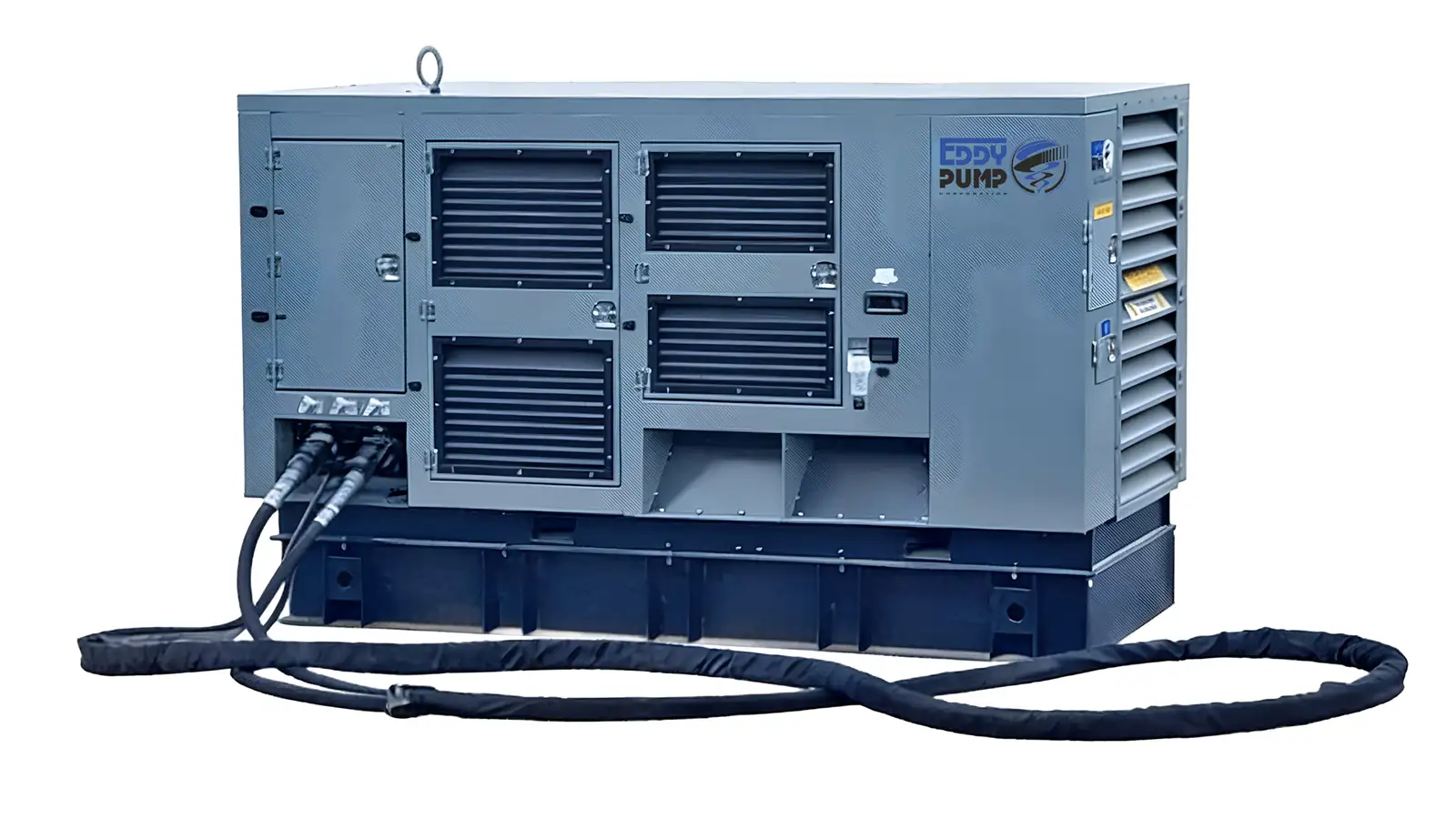
The Autonomous ModDredge can be configured with diesel or electric power depending on the site, emissions requirements, operating environment, and available infrastructure.
Diesel Power
Ideal for remote, off-grid, or temporary dredging projects
Electric Power
Ideal for ports, mines, industrial facilities, low-emissions sites, and fixed infrastructure environments
Ideal Applications / Industries for the Autonomous ModDredge
The Autonomous ModDredge is built for high-solids dredging in environments where mobility, production, safety, liner-sensitive configuration, and operating cost matter.

Mining and tailings management
Remove settled solids from active or inactive tailings ponds while reducing water handling, improving solids concentration, and supporting safer remote operation.

Environmental remediation
Reduce personnel exposure and support controlled sediment removal in contaminated or sensitive environments.

Ports and harbors
Support maintenance dredging in confined or access-sensitive marine environments with a modular platform and configurable pumping power.

Industrial wastewater and process water
Maintain production water systems, settling ponds, and industrial basins by removing accumulated sludge, fines, and sediment.

Power generation and ash ponds
For lined or sensitive-bottom basins, the Autonomous ModDredge uses winch positioning with liner-safe intake options like a roller cutterhead, water jet ring, or no-cutter setup.

Sand and aggregate production
Move high volumes of sand, slurry, and settled solids with high production and reduced mobilization complexity.

Municipal water infrastructure
Operate in narrow, shallow, or confined waterways where conventional dredges may be difficult to deploy.

Stormwater and flood response
Deploy rapidly for emergency sediment removal after storms, floods, or infrastructure events.
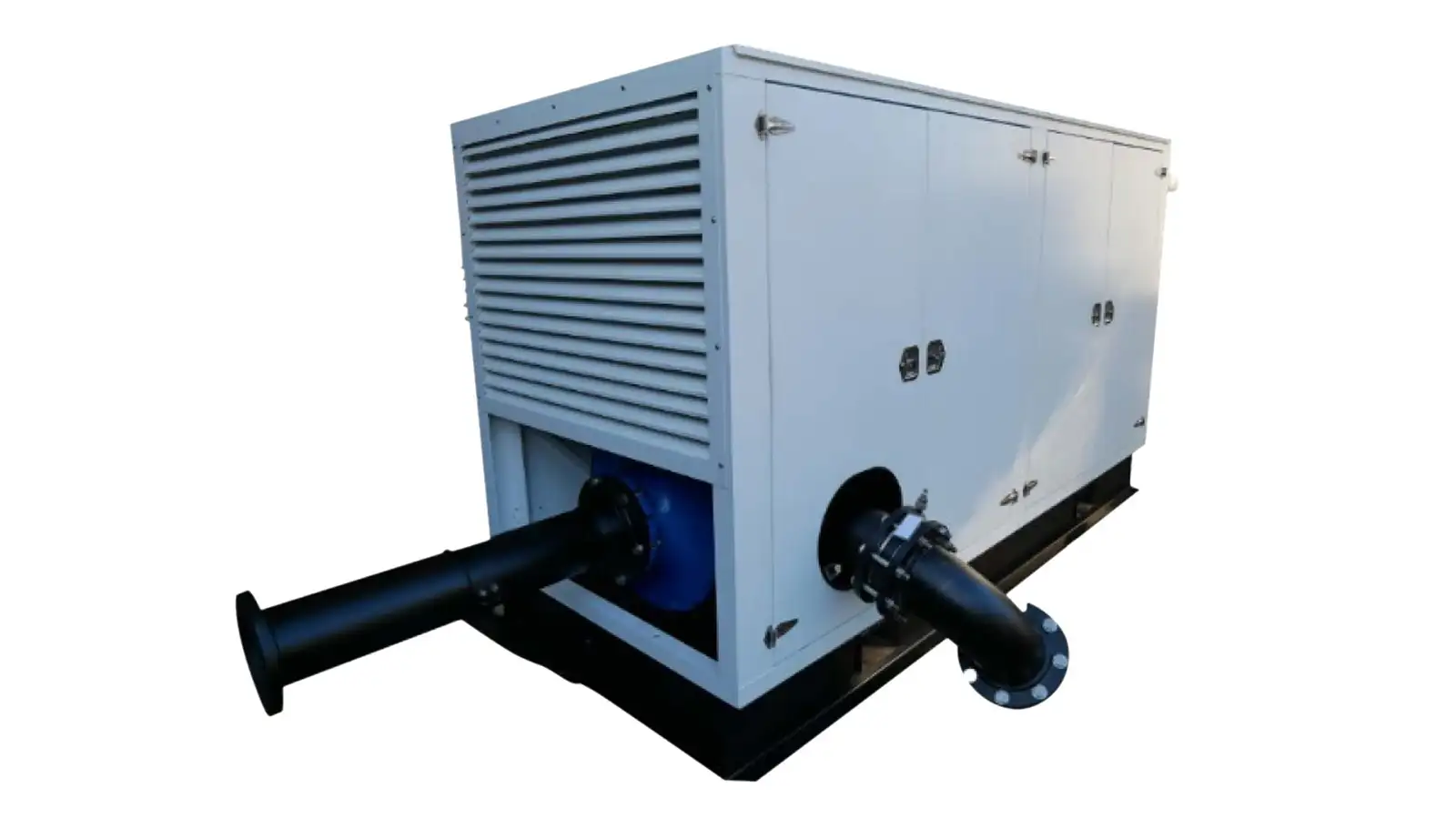
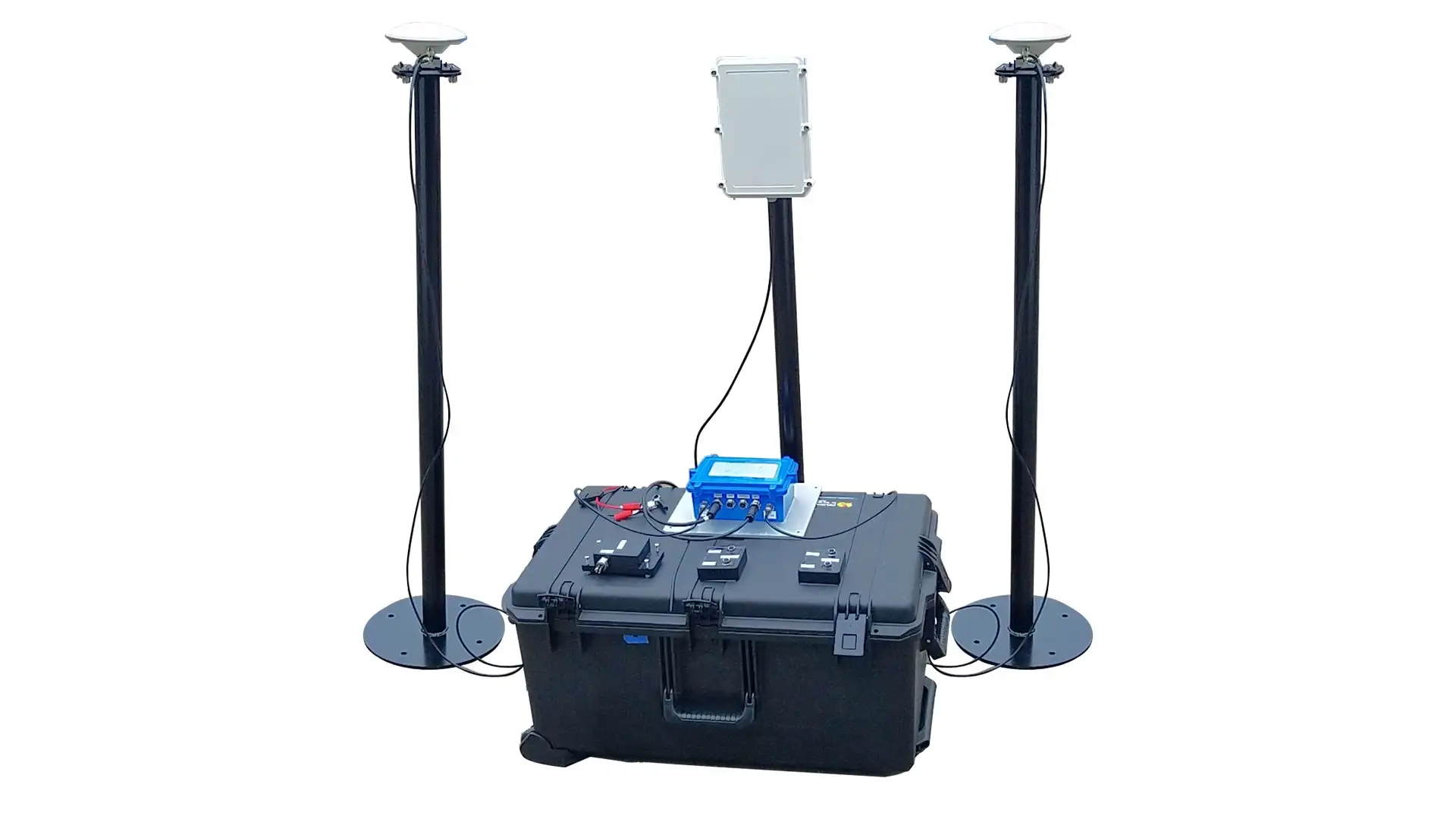
Complete Dredging Systems Available
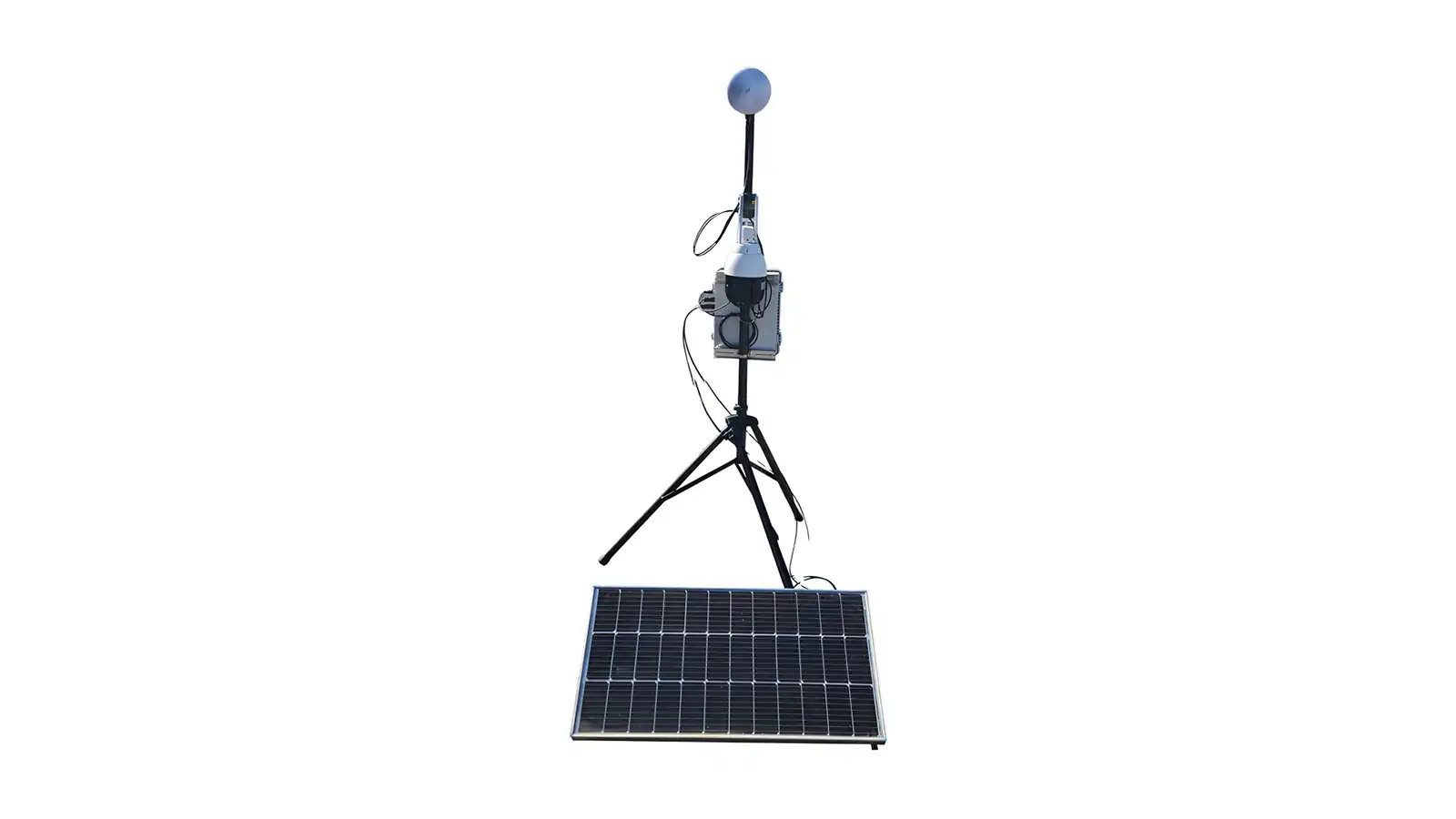
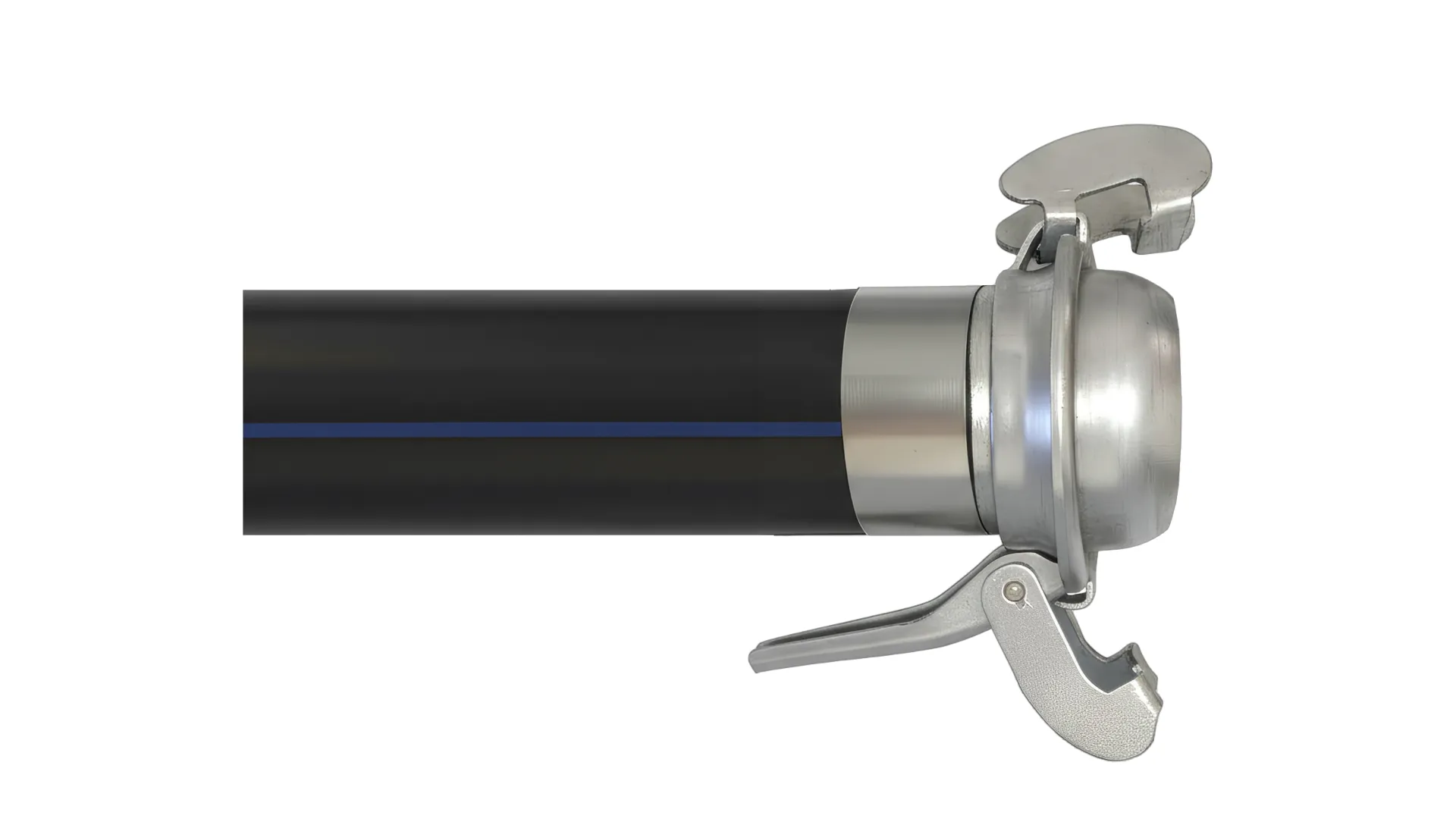
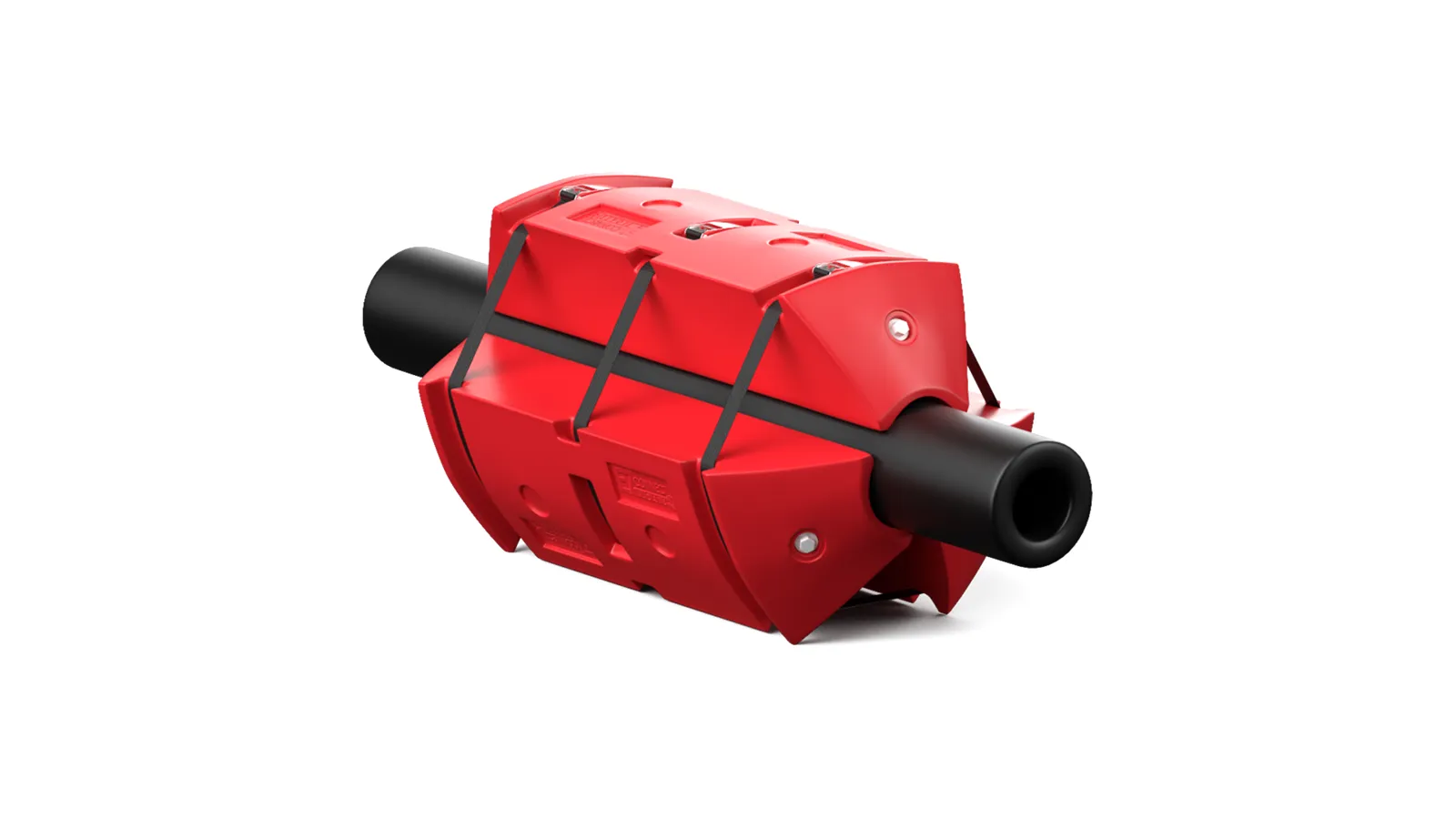
Buyers are often not just shopping for a dredge body. They are trying to solve a complete dredging problem. EDDY Pump can support the full system configuration.
Why EDDY Pump Technology Matters
The Autonomous ModDredge is powered by EDDY Pump technology, designed for high-solids slurry applications where conventional centrifugal pumps struggle with clogging, wear, low solids, and inconsistent production.

Key Advantages
- High-solids pumping capability
- Non-clog pump design
- Reduced wear in abrasive slurry environments
- Configurable dredge platform
- Modular deployment
- Remote operation capability
- Lower cost per cubic yard moved
- Built for industrial, municipal, mining, marine, and environmental dredging applications
ModDredge fundamentally changes dredging economics.
By combining:
- 30-70% solids pumping
- 2-3x production rates
- 30-60% lower operating costs
- Up to 70% lower mobilization costs
- Liner-sensitive configurations available
- Remote unmanned operation capability
The Autonomous ModDredge delivers more material moved per dollar than conventional dredges – with application-specific configurations designed to help protect liner integrity.
Lowest cost to mobilize. Highest solids concentration. Highest production per operator. Configurable for liner-sensitive applications. Remote-operated. Unmatched versatility.
Gallery