




Long Reach Extended Arm and Boom for Excavator
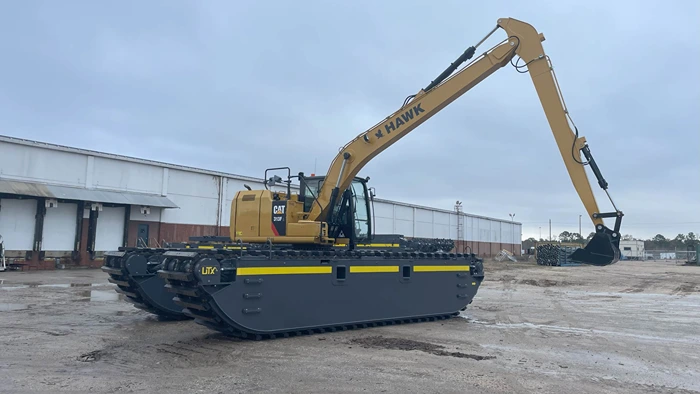
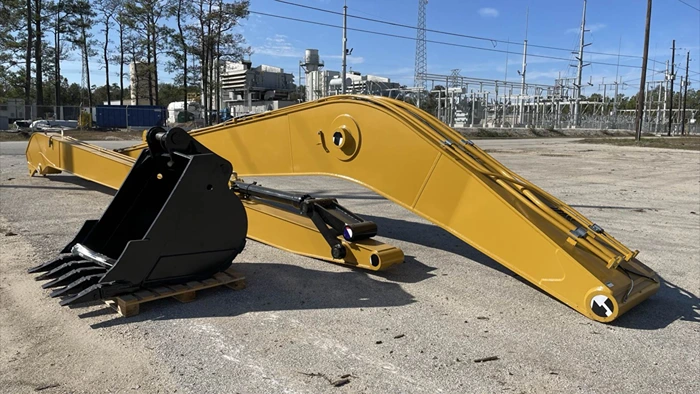
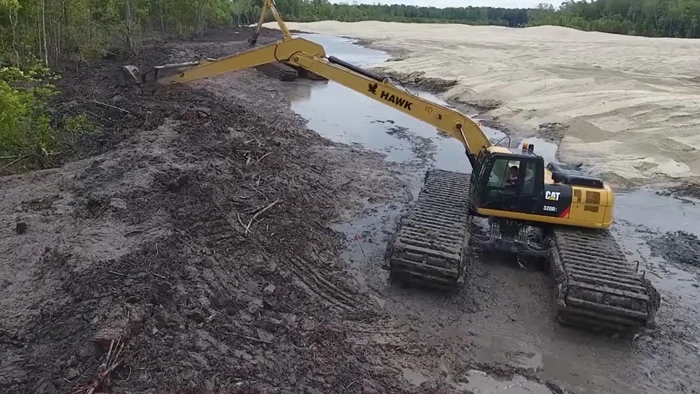
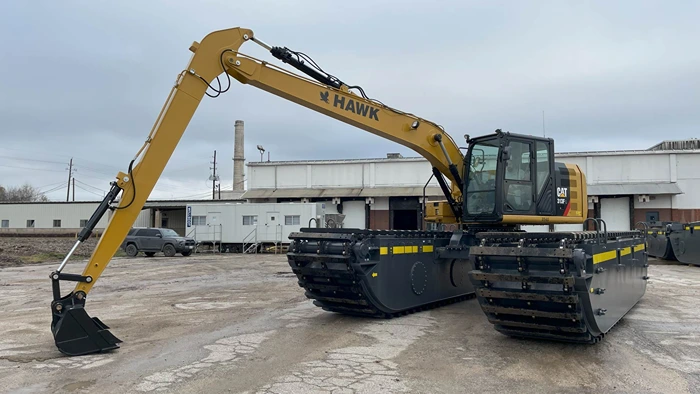
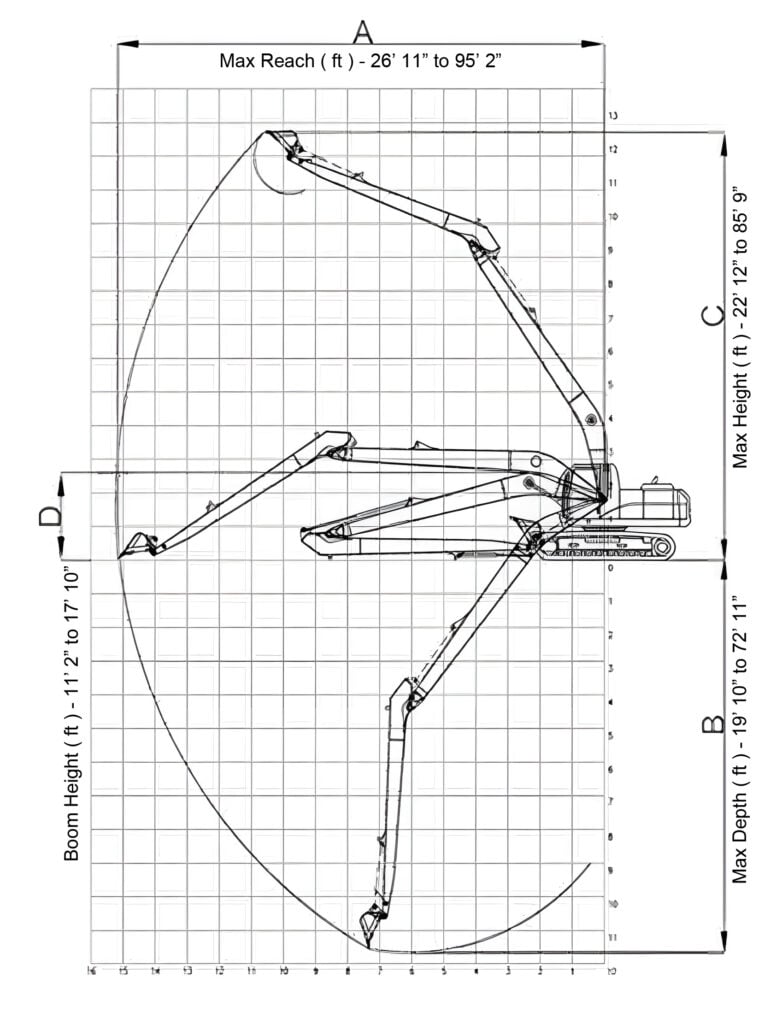
The HAWK Long Reach Arm and Boom, distributed by EDDY Pump, transforms 5– to 130–ton excavators into high-reach, deep-digging systems with up to twice the extended reach. Built from S355JR steel plates and precision-welded for maximum durability, it comes pre-plumbed with hydraulic lines, slurry hose brackets, and quick-connect fittings for fast deployment. Engineered for dredging, marine construction, and elevated operations, it integrates seamlessly with EDDY Pump attachments to deliver unmatched efficiency and reliability.
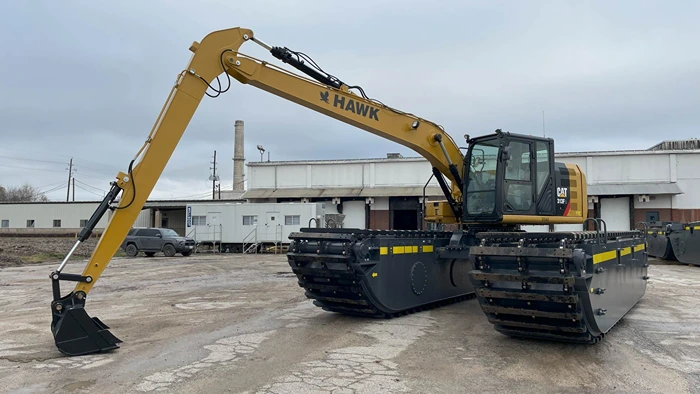
Key Features / Advantages
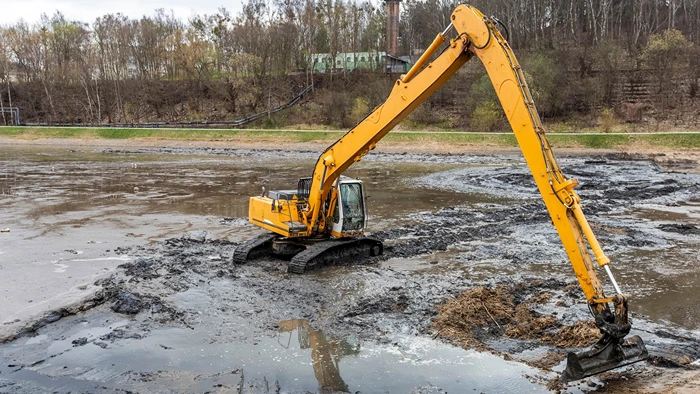
- Extended Reach – Doubles the working reach of standard excavators for dredging, canal, swamp, lake, and river work.
- Heavy-Duty Construction – Built with high-tensile strength S355JR steel plates for durability.
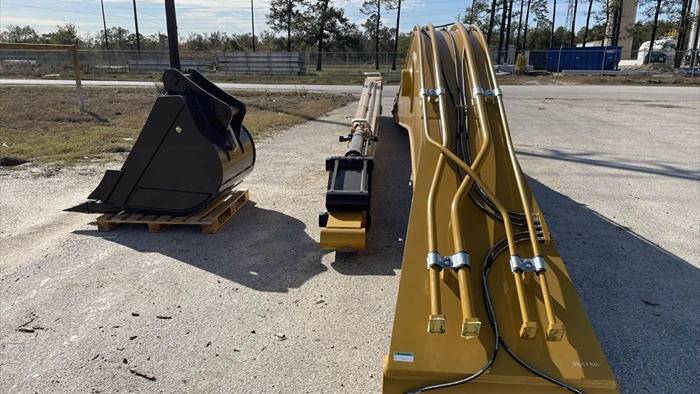
- Pre-Plumbed Hydraulics (Optional) – Hydraulic lines and hose brackets installed to reduce setup time (saves ~24 person-hours).
- Rugged Design – Reinforced boom, arm, and linkage with stress-relieving brackets and a high-quality bucket cylinder.
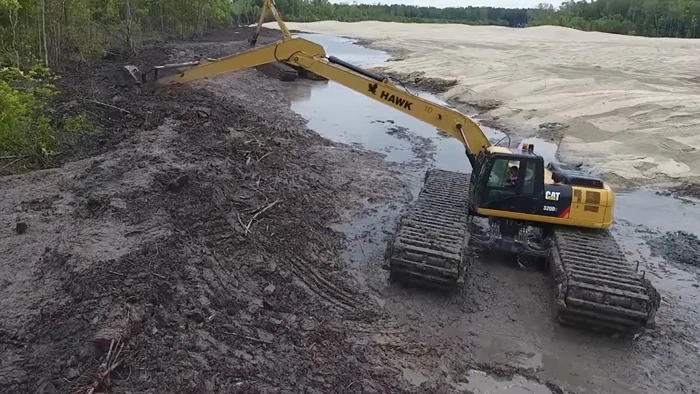
- Advanced Components:
- Chrome-coated solid pins
- Steel shims with a hard metal disk
- EM bushings with grease-trap surface pattern, wear-resistant coating, and 30% longer life
- Advanced GP bucket with abrasion-resistant steel and redesigned side cutter
- Additional Counterweight (Optional) – Improves excavator balance and stability.
- Low Folding Profile – Easier transport between job sites.
- Compatibility – Supports both hydraulic dredge pump attachments and standard mechanical dredging tools.
- Plug-and-Play Hydraulics – Ready-to-use setup for immediate operation.
- Certifications – Manufactured under ISO 9001 and CE-certified standards.
- Quality Assurance – Finite Element Analysis (FEA), CAD simulation stress tests, and NDT weld testing for durability.
Enhanced Attachment Compatibility

Excavator Models & Weight Classes
- Primary focus on 10-, 20-, 30-, and 40-ton excavators, including:
- Cat 320, Cat 336, Cat 349 (or equivalent machines)
- Available for wider compatibility: custom kits can be tailored to match your specific excavator make, model, and tonnage. Please let us know your machine, and we’ll configure the optimal boom, stick, and bucket combination.

Excavator Dredge Pump Attachment (EDDY Pump)
- Seamlessly pins into your existing bucket linkage and runs off the excavator’s auxiliary hydraulics, or optionally an HPU or electric power unit, for flexible setup.
- Offers agitation options, including a cutterhead for compacted material and high-pressure water jetting rings for breaking up and improving slurry throughput.
- Available in multiple discharge sizes (4″ to 12″), delivering 700–4,000 GPM and achieving dredging depths up to 85 ft.
- Drives productivity with slurry pumping capabilities up to 4,500 ft without a booster, although an HPU is advised for distances beyond 2,000 ft.
- Modular design supports alternative deployment methods, including cable-hung, diver-operated, or barge-mounted, for unmatched versatility.

Standard Excavator Buckets
- The system comes with a standard excavation bucket, hydraulic cylinder, and mounting pins, all of which are ready for immediate use.
- High-strength, wear-resistant bucket construction provides enhanced penetration, longevity, and adaptability, making it ideal for dredging, trenching, and general excavation.

HAWK Clamshell Buckets (Rotating & Non-Rotating)
- Rotating Clamshell Buckets: Feature a 360° sealed hydraulic rotation for precise placement, improved throughput, reduced equipment wear, and enhanced safety. Built for excavators up to 50 tons.
- Non-Rotating Clamshell Buckets: Featuring a robust two-bucket design with powerful hydraulics, these buckets are ideal for dredging, excavation, sorting, and material handling. Available in sizes ranging from 5–55 tons, capacities from 0.6 to 3.5 m³, and customizable per machine model.

RTK GPS Dredge Positioning System (HAWK Vision)
Provides survey-grade GPS precision (RTK) by continually monitoring the position of the bucket, clamshell, or dredge pump—eliminating over- or under-dredging and optimizing production.
Gallery
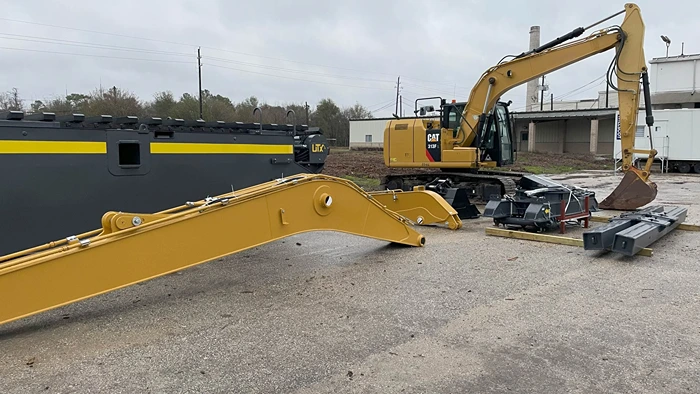
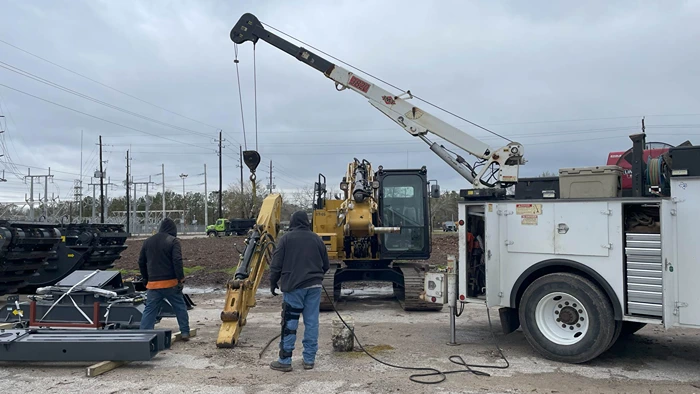
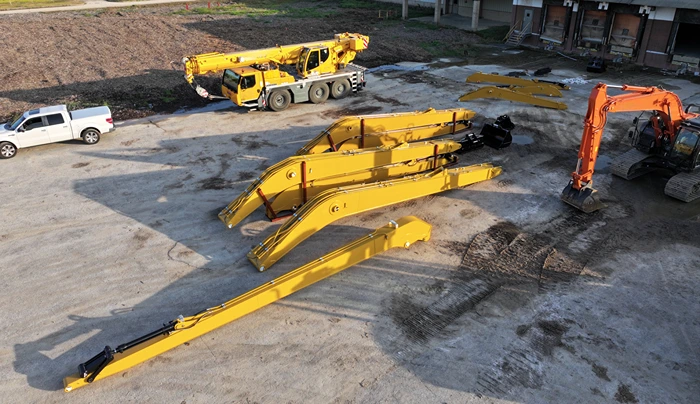
Long Reach Extended Arm and Boom for Excavator
Specifications - All Models
| Model | Excavator Weight | Total Length | Boom Length | Stick Length | Bucket Capacity |
|---|---|---|---|---|---|
| LRA726 | 7–8 Ton | 26′3″ (8 m) | 16′0″ (4.8 m) | 9′3″ (2.8 m) | 0.24 yd³ (0.18 m³) |
| LRA1036 | 10–13 Ton | 36′ (11 m) | 21′4″ (6.5 m) | 14′4″ (4.4 m) | 0.65 yd³ (0.5 m³) |
| LRA1041 | 10–13 Ton | 41′ (12.5 m) | 23′6″ (7.2 m) | 16′9″ (5.1 m) | 0.52 yd³ (0.4 m³) |
| LRA1436 | 14–16 Ton | 36′1″ (11 m) | 21′6″ (6.5 m) | 13′9″ (4.1 m) | 0.65 yd³ (0.5 m³) |
| LRA1444 | 14–16 Ton | 44′4″ (13.5 m) | 23′6″ (7.2 m) | 16′6″ (5 m) | 0.52 yd³ (0.4 m³) |
| LRA1844 | 18–22 Ton | 44′5″ (13.5 m) | 25′6″ (7.8 m) | 17′8″ (5.4 m) | 0.78 yd³ (0.6 m³) |
| LRA1849 | 18–22 Ton | 49′3″ (15 m) | 28′5″ (8.7 m) | 20′6″ (6.3 m) | 0.65 yd³ (0.5 m³) |
| LRA1854 | 18–22 Ton | 54′2″ (16.5 m) | 30′6″ (9.3 m) | 22′8″ (6.9 m) | 0.52 yd³ (0.4 m³) |
| LRA2349 | 23–26 Ton | 49′3″ (15 m) | 28′5″ (8.7 m) | 20′6″ (6.2 m) | 0.92 yd³ (0.7 m³) |
| LRA2357 | 23–26 Ton | 57′5″ (17.5 m) | 30′6″ (9.3 m) | 22′8″ (6.9 m) | 0.78 yd³ (0.6 m³) |
| LRA2360 | 23–26 Ton | 60′8″ (18.5 m) | 34′ (10.4 m) | 26′1″ (8 m) | 0.65 yd³ (0.5 m³) |
| LRA2754 | 27–32 Ton | 54′2″ (16.5 m) | 30′9″ (9.4 m) | 21′10″ (6.7 m) | 0.92 yd³ (0.7 m³) |
| LRA2762 | 27–32 Ton | 62′4″ (19 m) | 34′0″ (10.4 m) | 25′1″ (7.7 m) | 0.79 yd³ (0.6 m³) |
| LRA3365 | 33–36 Ton | 65′7″ (20 m) | 37′3″ (11.3 m) | 27′9″ (8.5 m) | 1.05 yd³ (0.8 m³) |
| LRA3368 | 33–36 Ton | 68′11″ (21 m) | 38′10″ (11.8 m) | 29′4″ (9 m) | 0.92 yd³ (0.7 m³) |
| LRA3868 | 38–45 Ton | 68′11″ (21 m) | 38′11″ (11.9 m) | 28′11″ (8.8 m) | 1.31 yd³ (1 m³) |
| LRA3872 | 38–45 Ton | 72′2″ (22 m) | 40′9″ (12.3 m) | 30′5″ (9.3 m) | 1.05 yd³ (0.8 m³) |
| LRA4672 | 46–50 Ton | 72′2″ (22 m) | 40′4″ (12.3 m) | 30′5″ (9.3 m) | 1.18 yd³ (0.9 m³) |
| LRA6075 | 60–65 Ton | 75′6″ (23 m) | 42′6″ (12.9 m) | 32′9″ (10 m) | 1.60 yd³ (1.2 m³) |
| LRA7078 | 70–75 Ton | 78′9″ (24 m) | 45′0″ (13.7 m) | 33′9″ (10.3 m) | 1.70 yd³ (1.3 m³) |
| LRA8082 | 80–90 Ton | 82′ (25 m) | 47′3″ (14.4 m) | 35′1″ (10.7 m) | 1.83 yd³ (1.4 m³) |
| LRA10088 | 100–110 Ton | 88′7″ (27 m) | 50′11″ (15.5 m) | 37′10″ (11.5 m) | 2.09 yd³ (1.6 m³) |
| LRA10091 | 100–110 Ton | 91′10″ (28 m) | 52′10″ (16.1 m) | 38′4″ (11.7 m) | 1.83 yd³ (1.4 m³) |
| LRA12091 | 120–130 Ton | 91′10″ (28 m) | 52′7″ (16 m) | 39′11″ (12.2 m) | 2.09 yd³ (1.6 m³) |
| LRA12095 | 120–130 Ton | 95′2″ (29 m) | 54′10″ (16.7 m) | 39′10″ (12.2 m) | 1.83 yd³ (1.4 m³) |
Specifications - By Excavator Models
| Excavator Model | Length | Boom Length | Stick Length | Bucket Capacity |
|---|---|---|---|---|
| Case CX210 | 49′3″ (15 m) | 28′5″ (8.6 m) | 20′6″ (6.2 m) | 0.92 yd³ (0.7 m³) |
| Case CX210 | 57′5″ (17.5 m) | 30′6″ (9.3 m) | 22′8″ (6.9 m) | 0.78 yd³ (0.6 m³) |
| Case CX210 | 60′8″ (18.5 m) | 33′12″ (10.3 m) | 26′1″ (7.9 m) | 0.65 yd³ (0.5 m³) |
| Case CX250 | 54′2″ (16.5 m) | 30′9″ (9.4 m) | 21′1″ (6.7 m) | 0.9 yd³ (0.7 m³) |
| Case CX250 | 62′4″ (19 m) | 33′1″ (10.4 m) | 25′1″ (7.7 m) | 0.8 yd³ (0.6 m³) |
| Case CX300 | 65′7″ (20 m) | 37′3″ (11.3 m) | 27′9″ (8.4 m) | 1.05 yd³ (0.8 m³) |
| Case CX300 | 68′11″ (21 m) | 38′10″ (11.8 m) | 29′4″ (8.9 m) | 0.92 yd³ (0.7 m³) |
| Caterpillar 320 | 44′5″ (13.5 m) | 25′6″ (7.7 m) | 17′7″ (5.3 m) | 0.78 yd³ (0.6 m³) |
| Caterpillar 320 | 49′3″ (15 m) | 28′5″ (8.6 m) | 20′6″ (6.2 m) | 0.65 yd³ (0.5 m³) |
| Caterpillar 320 | 54′2″ (16.5 m) | 30′6″ (9.3 m) | 22′8″ (6.9 m) | 0.52 yd³ (0.4 m³) |
| Caterpillar 323 | 49′3″ (15 m) | 28′5″ (8.6 m) | 20′6″ (6.2 m) | 0.92 yd³ (0.7 m³) |
| Caterpillar 323 | 57′5″ (17.5 m) | 30′6″ (9.3 m) | 22′8″ (6.9 m) | 0.78 yd³ (0.6 m³) |
| Caterpillar 323 | 60′8″ (18.5 m) | 33′12″ (10.3 m) | 26′1″ (7.9 m) | 0.65 yd³ (0.5 m³) |
| Caterpillar 325 | 49′3″ (15 m) | 28′5″ (8.6 m) | 20′6″ (6.2 m) | 0.92 yd³ (0.7 m³) |
| Caterpillar 325 | 57′5″ (17.5 m) | 30′6″ (9.3 m) | 22′8″ (6.9 m) | 0.78 yd³ (0.6 m³) |
| Caterpillar 325 | 60′8″ (18.5 m) | 33′12″ (10.3 m) | 26′1″ (7.9 m) | 0.65 yd³ (0.5 m³) |
| Caterpillar 336 | 65′7″ (20 m) | 37′3″ (11.3 m) | 27′9″ (8.4 m) | 1.05 yd³ (0.8 m³) |
| Caterpillar 336 | 68′11″ (21 m) | 38′10″ (11.8 m) | 29′4″ (8.9 m) | 0.92 yd³ (0.7 m³) |
| Caterpillar 349 | 72′2″ (22 m) | 40′4″ (12.3 m) | 30′5″ (9.2 m) | 1.18 yd³ (0.9 m³) |
| Hitachi EX120 | 36′ (11 m) | 21′4″ (6.4 m) | 14′4″ (4.3 m) | 0.65 yd³ (0.5 m³) |
| Hitachi EX120 | 41′0″ (12.5 m) | 23′6″ (7.1 m) | 16′9″ (5.1 m) | 0.52 yd³ (0.4 m³) |
| Hitachi ZX200 | 44′5″ (13.5 m) | 25′6″ (7.7 m) | 17′7″ (5.3 m) | 0.78 yd³ (0.6 m³) |
| Hitachi ZX200 | 49′3″ (15 m) | 28′5″ (8.6 m) | 20′6″ (6.2 m) | 0.65 yd³ (0.5 m³) |
| Hitachi ZX200 | 54′2″ (16.5 m) | 30′6″ (9.3 m) | 22′8″ (6.9 m) | 0.52 yd³ (0.4 m³) |
| Hitachi ZX250 | 54′2″ (16.5 m) | 30′9″ (9.4 m) | 21′1″ (6.7 m) | 0.9 yd³ (0.7 m³) |
| Hitachi ZX250 | 62′4″ (19 m) | 33′1″ (10.4 m) | 25′1″ (7.7 m) | 0.8 yd³ (0.6 m³) |
| Hitachi ZX300 | 65′7″ (20 m) | 37′3″ (11.3 m) | 27′9″ (8.4 m) | 1.05 yd³ (0.8 m³) |
| Hitachi ZX300 | 68′11″ (21 m) | 38′10″ (11.8 m) | 29′4″ (8.9 m) | 0.92 yd³ (0.7 m³) |
| Hitachi ZX350 | 68′11″ (21 m) | 38′11″ (11.8 m) | 28′11″ (8.8 m) | 1.31 yd³ (1 m³) |
| Hitachi ZX350 | 72′2″ (22 m) | 40′9″ (12.3 m) | 30′5″ (9.2 m) | 1.05 yd³ (0.8 m³) |
| John Deere 135P | 36′1″ (11 m) | 21′6″ (6.6 m) | 13′9″ (4.2 m) | 0.7 yd³ (0.5 m³) |
| John Deere 200G | 44′4″ (13.5 m) | 23′6″ (7.2 m) | 16′6″ (5 m) | 0.5 yd³ (0.4 m³) |
| John Deere 200G | 44′5″ (13.5 m) | 25′6″ (7.7 m) | 17′7″ (5.3 m) | 0.78 yd³ (0.6 m³) |
| John Deere 200G | 49′3″ (15 m) | 28′5″ (8.6 m) | 20′6″ (6.2 m) | 0.65 yd³ (0.5 m³) |
| John Deere 200G | 54′2″ (16.5 m) | 30′6″ (9.3 m) | 22′8″ (6.9 m) | 0.52 yd³ (0.4 m³) |
| John Deere 210G | 44′5″ (13.5 m) | 25′6″ (7.7 m) | 17′7″ (5.3 m) | 0.78 yd³ (0.6 m³) |
| John Deere 210G | 49′3″ (15 m) | 28′5″ (8.6 m) | 20′6″ (6.2 m) | 0.65 yd³ (0.5 m³) |
| John Deere 210G | 54′2″ (16.5 m) | 30′6″ (9.3 m) | 22′8″ (6.9 m) | 0.52 yd³ (0.5 m³) |
| John Deere 245G | 49′3″ (15 m) | 28′5″ (8.6 m) | 20′6″ (6.2 m) | 0.92 yd³ (0.7 m³) |
| John Deere 245G | 57′5″ (17.5 m) | 30′6″ (9.3 m) | 22′8″ (6.9 m) | 0.78 yd³ (0.6 m³) |
| John Deere 245G | 60′8″ (18.5 m) | 33′12″ (10.3 m) | 26′1″ (7.9 m) | 0.65 yd³ (0.5 m³) |
| John Deere 300G | 65′7″ (20 m) | 37′3″ (11.3 m) | 27′9″ (8.4 m) | 1.05 yd³ (0.8 m³) |
| John Deere 300G | 68′11″ (21 m) | 38′10″ (11.8 m) | 29′4″ (8.9 m) | 0.92 yd³ (0.7 m³) |
| John Deere 350G | 65′7″ (20 m) | 37′3″ (11.3 m) | 27′9″ (8.4 m) | 1.05 yd³ (0.8 m³) |
| John Deere 350G | 68′11″ (21 m) | 38′10″ (11.8 m) | 29′4″ (8.9 m) | 0.92 yd³ (0.7 m³) |
| John Deere 470G | 72′2″ (22 m) | 40′4″ (12.3 m) | 30′5″ (9.2 m) | 1.18 yd³ (0.9 m³) |
| John Deere 870P | 82′ (25 m) | 47′3″ (14.4 m) | 35′1″ (10.6 m) | 1.83 yd³ (1.4 m³) |
| Komatsu PC200 | 49′3″ (15 m) | 28′5″ (8.6 m) | 20′6″ (6.2 m) | 0.92 yd³ (0.7 m³) |
| Komatsu PC200 | 57′5″ (17.5 m) | 30′6″ (9.3 m) | 22′8″ (6.9 m) | 0.78 yd³ (0.6 m³) |
| Komatsu PC200 | 60′8″ (18.5 m) | 33′12″ (10.3 m) | 26′1″ (7.9 m) | 0.65 yd³ (0.5 m³) |
| Komatsu PC210 | 44′5″ (13.5 m) | 25′6″ (7.7 m) | 17′7″ (5.3 m) | 0.78 yd³ (0.6 m³) |
| Komatsu PC210 | 49′3″ (15 m) | 28′5″ (8.6 m) | 20′6″ (6.2 m) | 0.65 yd³ (0.5 m³) |
| Komatsu PC210 | 54′2″ (16.5 m) | 30′6″ (9.3 m) | 22′8″ (6.9 m) | 0.52 yd³ (0.4 m³) |
HAWK Excavator Solutions Distributed by EDDY Pump

Long Reach Extended Arm and Boom Kit
A heavy-duty upgrade kit designed for 5 to 130-ton excavators that doubles the working reach compared to a standard boom. It’s pre-plumbed for hydraulic and slurry hose integration—enabling faster jobsite deployment and optimized dredging performance.
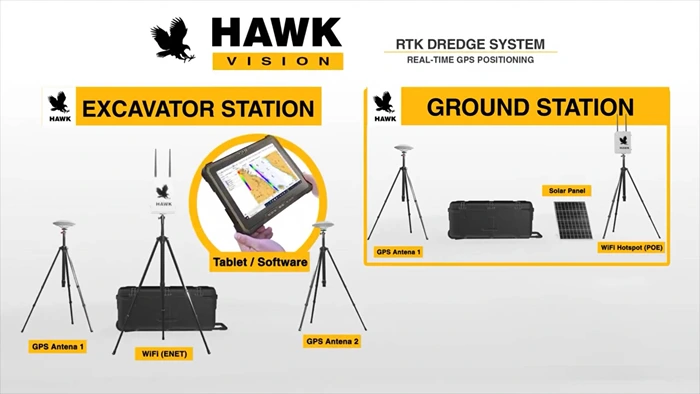
HAWK Vision RTK GPS Dredge Positioning System
An advanced RTK GPS that tracks the precise location of the bucket, clamshell, or dredge pump—eliminating over- or under-dredging and improving productivity with real-time positioning data.

Amphibious Undercarriage (Swamp Buggy Conversion)
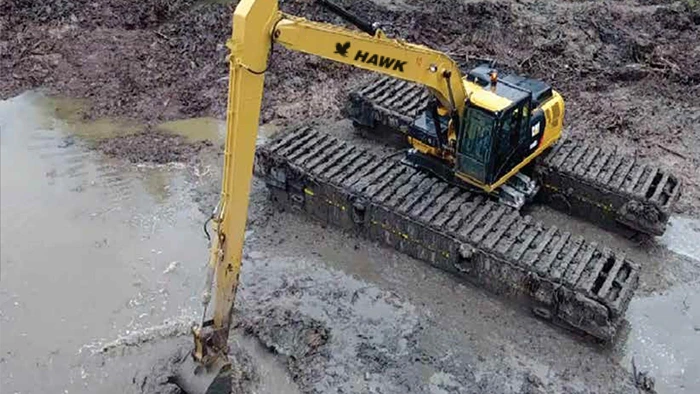
A modular pontoon undercarriage solution that converts standard excavators into amphibious dredgers—ideal for operating in wetlands, marshes, and shallow water environments. When combined with a dredge attachment, it becomes a highly effective platform for marsh dredging.
What’s Included in the Long Reach Arm & Boom Kit
| Item | Included |
|---|---|
| Boom | 1 unit |
| Arm | 1 unit |
| Hydraulic bucket cylinder | 1 unit |
| Hydraulic tubing with a clamp | 1 set |
| Hydraulic pressure hose | 1 set |
| Bucket linkage with two pins | 1 set |
| Bucket pins | 2 pcs |
| Arm cylinder pin | 1 pc |
| Yoke pin | 1 pc |
| EM bushings | Included |
| CE bucket with teeth | 1 unit |
| Seal kit for bucket cylinder | 1 set |
Quality Assurance

Industries Served

River, Canal, and Lake Dredging
Long Reach Arms extend the working depth and range of excavators, making them ideal for removing silt, sand, and debris from inland waterways. Their added reach reduces the need for repositioning and speeds up dredging cycles.

Port and Harbor Maintenance
By pairing Long Reach Arms with buckets or dredge attachments, ports can efficiently clear sedimentation that restricts vessel access. The extended boom ensures operators can reach far under piers, docks, and jetties.

Mining and Tailings Ponds
Tailings ponds often require excavation at extended depths or distances. Long Reach Arms allow safe material removal from pond edges, minimizing equipment exposure to unstable or hazardous ground conditions.

Wetland and Marsh Excavation
In sensitive ecosystems, Long Reach Arms allow operators to reach further into marshes, swamps, and wetlands without driving heavy machinery into fragile terrain, reducing environmental disruption.

Flood Control and Embankment Work
Long Reach Arms enable excavation and strengthening of levees, dikes, and flood channels from a safe distance. Their reach allows operators to clear debris and restore flow capacity after floods.

Land Reclamation and Coastal Projects
Extended booms are used to move dredged material for filling low-lying areas and shoreline reclamation. Their long-range capability reduces the need for barge repositioning in large coastal projects.

Bridge, Dam, and Infrastructure Maintenance
Long Reach Arms allow excavation and maintenance under bridges, near dam spillways, and around pilings, where standard booms cannot reach. This capability ensures safer and more efficient access in hard-to-reach zones.
Flood Channel Rehabilitation for Municipal Infrastructure
Case Study

Challenge
A mid-sized city faced recurring flooding due to heavy sedimentation and debris buildup in its flood control channel. Standard excavators and maintenance equipment struggled to clear blockages, as much of the material was located beyond their operational reach. Repositioning equipment multiple times along the embankment added cost, time, and safety risks, especially with unstable ground conditions near the channel edge.

Solution
The municipality deployed a HAWK Long Reach Arm mounted on a 30-ton excavator, distributed by EDDY Pump. The extended boom allowed operators to reach across the full width of the channel, removing silt, debris, and vegetation without repositioning. The long reach also enabled precise reshaping of embankments, improving water flow efficiency. Pre-plumbed hydraulics supported quick integration with a bucket attachment, ensuring rapid mobilization.

Result
The project was completed ahead of schedule, restoring the channel’s designed flow capacity before the next rainy season. The use of the Long Reach Arm reduced machine repositioning by nearly 40%, resulting in a decrease in fuel costs and labor hours. Most importantly, the city was able to mitigate flood risk for nearby communities, improving public safety while reducing future emergency maintenance costs.
Call for sales or support
If you need assistance with pump selection, sales or engineering support, call 619-404-1916.
Frequently Asked Questions
What is a Long Reach Arm and Boom, and how is it different from a standard excavator arm?
A long-reach boom is a specially engineered attachment that extends the working range of an excavator, up to twice the length of a standard arm. While a standard arm is designed for general digging, a Long Reach system is optimized for dredging, canal deepening, wetland excavation, and working in areas that require extended reach without repositioning the machine.
Which excavator sizes are compatible with HAWK Long Reach Arms?
HAWK manufactures extended arms, distributed by EDDY Pump, for excavators in a wide range of classes, from 5-ton compact machines to 130-ton heavy-duty excavators. Commonly supported classes include 20-, 30-, and 40-ton machines such as Cat 320, Cat 336, and Cat 349 equivalents. Custom engineering is available to match specific makes and models.
What applications are best suited for a heavy-duty long-reach excavator arm?
Excavator arm extensions are ideal for projects that require excavation at extended depths or distances. These include river and canal dredging, port and harbor maintenance, management of mining tailings ponds, flood channel rehabilitation, wetland restoration, and maintenance of dams and bridges. They are widely used in both municipal and industrial projects where standard booms cannot reach.
How does a Long Reach Arm improve dredging operations?
When paired with an EDDY Pump dredge pump attachment, the dredging excavator's long reach boom enables operators to dredge deeper and further from a single position. This reduces the need for frequent machine repositioning, shortens cycle times, and increases efficiency. Pre-plumbed hydraulic lines and slurry hose brackets facilitate easy integration of pumps, clamshells, or buckets.
What materials are used in manufacturing the HAWK Long Reach Arms?
HAWK excavator long arm attachments are built with high-tensile S355JR steel plates, known for their strength and durability. Components are robotically welded, FEA-tested for stress analysis, and undergo NDT weld testing to ensure reliability. These materials and processes enable the arms to withstand demanding environments in dredging and excavation.
Are additional counterweights required for safe operation?
Yes, for many long-reach applications, HAWK provides optional additional counterweights to balance the excavator during extended operations. This ensures stability when digging or dredging at long distances, reducing the risk of tipping and improving machine safety.
Can a long-reach boom be transported easily between job sites?
Despite their size, the HAWK excavator's long reach arm and boom are designed with a low-folding profile for easy transport. This makes them easier to load onto trailers or barges, reducing logistical challenges when moving equipment between dredging or construction sites.
How does the long arm attachment impact excavator performance and cycle times?
A long reach arm extends the working envelope but slightly reduces lifting capacity compared to standard booms due to leverage. However, they are engineered for balance, strength, and efficiency in deep digging and dredging applications. By minimizing repositioning, they often increase overall project productivity despite lower lifting power.
What is included in an excavator long reach arm and boom package from HAWK/EDDY Pump?
A standard package includes: boom, arm, bucket cylinder, hydraulic tubing and hoses, bucket linkage with pins, CE-certified bucket with teeth, bushings, and seal kit. Optional counterweights and slurry hose brackets are also available, depending on project needs.
How does HAWK ensure quality and reliability in its Long Reach Arms?
HAWK’s manufacturing facility is ISO 9001 and CE certified. Each Long Reach Arm undergoes Finite Element Analysis (FEA) for stress and strength, as well as Non-Destructive Testing (NDT) on all welds. This ensures every arm delivers long-lasting performance, even in demanding dredging and excavation environments.
HD (Heavy Duty) Slurry Pumps / Dredge Equipment