
Best For
- Sediment pumping from ponds, lagoons, canals, and basins
- Sand pumping for dredging support and shoreline transfer
- High-solids slurry pumping where reach, control, and safety matter
- Feeding dewatering setups (settling areas, containment zones, geotextile tubes/bags)
- Primary concrete placement work (concrete may be supported as a secondary use case, but the system is primarily designed and marketed for sediment/sand/slurry)
What It Is
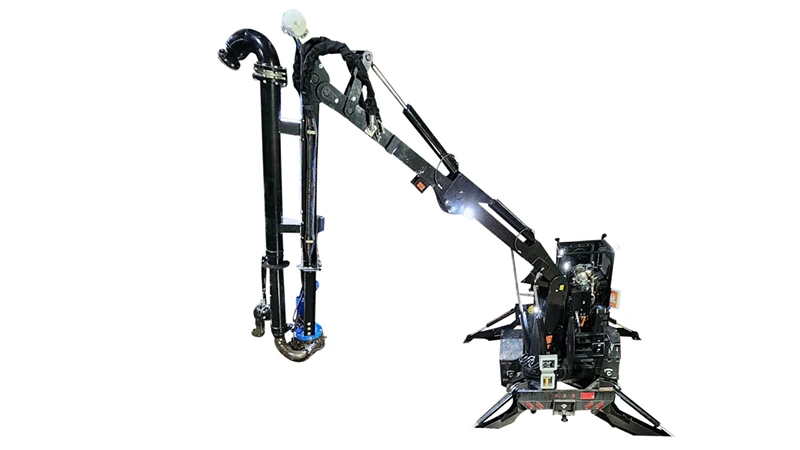
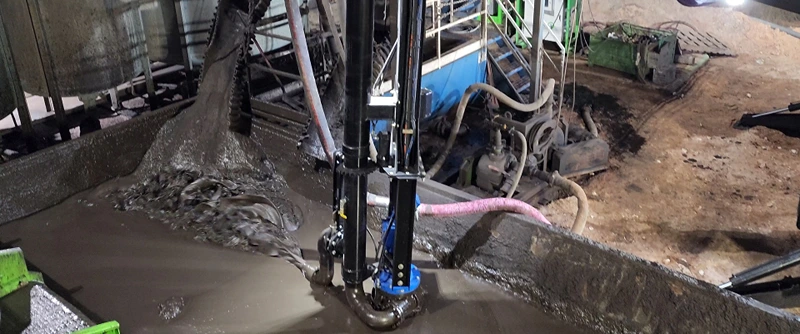
The Remote-Operated Trailer Boom Pump is a shore-based pumping and positioning system that pairs a trailer-mounted boom with an EDDY Pump to move sediment, sand, sludge, and other high-solids slurry. The boom provides controlled placement of suction/discharge piping in locations that are difficult or unsafe to access manually—while wireless remote operation improves safety and accuracy on the jobsite.
Why Remote Operation Matters
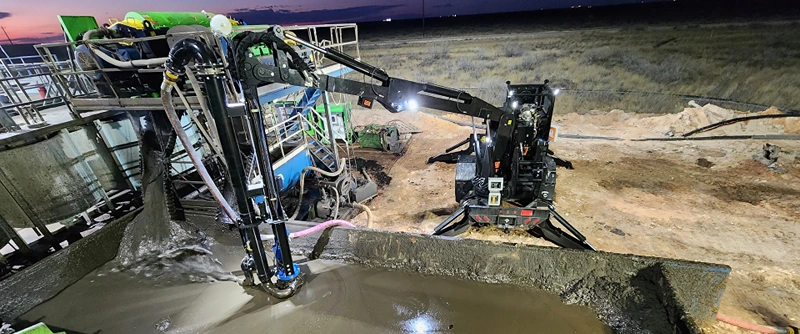
Remote boom control improves safety and productivity in demanding environments:
- Safer operation: Operators can stand clear of unstable banks, confined spaces, and hazardous material zones.
- Precise positioning: Controlled reach helps target sediment/sand pickup and manage discharge placement.
- Less manual handling: Reduces strain and risk from moving heavy hoses/piping by hand.
- Faster workflow: Less repositioning and more consistent placement during long cleanout projects.
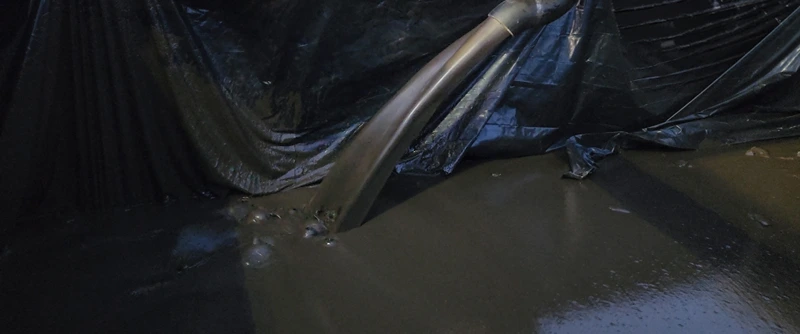
Built for Sediment, Sand, and Abrasive Slurry
Sediment and sand are tough on equipment. This system is designed for abrasive, solids-laden pumping environments where material density can vary and debris may be present. EDDY Pump’s heavy-duty pumping capability is built to perform in harsh slurry applications and support dredging and sediment removal work where reliability matters.
Concrete pumping can be supported when needed.

How It Works
- Position the trailer on stable ground near the pumping area.
- Use the boom to place the suction/discharge piping where it needs to be—over banks, into basins, or along shorelines.
- Operate the boom using the wireless remote for controlled reach, elevation, and placement.
- Pump sediment/sand slurry to the designated discharge location such as containment, dewatering, settling areas, or processing zones.
Product Specifications
| EDDY Pump Models | 4-in up to 12-in |
|---|---|
| Flow Rate | 400 - 6000 GPM |
| Head | Up to 200 ft |
| Power Type | Electric or Diesel |
| Boom Length | 25-60-ft |
| Portability | Trailer-Mounted for ease of transport |
Applications
The Remote-Operated Trailer Boom Pump is built for sediment pumping and sand pumping in dredging and high-solids slurry environments.

Primary Applications (Sediment & Sand):
- Pond, lagoon, and basin cleanouts: Remove settled sediment and sludge efficiently with controlled reach.
- Sand pumping and dredging support: Shore-based transfer of sand/sediment slurry to containment or dewatering areas.
- Canals and waterways: Remove silt and sediment buildup where access is limited and precision placement matters.
- Sediment transfer to dewatering systems: Feed geotextile tubes/bags, settling areas, and containment zones with controlled discharge placement.
- Industrial pits and process areas: Transfer abrasive, solids-laden slurry from pits, sumps, and containment areas.
- Concrete pumping: Supported by heavy-duty pump capability when required.
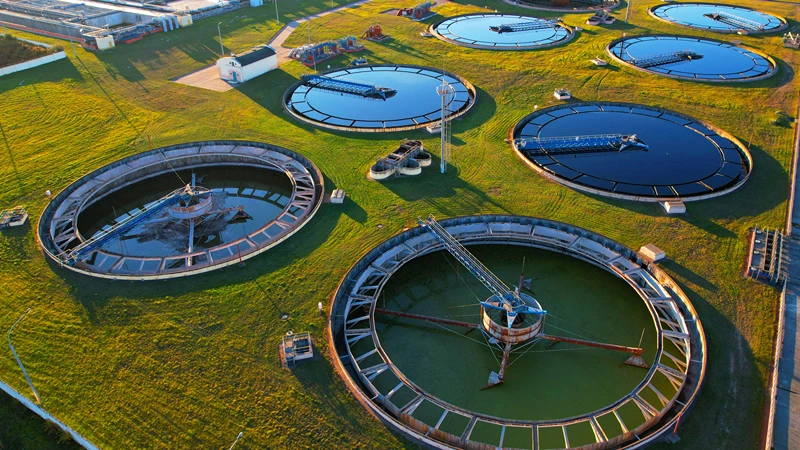
Common Industries
- Environmental remediation
- Dredging contractors
- Mining & aggregates
- Wastewater & industrial facilities
- Municipal/public works
- Power & utility sites
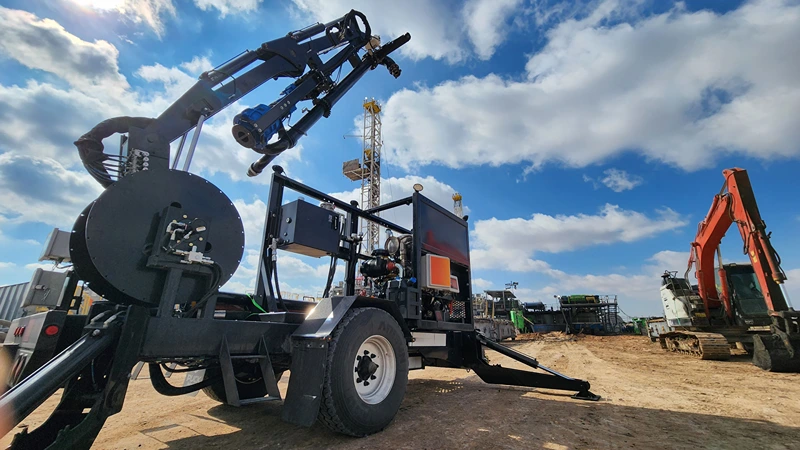
Key Benefits
- Remote operation for improved safety and jobsite control
- Boom reach for hard-to-access sediment and sand pumping locations
- Designed for abrasive, high-solids slurry environments
- Reduced repositioning and manual handling during long cleanout projects
- Concrete pumping supported as a secondary application when required
Frequently Asked Questions
Q: What is a remote-operated trailer boom pump?
A: It is a trailer-mounted boom paired with a heavy-duty pump that allows an operator to position the boom using a wireless remote. It’s used to move sediment, sand, and high-solids slurry from shore-based setups with more control and improved safety.
Q: What is this system primarily used for?
A: The primary use case is sediment pumping and sand pumping for dredging support, cleanouts, and slurry transfer. It’s commonly used in ponds, lagoons, canals, basins, pits, and other areas where access is limited.
Q: Can it pump sand slurry and abrasive material?
A: Yes. The system is designed for demanding slurry environments, including abrasive sand and solids-laden sediment mixtures where durable pumping performance is required.
Q: Why use a boom for sediment removal and sand pumping?
A: The boom provides controlled reach from stable ground, helping place suction/discharge piping into hard-to-reach areas. This reduces repositioning, improves targeting, and can reduce manual handling in hazardous zones.
Q: Is the boom remote controlled?
A: Yes. Wireless remote operation allows the operator to adjust boom position from a safer distance, improving control and reducing exposure to unstable banks, confined areas, and hazardous conditions.
Q: Where does the pumped material typically go?
A: Sediment and sand slurry can be discharged to containment zones, settling areas, dewatering systems (such as geotextile tubes/bags), processing sites, or other approved disposal locations depending on the project.
Q: Is this mainly for placing concrete?
A: No. The system is primarily designed and marketed for sediment removal, sand pumping, and high-solids slurry transfer. Concrete pumping can be supported as a secondary application when required, but it should not be positioned as the main use case.