This Article Includes
- Slurry Pump Design
- Slurry Pump Construction Material
- Slurry Pump Seal
- Slurry Pump Power Sizing

Choose the Right Slurry Pump
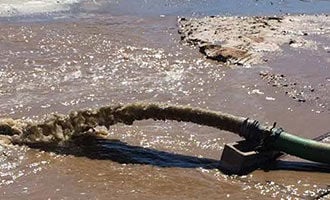
Choosing the correct slurry pump for your application can be a difficult task. Slurry pumps can be found in almost all industries and play a crucial role in many processes. The 5 key aspects to look for in determining the proper slurry pump are slurry pump design, pump construction material, slurry pump deployment, slurry pump seal, and correct slurry pump power sizing.
Slurry Pump Design
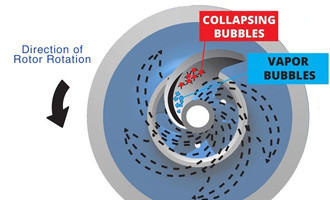
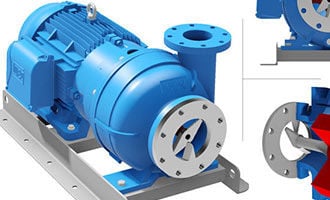
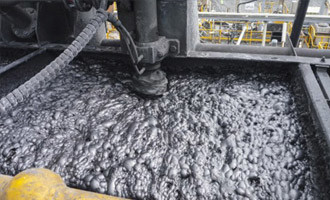
The design of a slurry pump is critical to making sure that the abrasive and often corrosive aspects of the slurry does not destroy the impeller. Additionally, slurry and sludge may contain large unforeseen solids that will inevitably clog many types of pumps. Since most centrifugal pumps have an impeller with a close tolerance to the volute, the abrasive and sometimes corrosive nature of the slurry will quickly wear the volute and ruin the tolerance. This, in turn, causes the pump to lose its suction capability. This causes massive downtime with slurry pumps along with costly maintenance and spare parts.
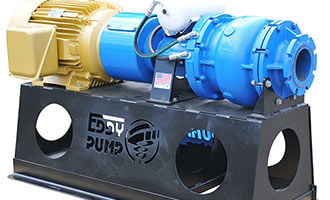
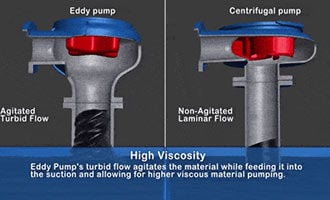
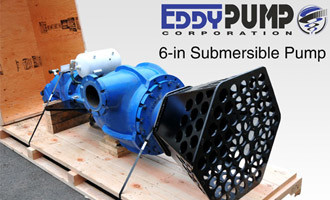
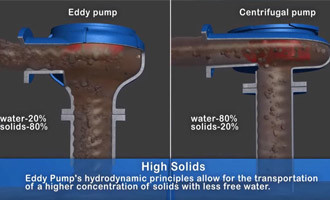
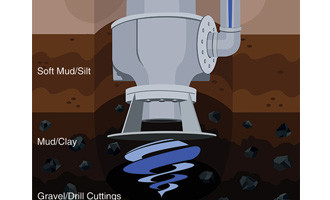
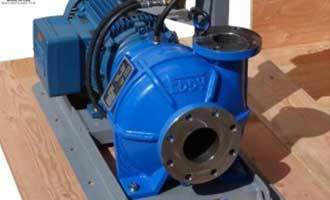
For this reason, the EDDY Pump is ideal for slurry pumping applications. The EDDY Pump does not have an impeller, but instead a rotor that does not have any critical tolerances. This allows it to pump slurry at rates of 30% and solids up to 12 inches. This is far more than what centrifugal pumps can handle without any failure or need to change wear parts.
Call for sales or support
If you need assistance with pump selection, sales or engineering support, call 619-404-1916.
Slurry Pump Construction Material
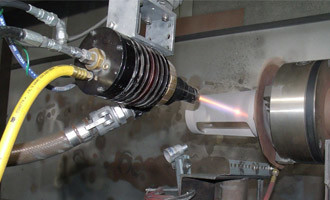
Choosing the proper material for a slurry pump is another critical process for determining the correct pump to handle your slurry. If the slurry is highly abrasive with a neutral pH then the best construction material is a Hi-Chrome. This metallurgy has the highest Brinell hardness that can withstand the abrasive nature of the slurry. On the other hand, if the slurry is not only abrasive but also has a low pH, it is best to go with a duplex stainless steel construction. This material is the best for a slurry pump to withstand caustic material such as acid, while still having a high Brinell level.
Slurry Pump Deployment Method
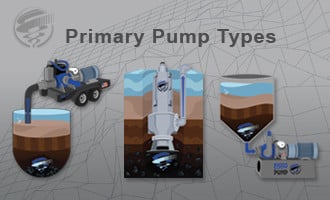
Determining the ideal deployment of a slurry pump is an important step in determining the ideal setup. The three main slurry pump deployment methods are submersible pumps, flooded suction pumps, and self-priming pumps.
Slurry Pump Seal
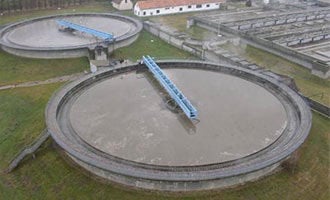
Adding lime with water, as a slurry, allows the solution to be pumped considerable distances, making transporting the material easier than mechanically loading into trucks. As you can imagine, the lime slurry is not only corrosive but abrasive as well, which can pose challenges for all types of pumps. Due to these challenges, pump manufacturers are constantly coming up with new designs for reducing the detrimental effects that lime slurry can have on their equipment and production rates. Some of these design ideas are featured on multiple types of pumps including slurry pumps, centrifugal pumps, and peristaltic pumps. Typically, the answer to effectively pumping lime is to keep the fluid moving constantly to maintain the chemical in suspension. With lime slurry, it is important to constantly be reaching a critical line velocity in which there is enough flow and turbulence to prevent sediment from building up in dead spots or crevices found throughout the system. It goes without saying that cleaning limescale in pipes can be very labor intensive, expensive, and particularly in metal pipes. Ideally, the pipeline should be as smooth as possible with an open flow path, making sure the flow rate is directly proportional to maintaining momentum. This is why the EDDY Pump’s turbulent flow design is perfect for keeping the slurry agitated enough to not accumulate on the sides of the pipelines.
Slurry Pump Power Sizing
Determining the proper slurry pump size and power requirements for your application is crucial. Based on the abrasive nature of slurries, it is important to choose a pump size that will allow for the pump to run at a slow enough speed in order to lengthen the duration of the slurry pump’s life. An ideal RPM to run a slurry pump at is between 900-1200 RPM. Once you begin to exceed this speed, the life of the pump significantly decreases because the wear points in the slurry pump essentially get sandblasted.
EDDY Pump for Slurry Pump
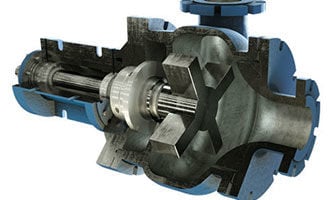
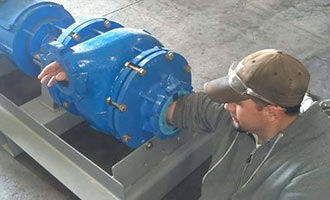
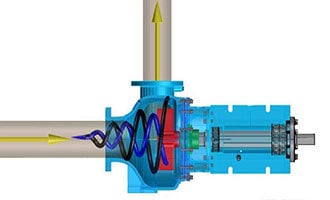
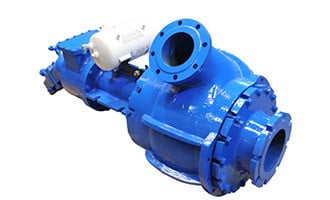
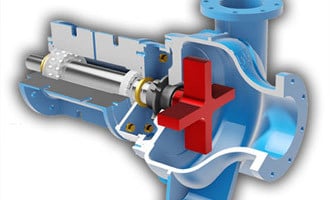
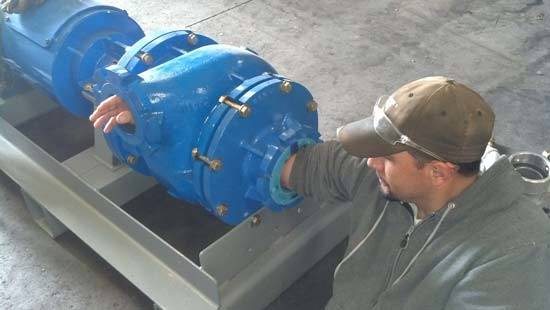
As you can see in the 4″ EDDY Pump shown above, the tolerance between the rotor and the volute easily allows the passage of a man’s arm, while the tolerance in a centrifugal pump is significantly less.
This means you can pump MORE solids with LESS clogging.
For more information on EDDY Pump technology, click here.
Pump & Dredging
EDDY Pump Deployment Options
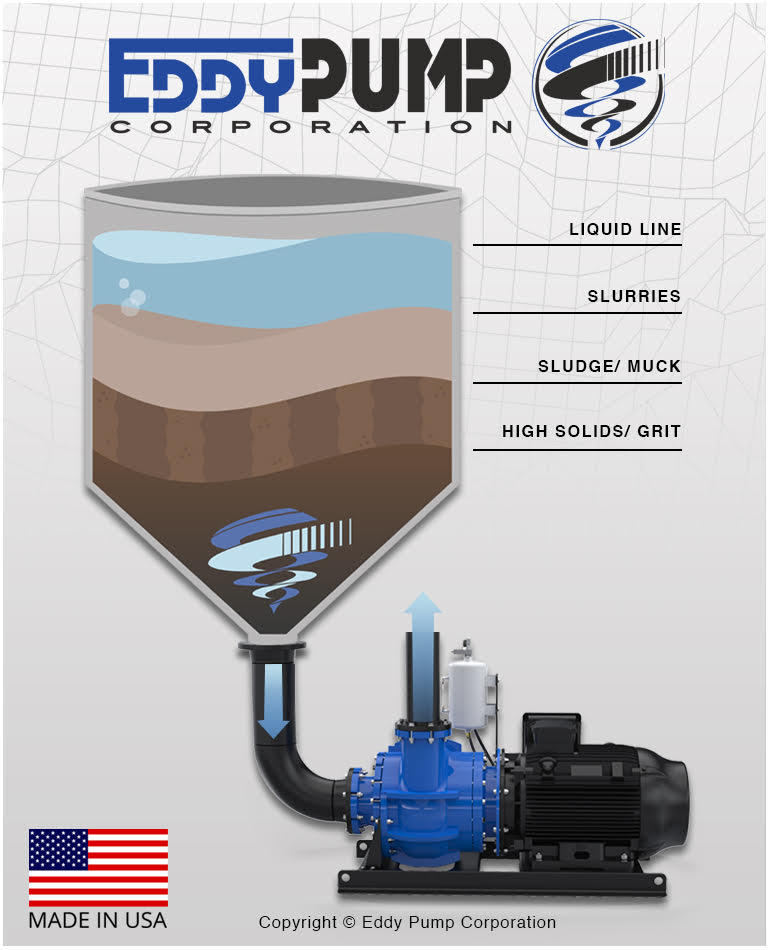
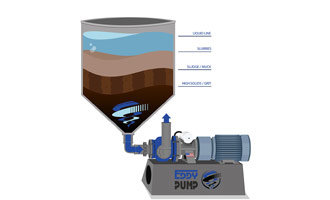
Flooded Suction Pumps
The fluid to be pumped with flooded suction pumps is positioned above the pump. With the pump positioned below, gravity can feed the fluid into the pump’s suction and keep the pump primed.
Read More ↗
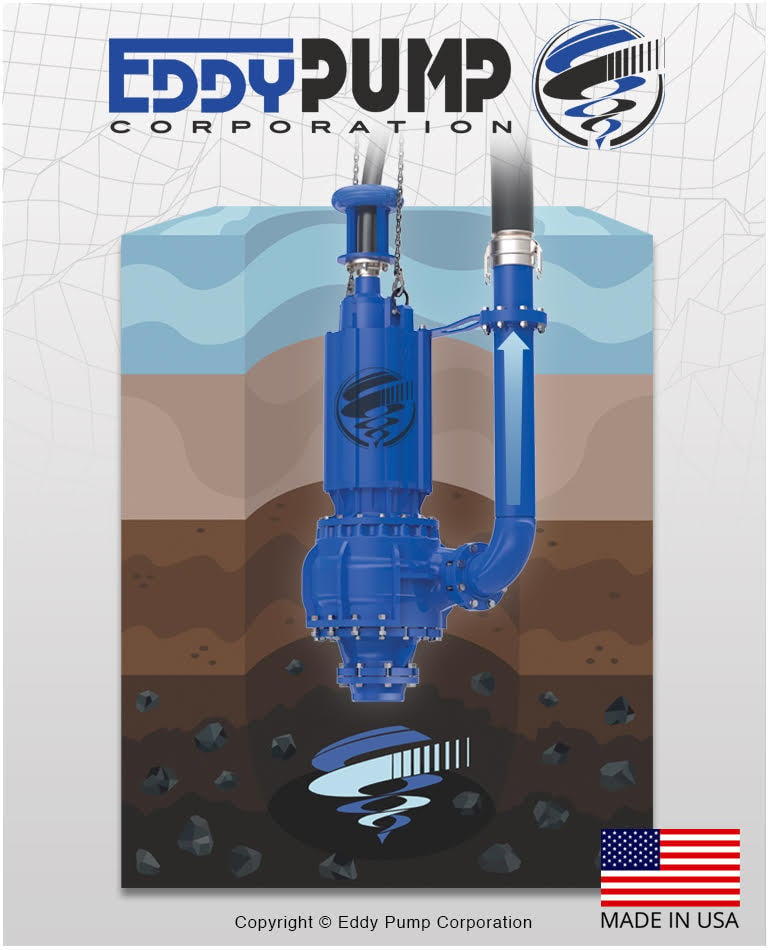
Submersible Pumps
Pumps that are completely submerged in the liquid are called submersible pumps. By being submerged in the fluid to be pumped, there is no need for priming the pump.
Read More ↗
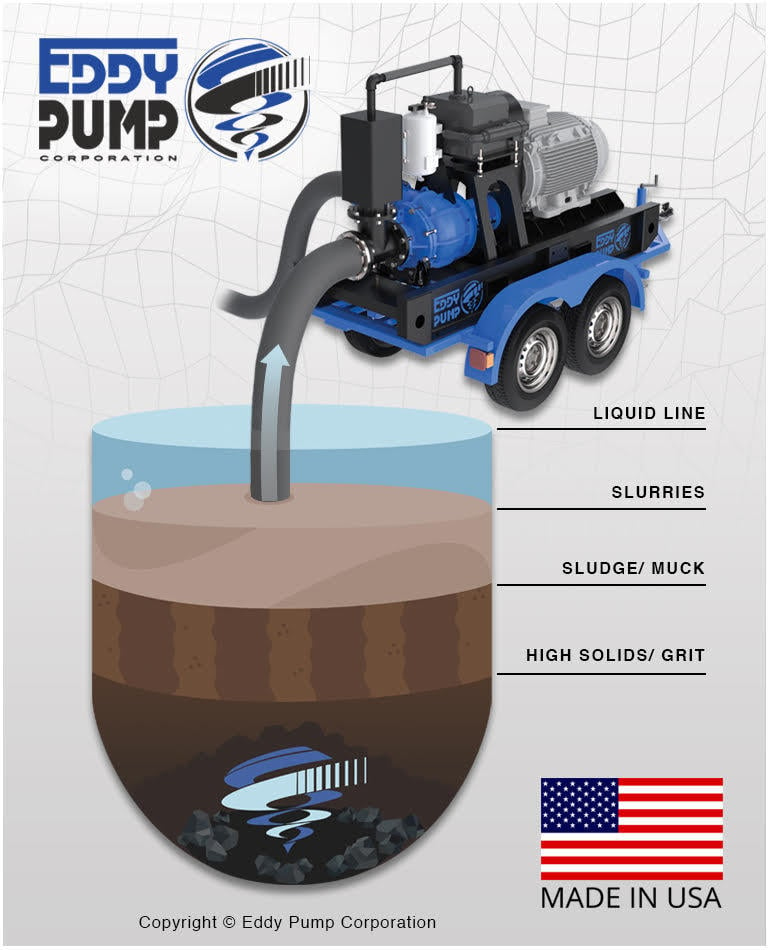
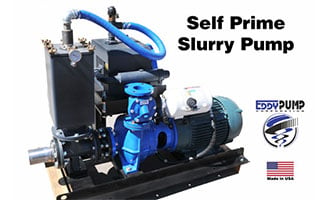
Self-Priming Pumps
With a self-priming unit, the pump and power unit are not submerged. The suction hose goes into the slurry and the unit acts like a super-sized wet dry vacuum. Can be trailer mounted for added mobility.
Read More ↗
We Pump Solids
Not Water
See The EDDY Pump Benefits When Compared to a Centrifugal Pump
HD (Heavy Duty) Slurry Pumps / Dredge Equipment
Other EDDY Pump Products
ARTICLES
Popular Slurry Pump & Dredging Articles