


Matériel de dragage
EDDY Pump delivers advanced dredging solutions with an open rotor design that handles tough materials efficiently. As a leader in the dredging industry, we offer a range of advanced dredgers engineered for efficiency and versatility. Our expertise ensures you get the right equipment for your specific dredging applications, and we support you in selecting the best solution for your next project. Our modular equipment adapts to various deployment needs, ensuring a perfect fit for your project.

Advanced Dredging Technology
Innovative Dredging Solutions with Versatile and Efficient EDDY Pump Technology
EDDY Pump provides the most innovative dredging equipment solutions worldwide. Our team of expert pump engineers developed the EDDY Pump’s open rotor design which allows for far higher tolerances that allow for just about anything that will go into the intake to be passed through the discharge without issues. We also provide modular dredging equipment products that can easily convert to different deployment types to ensure we have a deployment option that matches what you need for your job.
In addition to our modular products, EDDY Pump offers both mechanical dredgers and hydraulic dredgers to address a wide range of dredging challenges. Our mechanical dredgers utilize robust mechanical components such as buckets and clamshells, providing efficient excavation and transport of material, while hydraulic dredgers use water and suction technology for versatile material handling.
Youtube not loading? Try our alternate video player
How The Pump Works
Learn Why Our Slurry Pumps have Higher Production and more Uptime
EDDY Pump industrial slurry pumps are non-clog pumps designed for high solids industrial pumping applications. Our patented pump technology outperforms all centrifugal, vortex and positive displacement pumps in a variety of the most difficult pumping applications.
The adjustable size, ultra recessed rotor can pass the largest material in the industry, ensuring maximum uptime when pumping large solids. The suction tube plays a critical role by drawing loosened material into the pump, enabling efficient transfer of dredged solids from the source to the discharge point.
Excavator Pump Attachment
Attach to an Excavator and Start Dredging
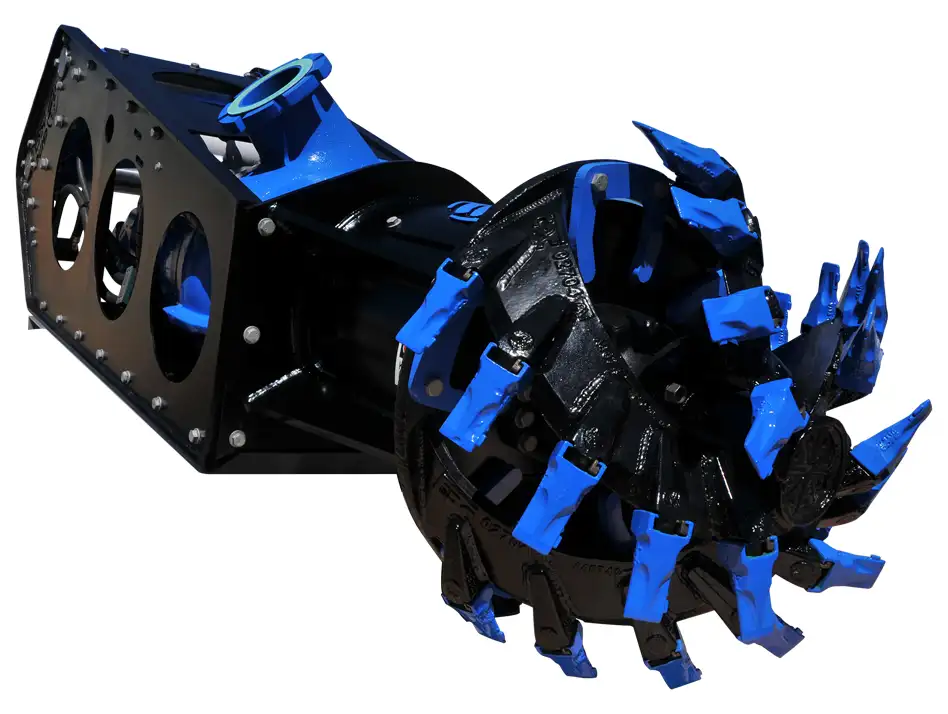
The excavator-mounted dredge pump attachment improves the process of pumping high solids while utilizing the hydraulic power of your existing excavator, significantly enhancing operational efficiency. The discharge pipeline plays a crucial role in transporting dredged material from the suction tube to designated disposal sites, which is essential in various marine engineering projects. The EDDY Pump Excavator Attachment quickly and securely pins into your current bucket linkage, allowing for fast setup and minimal downtime. Larger excavators can be equipped with up to a 12-inch pump, providing the capacity to handle substantial volumes of material. This attachment is ideal for dredging, slurry transport, and material removal in challenging environments such as rivers, lagoons, and mining pits where contaminated sediments can be the most dangerous. Its rugged design ensures durability and long-lasting performance, making it the right equipment for even the most demanding applications, making it a versatile solution for any heavy-duty project.
Dredge Sled
Pond and Lagoon Dredging Equipment
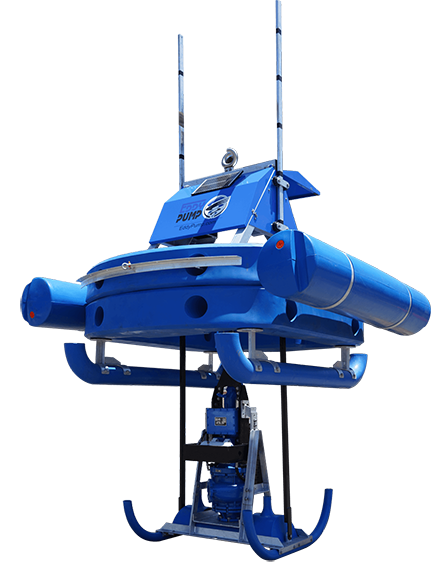
The patented Dredge Sled lagoon dredge pump is a highly engineered solution designed specifically for submersible dredging operations. Its innovative design allows it to autonomously glide along the bottom of lagoons, effectively pumping highly viscous or abrasive materials such as sludge, muck, paste, and high solids.
Built to handle the harshest pumping applications, the Dredge Sled is perfect for lagoon dredging tasks where precision and durability are crucial. Whether dealing with industrial waste, sediment buildup, or environmental cleanup, the Dredge Sled ensures efficient and gentle removal of challenging materials, making it a valuable asset for various industries. In environmental cleanup projects, the Dredge Sled is highly effective at removing contaminated sediments to restore water quality and ecosystem health. Its unique ability to maintain steady, consistent dredging while minimizing environmental impact further enhances its reputation as a go-to solution for complex lagoon applications.
Pompes auto-amorçantes
Options de montage sur remorque ou sur patins
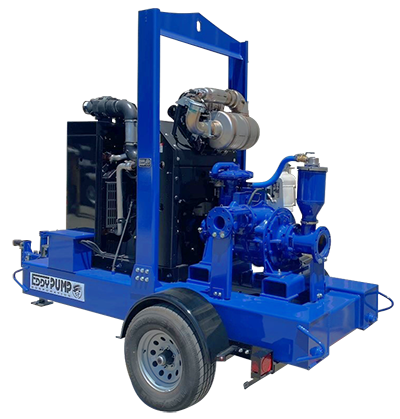
Most EDDY Pumps are designed to be submersible, but with a self-priming unit, the pump and power unit remain above the water or slurry surface. Hydraulic dredgers utilize moving water to efficiently transport dredged materials, using suction to gather materials and move them as a slurry through pipelines. Instead of submersion, a suction hose is extended into the slurry, allowing the unit to operate much like a super-sized wet vacuum, pulling up dredged material with impressive efficiency. This design provides flexibility for various applications and environments, especially where submersible pumps might be better. The self-priming unit can be mounted on a trailer or skid, ensuring easy mobility between job sites and making it a perfect solution for tasks requiring frequent relocation, such as mining, dredging, and industrial cleaning. This versatility allows operators to deploy the unit quickly and efficiently, improving productivity while reducing setup time.
Remote-Operated Trailer Boom Pump
Control Your Boom Operations Remotely
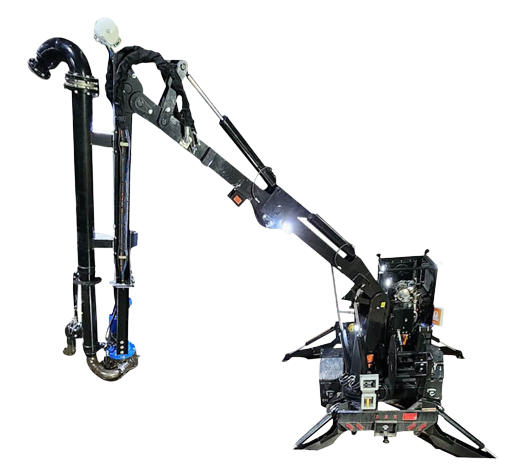
Welcome to EDDY Pump’s Remote-Operated Trailer Boom Pump, an innovative solution designed for efficient and versatile concrete pumping operations. Equipped with a wireless remote control, this advanced pump allows operators to manage boom operations from a distance, offering unparalleled convenience and control. Whether used for large-scale construction projects or precise, delicate placements, the remote-operated boom ensures precision and enhances operational safety. With the ability to adjust the boom’s position effortlessly, users can optimize their pumping operations, minimize downtime, and improve project efficiency. This trailer-mounted unit provides flexibility and ease of mobility, making it the go-to choice for a wide range of demanding concrete pumping applications. Consider this equipment for your next project to ensure optimal performance and efficiency.
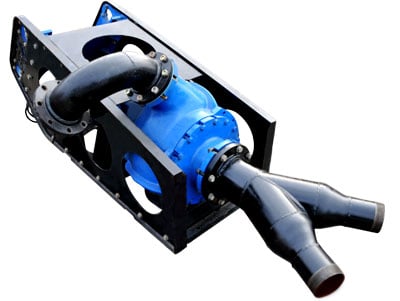
Pompe de dragage actionnée par plongeur
Un plongeur sous-marin contrôle le tuyau d’admission de la pompe
Our Diver-operated Dredge is engineered for easy mobilization and optimized for high-efficiency pumping, delivering production rates of 75 to 150 cubic yards of material per hour. Mechanical dredgers use buckets or clamshells to extract materials from underwater locations such as harbors. This advanced design allows for the pumping of higher solids content compared to conventional pumps, reducing the likelihood of clogging and ensuring continuous, smooth operation. The diver-operated system provides superior versatility, allowing it to perform effectively in a wide range of underwater dredging applications. Whether for environmental cleanup, mining, or infrastructure projects, this dredge is a reliable solution for handling abrasive materials while maximizing productivity and minimizing operational downtime.
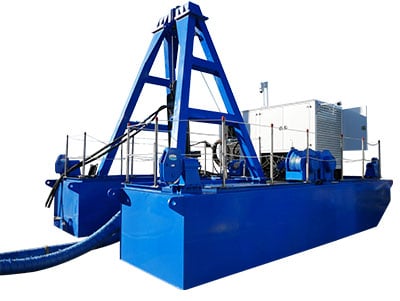
Drague autonome
Plate-forme de dragage télécommandée
The EDDY Autonomous Dredge System is an advanced, remote-operated, unmanned dredging platform designed for high-efficiency dredging tasks. Various types of dredgers, including mechanical, hydraulic, and specialized designs such as grab and suction dredgers, are integral to different dredging projects. Equipped with powerful onboard dredging equipment, it is capable of moving slurry, sludge, and high-solids materials at rates of up to 4,000 gallons per minute (GPM) with a discharge head of over 400 feet. Despite its robust capabilities, the system maintains a compact footprint of just 650 square feet, making it ideal for projects requiring efficient space utilization. By anchoring 3 to 4 cables on land, the dredge can effectively cover large areas without the need for any onboard crew, ensuring safe and streamlined operations. This autonomous system reduces the need for manual labor and increases operational efficiency, making it perfect for large-scale dredging projects where precision, power, and minimal intervention are essential.
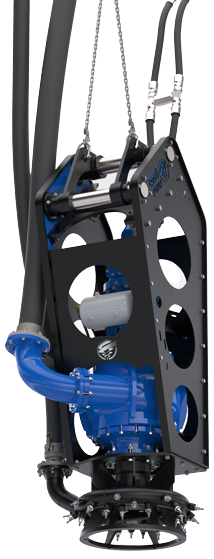
Cable-Deployed Dredge Pump
Combine With a Water Jetting Ring to Break Up Consolidated Material
EDDY Pump’s submersible electric and hydraulic-driven dredge pump, equipped with a water jetting ring agitator option, is a market leader in high solids pumping. What sets the EDDY Pump apart from traditional dredge pumps is its unique design, which forgoes the conventional impeller for a heavy-duty geometrically engineered rotor. This rotor creates a synchronized eddy current, much like a tornado, allowing the pump to efficiently move high solids content, slurry, and abrasive materials with minimal clogging. The water jetting ring agitator further enhances the pump’s performance by breaking up consolidated materials, making them easier to pump. This innovative design not only boosts efficiency but also increases durability, ensuring that the pump can handle the most challenging dredging environments without the excessive wear and tear common to impeller-based pumps. EDDY Pump’s technology provides superior performance and longevity, making it the preferred choice for industries requiring reliable high-solids dredging solutions.
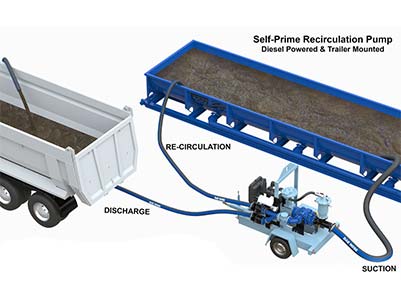
The EDDY Self-Priming Slurry Mixing and Transfer Pump is an advanced system that combines several key components for efficient slurry management. It features a vacuum-assisted priming slurry pump, a dedicated slurry container, a suction and discharge hose, and a recirculation hose. This setup enables the continuous mixing of slurry within the storage container, preventing the slurry from settling over time. By maintaining the slurry in a suspended state, the pump ensures smooth and easy transfers to trucks or other disposal systems. The recirculation hose enhances the efficiency of the process, making it ideal for industries that require consistent slurry handling, such as mining, dredging, or waste management. This system not only simplifies slurry transfer but also reduces downtime, improving overall operational productivity.
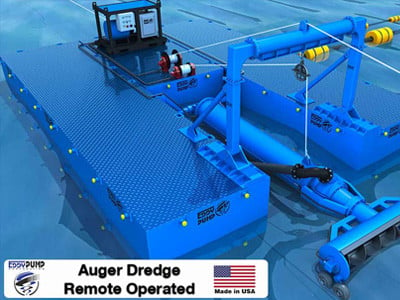
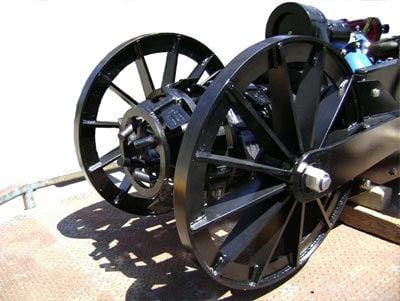
Auger Suction Dredges are highly effective for dredging applications where the presence of liners, such as poly, clay, concrete, or other types of plastic liners, requires careful handling. These dredges are specifically designed to operate safely inlined environments, preventing damage to the liner while ensuring efficient sediment removal. The Auger Suction Dredge can be equipped with wheels, allowing it to glide gently over the surface of the liner, making it an ideal choice for liner-safe dredging. Despite its liner-friendly design, the auger mechanism is powerful enough to break up consolidated materials, ensuring optimal performance in removing sediment, sludge, or other materials. This combination of safety and efficiency makes the Auger Suction Dredge a versatile solution for a wide range of dredging projects.
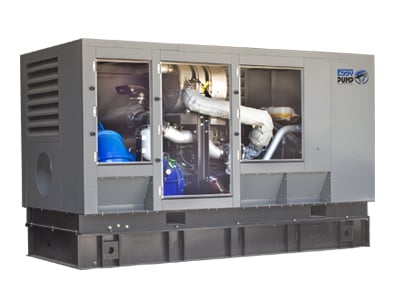
Booster Pumps play a crucial role in enhancing the performance of main pumps, especially when pumping material over long distances. They help maintain optimal line velocity and prevent the loss of flow or pressure downstream. By incorporating booster pumps into your system, you can ensure that material is transferred efficiently without the risk of slowing or clogging the pipeline. When dealing with extended pumping distances, booster pumps become essential to maintain a steady flow, facilitating the smooth transfer of slurry, sediment, or other materials over large areas. These pumps are vital for industries that require continuous and reliable material handling, such as mining, dredging, or construction.
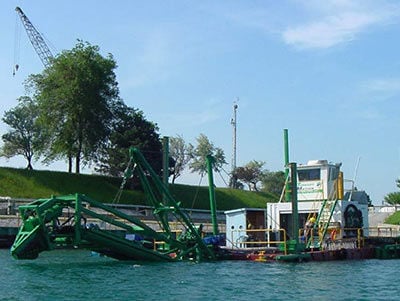
The EDDY Environmental Dredge is engineered to offer unparalleled precision in dredging operations, specifically designed to target and remove only the intended material without disturbing the surrounding ecosystem. Its advanced design minimizes the risk of over-dredging, ensuring that unwanted material is left undisturbed, which is critical for sensitive environmental projects.
By focusing solely on the removal of contaminant materials, the EDDY Environmental Dredge is also designed for the precise removal of contaminated sediments to improve water quality and restore ecological health. This reduces the volume of material that requires treatment, ultimately lowering both the cost and time associated with the dredging project. This precision makes it an ideal solution for environmentally conscious dredging operations, where protecting natural habitats and minimizing environmental impact are of utmost importance.
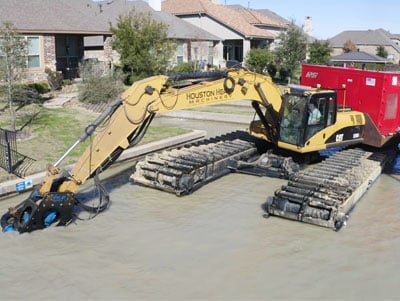
Amphibious Excavators are ideal for tackling challenging dredging projects in hard-to-reach areas such as marshes, swamps, shallow waters, and harbors. These specialized excavators are equipped with pontoon undercarriages, also known as amphibious undercarriages, which allow them to operate efficiently in environments where traditional excavators struggle. By replacing the standard factory undercarriage with a floating amphibious undercarriage, these excavators gain the ability to traverse difficult terrains and extend their dredging capabilities further into water bodies. This versatile design enables access to areas that would otherwise be inaccessible, making amphibious excavators a powerful solution for a wide range of dredging and environmental restoration projects.
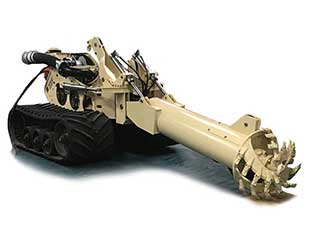
The Subdredge is a cutting-edge, remote-operated submersible dredge (ROV) designed for high-efficiency dredging in challenging environments. This versatile system can be powered either hydraulically or electrically, offering flexibility depending on the project’s needs. The Subdredge is available in various pump sizes, ranging from 4-inch to 10-inch, allowing it to handle a wide range of materials and project scopes.
With impressive production rates of up to 4,500 gallons per minute (GPM) or 400 cubic yards of material per hour, the Subdredge is ideal for large-scale dredging operations. Its remote-operated design provides unmatched precision and control, making it an essential tool for underwater dredging projects where human operation is not feasible. Unlike cutter suction dredgers, which use a rotating cutter head to cut and remove sediment and are often used for large-scale marine engineering projects, the Subdredge offers a compact, submersible solution for environments where traditional dredgers may not be suitable.
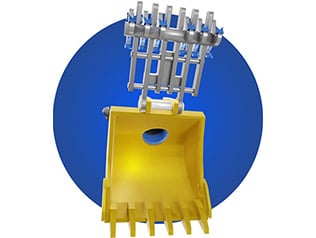
The Self-Priming Excavator Pump & Bucket combines the robust power of the EDDY Pump Excavator Pump Attachment with the functionality of a traditional excavator digging bucket. This innovative design allows operators to harness the full digging potential of the excavator, using the bucket’s teeth to break through tough materials while simultaneously pumping slurry, sludge, or solids.
Ideal for hard-digging environments, this setup increases production by integrating the strength of the excavator with the high-efficiency pumping of EDDY Pump technology. The self-priming feature ensures that material can be pumped continuously without the need for manual priming, making the Self-Priming Excavator Pump & Bucket a powerful solution for excavation, dredging, and material transfer operations. The Self-Priming Excavator Pump & Bucket is available for sale to meet the needs of demanding excavation and dredging projects.
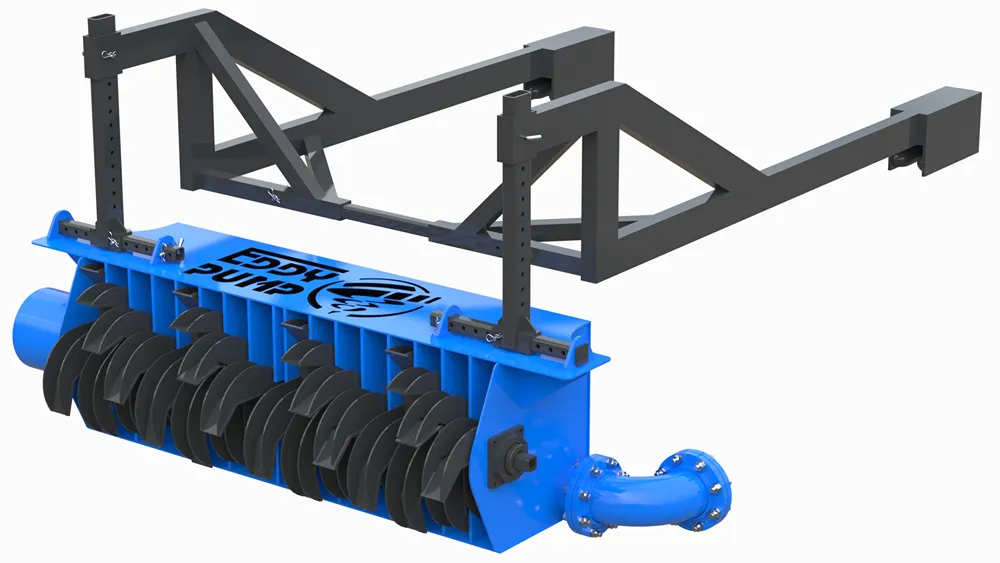
The EDDY Pump Hydraulic Sargassum Removal Attachment (HSRA) is a groundbreaking, patented solution specifically designed for efficient sargassum seaweed management in coastal areas. This innovative attachment transforms sargassum cleanup operations by offering a fast, reliable method to tackle the growing issue of seaweed accumulation. The HSRA can be easily attached to small workboats or excavators, making it a versatile tool for coastal regions and marine environments.
With its robust design, it empowers operators to quickly and effectively remove large volumes of sargassum, minimizing the impact on ecosystems and enhancing the efficiency of beach and coastal cleanup efforts. The HSRA is a game-changer for combating the sargassum influx, offering an environmentally friendly and cost-effective solution to a widespread problem. EDDY Pump also offers services to help clients sell their used sargassum removal attachments or upgrade to the latest models.
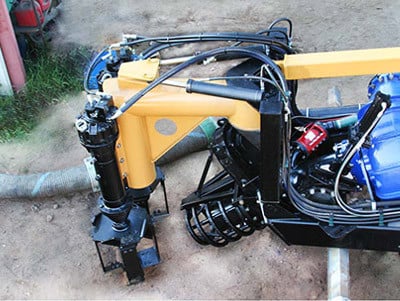
Since 1984, EDDY Pump has been at the forefront of bringing innovative solutions to the aging dredge industry. With a commitment to advancing dredging technology, we have continually improved upon our popular slurry agitation dredge systems, providing cutting-edge equipment that outperforms traditional methods. Unlike many in the industry, EDDY Pump manufactures both its pumps and dredging equipment in-house, ensuring seamless integration and unmatched performance. This vertical integration allows us to offer superior support and custom solutions to meet the demands of various industries, from mining and oil to environmental cleanup. Our focus on innovation and quality has made us a leader in dredging technology, delivering reliable and efficient solutions to even the most challenging projects.
Remove the sediment from your poly or concrete-lined retention ponds with confidence, without the risk of damaging delicate liners. EDDY Pump offers fully customized pumping solutions tailored for clay, plastic, poly, and concrete-lined ponds. Whether your project involves sensitive environments or complex pond designs, our versatile pumping options ensure effective sediment removal while protecting the integrity of the pond liners. Choose from a variety of deployment methods, including barge, excavator, or submersible pump configurations, to best suit your project’s needs. With EDDY Pump’s reliable technology, you can tackle even the most challenging sediment removal tasks efficiently and safely.
EDDY Pump is a Dredge Manufacturer
EDDY Pump is a Dredge Manufacturer, we build dredges and pumps. In harsh conditions with sand, sludge, rocks, slurry, normal dredge pumps clog, wear and fail more often. These scenarios inevitably lead to downtime for pump maintenance, hurting your bottom line. This is not the case with The EDDY Pump since we have the tolerance to pump solid objects up to 11 inches!
How? The EDDY Pump’s open rotor design with no critical tolerances will allow anything that will go into the intake to be passed through the discharge without issues. Tolerance between the rotor and the volute in the 4″ EDDY Pump easily allows the passage of a man’s arm, while the tolerance in a centrifugal pump is significantly less. In a 2-inch to 12-inch EDDY Pump, the tolerance ranges from 1-11 inches.
This translates to a significant amount of solids and material pass through, all without clogging the pump.
EDDY Pump Features and Benefits
Specialty Dredge Equipment Features and Benefits
EDDY Pump
Advantages
- Non-Clog, High Viscosity, High Specific Gravity, High Abrasives, Low pH Pumping Design
- 30-70% Solids Pumping by Volume
- Ability to pump objects of up to 12-inches in diameter
- 100% American Built
- State-of-the-Art Research and Development Facilities on site
- Easily process rags, string, rocks and foreign objects
Dredge Equipment Config Options
- Numerous Dredge and Pump Configurations
- Customizable Dredges and Pump Systems
- Electric, Hydraulic Driven or Diesel Driven
- Various Cutterhead Options
- Remote Operation Capability
- GPS / RTK Precise Positioning and Dredging
- Liner-Safe Operation (Clay, Poly, Concrete, etc)
More
Options
- Environmentally Safe
- Low to No Turbidity
- Easy to Ship and Assemble Worldwide
- Self-Priming Systems Available
EDDY PUMP VIDEOS
Watch our videos showcasing Eddy Pump’s real-world performance and impressive results across various applications.
Excavator Dredge Attachment
EddyPump Vs. Centrifugal Pump


Dredge Manufacturer EDDY Pump
Benefits and Technology Overview
Pass solids from 1-12 inches (rocks, rags, debris). The EDDY Pump’s open rotor design with high tolerances allow anything that will go into the intake to be passed through the discharge without issues.
Tolerance between the rotor and the volute in the 4″ EDDY Pump easily allows the passage of a man’s arm (*see picture below). Compared with the tolerance in a centrifugal pump, the EDDY Pump easily wins. Pump Range spans 1-inch through 12-inch EDDY Pump line, the tolerance ranges from 1-12 inches.
This translates to a significant amount of solids and debris pass through, without clogging the pump. To learn more about the technology behind our pumps continue reading Here.

Superior Non-Clog Slurry Pumps for EDDY Dredge Equipment
Serving Key Industries with High-Solids Handling
Optimal Pump Solutions for Tough Applications
Industries Most Served: Mining, Oil and Fracking, Waste Water, Paper/Pulp, Chemical, Energy, Water Districts, Irrigation Districts and Dredging Companies.
Best Applications: If you are pumping high solids, slurry, extremely viscous material, high abrasives, coal ash (sand, grit & gravel) and material filled with solids, then you found the ideal pump for your job. Call or message for selection help.
Industries Most Served: Mining, Oil and Fracking, Waste Water, Paper/Pulp, Chemical, Energy, Water Districts, Irrigation Districts and Dredging Companies.
The Best Non-Clog and High Solids Slurry Pump on the Market. Since 1984.
We are one of the few companies who manufactures both our pumps and dredging equipment to ensure optimal support. All equipment Powered by EDDY Pump.
Best Applications: If you are pumping slurry, high solids, extremely viscous material, paste, high abrasives (sand & gravel) and material filled with solids, then you found the ideal pump for your job. Call Us.
Industries Most Served: Mining, Fly Ash, Coal Ash Pumping, Oil and Fracking, Waste Water, Paper/Pulp, Chemical, Energy, Water Districts, Irrigation Districts and Dredging Companies.


Call for sales or support
If you need assistance with pump selection, sales or engineering support, call 619-404-1916.
Talk To About Any Question?
Dredging Equipment FAQs
What is dredging equipment?
Dredging equipment refers to specialized machinery and tools used for excavating, removing, and transporting sediment, silt, or debris from bodies of water. Dredgers are a primary category of dredging equipment, encompassing various machines specifically designed for underwater excavation. It includes various dredges, pumps, pipelines, and ancillary support equipment.
What are the main types of dredging equipment?
The main types of dredging equipment include:
-
Mechanical dredgers: These use mechanical tools such as buckets or clamshells to extract material from the seabed or riverbed, and are often available for sale.
-
Hydraulic dredgers: These utilize water and suction technology to excavate and transport dredged material, including types like cutter suction and dustpan dredges.
-
Cutter suction dredges
-
Submersible dredge pumps
-
Excavator dredges
-
Hydraulic dredges
-
Dragline dredges
-
Clamshell dredges
How does dredging equipment work?
Dredging equipment works by mechanically excavating sediment from underwater environments or using hydraulic forces such as water pressure or suction to dislodge and transport sediment. The dredged material is transported via pipelines, including the discharge pipeline which specifically carries the material to designated disposal sites, or by barges to a processing facility.
What is the purpose of dredging equipment?
The purpose of dredging equipment is to maintain navigable waterways, improve water quality, prevent flooding, restore aquatic habitats, reclaim land, support marine construction projects, and facilitate sediment removal in various industrial and environmental applications. Dredging equipment plays a crucial role in the dredging industry, enabling advanced underwater excavation and supporting a wide range of marine infrastructure development and environmental initiatives.
What factors should be considered when selecting dredging equipment?
Factors to consider when selecting dredging equipment include the type of sediment, dredging depth, required production rate, operating conditions, environmental regulations, project budget, and accessibility of the dredging site. It is essential to choose the right equipment based on specific project requirements and site conditions to ensure optimal performance and efficiency.
What are the advantages of using specialized dredging equipment?
Advantages of using specialized dredging equipment include:
- Efficient removal of sediment, silt, or debris
- Ability to operate in various water depths and conditions
- Flexibility to adapt to different types of dredging projects
- Minimized environmental impact compared to manual or conventional methods
- Improved safety for personnel involved in dredging operations.
What are the environmental considerations when using dredging equipment?
Environmental considerations when using dredging equipment include potential impacts on water quality, sediment disturbance, disruption to aquatic habitats, marine life effects, and environmental regulation compliance. Proper planning and mitigation measures are essential to minimize ecological impact. Additionally, removing contaminated sediments is crucial for reducing pollution, improving water quality, and supporting ecosystem health.
What maintenance is required for dredging equipment?
Dredging equipment maintenance typically includes regular inspection, lubrication, cleaning, and replacing worn parts such as dredge pumps, cutter heads, and hydraulic components. Proper maintenance helps ensure optimal performance and longevity of the equipment.
How is dredging equipment transported to the dredging site?
Dredging equipment is transported to the dredging site using various methods, such as trucks, trailers, barges, or specialized vessels, depending on the size and type of equipment. Transport logistics are carefully planned to ensure safe and efficient delivery to the site.
What are the safety considerations when operating dredging equipment?
Safety considerations when operating dredging equipment include proper personnel training, adherence to safety protocols and regulations, use of personal protective equipment, regular equipment inspections, and implementation of emergency response plans to mitigate potential hazards.
How much does a new dredge cost?
The cost of a new dredge varies depending on factors such as size, capacity, features, and manufacturer. New dredges are available for sale in a range of sizes and configurations to suit different project needs. For larger, more complex dredging equipment, prices range from tens of thousands to millions.
How much does dredging cost?
Dredging costs vary depending on factors such as the volume of material, dredging depth, type of sediment, location, equipment used, disposal method, and regulatory requirements. Project costs can range from thousands to millions of dollars.
What is the cost of dredging in India?
The cost of dredging in India varies depending on project specifics such as location, type of sediment, dredging method, and regulatory requirements. For dredging projects in Indian waters, costs can range from a few hundred thousand to several million dollars.
What is the cost of dredger ships?
The cost of dredger ships varies depending on factors such as size, capacity, features, condition, and manufacturer. Prices for new or used dredger ships can range from several hundred thousand to tens of millions of dollars.
Which is the best dredger company?
The best dredger company depends on individual project requirements, budget, and specific needs. Several reputable dredger companies specialize in manufacturing and supplying dredging equipment, each with strengths and capabilities.
Is dredging cost-effective?
Dredging can be cost-effective when properly planned and executed to achieve specific project objectives such as maintaining navigable waterways, preventing flooding, restoring ecosystems, or supporting construction projects. However, costs can vary depending on project complexity, environmental considerations, and regulatory requirements.
What is the future of dredging?
The future of dredging will likely involve technological advancements, automation, and sustainable practices to improve efficiency, reduce environmental impact, and address emerging challenges such as sea level rise, sediment management, and coastal protection. These innovations are shaping the future of the dredging industry by transforming underwater excavation, enhancing environmental considerations, and supporting marine infrastructure development.
What are the disadvantages of dredging?
Dredging can have environmental impacts, such as habitat disturbance, sediment dispersion, and disruption to marine ecosystems. Other drawbacks may include high costs, regulatory challenges, and potential stakeholder conflicts.
What are the risks of dredging?
Risks of dredging can include equipment malfunctions, accidents, environmental damage, sediment contamination, regulatory violations, and unforeseen challenges such as adverse weather conditions or unexpected sediment characteristics. Encountering contaminated sediments during dredging poses additional risks, as improper handling can lead to the spread of pollutants, negatively impacting water quality and ecological health. Proper management and remediation of contaminated sediments are essential to minimize these risks.
How long does dredging last?
The duration of dredging projects varies depending on project size, scope, complexity, and environmental conditions. Dredging projects can range from short-term maintenance dredging operations lasting weeks to large-scale capital dredging projects spanning several months or years.
For your next project, consult with experts to ensure you choose the right equipment and plan effectively for timely completion.
Is dredging bad for the ocean?
Dredging can have positive and negative impacts on the ocean, depending on how it is conducted and managed. While dredging is necessary for maintaining navigable waterways and supporting various industries, improper dredging practices can lead to habitat destruction, sedimentation, and other environmental concerns.
However, removing contaminated sediments through dredging can have a positive impact on ocean health by extracting polluted materials from water bodies, thereby improving water quality and supporting healthier ecosystems.
What are the reasons for dredging?
Four common reasons for dredging include:
-
Maintaining navigable waterways for shipping and maritime traffic
-
Maintaining harbors for safe navigation and port operations
-
Preventing flooding by improving drainage and water flow
-
Restoring aquatic habitats and ecosystems by removing sediment and debris.
HD (Heavy Duty) Slurry Pumps / Dredge Equipment
Related Products
For assistance Call 619-404-1916 and let us help match your project
with the right pump.