When it comes to handling abrasive, high-solid slurries, few pumps are as reliable as vertical slurry pumps. Industries such as mining, dredging, and wastewater treatment rely on them because they outperform standard pumps in harsh conditions, where corrosion, wear, and heavy loads would quickly break down less robust equipment. Whether it’s moving thick mining sludge or processing wastewater sludge, these pumps are designed to withstand the rigors of heavy-duty use and keep operations running smoothly.
The vertical pump is designed to handle demanding conditions, offering higher reliability, easier maintenance access, and a smaller installation footprint. In addition to mining and wastewater, vertical slurry pumps are widely used in various industries, including chemical processing, paper and pulp, and others, demonstrating their versatility. As one of the most trusted names in slurry transport, EDDY Pump delivers industry-leading technology designed to tackle such challenges. From our vertical to horizontal slurry pump systems, we offer versatile solutions optimized for both industrial slurry pump and commercial slurry pump applications.
Introduction to Slurry Pumps
Slurry pumps are a specialized type of centrifugal pump specifically designed to handle high-density slurries—mixtures of liquids and solid particles that are often abrasive and corrosive. These pumps are essential in various industries, including mining, construction, and wastewater treatment, where the reliable transport of challenging materials is critical to operational success. Thanks to their robust construction and use of wear-resistant materials, slurry pumps are built to withstand the harsh conditions associated with handling slurries, ensuring reliable operation even in the most demanding environments.
By efficiently moving slurries with high solid content, slurry pumps help reduce operating costs and minimize downtime, making them a vital component in any process that involves abrasive or corrosive materials. Their innovative designs are specifically engineered to minimize wear and tear, further extending pump life and ensuring consistent performance. Whether in mineral processing, power generation, or wastewater treatment, slurry pumps are the backbone of systems that require the safe and efficient handling of slurries.
Understanding the Design of a Vertical Slurry Pump
A vertical pump is specifically engineered with a vertically oriented shaft and motor placed above the fluid level, allowing it to function effectively in deep or confined spaces such as pits, tanks, or sumps. This design is essential in various industrial and commercial settings that demand reliable slurry handling under difficult conditions.

Key Components:
-
Pump Casing:
This critical part of this slurry pump is constructed from high-durability materials such as hardened alloys, wear-resistant alloys, or elastomer linings. It houses the impeller and is designed to resist extreme abrasion from high-solids slurries typically found in mining or dredging operations. The casing also provides structural integrity to the pump, enabling it to handle high pressure and flow rates associated with industrial slurry pump systems.
-
Impeller:
The impeller in EDDY Pump’s vertical slurry pump is recessed and features an open rotor design. This configuration enables the passage of large solids and viscous media without direct impeller contact, thereby significantly reducing wear and increasing pump longevity. The impeller eye, located at the inlet of the impeller, is designed to optimize solids handling and enhance wear resistance, contributing to efficient pump operation. Semi-open impeller designs are also available, offering improved efficiency and durability for abrasive and large particle slurries. Impeller diameter is a key factor affecting pump performance, including capacity, head, and solids handling capabilities. Additionally, moulded elastomer impellers are used for handling abrasive and corrosive slurries, providing further protection and longevity in demanding applications. This is a key differentiator from traditional centrifugal commercial slurry pump impellers that suffer from clogging and rapid degradation in harsh conditions.
-
Shaft:
A reinforced shaft transmits mechanical power from the motor to the impeller. The vertical pump’s shaft is often supported by multiple bearing assemblies and shaft sleeves that ensure alignment, vibration control, and reduced maintenance needs over time. Shaft design plays a crucial role in deep well installations, where lateral loads and dynamic stresses are higher.
-
Motor Configuration:
Vertical slurry pumps feature a vertically mounted motor positioned above the slurry line, ensuring it remains dry and safe from corrosive environments. This configuration not only enhances maintenance accessibility but also prevents motor failures caused by fluid ingress. EDDY Pump utilizes TEFC (Totally Enclosed Fan-Cooled) motors for its slurry pump systems, maximizing operational life in abrasive and corrosive environments.
How Vertical Design Improves Pumping in Deep Pits and Sumps:
The vertical configuration eliminates the need for long suction piping and priming that is required in a horizontal slurry pump system. By placing the impeller directly into the slurry and aligning the shaft vertically, the pump leverages gravitational feed and submersion to initiate flow through the discharge pipe. This improves efficiency, reduces energy losses, and enables reliable operation even in extremely deep containment zones where horizontal options may fail.
An extended shaft protruding design allows for deeper installation and facilitates the use of external agitators, making it easier to maintain and enhance agitation performance in challenging environments.

Unique Features of EDDY Pump’s Vertical Models:
- Patented non-clogging rotor capable of pumping solids up to 12 inches in diameter
- No critical tolerances between rotor and volute, reducing wear and risk of breakdowns
- High-viscosity and high-solid slurry compatibility without losing hydraulic performance
- Modular design with submersible pump head and dry motor assembly for safer maintenance
- Easily retrofittable for replacing traditional industrial slurry pumps or commercial slurry pump systems without major structural changes
Such pumps are characterized by a vertically oriented shaft with the motor mounted above the fluid level, making them ideal for installations in deep pits, tanks, or sumps.
Key Components:
- Pump Casing: Designed to house the impeller and withstand abrasive slurries.
- Impeller: Transmits energy to the slurry. The EDDY Pump utilizes a recessed impeller design to minimize contact with solids, thereby reducing wear.
- Shaft: A robust shaft transmits power from the motor to the impeller, often supported by bearings to maintain alignment.
- Motor Configuration: Typically, vertical pumps use dry-mounted motors above the fluid to prevent exposure to corrosive media.
How Vertical Design Improves Pumping in Deep Pits and Sumps:
The vertical configuration allows for long shaft lengths without requiring priming or suction lift. This setup enables pumping directly from deep or narrow containment areas, improving efficiency where horizontal slurry pump models may struggle to perform.
Additionally, the shaft and bearing assembly are engineered to operate safely outside the first critical speed zones, ensuring reliable and trouble-free performance.
Unique Features of EDDY Pump's Vertical Models:
- Patented non-clogging rotor design
- No critical tolerances between the rotor and volute
- High solids and viscosity handling
- Submersible pump heads with dry motor placement for safety and maintenance ease
- An optional external mechanical agitator is available for improved solids suspension and enhanced slurry flow
Sump Pumps vs. Vertical Pumps
When it comes to handling slurries, understanding the differences between sump pumps and vertical pumps is crucial for selecting the right equipment for your application. Sump pumps are typically used for removing liquids from sumps or pits, making them suitable for general dewatering tasks. However, their design often limits their ability to handle high-density slurries, abrasive materials, or large particles.
Vertical pumps, specifically vertical slurry pumps, are designed for submerged suction pumping applications that require the handling of heavy-duty slurries. These pumps excel in environments with high concentrations of solids, thanks to their ability to be fully elastomer-lined or constructed with hard metal components for maximum resistance to wear and corrosion. These pumps are specifically designed to handle abrasive materials and large particles, making them the preferred choice for heavy-duty slurry applications in mining, mineral processing, and other demanding industries.
In contrast, sump pumps may struggle with slurries containing high solid concentrations or oversized particles, leading to increased wear and potential failure. For operations that demand reliable, long-term performance in harsh environments, vertical slurry pumps offer superior durability, efficiency, and versatility.
Advantages of Using Vertical Slurry Pumps
Space-Saving Installation:
A vertical pump occupies a smaller footprint since it is installed directly into the pit or tank. This minimizes infrastructure requirements and is especially advantageous in space-constrained facilities.
Superior Handling of Corrosive and Abrasive Slurries:
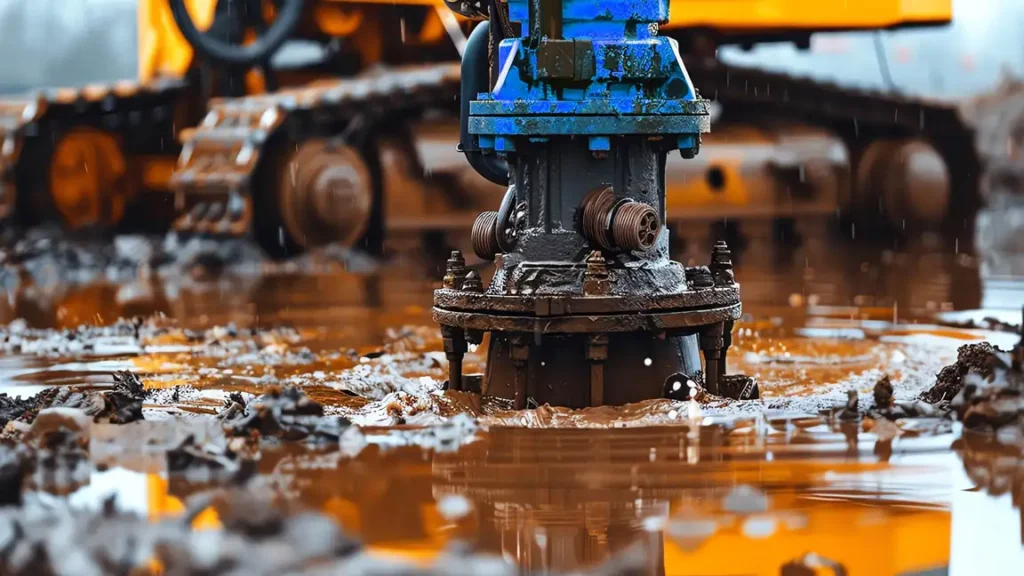
Vertical slurry pumps are better suited to handle aggressive slurries due to their submerged components and corrosion-resistant materials. EDDY Pump models are engineered to handle up to 70-80% solids without clogging.
These pumps are widely used in industrial applications that require reliable handling of abrasive and corrosive slurries.
Lower Maintenance Needs in Certain Environments:
Vertical designs often allow maintenance personnel to access the motor and upper assemblies without needing to remove the entire pump. This setup results in reduced downtime compared to horizontal slurry pumps and commercial slurry pump units.
Where Vertical Slurry Pumps Excel
Mining Tailings Management:
In mining operations, tailings pits often reach significant depths. Vertical slurry pumps are ideal for continuous, abrasive-duty operation. Their ability to handle dense slurries makes them superior to conventional commercial slurry pump setups. Selecting the appropriate vertical pump involves matching the model to the specific requirements of mining tailings management, ensuring the pump's performance parameters align with the application's demands for optimal operation and durability.
Slurry Sumps in Wastewater Plants:
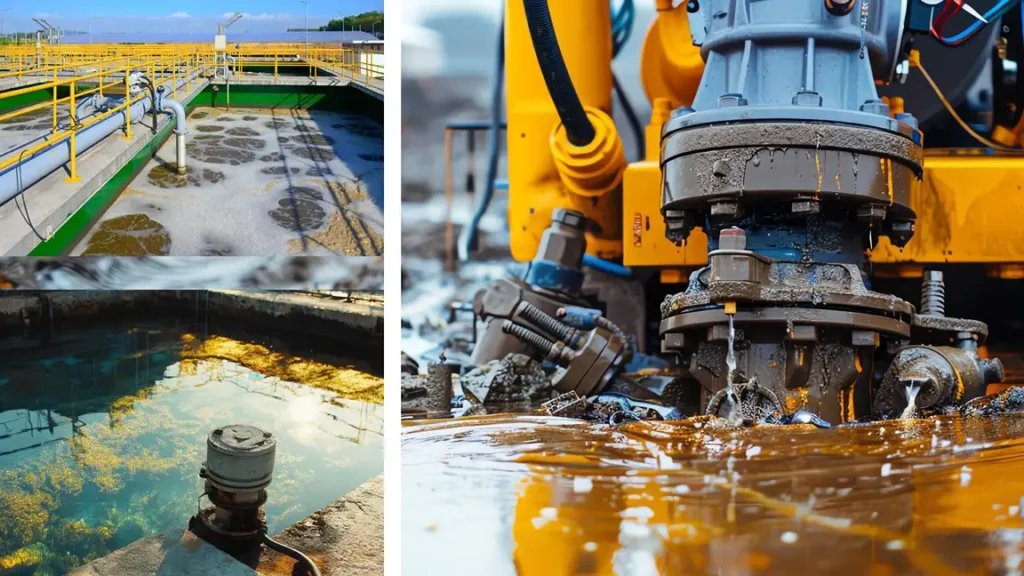
Wastewater treatment involves removing settled sludge from sumps. Vertical slurry pumps excel in submerged applications, reliably transferring liquids with high solids content. In comparison, positive displacement pumps are also used in wastewater treatment, offering excellent durability and effectiveness when handling abrasive slurries, especially in high-wear conditions. Each pump type has its advantages depending on the specific requirements of the application.
Dredging Pits and Barge Offloading Operations:
In dredging, vertical slurry pumps can be mounted on floating barges or directly into pit walls. This reduces the need for complex suction pipelines required by horizontal slurry pump systems. An optional suction agitator can also be fitted to the pump to enhance solids suspension and maintain slurry uniformity during dredging operations.
Industrial Processing Plants Requiring Deep Well Pumping:
Industries such as chemical processing and steel production often require pumping slurry from deep tanks. These pumps provide reliable suction without cavitation and are highly resistant to wear and tear. A robust pump shaft is essential in these applications to ensure reliable operation and prevent mechanical failures during deep well industrial processing.
High Head Pumping Applications
High-head pumping applications require pumps that can generate significant pressure to move slurries through tall discharge pipes or over long distances. Vertical slurry pumps are ideally suited for these scenarios, as their robust construction and use of wear-resistant alloys—such as 27% chrome alloy—enable them to withstand the intense abrasion and corrosion associated with high head pumping.
The design of these pumps incorporates features such as large particle impellers and suction agitators, enabling them to efficiently handle high-density slurries and large particles without compromising flow rates or pressure. This makes them an excellent choice for applications where both high head and the ability to handle abrasive and corrosive slurries are required. With their reliable operation and resistance to wear, vertical slurry pumps ensure consistent performance and reduced maintenance in even the most challenging high-head environments.
Vertical Slurry Pump vs. Commercial Slurry Pump Options
How Vertical Models Outperform Traditional Commercial Slurry Pumps in Specific Scenarios:
Vertical slurry pumps are designed for demanding applications that exceed the capabilities of traditional commercial slurry pump systems. Their ability to operate in deep pits, handle higher solid concentrations, and reduce clogging events gives them a distinct edge. For example, while commercial slurry pumps may require external priming and suffer from suction limitations, vertical pumps submerge directly into the fluid, removing the need for complicated suction lines and minimizing the risk of cavitation.
These vertical pump systems are also better suited for abrasive and corrosive slurries, offering greater durability through the use of specialized materials and submerged wear components. In contrast, many commercial slurry pumps rely on close-clearance components that are prone to damage in harsh conditions, resulting in higher maintenance costs and shorter operational lifespans.
Comparing Specifications:
- Flow Rate: EDDY Pump's vertical slurry pumps are capable of delivering high volumes of slurry while maintaining laminar flow, even with heavy solids loading. Commercial slurry pumps typically show a drop in efficiency when handling thick or heterogeneous slurries.
- Head: Vertical pumps achieve superior head performance because they can eliminate suction limitations. With gravity feed and submerged impellers, they can maintain constant head even at greater depths, unlike horizontal slurry pump systems.
- Solids Capacity: EDDY Pump's vertical models can accommodate solids up to 12 inches in diameter, significantly outperforming commercial slurry pumps, which typically handle solids under 3 inches in diameter.
Lifecycle Cost Analysis:
Over time, vertical slurry pumps offer a lower total cost of ownership compared to commercial slurry pump units. Their higher abrasion resistance, reduced maintenance intervals, and longer operational life translate into fewer shutdowns and less frequent part replacement. Horizontal slurry pump models often experience higher wear rates and energy losses, especially when operating under less-than-ideal suction conditions.
While the initial investment in a vertical pump might be higher, the ROI is quickly realized through decreased downtime, increased throughput, and minimal service disruption. For operations prioritizing reliability and long-term performance, EDDY Pump's vertical pump is a more cost-effective and technically superior choice than standard commercial slurry pump systems.
How Vertical Models Outperform Traditional Commercial Slurry Pumps in Specific Scenarios:
Unlike many commercial slurry pump systems designed for general-purpose use, vertical slurry pumps are specifically designed for high-abrasion, high-depth operations. Their vertical design allows for greater immersion depth and direct fluid contact, eliminating the need for priming. By utilizing the kinetic energy generated by the rotating impeller, vertical pumps efficiently transport abrasive slurries at high flow velocities and pressure.
Comparing Specifications:
- Flow Rate: Vertical slurry pumps from EDDY Pump support high-volume flow with less turbulence.
- Head: Vertical pumps achieve high heads efficiently by leveraging gravity-assisted feed and properly aligned motors.
- Solids Capacity: EDDY Pump vertical models handle solids up to 12 inches in diameter, outperforming most commercial slurry pump systems.
Key Considerations When Selecting an Industrial Slurry Pump
Fluid Characteristics (Solids Concentration, Abrasiveness, Corrosiveness):
The slurry's physical and chemical makeup is critical. High-solids and corrosive applications require specialized materials, such as hardened steel or elastomers.
Depth of the Pit or Tank:
Deeper installations benefit from vertical slurry pump systems due to their ability to operate at extended shaft lengths without external suction assistance.
Maintenance Access Requirements:
In facilities with limited floor space or restricted access, vertical slurry pumps simplify maintenance since the drive assembly remains above ground level.
Material of Construction (Rubber-Lined, Hardened Alloys):
Material selection directly affects pump lifespan. EDDY Pump offers a wide range of corrosion- and abrasion-resistant materials for both vertical and horizontal slurry pump models.
Maintenance and Repair of Vertical Slurry Pumps
Ensuring the reliable operation of vertical slurry pumps requires a proactive approach to maintenance and repair. Regular inspection and replacement of wear parts—such as impellers, suction agitators, and discharge pipes—are essential to prevent unexpected failures and extend pump life. Attention should also be given to the bearing assembly and sealing system, as these components are critical for maintaining alignment and preventing leaks in vertical slurry applications.
To further protect the pump from damage caused by large particles and debris, the use of moulded snap-on elastomer strainers and drop-in metal mesh strainers is highly recommended. These strainers act as a first line of defense, reducing the risk of clogging and minimizing downtime. By adhering to a consistent maintenance schedule and using genuine replacement parts, operators can maximize the lifespan of their vertical pumps, ensure reliable operation, and keep operating costs under control.
EDDY Pump's Innovation in Vertical and Horizontal Slurry Pump Design
- Patented Non-Clogging Technology:
EDDY Pump's rotor design creates a powerful vortex, allowing the pump to move slurry without direct impeller contact. This eliminates clogging even with large solids and high-viscosity fluids.
- Performance Benefits Compared to Conventional Centrifugal Designs:
Unlike standard centrifugal commercial slurry pump systems, EDDY Pump's models avoid performance losses due to tight tolerances and internal wear. This reduces operational costs and improves longevity.
- Real-World Case Studies Demonstrating Successful Deployments:
- Mining: In South America, vertical slurry pumps are used in copper tailings facilities, achieving 24/7 uptime and minimal maintenance over an 18-month period.
- Wastewater: In California, EDDY Pump replaced an aging horizontal slurry pump system, cutting maintenance frequency by 60%.
Case Studies and Examples
The effectiveness of vertical slurry pumps is demonstrated across a wide range of industries and applications. In the mining sector, vertical pumps have played a crucial role in transporting highly concentrated slurries containing large particles, leading to reduced downtime and lower operating costs. For example, mining operations have reported significant improvements in reliability and throughput after switching to vertical slurry pumps for transporting tailings and concentrates.
In wastewater treatment, vertical slurry pumps have proven their value by efficiently handling abrasive and corrosive slurries, ensuring reliable operation, and minimizing maintenance requirements. Facilities have experienced fewer blockages and longer service intervals, resulting in improved process efficiency.
The construction industry also benefits from the versatility of vertical slurry pumps, using them to transport concrete and other challenging materials with high solid content. These pumps deliver efficient and reliable operation, even in harsh job site conditions.
These real-world examples demonstrate the adaptability and performance of vertical slurry pumps in various industries, making them the preferred solution for applications that require robust construction, reliable operation, and the ability to handle abrasive and corrosive slurries with large particles.
Conclusion
Selecting the right vertical slurry pump for your operation can lead to significant gains in efficiency, uptime, and maintenance savings. From mining to wastewater and industrial processing, vertical pumps outperform horizontal slurry pumps and commercial slurry pump options in demanding environments.
Beyond performance, partnering with EDDY Pump means gaining access to comprehensive support services, including custom engineering consultation, 3D pump modeling, application-specific recommendations, and on-site commissioning. Our technical team works closely with clients to ensure that each vertical pump is optimized for their specific operational environment, thereby reducing risk and maximizing return on investment.
Moreover, EDDY Pump offers a complete lifecycle cost evaluation to help clients understand the long-term financial benefits of using our vertical slurry pump systems. By factoring in durability, reduced wear, minimized downtime, and energy efficiency, businesses can make informed decisions that align with both performance goals and budgetary constraints.
Contact our team to get a vertical pump system configured to your specific application and experience the EDDY Pump advantage in efficiency, uptime, and maintenance savings. From mining to wastewater and industrial processing, vertical pumps outperform horizontal slurry pumps and commercial slurry pump options in tough environments.
EDDY Pump offers industry-proven slurry pump solutions backed by patented technology and engineering support. Contact our team to get a vertical slurry pump system configured to your application.
FAQ
How do I know if a vertical slurry pump is right for my facility?
Choosing the right pump depends on your facility layout, the nature of your operations, and the type of slurry you need to move. Vertical slurry pumps are typically a good fit for locations with deep sumps, limited floor space, or where submersible pumps aren't practical. It's best to consult with a pump specialist who can evaluate your site conditions and recommend a configuration that matches your process needs and operational goals.
What are the ongoing maintenance requirements for vertical slurry pumps?
While vertical slurry pumps are known for being easier to maintain than some other types, they still require regular checks. Operators should inspect components such as bearings, seals, and impellers for wear. Because these pumps often run in harsh environments, a preventive maintenance schedule helps extend equipment life, improve safety, and avoid costly downtime. Fortunately, many vertical designs allow for servicing above the fluid, which simplifies the process.
Can vertical slurry pumps handle unexpected changes in slurry consistency?
Yes, to an extent. Vertical slurry pumps are designed to handle varying levels of solid content, but their performance can still be affected if the slurry becomes significantly thicker or more abrasive than anticipated. Choosing a pump with some design flexibility or pairing it with a variable speed drive can help accommodate fluctuations. For more extreme changes, operators may need to adjust operating conditions or consider supplemental equipment.
How do vertical slurry pumps contribute to environmental or safety compliance?
These pumps can support compliance by offering safer containment and easier monitoring. Because the motor and most of the mechanical components remain outside the fluid, there's less risk of contamination or hazardous exposure during maintenance. Their efficiency in removing slurry also helps reduce the chances of leaks or overflows, which is especially important in industries with strict environmental or workplace safety regulations.
What kind of support should I expect from a vertical slurry pump manufacturer or supplier?
A reliable manufacturer should offer more than just equipment—they should also provide installation guidance, startup support, spare parts availability, and long-term maintenance plans. Some even offer on-site assessments or remote monitoring solutions. Choosing a partner with strong technical support and industry experience ensures that you’ll get the right pump for your needs and receive ongoing assistance if anything goes wrong.