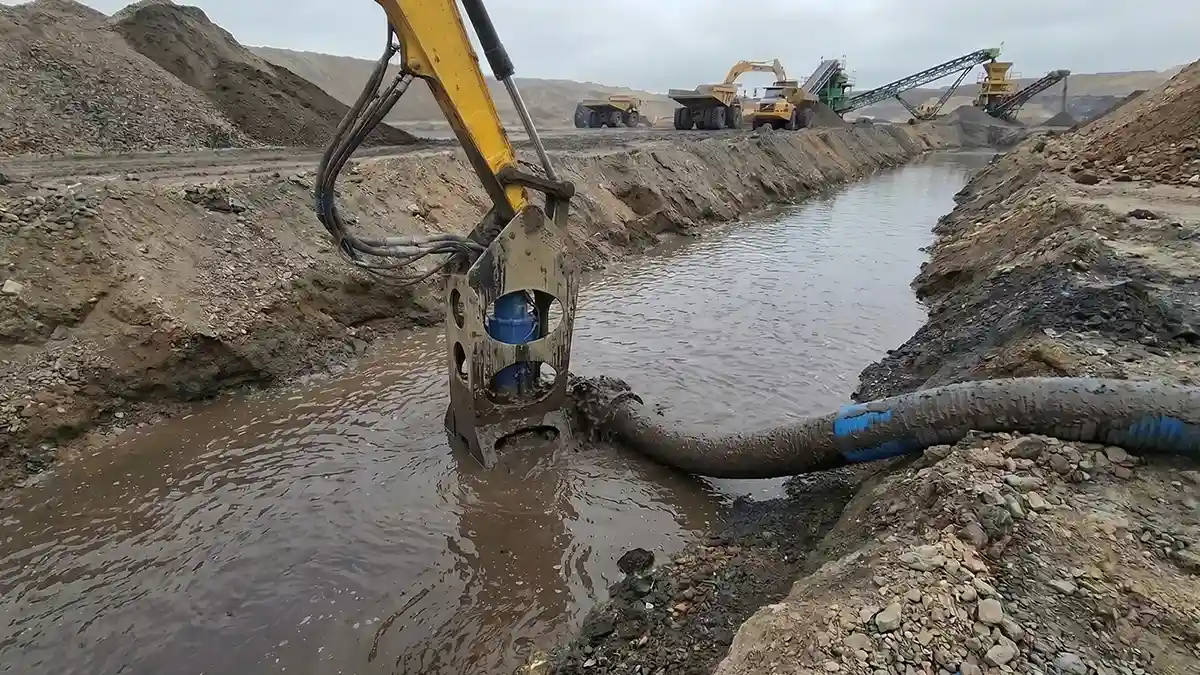
Quick Answer: Choosing the Right Excavator Dredge Pump Attachment To choose an excavator dredge pump attachment, compare five inputs before you compare brands or prices: your carrier's hydraulic capacity, the material you will pump, the duty point (flow and head) the...
Articles by Aniket Raj
Aniket Raj is a content contributor at EDDY Pump, producing technical guides and explainers on pump selection and operation. His articles help engineers, operators, and buyers compare pump types and understand how to match equipment to demanding applications.
Auger Dredge vs. Cutterhead Dredge: Which Is Better for Lined Lagoons?
Quick Answer: Which Dredge Is Safer for a Lined Lagoon? For most lined lagoons, an auger dredge with controlled bottom contact is the lower-risk starting point, and a cutterhead dredge is the option that needs the most justification. Neither is safe by type alone. A...
Slurry Process Pumps Explained
What Is a Slurry Process Pump and Where It Fits in Industrial Systems A slurry process pump is a type of industrial slurry pump designed to operate as part of a continuous processing system rather than for standalone material transfer. In industrial environments, it...
What Is a Self-Priming Excavator Pump?
A self-priming excavator pump is a pump system that can clear air from the suction side and restore flow without repeated manual priming after the initial fill. In practical terms, that means the pump can restart and recover more easily when air enters the line or...
Slurry Pump vs Dredge Pump: What’s the Difference?
A slurry pump moves mixtures of liquid and solids through a system. A dredge pump does more than transport material. It is built to handle larger, heavier solids and is often part of the excavation process itself. That is the core difference in slurry pump vs dredge...
How the Patented EDDY HHHV(High-Head-High Viscosity) Pump Delivers Unmatched Performance in Extreme Conditions
Pumping highly viscous fluids or thicker slurries has been the greatest challenge in the pumping industry. Compared to other liquids, highly viscous liquids offer more friction and great resistance to flow. Hence, to achieve high pressure (high head) with these...
Remote-Operated Trailer Boom Pump vs. Traditional Trailer Pumps: Key Differences Explained
Remote-operated trailer boom pump or the traditional trailer pump? This is one of the most frequently asked questions and a common comparison across modern construction sites. The construction industry is no longer limited to building structures. This is one industry...
Sand Dredging Machines – Powering Modern Sediment Removal Projects
Sediment management is at the core of maintaining healthy waterways and supporting critical infrastructure. Whether it’s keeping ports and shipping channels open, controlling flooding in rivers, or ensuring mining and construction projects run efficiently, dredging...
The Complete Guide to Muck Pumps: Applications, Benefits, and Industry Uses
Muck pump technology has become essential for industries worldwide that struggle to manage high-solid materials such as sediment, sludge, and tailings. Traditional pumping systems often fail when faced with these dense and abrasive mixtures, resulting in frequent...
Maximizing Energy Savings and Control with Variable Frequency Drive Pumps
Variable frequency drive pumps are becoming essential as industries and municipalities face growing pressure to improve energy efficiency, cut operational costs, and adopt smarter pumping solutions. Pumps remain among the largest energy consumers in facilities,...


