- Common Challenges in Pumping High-Viscosity Fluids
- Patented EDDY HHHV Pump to Overcome Challenges in Pumping High-Viscosity Fluids
- Key Features and Technical Specifications of the EDDY HHHV Pump
- Reasons HHHV Pump Excels in Extreme Conditions
- EDDY HHHV Pump Vs. Standard Centrifugal, Positive Displacement, and High-Viscosity Pumps
- Real-World Applications of the EDDY HHHV (High-Head-High Viscosity) Pump
- EDDY HHHV Pump for Unmatched Performance

Pumping highly viscous fluids or thicker slurries has been the greatest challenge in the pumping industry. Compared to other liquids, highly viscous liquids offer more friction and great resistance to flow. Hence, to achieve high pressure (high head) with these liquids, multiple pumps are required to prevent clogging and maintain operation. But then, using multiple pumps to transfer such liquid leads to frequent pump failures, higher maintenance costs, increased wear-and-tear risks, and, ultimately, higher operating costs.
This is where the EDDY HHHV (High-Head-High Viscosity) Pump emerges as a globally trusted pump. This patented pump is designed on the principle of ‘EDDY Boundary Layer Rotor’ technology. With this patented technology, the pump can create a boundary-layer effect, significantly reducing disturbances from pumped materials. This enables the pump to transfer even the thickest fluids, including industrial-grade grease, liquids, and slurry.
Common Challenges in Pumping High-Viscosity Fluids
Viscosity and Resistance:
High-viscosity fluids, such as grease, dense slurries, and industrial wastes, exhibit strong resistance to flow. The higher the density, the greater the resistance to flow. Pumping or transferring such liquids with standard pumps results in clogging, excessive wear, pressure loss, mechanical failures, and other losses when the pumps are operated beyond the liquids’ viscosity limits.
High Head Requirements:
Pumping environments that require transferring high-viscosity liquids over long distances require high pressure. This can be commonly seen in deep mines or tall refinery towers. However, as a liquid’s density or thickness increases, achieving a high head becomes more challenging. Standard pumps for high-viscosity fluids in these scenarios often cavitate or lose flow as pressure increases. Engineers thus rely on multi-stage centrifugal pumps or add a booster pump to meet the required head.
Clogs and Wear:
Mining slurries, drilling mud, industrial waste, and mine tailings are common viscous liquids that standard pumps handle. Because these slurries contain larger particles, the tight clearances of these pumps often clog, leading to erosion of their internal parts. In extreme conditions, standard pumps must dilute slurries with water, leading to frequent wear and cavitation. This results in increased downtime, higher overall maintenance costs, and frequent part replacements.
Limitations of Traditional Viscosity Pumps:
Positive-displacement pumps are widely used to transfer high-viscosity fluids. Due to complex maintenance, such as replacing stators, gears, seals, and valves, these pumps deliver low flow rates. Even the best centrifugal pumps can deliver the required flow and head, but they struggle to handle high-viscosity fluids over long distances or in continuous operation. Thus, there is always a demand for pumps capable of handling both high-viscosity liquids and high head.
Patented EDDY HHHV Pump to Overcome Challenges in Pumping High-Viscosity Fluids
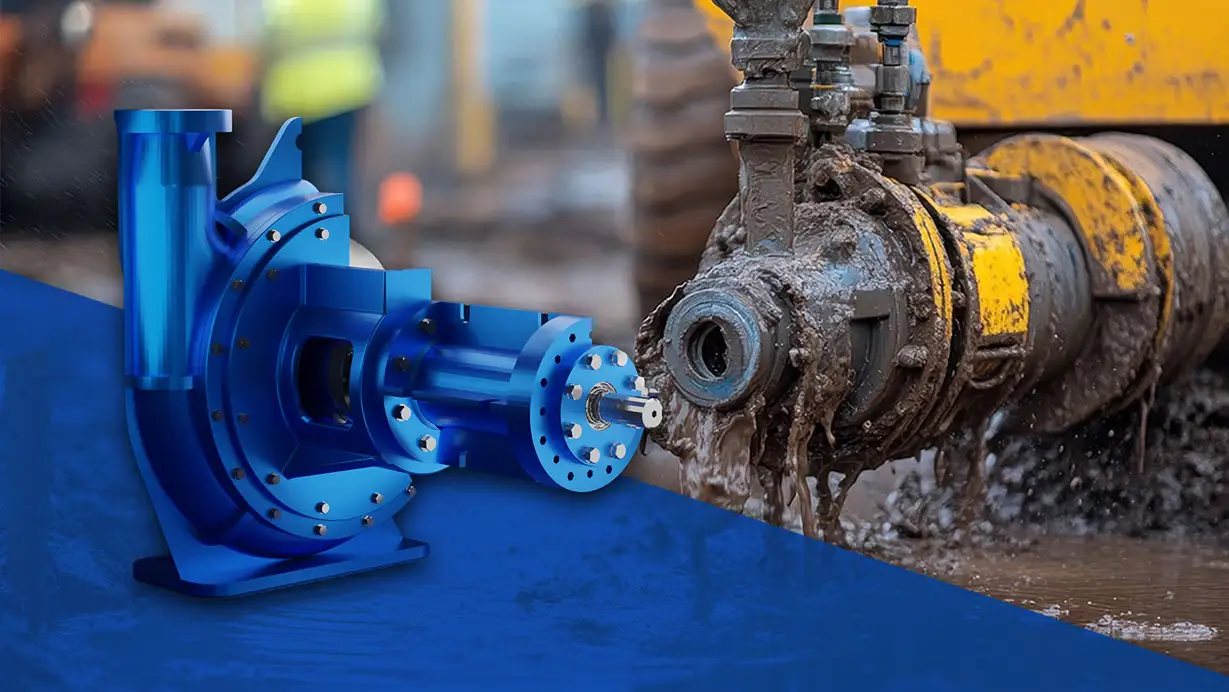
EDDY Pump has been innovating and pioneering pumping technology for several decades now. Their pumps feature patented technology that leverages an open-rotor design and harnesses eddy-current forces to pump thick fluids. The EDDY HHHV (High-Head High-Viscosity) Pump is a patented EDDY Pump solution that addresses the challenges of efficiently transferring high-viscosity fluids at high pressure. This high-viscosity pump has proved to be a versatile game-changer in the industry, thanks to its unique features, design, and reliability.
The ‘EDDY Boundary Layer Rotor’ forms the core of this EDDY HHHV (High-Head-High Viscosity) Pump. With this innovative rotor design, the pump creates a thin layer of fluid (a boundary layer) between the rotor and the viscous fluid to be pumped. The formation of this thin boundary layer reduces direct contact and friction between the pump and the fluid. This results in minimal disturbance and viscosity loss, enabling the pump to efficiently transfer liquids with viscosities up to 75,000 centipoise. This definitely sets a new industry standard in the pumping world.
While most standard pumps for high-viscosity fluid are designed either to deliver high pressure or to handle high-viscosity fluids, the EDDY High-Head High-Viscosity (HHHV) Pump is designed for both. Meaning, it can generate high discharge pressure when handling ultra-viscous fluids. This unique pump capability reduces the need for multiple pumps when transferring thick fluids over long distances.
Key Features and Technical Specifications of the EDDY HHHV Pump
Unmatched Viscosity Capability:
As mentioned earlier, the HHHV pump is designed to handle fluids or slurries with a viscosity up to 75,000 centipoises (cP). Simply put, this includes fluids that are thicker than molasses or drilling mud. Most high-viscosity pumps currently available fail abruptly when handling such fluids. This capability of the EDDY HHHV (High-Head-High Viscosity) Pump is crucial for transferring heavy crude oil, bitumen, thick sludges, and slurries.
High-Head Performance:
The EDDY HHHV Pump is engineered and built for extremely high-pressure tasks. This pump can easily achieve heads of over 500-ft TDH or 215 psi. While such performance can only be achieved by connecting pumps in series, the HHHV pump can achieve it independently. This capability makes it an ideal choice for transferring viscous liquids over long pipelines, to higher elevations, or in applications that require high pressure without the need for booster pumps.
Patented Boundary Layer Rotor:
The patented technology used in the EDDY HHHV (High-Head-High Viscosity) Pump offers two unique benefits – efficiency and product integrity. While the ‘Boundary Layer’ effect reduces internal friction, the pump’s energy is used to move the fluid efficiently. On the other hand, because the pump’s rotor forms a vortex (similar to a tornado), it doesn’t tear through the material as it pumps. This ensures product integrity while pumping sensitive fluids such as food products or emulsions.
Durability and Reliability:
The EDDY HHHV (High-Head-High Viscosity) Pump is built with heavy-duty, wear-resistant materials that ensure extended pump life and efficient operation in extreme conditions. Moreover, the pump’s large internal clearance (the gap between the rotor and casing) allows thicker solids to pass without grinding the pump. Combining robust construction with seamless operation under challenging conditions, the EDDY HHHV (High-Head-High Viscosity) Pump outperforms standard centrifugal pumps in handling high-viscosity liquids. This makes the pump extremely durable and reliable, while other pumps fail.

Reasons HHHV Pump Excels in Extreme Conditions
A pump’s true strength is revealed only when it is tested under extreme conditions. The EDDY HHHV Pump has been tested under tough industrial conditions, and here is how it delivered unmatched performance to excel any other pump in the market:
Avoids Fluid Dilution:
Standard centrifugal pumps require pre-dilution of high-viscosity liquids with water or a chemical to continue pumping. However, dilution is not always possible and feasible. The EDDY HHHV (High-Head-High Viscosity) Pump doesn’t require dilution or thinning of the fluids. While other pumps for high-viscosity fluids shut down or clog, this HHHV pump continues to pump at full capacity, reducing operational costs and process complexity.
Single-Pump High Head Solution:
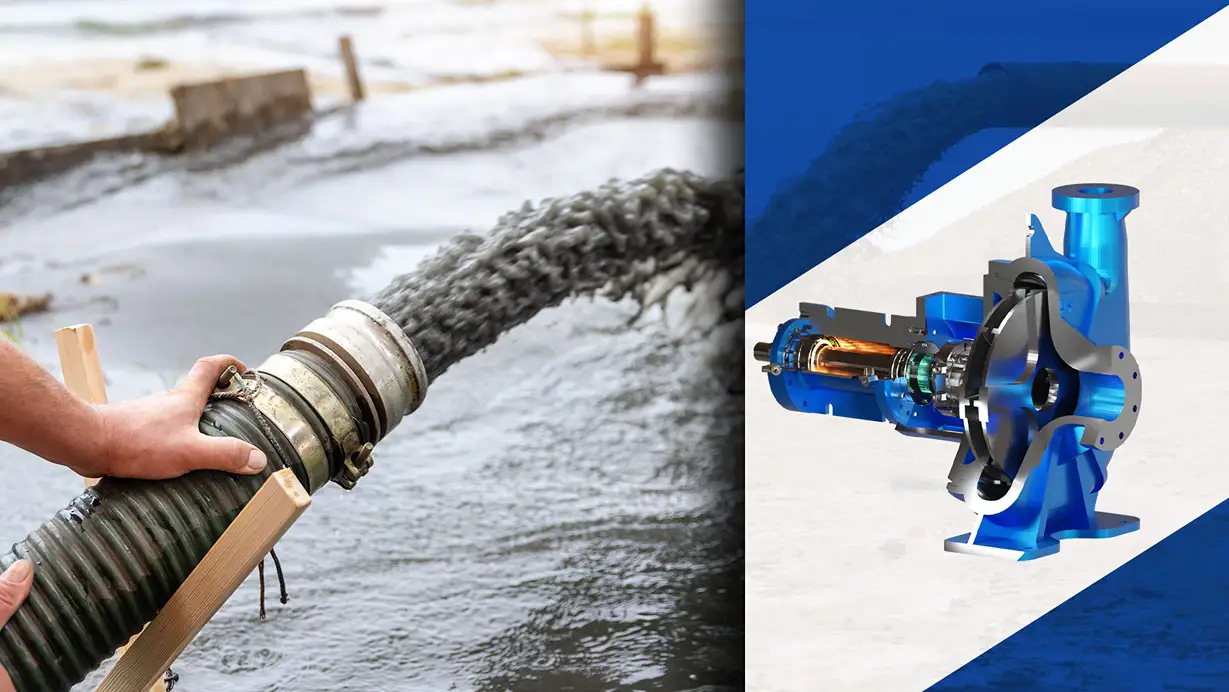
A standard pump for high-viscosity fluid requires booster pumps to handle viscous fluids. Combining multiple pumps often makes the setup prone to point failures and increased operational cost. In contrast, the EDDY HHHV (High-Head-High Viscosity) Pump simplifies this by generating high head even with the thickest fluids, eliminating the need for boosters or multi-stage pumps. This HHHV pump has demonstrated pumping oil sand and slurry over two miles at a production rate of 600 tons per hour (5,000 GPM).
Zero Clogs and High Uptime:
The patented design and operation of the HHHV pump make it a non-clog pump. Even when handling slurries that often choke standard pumps for high-viscosity fluids, this HHHV pump stands out as a trusted option with zero clogs. Furthermore, its boundary-layer effect protects its internal components from breakdown when handling high-viscosity fluids. This greatly improves uptime with the HHHV pump.
Lower Ownership Cost:
Though the EDDY HHHV (High-Head-High Viscosity) Pump is a premium, globally trusted pump, it is an extremely cost-effective option over the long term. With this heavy-duty pump, operators reduce costs associated with multi-stage or booster pumps. Its innovative design and seamless operation reduce pump failures, repeated maintenance costs, and parts replacement costs. Operating with the HHHV pump requires less workforce, reducing overall labor costs. In summary, deploying an EDDY HHHV Pump results in lower ownership costs than with standard or centrifugal pumps.
Ensures Safer Operation:
Fewer pieces of equipment under high pressure means fewer failure points. While standard or traditional pumps require a complex setup, the HHHV pump is a standalone unit for high-pressure applications. Using the HHHV pump to transfer high-viscosity liquids reduces the risk of leaks, bursts, or other pipeline failures, ensuring safer, more reliable operations.
EDDY HHHV Pump Vs. Standard Centrifugal, Positive Displacement, and High-Viscosity Pumps
Handling Highly-Viscosity Fluids:
- EDDY HHHV Pump: Maintains consistent flow
- Standard Centrifugal Pumps: Fails to meet flow/pressure requirement
- Positive Displacement (PD) Pumps: Design limitations and low flow rate
- Competitor High-Viscosity Pumps: Can handle either viscosity or flow, not both
Flow Rate:
- EDDY HHHV Pump: Very high and consistent flow rate (~5,000 GPM)
- Standard Centrifugal Pumps: High only with low-viscosity liquids
- Positive Displacement (PD) Pumps: Low to moderate
- Competitor High-Viscosity Pumps: Moderate flow
Head/Pressure Capability:
- EDDY HHHV Pump: Delivers high head
- Standard Centrifugal Pumps: Limited by increasing viscosity
- Positive Displacement (PD) Pumps: Pulsation is common
- Competitor High-Viscosity Pumps: Operates well with low-viscosity liquids
Solids Handling:
- EDDY HHHV Pump: 30-70% solids handling capability
- Standard Centrifugal Pumps: Poor with narrow clearance
- Positive Displacement (PD) Pumps: Poor to moderate (pump size dependent)
- Competitor High-Viscosity Pumps: Poor with tight internal tolerance
Internal Tolerance:
- EDDY HHHV Pump: Wider rotor gap (no tight tolerances)
- Standard Centrifugal Pumps: Tight and fragile internal tolerance
- Positive Displacement (PD) Pumps: Tight tolerance (high chances of wear)
- Competitor High-Viscosity Pumps: Narrow tolerance (increasing wear)
Clog Resistance:
- EDDY HHHV Pump: Patented non-clog design (excels in every condition)
- Standard Centrifugal Pumps: Poor
- Positive Displacement (PD) Pumps: Poor to moderate
- Competitor High-Viscosity Pumps: Clogs with solids or thick slurries
Reliability in Harsh Conditions:
- EDDY HHHV Pump: Built for challenging slurries and highly viscous liquids
- Standard Centrifugal Pumps: Reliability decreases with increased viscosity
- Positive Displacement (PD) Pumps: Wear increases in abrasive duty
- Competitor High-Viscosity Pumps: Highly inconsistent
Common Industries:
- EDDY HHHV Pump: US Navy, mining, oil & gas, food processing, and others
- Standard Centrifugal Pumps: Common in industries dealing with thinner fluids
- Positive Displacement (PD) Pumps: Industries requiring high viscosity with low flow
- Competitor High-Viscosity Pumps: Limited usage

Real-World Applications of the EDDY HHHV (High-Head-High Viscosity) Pump
-
Oil & Gas:
Pumps are always used to handle extremely viscous liquids in the petroleum production and refining processes. Standard pumps often fail when handling cold, heavy oil, drilling mud, and other viscous fluids in the oil and gas industry. This is where the EDDY HHHV (High-Head-High Viscosity) Pump excels, outshining almost all other pumps for high-viscosity fluids.
An oil plant used standard pumps and several multistage pumps to transfer thick bitumen slurries with a specific gravity of ~1.5 and a solid content of 50-70%. There were multiple reports of pump failures, operational halts, and downtime.
However, once the plant switched to the EDDY HHHV Pump, the pump easily transferred bitumen slurries over 2 miles at about 5,000 GPM, achieving a production rate of 600 tons/hour. Achieving this flow was previously not possible, even with a series of centrifugal pumps and pre-dilution of the slurries.
-
Food & Beverage:
Food processing requires more robust pumps to transfer heavier liquids, such as chocolate syrups, honey, food pastes, and other highly viscous products. Handling these liquids is extremely sensitive, as rough handling can easily damage their texture and flavor.
The EDDY HHHV (High-Head-High Viscosity) Pump is designed to handle these types of pastes and thick food mixtures with a constant flow, without altering their consistency. The boundary layer created within the HHHV pump ensures minimal temperature rise, even without aeration, offering gentle transfer and uniform concentration.
-
Mining (Slurries and Tailings):
Mining operations generate slurries and tailings that typically contain a high proportion of thick solids, large particles, and clays. The high viscosity of these liquids makes it nearly impossible for standard pumps designed for high-viscosity fluids to transport them from the mining site to the disposal areas.
Deploying the EDDY HHHV (High-Head-High Viscosity) Pump in mining operations has resulted in seamless transfer of slurries and tailings. The pump operated reliably even with extremely high solid content. Moreover, its non-clogging design and boundary-layer effect allowed it to handle the occasional rocks and debris in the tailings. The pump’s ability to deliver a high head enabled the transport of slurries and tailings over greater distances without the need for staging or booster pumps.

EDDY HHHV Pump for Unmatched Performance
As pumping conditions become extreme, the EDDY HHHV (High-Head High-Viscosity) Pump excels over other standard pumps on the market. By combining an innovative, patented EDDY Pump design with rugged engineering, it easily addresses the two greatest challenges: moving highly viscous liquids and achieving high pressure.
While its patented ‘EDDY Boundary Layer Rotor’ technology redefines transporting viscous liquids, its high head capability cuts down the need for any additional pumps. Additionally, its non-clog design and durable build keep operations running, ensuring the highest uptime with minimal maintenance costs.
With such innovative engineering, the EDDY HHHV (High-Head-High Viscosity) Pump is pushing the limits of what’s possible in the pumping industry. Even as pumping conditions become more challenging and demand for specialized equipment increases, the HHHV pump stands out as one of the most trusted and reliable pumps, delivering unmatched performance in extreme conditions. If your pumping project requires a robust, reliable, high-performing HHHV pump, contact the experts at EDDY Pump today to put the EDDY HHHV Pump to work.