Remote-operated trailer boom pump or the traditional trailer pump? This is one of the most frequently asked questions and a common comparison across modern construction sites.
The construction industry is no longer limited to building structures. This is one industry that has been constantly transforming landscapes and driving progress across cities and countries. Given the demanding conditions, trailer pumps play a crucial role in the construction industry. As challenges in construction and across construction sites increase, trailer pumps have become the most reliable equipment for contractors.
However, with modern techniques, growing challenges, and infrastructure demands, comparing a remote-operated trailer boom pump with a traditional trailer pump has become the need of the hour.
With this blog, let’s try to look into the key differences between the remote-operated and traditional pumps to conclude which is the most reliable option for a modern construction scenario. Let’s compare a traditional trailer pump with the EDDY Pump Remote-Operated Trailer Boom Pump to have a clear and better understanding of their advantages, disadvantages, limitations, and other important factors.

What is a Traditional Trailer Pump?
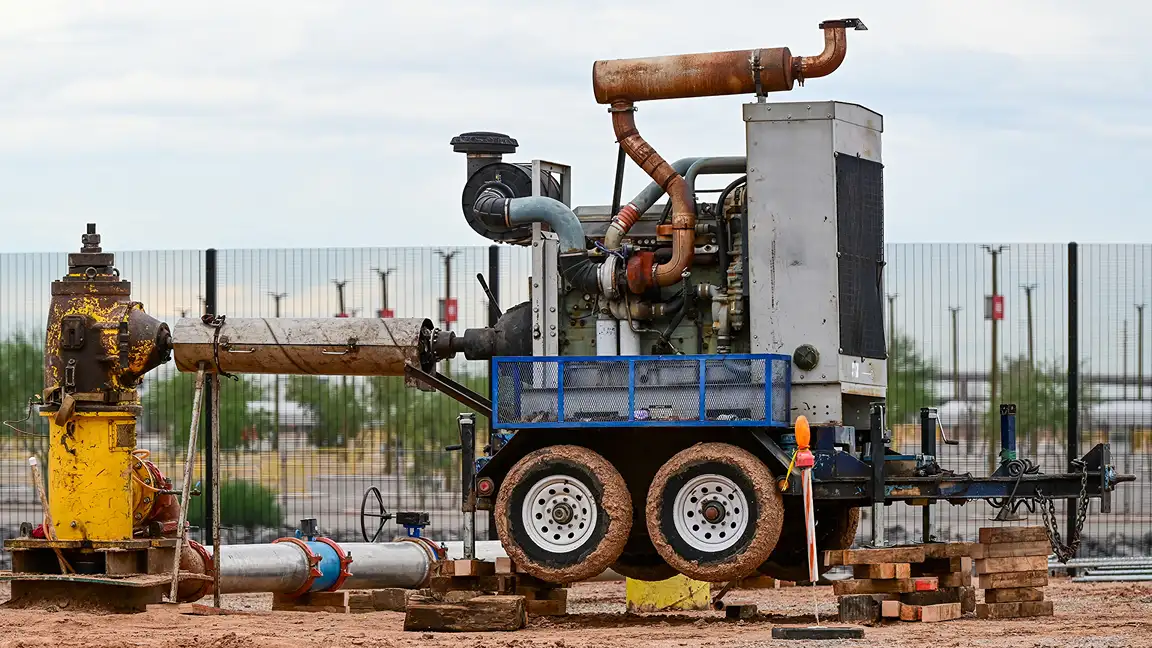
A traditional trailer pump is an engine-powered towable concrete pump. It is designed for on-site installation and connection to a pipeline to transport concrete across the construction site. Rather than pumping concrete or other slurries, traditional trailers push the materials through hoses or pipelines to the desired location. Its size can vary based on project demand, and it can be mounted on a trailer. This makes transportation across sites easy.
The size and functioning of a traditional trailer pump make it an ideal choice for residential and mid-level construction projects. Its ease of manoeuvrability makes it a preferred choice for infrastructure, tunnelling, and industrial projects. In short, this type of trailer pump is ideal for locations with easy access and for projects requiring a mid-level concrete supply.
Most traditional trailer pumps come with basic manual controls and lack modern automation. Since they are mostly manual, they always require operators to manage the trailer’s flow and pressure and route the hoses. Also, since they rely more on suction than on pumping, they are more prone to clogging. Hence, operating these trailer pumps is labor-intensive, time-consuming, and costly.
EDDY Pump – Remote-Operated Trailer Boom Pump
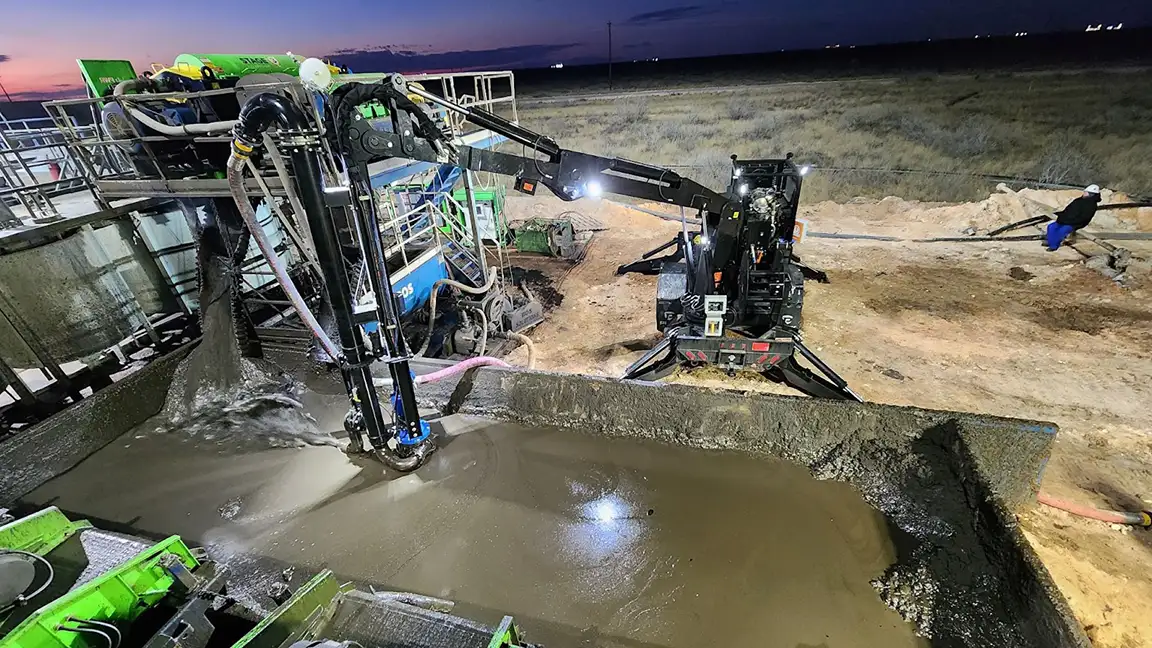
This remote-operated trailer boom pump is one of the most versatile and efficient solutions for concrete pumping. Unlike traditional trailer pumps, it combines the traditional mobility of trailer pumps with modern wireless control systems. While its mobility makes it a go-to option for hard-to-reach or hard-to-access sites, its wireless control allows remote operation, reducing labor stress and risks.
Rather than relying on suction technology, this remote-operated trailer pump uses EDDY Pump’s patented technology to pump concrete, solids, slurries, and sludge from concrete mixture tanks, canals, ponds, and other remote areas. This trailer pump can pump objects and solids up to 11 inches in diameter. Hence, it reduces the risk of clogging while transporting concrete over long distances across construction sites.
Another key advantage of EDDY Pump’s remote-operated trailer pump is its accessibility. It is a fully remote-controlled trailer pump. It can be accessed remotely with minimal human intervention, reducing the need for human intervention and associated risks.
Since it is connected via a wireless system, its boom can be positioned more precisely and with greater control over the flow. Whether the construction site requires placing concrete at higher elevations or in hard-to-reach areas, the controller can easily achieve the goal with minimal effort. Moreover, with a flow rate of 400-6,000 GPM, this remote-operated trailer boom pump can easily complete any construction or land-dredging projects.
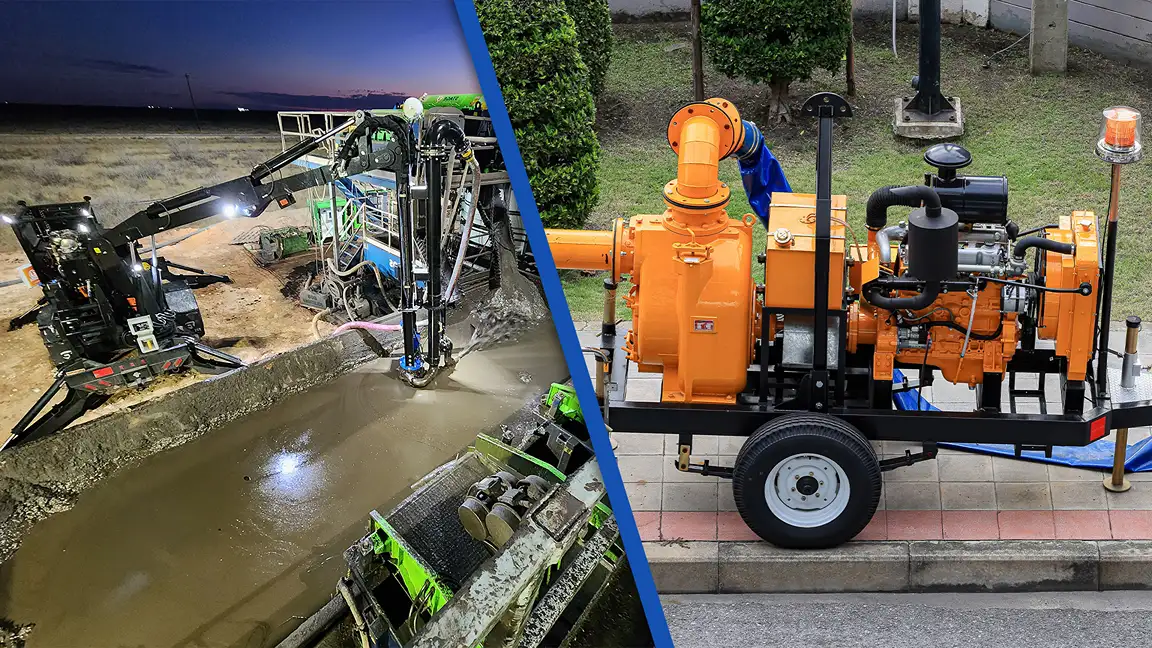
Comparing EDDY Pump Remote-Operated Trailer Boom Pumps and Traditional Trailer Pumps
-
Operation and Control:
The operation and control of both these trailer pumps clearly distinguish them. A traditional trailer pump comes with full manual controls. It requires an operator to remain stationary with the trailer to move or adjust boom positions or manage flow adjustments.
On the other hand, the EDDY Pump remote-operated trailer boom pump is fully remote-controlled. Whether it’s boom positions or flow adjustments, everything can be controlled remotely. The operator does not have to stay stationary with the trailer at any given time.
-
Safety Measures:
When it comes to safety, the remote-controlled trailer pump offers a substantial advantage over traditional trailer pumps. Remote operation allows trailer operators and other laborers to stay away from the main trailer, eliminating the risk of accidents or mishaps during operations. Moreover, in areas prone to landslides or where continuous human intervention is not feasible, remotely operated trailer pumps are ideal for transporting concrete or other mixtures.
-
Mobility
This is another important factor to consider while selecting between a traditional trailer pump and an EDDY Pump remote-operated trailer boom pump. The traditional trailer needs to be towed to the operational sites. It required transferring a secondary or optional vehicle to the job site. If the job site is in a remote area or not easily accessible, the towing vehicle may not be able to reach it.
On the other hand, the EDDY Pump remote-operated trailer boom pump relies on a compact trailer to be positioned across job sites. This trailer can be easily maneuvered to remote or hard-to-reach areas, ensuring optimal access to the construction area. Furthermore, for extremely challenging sites, the trailer pump’s 25-60 ft boom length makes it easy to transport concrete or slurries to the desired locations.
-
Deployment:
EDDY Pump’s compact, modular architecture allows the boom of the remote-operated trailer to be quickly recalibrated between different tanks, basins, and ponds without manual labor. Once the trailer is placed across the desired location, the boom’s position, reach, and elevation can be adjusted using the remote control. Once the boom is positioned, the operator can easily activate the pump to transport concrete or slurry to the desired location.
Deploying a traditional trailer pump is time-consuming. It begins with the operators securing the trailer on the ground by extending its support legs. Operators then need to verify hydraulic fluid condition, inspect the pipeline assembly, and position the components accordingly. If required, pipelines must be manually extended to reach the desired output location. Though this may sound straightforward, it can take several hours to assemble and deploy the trailer pump.
-
Maintenance:
Maintenance challenges are common with traditional trailer pumps, which rely entirely on manual controls. These setups require operators to continuously monitor hoses, valves, internal and external seals, and other fittings. They also require manual priming and cleaning at regular intervals or after a specified period. All these processes are highly dependent on human inspection. Even minor errors in inspection and maintenance can lead to clogs, seal failures, leaks, and downtime.
EDDY Pump’s remote-operated trailer boom pumps rely on a fully remote-controlled system. This setup leverages real-time data to monitor pump performance, flow rates, pressure changes, and component health. Analyzing these data points, operators can identify potential warning signs and avoid major problems before they occur. These predictive insights also help reduce unwanted shutdowns, improve overall efficiency, and cut operational costs.
5. Efficiency and Power Consumption:
This is another important factor to consider in trailer pump comparison. Traditional trailer pumps have limitations when handling concrete mixtures or other thick, abrasive slurries. Their pumping capacity and flow rates vary with the material’s nature and thickness. In contrast, EDDY Pump’s non-clogging design and ability to handle thick slurries enable the remote-operated trailer boom pump to transfer concrete mixtures with almost zero downtime.
Energy consumption is another major key differentiator between these two trailer pumps. While a traditional trailer pump experiences significant friction and mechanical wear, it also requires more power to operate. On the other hand, EDDY Pump’s innovative hydraulic and rotor design minimizes wear and friction, enabling it to consume less power than traditional trailer pumps.
-
Cost Implications:
Traditional trailers may look affordable, but they are not. Although their initial purchase may be on the lower end, they incur high long-term operating costs. With these pumps, contractors regularly incur costs for parts replacement, downtime, higher fuel charges, and maintenance.
The EDDY Pump remote-operated trailer pump is designed to withstand extreme operating conditions. Its design and build ensure minimal downtime, fewer wear components, and fewer parts replacements. With an initial investment, this pump provides contractors with a lifetime of zero-cost operation. Moreover, with EDDY Pump’s rental options, contractors can easily rent the remote-operated trailer boom pump and keep their operations within their budget.
Traditional trailer pumps require pump operators to stay close to the equipment. These pumps also require other crew members to remain close to the construction site to repair pipelines, troubleshoot pumping issues, adjust controls, and perform other tasks. Hiring additional crews incurs higher operational costs.
The remote-operated trailer pump requires the operator to stay away from the pump and operate remotely. Its boom position can be maintained using the remote system. Moreover, its pumping, flow rate, and discharge can be controlled remotely via the remote-control system. With these features, the remote-operated trailer pump is significantly more cost-effective than a traditional trailer pump.


Making the Right Choice
The construction industry is evolving like never before. With this evolution, efficiency, long-term value, and safety have become essential factors in the industry. Although traditional trailer pumps have been in use for decades, their limitations make them less suitable for modern construction needs.
On the other hand, the EDDY Pump Remote-Operated Trailer Boom Pump is a favorite in modern construction. Its advanced non-clog technology, remote-controlled operation, high mobility, increased safety measures, and predictive monitoring make it a reliable choice for heavy-duty or large-scale construction needs.
This detailed trailer pump comparison makes it clear that the EDDY Pump Remote-Operated Trailer Boom Pump excels and outshines traditional trailer pumps. If you are looking for reliable trailer boom pumps or your project demands optimal performance from a trailer pump, the EDDY Pump Remote-Operated Trailer Boom is your ultimate choice.