A dredging project has plenty of variables to manage early on: pump capacity, pipeline layout, discharge distance, and slurry conditions. Float count often gets treated like a simple accessory decision, but it has a direct effect on how the pipeline performs once it is in the water. Get it wrong, and the line may sag, ride too high, shift under laid, or require constant field adjustment.
The number of dredge pipe floats you need affects buoyancy, spacing, stability, and long-run pipeline reliability. In this guide, we will break down how pipeline float systems work, what variables matter most, and how to estimate the right number of floats for your setup. With modular systems like EZ Connect floats, you can also fine-tune fit across different pipe sizes without replacing the entire float body.
Why Float Count Matters More Than Operators Realize
Float count does more than keep a slurry pipeline above water. It affects how the line behaves during operation.
When there are too few floats, the pipeline can sit too low, sag between support points, and place added stress on the HDPE pipe, hose sections, joints, and couplings. That stress builds over time and can reduce flow efficiency, increase wear, and create more frequent maintenance interruptions. Even spacing matters because uneven support can allow localized sagging and poor line control.
Too many floats create a different problem. The pipeline may ride too high and become more reactive to waves, current, or vessel movement. That can make the line harder to control and less stable during operation, especially in marine construction or high-motion environments.
The goal is not maximum flotation. The goal is controlled flotation — enough buoyancy to support the loaded line, maintain alignment, and keep the pipeline running smoothly.
Understanding How EZ Connect Floats Work
Modular Fit Across Pipe Sizes
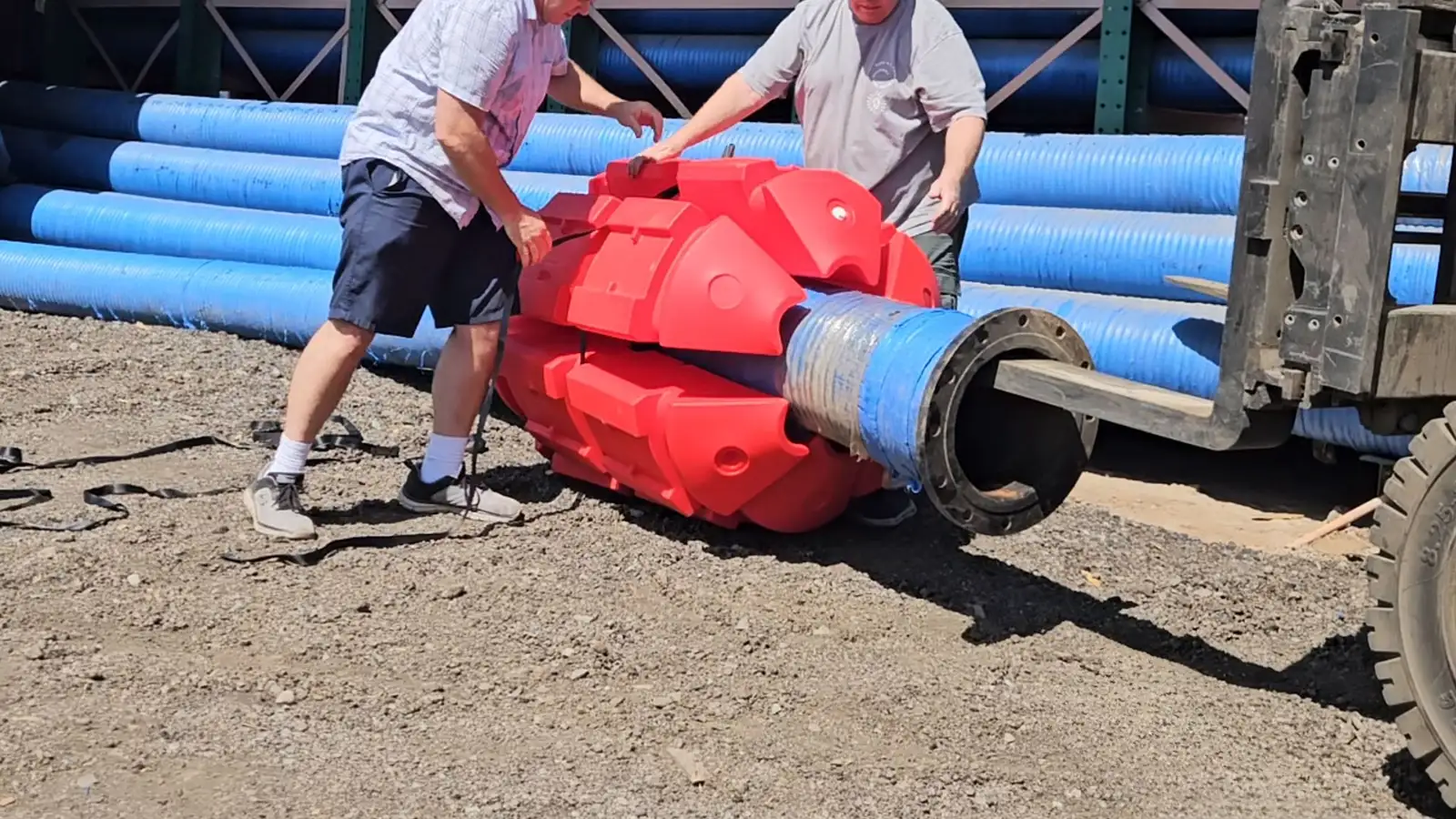
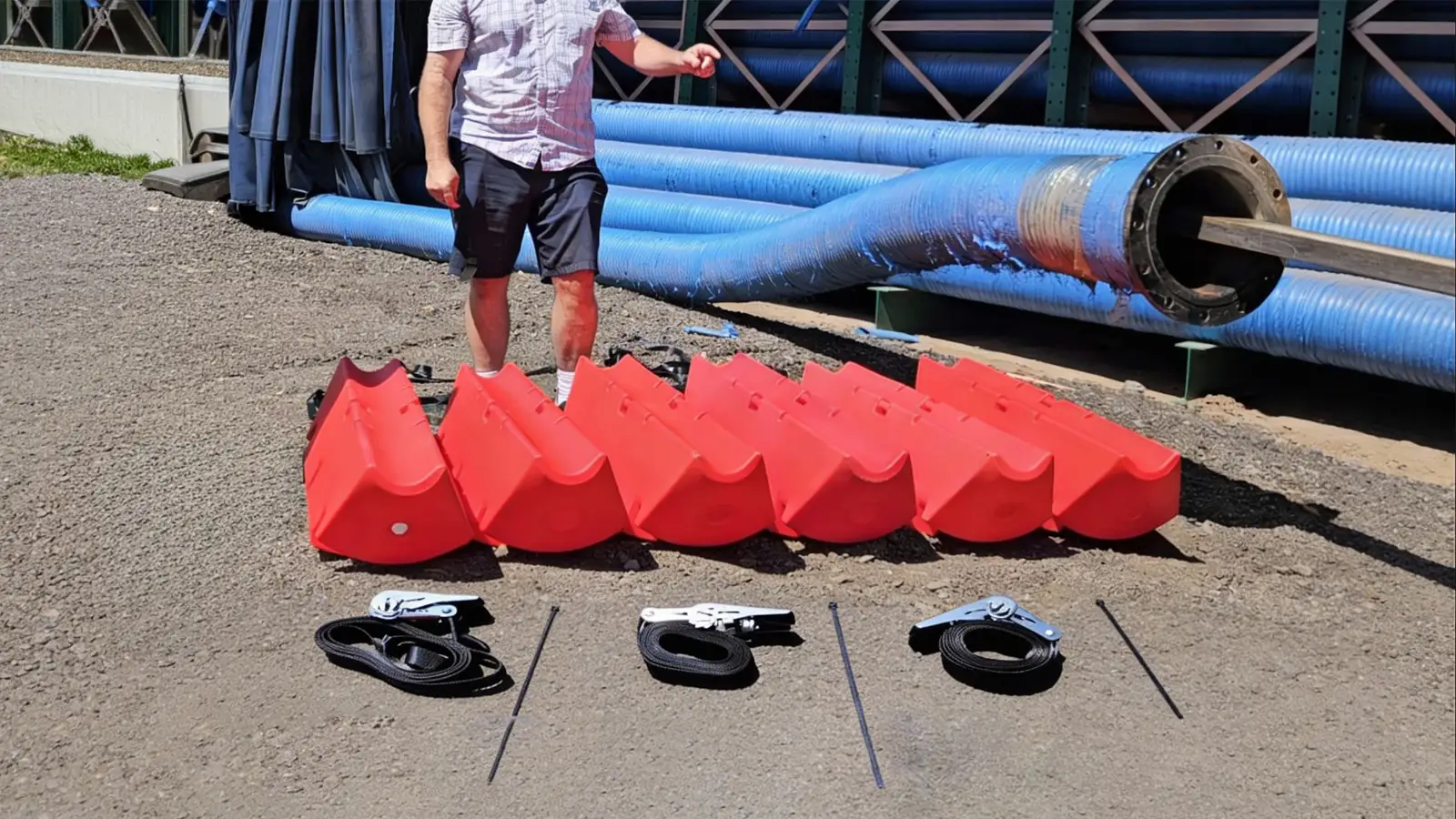
EZ Connect floats are built around a simple idea. Instead of locking you into a fixed size, they let you adapt the float to match your pipeline. The system uses interchangeable wedges that allow the float to fit different pipe diameters. That means the same float body can be adapted across multiple pipeline configurations, reducing inventory complexity and making field deployment more flexible.
This is an important distinction: the wedges adjust the fit around the pipe, but the float body and its displacement determine the buoyancy rating. In other words, wedges help the float fit correctly; they do not create the flotation capacity by themselves. A pipeline using an HDPE pipe in one project might not match the dimensions of another. With a modular system, you don’t need a completely new set of dredge pipe floats each time. You adjust the wedges to fit the pipe and keep the same float system in use.
How The Floats Support the Pipeline
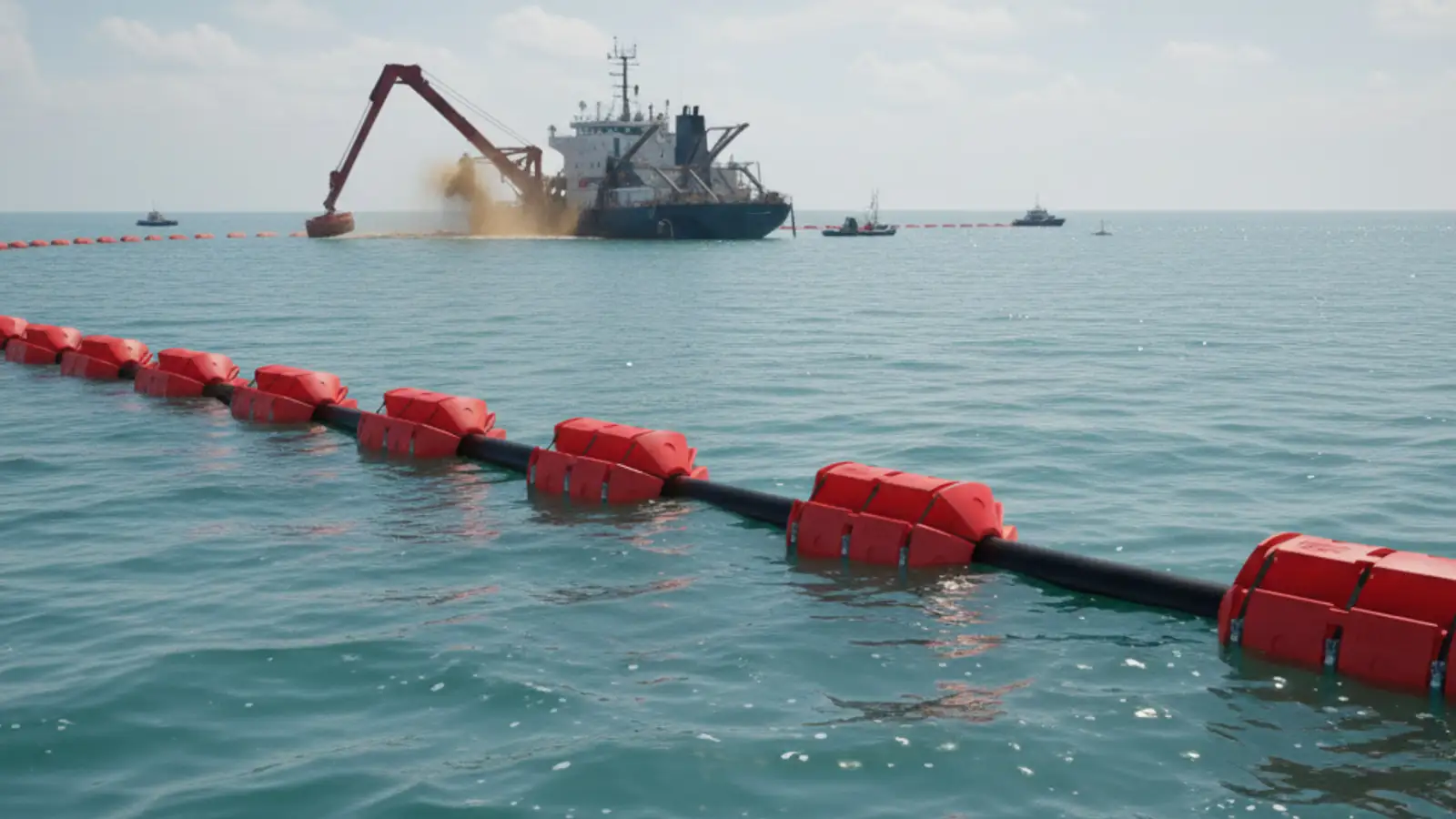
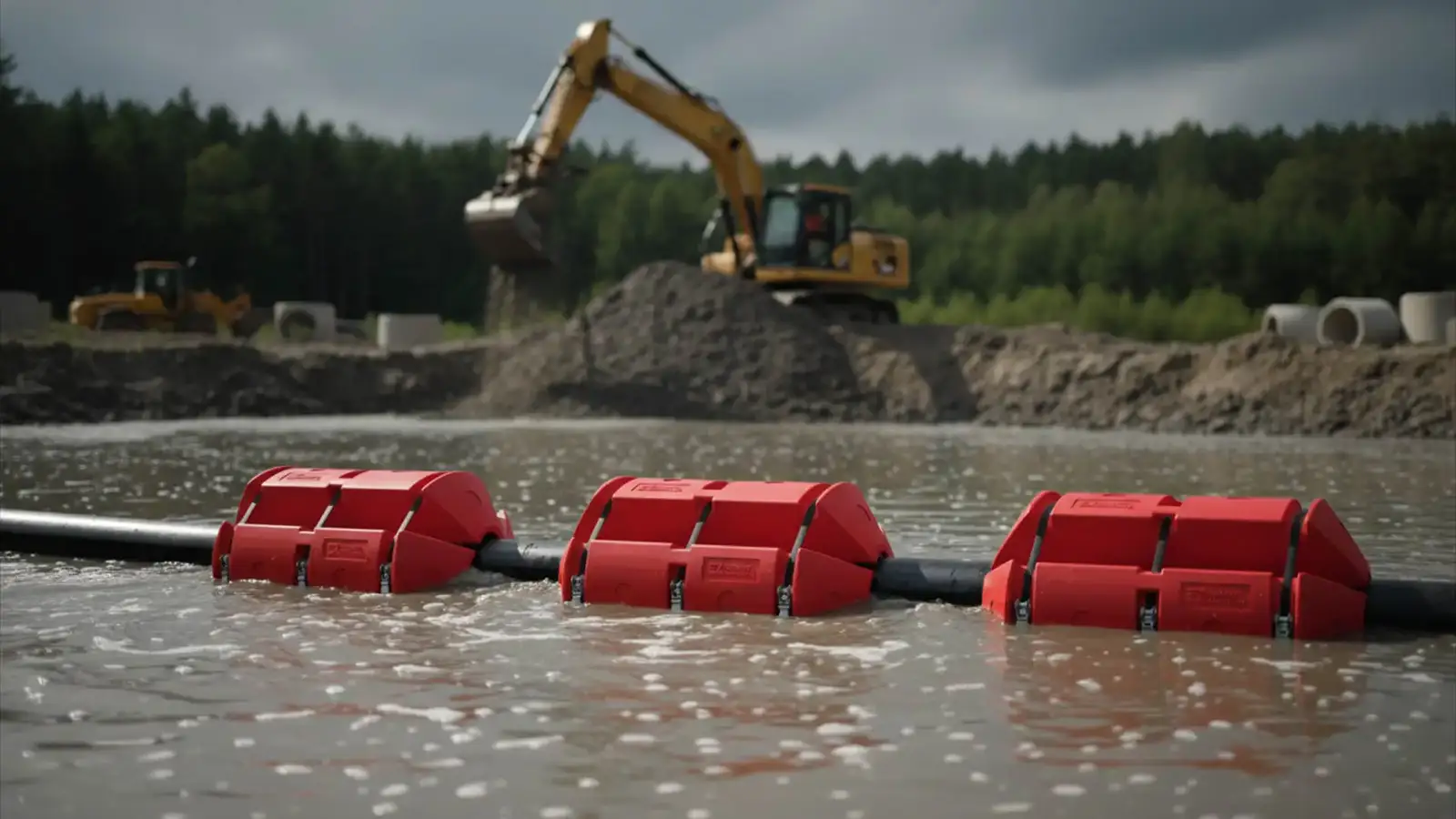
Pipeline floats are designed to distribute buoyancy along the length of the line so the pipeline stays level, supported, and predictable under load. Instead of relying on large fixed flotation sections, modular float systems spread support across smaller intervals, which helps reduce sag, improve alignment, and limit concentrated stress at connections.
These slurry pipeline floats don’t just keep the setup above water. They support it in a way that keeps the system stable and evenly balanced. Each float sits around the pipeline and distributes weight across its surface, which reduces stress on individual sections. When done right, the pipeline maintains a consistent level, and the flow through the dredge hose stays steady.
Modular dredge pipe floats take a more controlled approach. Instead of relying on large, rigid supports, they spread buoyancy across the pipeline in smaller, adjustable increments. That leads to better balance, fewer stress points, and a pipeline that responds more predictably during operation.
What Determines How Many Floats You Need?
There is no universal float count that works for every dredging job. The right number depends on how the pipeline, material, and environment interact.
-
Pipe Size and Pipeline Weight
Start with the pipe itself, because this is where most calculations begin.
- Pipe diameter changes everything. A larger HDPE pipe carries more volume, but once filled, it also adds more weight that your floats need to support. A dredge hose behaves differently, especially under load and movement.
- Pipe weight is where many estimates go wrong. An empty pipeline looks manageable on paper. Once the slurry fills it, the load increases quickly, and that extra weight has to be supported across the entire pipeline.
- Material type also plays a role. Polyethylene helps reduce weight compared to heavier materials, but it doesn’t remove the need for proper flotation. You still need to plan for real operating conditions, not ideal ones.
-
Slurry Density
Slurry density can significantly affect buoyancy requirements. Lighter sediment removal applications place less load on the pipeline, while denser mining slurry or abrasive material increases the total weight the float system must support. As slurry density rises, operators often need more floats, closer spacing, or higher-capacity float units to maintain proper support and stability.
Flow rate and pressure also play a role. Higher flow conditions create greater internal force within the pipeline, which can affect not only what happens inside the line but also how stable the pipeline feels on the surface during operation.
Water conditions matter as well. Because saltwater provides more buoyancy than freshwater, the same float configuration may perform differently depending on the jobsite. A setup that works in one environment may need adjustment in another.
-
Pipe vs. Hose Sections
Pipe and hose sections do not perform the same way in a floating slurry pipeline. Rigid pipe typically maintains its shape and weight distribution more consistently, while hose sections are more flexible and can move more under load or in changing water conditions. As a result, hose sections often require closer float spacing than rigid pipe to reduce sag, improve stability, and maintain better control of the pipeline during operation.
-
Water and Environmental Conditions
Freshwater and saltwater do not provide identical buoyancy behavior, and calm ponds do not behave like exposed marine jobs. Waves, current, vessel traffic, and general surface motion all affect how much support the pipeline needs and how tightly the floats should be spaced. Float count is not just about flotation. It is also about line control.
Pipeline Float Spacing
Spacing matters as much as total float count.
If floats are placed too far apart, the pipeline can sag between support points. That sag creates extra stress at joints, couplings, and transition points, and it can make the pipeline harder to control under full load. Competitor guides consistently recommend even spacing to distribute buoyancy and prevent unsupported sections.
In many applications, operators begin with floats spaced roughly 10 to 20 feet apart, then tighten spacing when slurry is heavier, the pipeline includes hose sections, or the environment is more dynamic. Some calculator guidance and manufacturer commentary point toward closer intervals in heavier-duty conditions.
Wider spacing reduces float count, but it increases sag risk. Closer spacing improves support and stability, but it adds cost and setup time. Good planning gets you close. Field observation finishes the job.
How to Calculate the Number of Floats You Need
You do not need to guess your way through float count. The process becomes manageable when you break it into five steps.
Step 1: Determine Total Pipeline Weight
Calculate the working weight of the full line, not just the empty pipe. That should include:
- pipe weight
- slurry weight
- hose sections
- fittings, couplings, and connection hardware
This is where many bad estimates start. A pipeline that seems manageable when empty can behave very differently once it is carrying material.
Step 2: Determine Buoyancy per Float
Next, determine how much upward support the float system needs to keep the loaded pipeline at the desired operating level. The objective is stable support, not excessive lift. Many engineering references also account for reserve buoyancy so the line remains controllable under operating variation rather than floating right at the edge of failure. A common reference point in polyethylene marine guidance is reserve buoyancy beyond bare minimum support.
Step 3: Confirm Buoyancy per Float
Check the actual buoyancy rating of the float model you plan to use. EZ Connect product material notes buoyancy ratings at both 50 percent and 100 percent submersion, which is useful because real-world planning often depends on how high or low you want the line to ride.
Step 4: Estimate Float Quantity
Use a simple starting formula:
Estimated float count = Required total buoyancy ÷ Buoyancy per float
For example, if your pipeline needs 5,000 pounds of buoyancy and each float provides 500 pounds, you would start with 10 floats. That gives you a working estimate before spacing and field conditions are applied.
Step 5: Adjust for Spacing and Conditions
This is where the estimate starts to reflect real operating conditions.
After calculating the base number of floats, adjust that quantity based on how the pipeline will actually be installed and used. Total buoyancy alone is not enough. A pipeline can have enough flotation on paper and still perform poorly if float placement, spacing, or site conditions are not considered.
Pipeline length affects how buoyancy must be distributed across the line. Spacing determines how often support is applied and how much sag can develop between floats. Environmental conditions such as waves, current, surface movement, and jobsite activity may require tighter spacing to improve stability and control. Project type also matters, since a calm sediment removal application behaves very differently from marine construction or mining.
This step turns the initial calculation into a realistic field estimate. The base number provides a starting point, but final adjustments are usually made based on how the fully loaded pipeline performs during operation.
Typical Float Demands by Application
Hydraulic Dredging
In a typical hydraulic dredging setup, the slurry density stays within a moderate range. You are moving a mix of water and sediment, not extremely heavy material, but not light either. That calls for a balanced approach.
You need enough buoyancy to support the loaded pipeline, but spacing also plays a key role in keeping the line stable. Most operators aim for a steady, level pipeline that maintains consistent flow without frequent adjustments.
Mining
Mining usually means heavier, denser, and more abrasive slurry. That increases buoyancy demand and often requires either more floats, higher-capacity floats, or tighter spacing to control sag and line stress.
Environmental Remediation
Environmental remediation projects often involve lighter material and more controlled conditions. The flotation requirements may be less aggressive, but line stability still matters, especially where precision and minimal site disruption are important.
Marine Construction
Marine construction introduces movement that cannot be ignored. Waves, current, and external motion increase the importance of stable distribution and tighter support intervals, even when the pipe size stays the same.
Bringing It All Together
Getting the right number of dredge pipe floats is not about picking a generic spacing number and hoping for the best. It comes down to understanding loaded pipeline weight, slurry density, float capacity, spacing, and operating conditions as one system.
Your first calculation should be treated as a working estimate, not a final truth carved into stone like some ancient dredging commandment. Once the line is deployed and fully loaded, small adjustments in spacing or float configuration can make a meaningful difference in stability and performance.
With a modular system like EZ Connect floats, those adjustments are easier to make without replacing the full setup. A properly supported pipeline does more than stay afloat. It runs more smoothly, reduces stress on the system, and helps keep the entire dredging operation efficient from start to finish.
Frequently Asked Questions About Dredge Pipeline Floats
1. How do I validate if my float distribution is adequate during operation?
Check for consistent pipeline elevation and uniform freeboard under full operating load. Visible sag between float intervals, uneven submergence, or unstable line movement usually indicates under-support or poor distribution. Even spacing is a basic but important sign of a sound setup.
2. Can one single float system work across multiple pipe diameters?
Yes, if the system is modular. EZ Connect floats are designed to support a wide range of pipe sizes by adjusting the fit with wedges while keeping the same float body concept in service.
3. What spacing should dredge pipe floats have?
A common starting range is 10 to 20 feet, but the right interval depends on slurry density, pipe or hose type, and water conditions. Heavier-duty or more dynamic jobs often need tighter spacing (1.2–1.5 SG) or dynamic environments often require spacing closer to 8–12 feet to limit sag and maintain stability.
4. How many floats are required for slurry pipelines?
Start by calculating total required buoyancy for the fully loaded line, including an operating safety margin:
Required Buoyancy = Pipeline Weight × 1.1–1.3 (safety factor)
After that, adjust the quantity based on spacing and job conditions. That is the logic behind most float calculators and engineering estimates.
For example, a 40,000-lb loaded pipeline with a 1.2 factor needs ~48,000 lb of buoyancy. With 600 lb floats, that’s about 80 floats, adjusted further for spacing.
5. How do slurry density variations impact float selection and count?
Slurry density directly scales buoyancy demand. For example, moving from 1.1 SG (sediment removal) to 1.4 SG (mining) can increase required buoyancy by 20–30%. This usually means tighter spacing or higher-capacity floats.
6. When should I choose modular floats over traditional pontoons?
Modular floats are a strong choice when projects involve variable pipe sizes, mixed conditions, or long runs where field adjustment matters. Traditional pontoons are usually better suited to fixed setups with less variation.
Talk to Our Engineering Team Before You Order
Calculations provide a solid starting point, but real projects rarely behave exactly like spreadsheets. Long runs, mixed pipe and hose sections, denser slurry, or changing site conditions can all shift what the pipeline needs once it is in operation.
A quick engineering review helps confirm that your float count, spacing, and configuration match actual job conditions before deployment. That reduces field adjustments, improves line stability, and helps the system perform the way you expect from day one.