
The Short Answer: Sand Pump vs Slurry Pump
The difference between a sand pump and a slurry pump comes down to the type of solids they are expected to handle and how stable the operating conditions are. . A sand pump is typically used for relatively uniform sand or fine sediment where particle size stays more consistent.. A slurry pump is built for broader solids variation, higher solids concentration, and more abrasive or irregular mixtures. .
This is not just a naming difference. It affects wear rate, solids handling, hydraulic stability, and how the pump performs across the full pipeline system.
Many sand pumps fit within the broader slurry-pump category, but not every slurry pump is the best fit for sand-focused service where hydraulic efficiency and predictable flow matter most.
That is why pump selection should be based on actual material behavior, pipeline conditions, and operating demands, not just the label used in a quote or brochure.
What Defines a Sand Pump in Real Operations
A sand pump is defined less by its label and more by the type of material it consistently handles in the field. In real operations, it is typically used where particle size staysrelatively uniform, such as sand or fine silt, and where the slurry composition does not fluctuate significantly.
That predictability usually supports steadier flow and better hydraulic efficiency than systems handling mixed solids or variable slurry conditions. Sand pumps are commonly used in applications like river sand extraction, construction dewatering, and controlled sand transfer systems, where the material profile is known and consistent. Key technical traits include:
- designed for consistent particle size such as sand and silt
- moderate solids handling capability with limited variation tolerance
- higher efficiency when pumping uniform material under stable conditions
- reduced ability to handle fibrous materials, organics, or mixed debris
These characteristics make sand pumps effective in controlled environments, but less adaptable once solids size, debris load, or slurry composition starts changing..

What Makes a Slurry Pump Different at the System Level
A slurry pump is defined by its ability to operate under changing material conditions and system demands, rather than a fixed material profile. Unlike sand pumps, slurry pumps are designed to handle mixed materials such as sand, gravel, sludge, and organics, often within the same system.
These materials often bring wider particle-size distribution, higher solids concentration, and more unpredictable flow behavior, all of which affect wear, efficiency, and reliability.
This means the pump must perform reliably even when the material properties are not consistent from one moment to the next.
Material Handling Range
- capable of moving fine particles as well as larger solids
- designed for abrasive, irregular, and non-uniform mixtures
System Integration
- operates effectively across long pipeline distances and elevation changes
- adapts to variable flow resistance and system curve conditions
- Is commonly used in continuous industrial processes where interruption is costly
Wear and Durability Considerations
- built for abrasive environments with higher wear tolerance
- performance depends heavily on slurry density, solids percentage, particle size, and system configuration rather than a simple water-based pump rating
Why Buyers Often Use “Sand Pump” and “Slurry Pump” Interchangeably
In the field, buyers do not always separate these terms cleanly. A contractor may ask for a sand pump when the application actually involves sand, silt, fines, and occasional debris. Another buyer may ask for a slurry pump even when the job is mostly uniform sand transfer.
That is why the label alone is not enough. The better approach is to define:
- what solids are actually in the mix
- how consistent the material is
- how far it needs to be pumped
- how much wear the system will see
- whether the operation is controlled or variable
In many cases, the right answer is not based on the term the buyer uses first. It is based on what the system really has to handle.
Sand Slurry Pump: Where the Overlap Actually Happens
The term “sand slurry pump” represents the overlap between two closely related but distinct categories. In practical terms, it usually refers to a slurry pump that has been selected or configured for sand-dominant material. While the primary medium is sand mixed with water, real operating conditions often introduce additional elements such as silt, clay, and minor debris. This creates a hybrid scenario where the material is not fully uniform, but also not as complex as heavy industrial slurry, requiring a balance between efficiency and material tolerance.
This terminology exists largely due to the gap between marketing language and engineering classification. In many cases, vendors use “sand pump” to describe simpler or more focused applications, even when the system technically operates under slurry conditions.
Key takeaways:
- A sand slurry pump is essentially a slurry pump optimized for sand-heavy mixtures
- All sand pumps operate within slurry conditions, but with limited variability tolerance
- Not all slurry pumps deliver optimal efficiency in sand-focused applications
- Performance and wear rates change when the material deviates from the intended design range
Why Dredging Systems Rarely Use “Pure” Sand Pumps
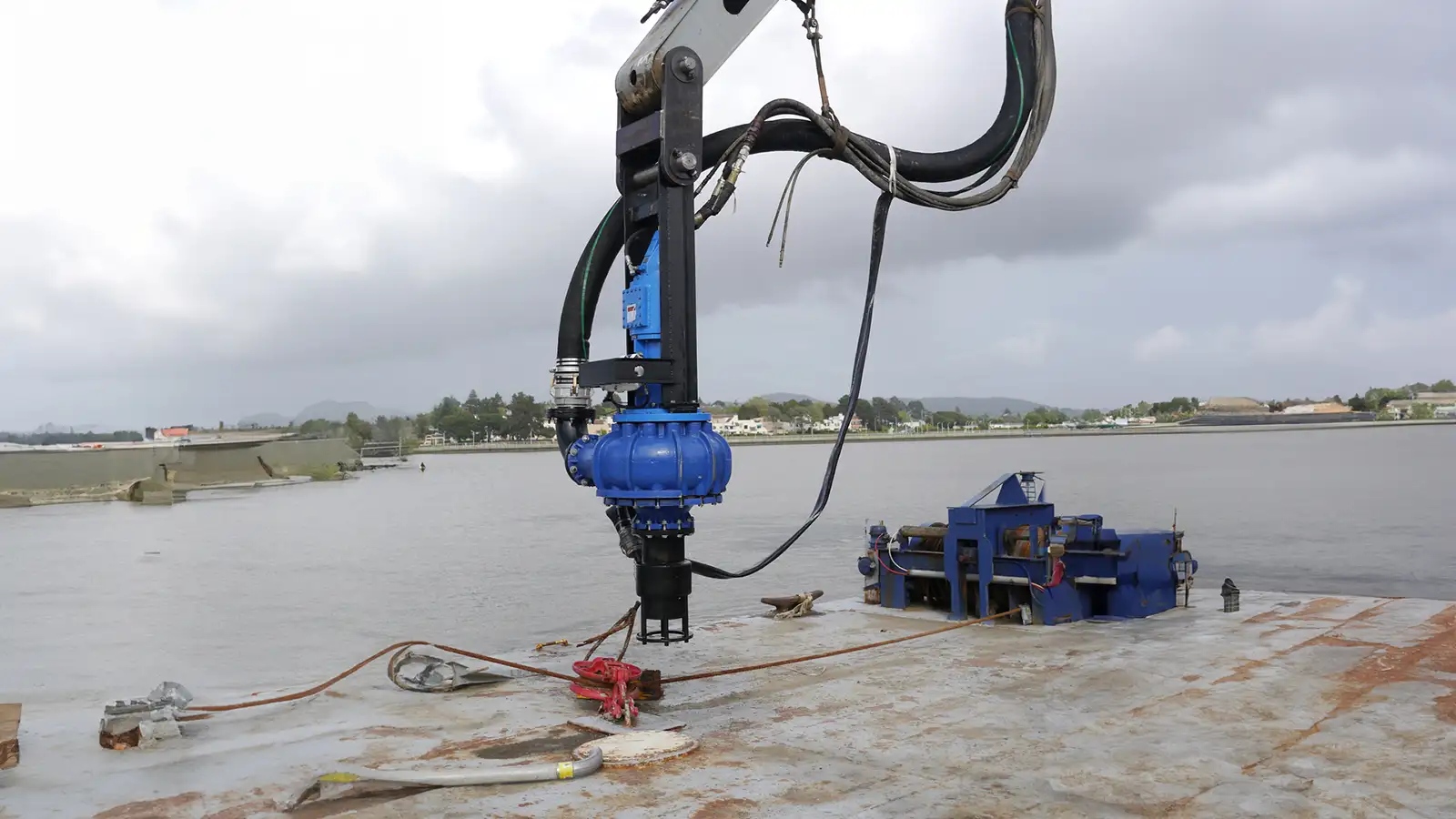
In real-world dredging operations, the material being pumped is rarely uniform enough to justify a pure sand pump. Even in sand-focused projects, the dredged material typically includes silt, clay, organics, fines, and occasional debris, , which creates a variable slurry that changes throughout the operation.
As a result, most dredging systems rely on a dredge pump or slurry pump that can tolerate these changing conditions without frequent clogging or unstable performance. The goal is not just to move sand. It is to maintain stable solids transport even when the material stream changes.
That makes solids-handling capability, wear resistance, and system stability more important than best-case efficiency on uniform material alone.
Common Mistakes When Choosing Between Sand and Slurry Pumps
- Assuming sand is always uniform
In real operations, sand often includes silt, clay, and debris. Treating it as a consistent material leads to incorrect pump selection and reduced reliability.
- Selecting based only on flow rate and head
While these are important, they do not account for how solids behave within the system. Material characteristics play an equally critical role in performance.
- Ignoring the solids concentration
Higher solids concentration increases wear and affects flow dynamics. Overlooking this factor can result in underperforming or quickly degrading equipment.
- Overlooking pipeline design
Pipeline length, elevation, and diameter directly impact friction loss and settling risk. A mismatch between pump and pipeline can lead to blockages or inefficiency.
- Choosing efficiency over durability
A pump optimized for efficiency under ideal conditions may fail quickly in abrasive or variable environments where durability is more important.
Misclassification of material leads to early wear and unstable performance.
Practical Selection Framework: When to Use Each Pump Type
Use a Sand Pump When:
- Material is primarily clean sand with minimal contamination
- Particle size remains consistent throughout the operation
- The system involves short-distance or localized transfer
- There is minimal presence of debris, organics, or variation in composition
- Operating conditions are stable and predictable over time
Use a Slurry Pump When:
- Material composition varies and includes mixed solids
- Solids concentration is high or changes during operation
- Long-distance pumping or complex pipeline routing is required
- Abrasive wear is a concern due to particle size or material hardness
- The system must handle fluctuations in flow, pressure, or material behavior
Choosing between a sand pump and a slurry pump should be based on the full operating system, not just the material at the intake. .A pump that matches both the material and the system will deliver more stable performance and longer service life.
Conclusion: The Difference Comes Down to Material Behavior, Not Labels
The difference between a sand pump and a slurry pump is ultimately defined by material behavior, solids variation, and total system demands. . Sand pumps perform best in controlled, predictable environments where particle size and composition remain consistent. Slurry pumps are better suited for real-world variability, including mixed solids, changing concentrations, abrasive wear and shifting operating conditions. The key takeaway is simple: do not choose between a sand pump and a slurry pump based on naming alone. Choose based on solids profile, wear risk, pipeline conditions, required pumping distance, and how much variation the system must tolerate.
That decision affects more than pump efficiency. It affects maintenance frequency, wear-part life, downtime risk, and total operating cost.
FAQ: Sand Pump vs Slurry Pump
What is the main difference between a sand pump and a slurry pump?
The main difference lies in material handling range and variability. A sand pump is designed for uniform, consistent particles like sand, while a slurry pump is built to handle mixed solids, varying particle sizes, and higher solids concentrations. This makes slurry pumps more adaptable in changing conditions.
Can a slurry pump be used for sand pumping?
Yes, a slurry pump can be used for sand pumping, but efficiency depends on how well the pump is matched to the material. In sand-only applications, a slurry pump may not achieve the same efficiency as a sand-specific design, but it provides greater flexibility if conditions change.
Is a sand slurry pump different from a slurry pump?
The term “sand slurry pump” is not a separate technical category. It usually refers to a slurry pump configured for sand-dominant material. The difference is more about application focus than a fundamentally different pump design.
Why are slurry pumps preferred in dredging applications?
Dredging rarely involves pure sand. Materials often include silt, clay, organics, and debris, which require pumps that can handle variability. Slurry pumps are preferred because they maintain performance across changing material conditions and reduce the risk of clogging.
Do sand pumps wear faster than slurry pumps?
Sand pumps can wear faster when used outside their intended range, especially in mixed or abrasive conditions. Slurry pumps are designed for higher wear environments, but their lifespan still depends on slurry properties and operating conditions.
What affects pump performance the most in these systems?
Pump performance is influenced by slurry properties such as density, solids concentration, and particle size, as well as pipeline factors like length, diameter, and elevation. System resistance and flow conditions play a critical role in determining overall efficiency and stability.


