- What Is Pump Priming?
- How a Self-Priming Excavator Pump Works
- When Self-Priming Matters Most in Excavator Pumping
- When Self-Priming Matters Less
- Self-Priming Pump vs Standard Excavator Pump
- Can Excavator Pumps Self-Prime?
- How to Decide If You Need a Self-Priming Excavator Pump
- Conclusion: When Self-Priming Becomes a Real Advantage
- Frequently Asked Questions About Self-Priming Excavator Pumps
A self-priming excavator pump is a pump system that can clear air from the suction side and restore flow without repeated manual priming after the initial fill. In practical terms, that means the pump can restart and recover more easily when air enters the line or when flow is interrupted.
That sounds simple enough, but here is the part that matters: not every excavator pump needs self-priming in the same way.
In many excavator pumping applications, especially with submerged slurry pump attachments, the pump is already positioned in the material. In those setups, priming behaves differently than it does in a surface-mounted suction-lift system. In other words, self-priming matters most when the pump has to pull fluid up through a suction line and keep recovering from air exposure. It matters less when the pump is already submerged at the source.
That is why the better question is not just, “What is a self-priming excavator pump?” The better question is, “When does self-priming actually solve a real operating problem?”
This article breaks down how pump priming works, why pumps lose prime in field conditions, how self-priming systems recover, and when a self-priming excavator pump makes sense compared with other excavator slurry pump configurations.
What Is Pump Priming?
Why Pumps Need Liquid to Start Working
Pump priming means filling the pump casing with liquid so the pump can create suction and begin moving fluid. Without liquid inside the pump, the system cannot establish the pressure difference needed to pull material through the suction line.
That is because most pumps are built to move liquid, not air. If the casing or suction line fills with air, suction breaks down and the pump stops moving material.
In excavation, dewatering, and slurry transfer work, this becomes a real operating issue because field conditions are rarely stable. Pumps deal with mud, slurry, dirty water, mixed solids, and changing fluid levels. Once air enters the system, the pump can lose suction fast.
Why Pump Priming Fails in Real Field Conditions
On paper, pump priming looks like a simple startup step. On-site, it becomes an operational weak point.
Air can enter the system through:
- loose suction connections
- worn fittings or seals
- shutdowns that allow fluid to drain back
- fluctuating fluid levels
- unstable suction line positioning
The problem gets worse in stop-start work. Excavator operations often involve repositioning, changing depth, shifting material, and restarting repeatedly through the day. Every restart creates another chance for the pump to lose prime.
That is why excavator pump priming becomes a recurring issue in some operations. The challenge is not just the pump. It is the combination of suction conditions, restarts, and site instability.
Why Manual Priming Slows Down Operations
When a pump loses prime, the workflow usually stops with it.
Someone has to step in, refill the pump, restore the setup, and restart the system. That takes time, interrupts the operator, and adds another manual step that can be done poorly under pressure.
In jobs with frequent interruptions, the pattern becomes familiar:
- start pumping
- lose prime
- stop work
- manually re-prime
- restart
One delay may seem minor. Ten delays in a shift are not. That is where the value of self-priming starts to become obvious.
How a Self-Priming Excavator Pump Works
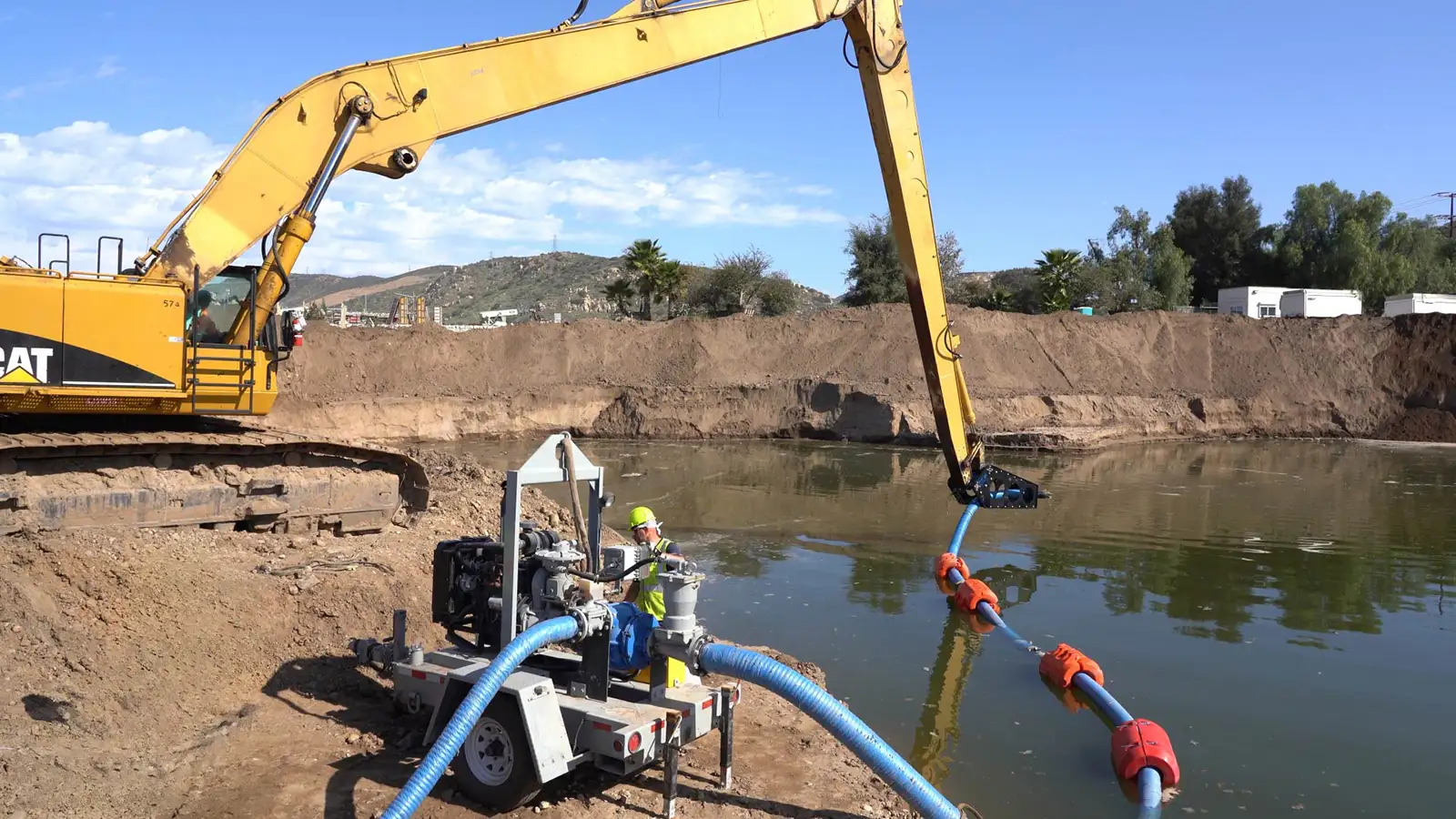
A self-priming excavator pump does not stop air from entering the system. What it does is continue operating long enough to clear that air and restore suction on its own.
The Initial Fill Still Matters
Even a self-priming pump cannot start completely dry. It still needs liquid inside the casing for initial startup.
That first fill creates the internal liquid volume the pump needs to begin circulation. After that, the pump is designed to retain enough liquid in the casing to restart and recover without requiring repeated manual priming in most normal operating conditions.
What Happens After Startup
Once the pump starts, it uses the liquid retained in the casing to begin moving fluid internally.
The process works like this:
- the impeller rotates and circulates retained liquid
- air entering through the suction side mixes with that liquid
- the air-liquid mixture continues circulating inside the casing
- the pump separates air from the liquid internally
- the air exits through the discharge side
- the liquid stays in circulation and helps rebuild suction
As the cycle repeats, air is cleared from the line and normal pumping resumes.
What Makes Self-Priming Possible
Self-priming is not one magic part. It depends on the internal pump design working together as a system.
The main functions are:
- liquid retention in the casing so the pump has starting volume after shutdown
- continuous internal circulation so the pump keeps moving fluid even when air is present
- air separation space so the pump can discharge air without fully losing pumping action
That is what separates a self-priming pump from a standard non-self-priming pump.
Where Self-Priming Breaks Down
Self-priming is useful, but it has limits.
Performance drops when the system faces:
- excessive suction lift
- long dry-running periods
- severe air leaks
- very heavy or highly viscous slurry
- conditions that allow the pump to lose all retained liquid
Once those limits are exceeded, even a self-priming slurry pump may need manual priming again.
When Self-Priming Matters Most in Excavator Pumping
The benefit of a self-priming excavator pump does not show up evenly across every application. It becomes valuable when priming is a repeated operational problem, not just a one-time startup step.
Frequent Stop-Start Work
Self-priming makes the biggest difference in jobs where the pump cycles on and off often.
This includes:
- excavation work with repeated repositioning
- intermittent slurry transfer
- trench and pit dewatering
- jobs with inconsistent intake conditions
In these cases, every restart creates another opportunity for standard pumps to lose suction. A self-priming system reduces the downtime between cycles.
Unstable Suction Conditions
If fluid levels shift, air pockets develop, or suction lines move during operation, a standard pump may lose prime repeatedly.
A self-priming pump is better suited for these variable conditions because it can clear moderate air intrusion without requiring immediate manual intervention.
Slurry and Mixed-Material Operations
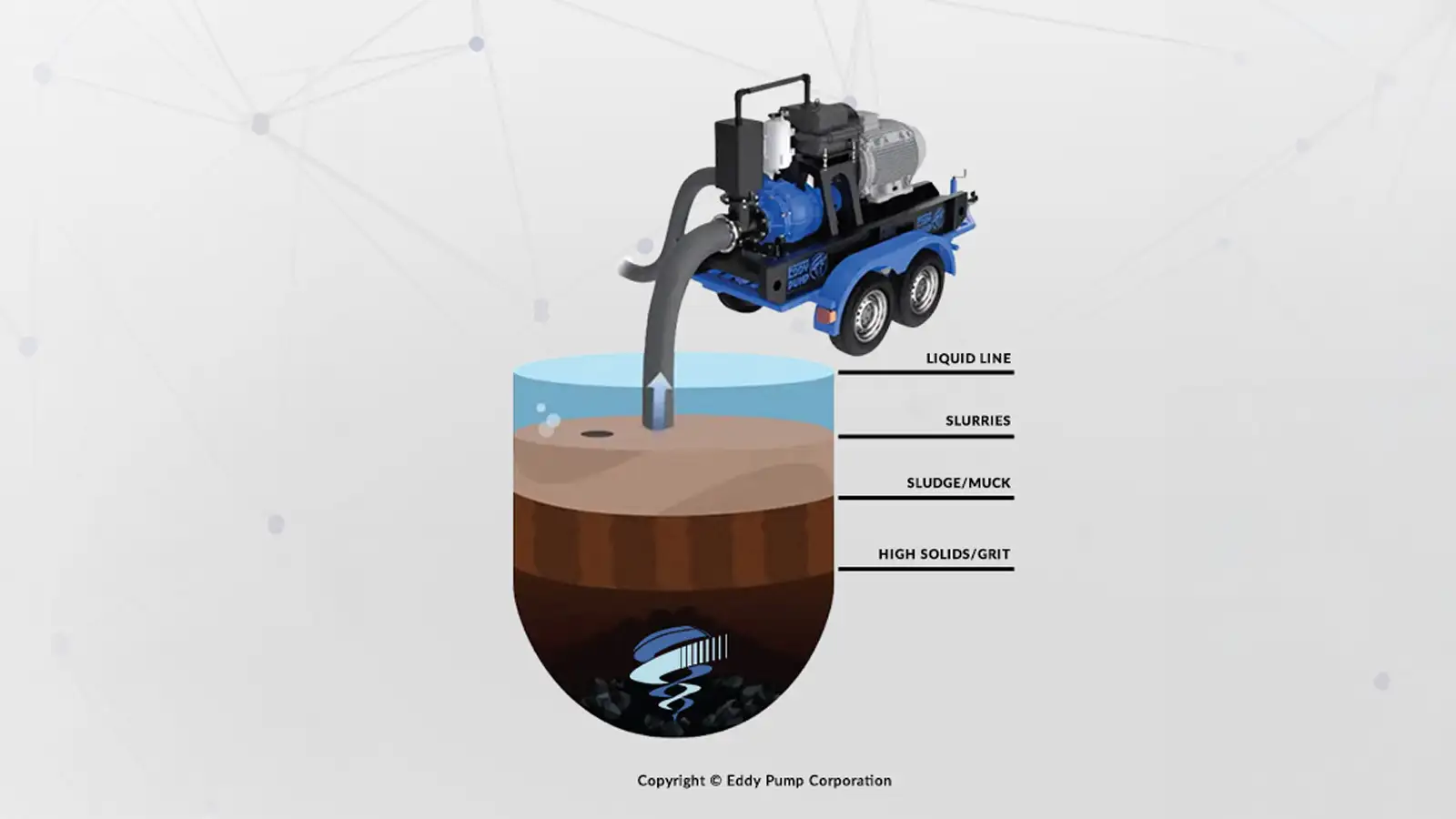
Slurry does not always behave like clean water. Solids, entrained air, inconsistent feed, and uneven flow all make pumping harder.
That is one reason self-priming slurry pump systems can be useful in excavation, dredging, and dirty-water transfer work. They are not magically immune to bad conditions, but they are better at recovering from the kind of interruptions that happen in the field.
When Self-Priming Matters Less
Not every excavator pumping setup needs self-priming.
Continuous Pumping With Stable Conditions
If the system runs continuously, the suction conditions stay stable, and the pump does not repeatedly lose prime, then self-priming adds less value.
In those cases, standard pump systems may perform just fine.
Submerged Excavator Slurry Pump Setups
This is an important distinction that should be made clear.
Many excavator slurry pump systems are submerged at the material source rather than relying on long suction lift conditions. In those configurations, the pump is already in the fluid or slurry zone, so the classic suction-side priming problem is reduced.
That does not mean design details stop mattering. It means the real decision may not be “self-priming versus non-self-priming.” The real decision may be whether the application is better served by:
- a surface-mounted self-priming pump
- a submerged excavator slurry pump
- a different hydraulic pump configuration entirely
That is a more useful and more credible way to frame the topic.
Self-Priming Pump vs Standard Excavator Pump
Standard Pump Behavior
A standard pump usually depends on manual priming before startup. If it loses suction during operation, someone has to step in and restore the system manually.
That means:
- more dependence on operator input
- more interruptions in stop-start work
- more downtime when air enters the system
Self-Priming Pump Behavior
A self-priming pump is designed to recover from moderate air entry without needing the full manual priming process each time.
That means:
- faster restart after interruptions
- fewer stoppages from air intrusion
- less reliance on manual intervention
- more consistent uptime in unstable conditions
The difference is not about power. It is about recovery.
Can Excavator Pumps Self-Prime?
Not all excavator pumps can self-prime.
Some require manual priming every time suction is lost. Others are designed to manage air internally and restore flow on their own after the initial fill.
So the accurate answer is this: excavator pumps can self-prime only if they are specifically designed as self-priming systems.
That said, not every excavator pump application needs self-priming. In some cases, especially with submerged slurry pump setups, the design eliminates much of the suction-side priming problem in the first place.
That is why the right question is not just whether the pump self-primes. The right question is whether the operating conditions make self-priming necessary.
How to Decide If You Need a Self-Priming Excavator Pump
A self-priming excavator pump is usually the right fit when:
- the pump starts and stops frequently
- air regularly enters the line
- suction conditions change through the day
- fluid levels are inconsistent
- manual re-priming is slowing the job down
A self-priming pump may be less important when:
- the operation runs continuously
- the intake conditions remain stable
- the pump does not regularly lose prime
- the system is submerged and suction lift is not the real issue
That is the practical decision point. Buy for the work pattern, not for the buzzword.
Conclusion: When Self-Priming Becomes a Real Advantage
A self-priming excavator pump is not automatically better in every pumping application. Its value depends on whether priming is actually a recurring problem in the field.
If your operation involves frequent restarts, variable suction conditions, changing fluid levels, or regular air exposure, a self-priming pump can reduce downtime and keep the workflow moving with less manual intervention.
If your setup is stable, continuous, or submerged at the source, self-priming may be less important than overall pump configuration, solids handling, hydraulic compatibility, and wear resistance.
That is the plain truth. Self-priming is not the answer to every excavator pumping problem. But when loss of prime keeps interrupting the job, it moves from being a convenience to being a practical requirement.
Frequently Asked Questions About Self-Priming Excavator Pumps
Can excavator pumps self-prime automatically every time?
No. Only pumps designed as self-priming systems can remove air and restore suction on their own. Even then, performance depends on proper installation, sealing, suction lift, and operating conditions.
Do self-priming pumps eliminate priming completely?
No. They still require an initial fill before first use. After that, they are designed to retain liquid and restart without full manual priming in most normal conditions.
How long does self-priming take?
In many setups, the process takes from a few seconds to a couple of minutes. The exact time depends on air volume, suction line length, vertical lift, and the material being pumped.
Can a self-priming slurry pump handle thick materials?
Yes, but only within its design range. Very dense or highly viscous slurry can slow internal circulation and reduce how quickly the pump can clear air and regain full suction.
What causes a self-priming pump to lose prime?
Common causes include air leaks, excessive suction lift, long dry periods, unstable intake conditions, and loss of retained liquid inside the casing.
Is a self-priming excavator pump necessary for all projects?
No. It is most useful when priming is a repeated issue. In stable or submerged pumping setups, other pump selection factors may matter more.