- Key Takeaways
- Understanding Diaphragm Pumps
- Evolution of Double Diaphragm Pumps
- Pneumatic Diaphragm Pumps: Revolutionizing Pumping Efficiency
- Key Applications of Air Diaphragm Pumps
- Modern Innovations in Diaphragm Pump Technology
- Safety Features in Diaphragm Pumps
- Environmental Considerations
- Choosing the Right Diaphragm Pump for Your Needs
- Conclusion
Key Takeaways
- Double diaphragm AODD pumps deliver near-continuous flow with significantly reduced pulsation compared to single-membrane designs. This makes them necessary in process applications that are sensitive to pressure variation.
- Flow rate in an AODD pump is controlled by inlet air pressure and stroke frequency. Unlike centrifugal pumps, AODD flow is not sensitive to backpressure, which makes them well suited to systems with variable discharge head.
- Diaphragm pumps are used across pharmaceutical filling lines, mining dewatering, chemical transfer, paint and coatings manufacturing, and wastewater sludge handling.
- Modern diaphragm pump designs include electronic stroke counters, air consumption monitors, and membrane leak detection, enabling predictive maintenance and real-time pump health monitoring.
- Installing pulsation dampeners on the discharge side of AODD pumps protects downstream instrumentation and pipe joints from pressure spikes and extends overall system service life.
Diaphragm pumps have been at the heart of fluid handling technologies for over a century. From their humble beginnings as simple mechanical devices, they have evolved into sophisticated and versatile pumps that are essential across various industries. The diaphragm pump’s ability to handle a broad spectrum of fluids, ranging from corrosive chemicals to viscous, high abrasion slurries, has made it a critical tool in industries such as chemical processing, mining, water treatment, pharmaceuticals, and food production. Diaphragm pumps are a type of positive displacement pump, meaning they move fluid by trapping a fixed amount and forcing (displacing) that trapped volume into the discharge pipe, which allows for precise and consistent flow even with challenging fluids.
The development of the diaphragm pump, which is also known as a membrane pump, began in the late 19th century when engineers sought a solution for pumping fluids that traditional centrifugal pumps could not handle. Early designs were rudimentary, often relying on hand-operated mechanisms to move the diaphragm. Over time, these pumps evolved into more complex machines driven by electric motors and, eventually, pneumatic systems. A significant modern advancement is the air operated double diaphragm pump, which offers enhanced reliability, maximum pressure, reduced leakage, and operational benefits such as low pulsation valves, making it ideal for demanding industrial applications.
As the industrial landscape grew more demanding, so did the need for pumps that could withstand harsh environments, handle difficult fluids, and operate efficiently for increased productivity over long periods. The well constructed diaphragm pump rose to the challenge, becoming a staple in industries that require reliability and robustness. In this comprehensive blog, we will explore the history, evolution, and modern advancements in diaphragm pump technology, examining how these pumps have adapted to meet the increasing demands of various industries. Modern diaphragm pumps are thoroughly tested for quality and safety before being deployed in industrial applications. We’ll also delve into the future trends that could shape the next generation of diaphragm pumps.

Understanding Diaphragm Pumps
At the core of a diaphragm pump’s operation is a flexible diaphragm that moves fluid, such as liquid, by creating a variable-volume chamber. This chamber expands and contracts as the diaphragm moves, allowing liquid to be drawn in during the intake stroke and expelled during the discharge stroke, with the flow typically controlled by check valves. Depending on the pump’s design, the movement of the diaphragm is controlled by either mechanical or pneumatic means.
The fundamental working principle of a diaphragm pump can be compared to the way a human heart pumps blood. Just as the heart contracts and relaxes to move blood through the circulatory system, a diaphragm pump uses the movement of its diaphragm to create pressure differentials that drive fluid flow. This simple yet effective mechanism is what makes diaphragm pumps so versatile and reliable.
Working Principle
The working principle of diaphragm pumps centers on the reciprocating action of a flexible diaphragm, which is typically constructed from robust materials such as rubber, thermoplastic, or Teflon. This diaphragm forms a critical seal between the pump’s drive mechanism and the fluid chamber, ensuring that the pumped fluid remains isolated from moving parts and potential contaminants. As the diaphragm moves upward within the chamber, the volume inside the pump increases, creating negative pressure that draws fluid in through the inlet. This suction action is regulated by suitable valves—such as check valves, butterfly valves, flap valves, or other shut off valves—which open to allow fluid to enter the chamber.
When the diaphragm reverses direction and moves downward, the chamber’s volume decreases, causing the pressure to rise. This increase in pressure forces the fluid out through the outlet, again controlled by the appropriate valves to ensure one-way flow. This cycle of expansion and contraction, much like the movement of a cylinder in an engine, enables diaphragm pumps to transfer, compress, or evacuate fluids efficiently. The hermetic seal provided by the flexible diaphragm eliminates the need for lubricants and prevents leaking, making these pumps ideal for handling a wide variety of fluids in demanding environments. This simple yet effective mechanism is what gives diaphragm pumps their reputation for reliable performance and versatility across numerous industries.
Single Diaphragm Pumps:
A single diaphragm moves the fluid in a single diaphragm pump. These pumps are typically more straightforward in design and are often used in applications where the fluid being pumped is not overly abrasive or viscous. However, single diaphragm pumps may have limitations in terms of their ability to handle high pressures or complex fluid characteristics.
Double Diaphragm Pumps:
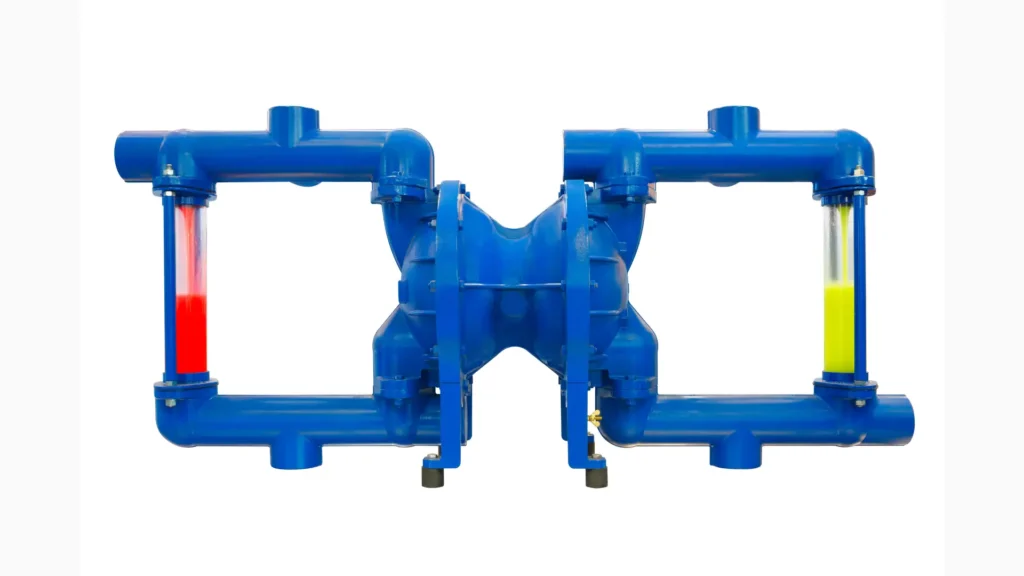
The double diaphragm pump improves upon the single diaphragm design by using two diaphragms working in tandem. The pumping action occurs on one side at a time, with each chamber alternately inflating and deflating to move the fluid. This design allows for more balanced fluid movement, reducing pulsation and increasing the pump’s overall efficiency. Double diaphragm pumps are well-suited for handling a wider range of fluids, including those that are viscous, abrasive, or corrosive.
The use of check valves in diaphragm pumps ensures that fluid flows in only one direction, preventing backflow and maintaining consistent operation. These valves open and close in response to pressure changes within the pump, allowing fluid to be drawn in during the intake stroke and expelled during the discharge stroke.
Evolution of Double Diaphragm Pumps
The development of double diaphragm pumps marked a significant milestone in the evolution of diaphragm pump technology. By incorporating two diaphragms instead of one, these pumps addressed several critical issues that limited the performance of single diaphragm pumps. The double diaphragm design not only improved the pump’s ability to handle more challenging fluids but also enhanced its durability and efficiency, as long as reasonable lubrication is present. Operated double diaphragm pumps are recognized for their reliability and suitability for demanding applications, offering features such as leak reduction, low pulsation, and robust construction tailored for high-performance fluid transfer.
Modern operated double diaphragm pumps often feature stall free operation, which further enhances reliability and reduces maintenance requirements.
Enhanced Fluid Handling:
Double diaphragm pumps are particularly effective in handling fluids that are difficult to manage with other types of pumps. For example, they can pump viscous liquids, such as oils, adhesives, and paints, without the risk of clogging or damage. They can also handle abrasive slurries, such as those found in mining and construction, where the presence of solid particles can quickly wear down other types of pumps. The pump head plays a crucial role in these processes by enabling efficient suction and discharge of challenging fluids, ensuring reliable operation even with difficult materials. The ability to manage a wide range of fluid characteristics makes double diaphragm pumps a versatile choice for many industrial applications.
Improved Durability:
One of the primary advantages of double diaphragm pumps is their enhanced durability. The use of two diaphragms reduces the mechanical stress on each diaphragm, leading to longer pump life and fewer maintenance requirements. This durability is especially important in industries where downtime can be costly, such as in chemical processing and oil and gas. The robust construction of double diaphragm pumps also allows them to operate reliably in harsh environments, where exposure to chemicals, extreme temperatures, and abrasive materials can quickly degrade other types of pumps.
Greater Efficiency:
Double diaphragm pumps offer improved efficiency over their single diaphragm counterparts. The balanced design of the double diaphragm system reduces energy losses, resulting in smoother and more consistent fluid movement. The unique pumping action of double diaphragm pumps further enhances their efficiency and ensures smooth fluid transfer. This efficiency is particularly important in large-scale industrial processes, where even small improvements in pump performance can lead to significant cost savings. Additionally, the reduced pulsation provided by double diaphragm pumps minimizes the risk of fluid hammer, a phenomenon that can cause damage to piping systems and other equipment.
The success of double diaphragm pumps in addressing the limitations of earlier designs has made them a preferred choice in many industrial settings. As industries continue to demand more from their pumping systems, the double diaphragm pump remains a key player in meeting these challenges.

Pneumatic Diaphragm Pumps: Revolutionizing Pumping Efficiency
The introduction of pneumatic (air-operated) diaphragm pumps represented a significant leap forward in pump technology. Unlike traditional pumps that rely on electric motors or manual operation, pneumatic diaphragm pumps use compressed air as their power source. These pumps do not require an electric motor, which distinguishes them from other pump types and allows for safer operation in hazardous environments.
AODD pumps (air operated double diaphragm pumps) are a type of pneumatic diaphragm pump that operate by using compressed air to move diaphragms and valves, enabling the transfer of various fluids. The advantages of AODD pumps include their ability to handle a wide range of viscosities, self-priming capabilities, and suitability for use in industries where electricity is not ideal or safe. This innovation brought several advantages that revolutionized the way pumps were used in industrial settings.
Intrinsically Safe Operation:
One of the most significant benefits of pneumatic diaphragm pumps is their intrinsic safety. Because they do not rely on electricity, these pumps can be used safely in hazardous environments where electrical sparks could ignite flammable materials. This safety feature is critical in industries such as chemical processing, mining, and oil and gas, where explosive atmospheres are common. Pneumatic diaphragm pumps are designed to operate without generating heat or sparks, making them ideal for use in environments where safety is a top priority.
High Efficiency and Versatility:
Pneumatic diaphragm pumps are highly efficient and versatile, making them suitable for a wide range of applications. They can handle varying fluid viscosities and flow rates without the need for complex controls or electrical connections. This versatility is particularly valuable in industries where fluid characteristics can change frequently, such as in chemical processing and wastewater treatment. Additionally, pneumatic diaphragm pumps can be easily adjusted to accommodate different flow rates and pressures, allowing them to be used in a variety of settings without requiring extensive modifications.
Self-Priming and Dry Running Capabilities:
Pneumatic diaphragm pumps are self-priming, meaning they can start pumping without needing to be filled with fluid first. This feature is especially useful in applications where the fluid supply may be intermittent or where the pump needs to be located above the fluid source. Additionally, pneumatic diaphragm pumps can run dry without damage, making them suitable for applications where the fluid level may fluctuate or where the pump may need to be temporarily stopped and restarted. These capabilities make pneumatic diaphragm pumps a reliable choice in challenging environments where other pumps might struggle.
Reduced Maintenance:
With fewer moving parts and no need for complex electrical systems, pneumatic diaphragm pumps require less maintenance than their electric counterparts. This reduced maintenance translates to lower operational costs and less downtime, further enhancing their appeal in industrial settings. The simplicity of pneumatic diaphragm pumps also makes them easier to repair and maintain, reducing the need for specialized training or equipment. This ease of maintenance is particularly important in remote or challenging environments where access to technical support may be limited.
The combination of safety, efficiency, and versatility offered by pneumatic diaphragm pumps has made them a popular choice in industries that demand reliable and robust fluid handling solutions. As industrial processes continue to evolve, the role of pneumatic diaphragm pumps is likely to expand, further solidifying their position as a critical component of modern fluid handling systems.
Key Applications of Air Diaphragm Pumps
Air-operated diaphragm pumps have found widespread use in various industries due to their unique advantages. Their ability to handle a wide range of fluids, combined with their safety and efficiency, makes them a valuable asset in numerous applications. Some of the key industries and applications where air diaphragm pumps are commonly used include:
Chemical Processing:
In the chemical industry, air diaphragm pumps are extensively used for transferring aggressive chemicals, acids, solvents, and other hazardous materials. Their ability to handle corrosive fluids and operate safely in explosive atmospheres makes them indispensable in chemical plants. Air diaphragm pumps are often used in processes such as chemical dosing, mixing, and transfer, where precise control and reliable operation are critical. The use of advanced materials, such as PTFE and Hastelloy, allows these pumps to withstand the harsh conditions often encountered in chemical processing, ensuring long service life and minimal maintenance requirements.
Wastewater Treatment:
In wastewater treatment facilities, diaphragm pumps are used to handle sludge, slurries, and other high-solid-content fluids. Their robust design allows them to operate efficiently in these challenging conditions, ensuring reliable performance and minimal downtime. Air diaphragm pumps are particularly well-suited for applications such as dewatering, where the pump’s ability to handle solids and varying fluid characteristics is essential. Additionally, the self-priming and dry-running capabilities of air diaphragm pumps make them ideal for use in treatment facilities where fluid levels can fluctuate or where pumps need to be restarted frequently.
Mining and Construction:
In mining and construction, air diaphragm pumps are used for dewatering, transferring abrasive slurries, and pumping concrete. Their ability to handle abrasive materials without significant wear and tear makes them ideal for these demanding applications. In mining, air diaphragm pumps are often used to remove water from mine shafts and tunnels, ensuring safe working conditions and preventing flooding. In construction, these pumps are used to transfer concrete, grout, and other construction materials, where their ability to handle viscous and abrasive fluids is crucial for efficient operation. The durability and reliability of air diaphragm pumps in harsh environments make them a preferred choice for many contractors and engineers.
Food and Beverage:
The food and beverage industry relies on diaphragm pumps for transferring liquids, pastes, and semi-solids. The pumps’ ability to handle shear-sensitive fluids without contamination is crucial in maintaining product quality. In food processing, air diaphragm pumps are used to transfer ingredients such as sauces, syrups, and dairy products, where gentle handling is required to prevent product degradation. The use of hygienic materials and designs ensures that these pumps meet strict food safety standards, preventing contamination and providing the highest levels of product quality. Additionally, the ability to easily clean and sanitize air diaphragm pumps makes them ideal for use in industries where hygiene is a top priority.
Pharmaceuticals:
In the pharmaceutical industry, diaphragm pumps are used to transfer delicate fluids, including solvents and suspensions. Their hygienic design and ability to prevent cross-contamination make them essential in pharmaceutical production processes. Air diaphragm pumps are often used in applications such as sterile fluid transfer, where the pump’s ability to operate without generating heat or contamination is critical. The use of high-purity materials, such as PTFE and stainless steel, ensures that these pumps meet the stringent requirements of pharmaceutical manufacturing, providing reliable and consistent performance in even the most demanding environments.
These applications highlight the versatility and reliability of air-operated diaphragm pumps, making them a valuable asset in a wide range of industrial operations. As industries continue to demand more from their fluid handling systems, the role of air diaphragm pumps is likely to grow, further cementing their place in modern industrial processes.

Modern Innovations in Diaphragm Pump Technology
As industrial demands continue to evolve, so too does diaphragm pump technology. Modern innovations have focused on improving pump efficiency, durability, and ease of use while also integrating advanced features that enhance overall performance. These innovations have made diaphragm pumps more efficient, reliable, and adaptable to the needs of modern industry, ensuring their continued relevance in the years to come.
Advanced Materials:
The development of new materials for diaphragms, valves, and pump bodies has significantly improved the durability and chemical resistance of diaphragm pumps. Materials such as PTFE (Teflon), Santoprene, and Viton are now commonly used to withstand the harsh conditions of industrial applications, extending the life of the pumps and reducing maintenance requirements. The use of advanced materials has also allowed diaphragm pumps to handle more aggressive and abrasive fluids, further expanding their range of applications. For example, the use of PTFE diaphragms in chemical processing has significantly reduced the risk of chemical attack, ensuring long service life and reliable performance in even the most challenging environments.
Smart Technology Integration:
The integration of smart technology into diaphragm pumps has revolutionized their operation. Sensors and control systems can now monitor pump performance in real time, providing valuable data on flow rates, pressure, and diaphragm wear. This information allows for predictive maintenance, reducing the risk of unexpected failures and optimizing pump performance. Smart technology also enables remote monitoring and control of diaphragm pumps, allowing operators to adjust pump settings and monitor performance from a central control room or even from off-site locations. This level of control and insight is particularly valuable in large-scale industrial operations, where even small improvements in efficiency can lead to significant cost savings.
Automation and Control:
Modern diaphragm pumps can be integrated into automated systems, allowing for precise control over flow rates and pressure. This capability is particularly useful in applications where maintaining consistent fluid delivery is critical, such as in chemical dosing and mixing processes. Automated diaphragm pumps can be programmed to operate at specific flow rates and pressures, ensuring consistent performance and reducing the risk of human error. Additionally, the integration of diaphragm pumps into automated systems allows for greater flexibility and scalability, enabling manufacturers to quickly adjust production rates and respond to changing market demands.
Noise Reduction:
Innovations in pump design have also focused on reducing noise levels during operation. Quieter pumps are particularly important in industries where noise pollution is a concern, such as in food processing and pharmaceuticals. The use of advanced materials and design techniques has allowed manufacturers to reduce the noise generated by diaphragm pumps, making them more suitable for use in environments where noise levels need to be minimized. Additionally, the reduction of noise levels in diaphragm pumps can improve working conditions for operators, reducing the risk of hearing damage and improving overall safety.
Energy Efficiency:
As energy costs continue to rise, there has been a significant focus on improving the energy efficiency of diaphragm pumps. Modern pumps are designed to minimize air consumption and reduce energy waste, making them more cost-effective to operate in the long term. The use of advanced control systems and materials has allowed manufacturers to create diaphragm pumps that operate more efficiently, reducing the overall energy consumption of industrial processes. Additionally, the use of energy-efficient diaphragm pumps can help companies meet sustainability goals and reduce their carbon footprint, further enhancing their appeal in today’s environmentally conscious marketplace.
These innovations have made diaphragm pumps more efficient, reliable, and adaptable to the needs of modern industry, ensuring their continued relevance in the years to come. As industries continue to demand more from their fluid handling systems, the role of diaphragm pumps is likely to grow, further cementing their place in modern industrial processes.
Safety Features in Diaphragm Pumps
Diaphragm pumps are engineered with a range of safety features to ensure reliable performance and protect both operators and equipment. One of the standout features is the low pulsation air valve, which enables smooth and rapid changeover during each pumping cycle. This design minimizes pressure surges, ensuring a consistent discharge pressure and reducing the risk of system shocks that could damage sensitive components or disrupt processes. The modular air valve design further enhances safety and convenience, allowing for quick maintenance or replacement of the valve without removing the entire pump from service—an important consideration for minimizing downtime in critical operations.
The air distribution system in diaphragm pumps is carefully designed to deliver a steady supply of air pressure, keeping the pump operating within safe and controlled parameters. This not only supports reliable performance but also helps prevent over-pressurization and potential leaks. For applications in hazardous environments, many diaphragm pumps can be equipped with explosion-proof motors, making them suitable for use in industries where flammable or volatile fluids are present. Additionally, these pumps are self-priming and capable of handling shear sensitive fluids and abrasive materials without leaking or suffering damage, thanks to the use of corrosion-resistant wetted parts. These safety features, combined with the pump’s ability to handle a wide range of fluids and operate in various industries, make diaphragm pumps a trusted choice for applications where safety and reliability are paramount.
Environmental Considerations
Diaphragm pumps are designed with environmental responsibility in mind, offering increased efficiency and reliable performance while minimizing their ecological footprint. By utilizing compressed air as a power source, diaphragm pumps eliminate the risk of electrical hazards and can safely operate in hazardous or explosive environments. Their ability to run dry without sustaining damage is a significant advantage, as it reduces the risk of fluid spills and environmental contamination—an important consideration in industries where fluid containment is critical.
The robust design of diaphragm pumps allows them to handle fluids containing solids, making them ideal for applications where waste or slurry management is required. Their low friction operation and minimal wear on components translate to reduced maintenance needs and a longer operational life, which in turn decreases the frequency of part replacements and the associated waste. The long life of the diaphragm and other key components further reduces the environmental impact related to manufacturing and disposal. By combining reliable performance, the ability to operate with a wide range of fluids, and features that support sustainability, diaphragm pumps provide an efficient and environmentally conscious solution for modern industry.
Choosing the Right Diaphragm Pump for Your Needs
Selecting the appropriate diaphragm pump for a specific application requires careful consideration of several factors. These factors include the type of fluid being pumped, the required flow rate, the pressure at which the pump will operate, and the specific requirements of the application. By carefully evaluating these factors, operators can ensure that they select a pump that will provide reliable and efficient performance in their particular application.
Fluid Type:
The nature of the fluid being pumped is a critical consideration when selecting a diaphragm pump. For instance, highly viscous or abrasive fluids may require a pump with reinforced diaphragms and wear-resistant materials. Corrosive fluids, on the other hand, may necessitate the use of chemically resistant materials like PTFE.
Additionally, the fluid’s temperature, pH, and chemical composition must be considered to ensure that the pump materials are compatible with the fluid and will not degrade over time. In some cases, specialized coatings or materials may be required to protect the pump from corrosion or wear, ensuring long service life and reliable performance.
Flow Rate and Pressure Requirements:
The required flow rate and pressure will determine the size and type of diaphragm pump needed for a specific application. Applications that demand high flow rates or operate under high pressure will require pumps that can handle these conditions without compromising performance or longevity. Additionally, the pump’s ability to maintain consistent flow rates and pressures is critical in applications where precise control is required, such as in chemical dosing or mixing processes. By carefully evaluating the flow rate and pressure requirements of an application, operators can ensure that they select a pump that will provide reliable and efficient performance.
Operating Environment:
Another important factor to consider when selecting a diaphragm pump is the environment in which it will be used. In hazardous or explosive atmospheres, pneumatic diaphragm pumps may be the best choice due to their intrinsic safety features.
In contrast, applications in clean or controlled environments may benefit from the precise control offered by electrically powered pumps. Additionally, the pump’s ability to withstand harsh environmental conditions, such as extreme temperatures, humidity, or exposure to chemicals, must be considered to ensure reliable operation in the specific application.
Maintenance and Durability:
Consideration should also be given to the pump’s maintenance requirements and overall durability when selecting a diaphragm pump. Pumps with advanced materials and smart technology may offer longer service life and reduced maintenance needs (key for applications like a car wash, chemical plants and others), which can be particularly advantageous in critical applications where downtime is costly.
Additionally, the pump’s ease of maintenance and repair should be considered, especially in remote or challenging environments where access to technical support may be limited. By selecting a pump that is easy to maintain and repair, operators can reduce downtime and ensure reliable performance in even the most demanding environments.
Cost Considerations:
While diaphragm pumps can be more expensive upfront than other types of pumps, their durability and efficiency can result in lower total cost of ownership over time. It is important to weigh the initial cost against the long-term benefits when selecting a pump. Additionally, the pump’s energy efficiency and maintenance requirements should be considered when evaluating the total cost of ownership, as these factors can significantly impact the overall cost of operating the pump. By carefully evaluating the cost considerations of a diaphragm pump, operators can ensure that they select a pump that provides the best value for their specific application.
Case Studies of Successful Applications:
Reviewing case studies of successful diaphragm pump applications can provide valuable insights into how these pumps perform in real-world scenarios. For example, in a chemical processing plant, the use of PTFE-lined double diaphragm pumps has significantly reduced maintenance costs and downtime by effectively handling aggressive chemicals. Similarly, in a wastewater treatment facility, pneumatic diaphragm pumps have proven their reliability by consistently managing high-solid-content sludge without clogging or failure. These case studies highlight the importance of selecting the right diaphragm pump for a specific application and demonstrate the benefits that can be achieved by making the right choice.
By carefully considering these factors, operators can ensure that they select a diaphragm pump that will provide reliable and efficient performance in their specific application. By choosing the right pump, operators can reduce downtime, improve efficiency, and ensure the long-term success of their operations.
Conclusion
Since their inception, diaphragm pumps have evolved from basic mechanical devices to sophisticated systems integral to modern industry. The development of double diaphragm pumps, the introduction of pneumatic systems, and ongoing innovations in materials and design have all contributed to their enduring success. As industries continue to demand more efficient, reliable, and versatile pumping solutions, diaphragm pumps are poised to remain at the forefront of industrial fluid handling technology.
With advancements in smart technology, automation, and energy efficiency, the future of diaphragm pumps looks promising, offering even greater capabilities and performance in the years to come. As industrial processes continue to evolve, diaphragm pumps will continue to play a critical role in ensuring reliable and efficient fluid handling in a wide range of applications. By staying at the forefront of pump technology, diaphragm pumps will continue to meet the needs of modern industry, providing reliable and efficient performance for years to come.