Types of Cofferdams
- Braced Cofferdam
- Single and Double-walled Sheet Pile Cofferdam
- Earth Embankment Cofferdam
- Rock Fill Cofferdam
- Cellular Cofferdam

What Are Cofferdams?
It’s no secret that underwater construction poses a challenge to engineers around the world. Working above the waterline is quite achievable, however, when it comes to working below the waterline, innovative solutions must be created for a successful project. Many times, these solutions involve constructing cofferdams.
Cofferdams are temporary structures created within a body of water to allow construction crews to completely dewater an area, allowing them to perform underwater construction such as laying foundations, pouring concrete, welding, and oil rig construction. Cofferdams can be completely customized for any given project and can be built in many different types and configurations to suit the needs of the project. They are essential for projects to build bridges, build dams, oil platforms, and bridge piers, as well as for developing international ports. Cofferdam construction enables infrastructure projects that connect communities and remains significant today in various construction scenarios. Often, the area must be dredged with submersible dredge pumps to remove soil and fine silts in order to level the ground before the cofferdam construction can begin. Projects like this are some of the most demanding in the construction industry.
When you have to rely on technology in a very demanding work environment, going with a company that manufactures equipment that has excelled in the harshest applications in the world can pay big dividends. EDDY Pump Corporation’s Pumping and Dredging equipment has been put to the test in many such situations. The following article shows how EDDY Pump has provided endless value in cofferdam construction projects.

The EDDY Pump Powers All of Our Dredging Equipment
Cofferdam Types Explained
Double wall cofferdams are constructed with two parallel sheet pile walls tied together and filled with soil, providing stability for water depths up to 12 meters. They are commonly used in medium-depth water projects.
Single wall cofferdams use a single sheet pile wall supported by internal bracing or struts, suitable for small water depths (typically 4.5 to 6 meters). Guide piles, wales, and sandbags are often used for stabilization, making them ideal for shallow water construction.
Timber crib cofferdams are built on land, floated into position, and used in rapid currents or rocky river beds. These cofferdams function as gravity dams, with cells filled with rock ballast and soil to resist lateral forces.
There are also different types of cellular cofferdams, such as diaphragm and circular types, each designed for specific structural purposes and large-scale water or construction projects.
Cofferdam Materials
Selecting the right materials is fundamental to building a reliable and effective cofferdam. The most commonly used materials in cofferdam construction are steel sheet piles, wooden sheet piles, and concrete sheet piles. Steel sheet piles are especially popular in modern construction projects due to their exceptional strength, durability, and resistance to corrosion, making them ideal for deep excavations and situations with high heads of water. These steel sheet piles can be driven deep into the ground, forming a tight seal that helps resist hydrostatic pressure and lateral forces from surrounding water and soil.
In some construction scenarios, steel sheet piles are combined with rock fill or soil to enhance stability and support, particularly in challenging soil conditions. For smaller or temporary structures, wooden sheet piles may be used, especially when the water depth is shallow and the loads are lighter. Concrete sheet piles are another option, often chosen for projects requiring a more permanent structure or when specific site conditions demand it.
Ultimately, the choice of cofferdam materials depends on the unique requirements of each construction project, including the nearby structures, type of cofferdam, the depth and velocity of the water, and the characteristics of the surrounding soil. By carefully considering these factors, engineers can ensure that the cofferdam will perform effectively throughout the construction process.
Braced Cofferdam
Braced cofferdams are formed from a single all sheet of piling. This sheet is then driven into the ground in sections around the planned excavation site, creating a box. This box is stabilized using internal bracing such as struts and beams on the inside to keep water from getting inside. Once the box has been braced, construction crews will begin to dewater the area inside the box, allowing for construction on the seafloor. Working inside a braced cofferdam often involves confined space conditions, which require a comprehensive emergency response plan to address potential hazards. Braced cofferdams are primarily used in shallow water environments for projects such as pier construction.
Call for sales or support
If you need assistance with pump selection, sales or engineering support, call 619-404-1916.
Earth Embankment Cofferdam
These are the simplest type of cofferdam construction methods, well suited for depths of water up to 3 m. Earth embankments are constructed around the area to be dewatered. The earth coffer dams are built of local soils, preferably fine sand. However, constructing earth embankment cofferdams in course grained soil can be challenging, as such soils increase seepage and reduce overall stability. These usually have a clay core or a vertically driven sheet piling in the middle. The upstream slope of the bank is covered with riprap to mitigate erosion. A successful cofferdam does not necessarily need to be completely watertight. From an economical sense, it is not possible to make it watertight and hence some seepage of water into the excavation is usually expected and tolerated to an extent. When designing earth embankment cofferdams, it is important to consider the groundwater table, as a high groundwater table can lead to excessive water ingress and compromise the effectiveness of the cofferdam. The water collected through seepage is pumped out of the excavation site to keep the construction area as dry as possible. The earth embankment cofferdams are often constructed with a minimum freeboard of about 1m to prevent waves or high tides from spilling over the embankment. Sand-bag cofferdams are also used, primarily in an emergency situation, but can be less efficient.
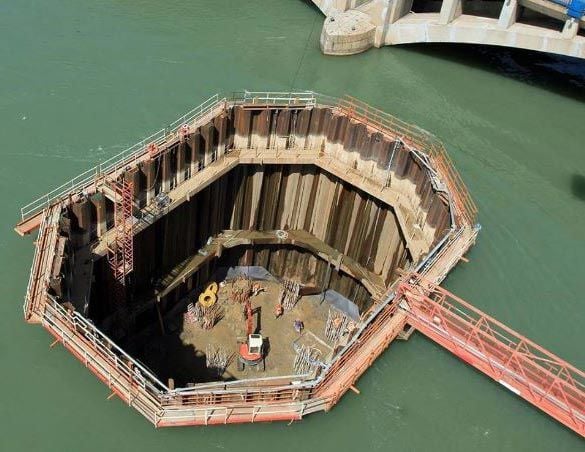
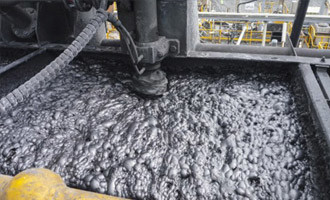
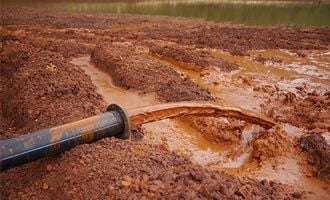
Cofferdam construction project underway
Single/Double-walled Sheet Pile Cofferdam
Sheet piling is an earth retention and excavation support technique that retains soil, using steel sheet sections with interlocking edges. A single wall cofferdam consists of a single sheet pile wall supported by internal bracing, such as struts or cross braces, and is suitable for shallow water depths, typically between 4.5 to 6 meters. In contrast, double wall cofferdams use two parallel sheet pile walls tied together and filled with soil for added stability, making them suitable for water depths up to 12 meters. The main components consisting of sheet piles, wales, and cross braces provide the necessary structural support. These cofferdams are often constructed as welded steel structures for strength and durability. These sheet piles are then often securely braced to support the weight of the water the sheet pile will be retaining, therefore allowing dewatering and construction to commence.
Rock Fill Cofferdam
Rockfill cofferdams made of rockfill are sometimes used to enclose the site to be dewatered. Timber crib cofferdams are another gravity-type cofferdam, constructed on land and then floated into place, typically used in rapid currents or rocky river beds; they consist of timber cells filled with rock ballast and soil to resist lateral forces. Rockfill can be described as an embankment of compacted, free-draining sand and rocks. Rockfill cofferdams are permeable and are usually provided with an impervious membrane of soil to reduce the rate of seepage that must be pumped out to keep the area dry.
Cellular Cofferdam
Cellular cofferdams are typically constructed by driving sheet piles of particular shapes to form a series of cells. For diaphragm types, straight diaphragm walls are used, while circular types utilize circular arcs and circular cells as core structural components. These circular cells are interconnected to form a watertight wall rigid enough to retain water. Such structures are designed to resist lateral forces without the need for cross excavation bracing, making them ideal for large-scale projects in water bodies. These cofferdams are typically constructed as steel structures, with the enclosure built to create a dry work environment. The cells are then filled with soil to help provide an additional stabilizing force against the lateral pressure of the water. Cellular cofferdams are often built as a circular type or diaphragm type, depending on the project specifications and location.
How EDDY Dredge Pumps Excel at Cofferdam Construction Projects
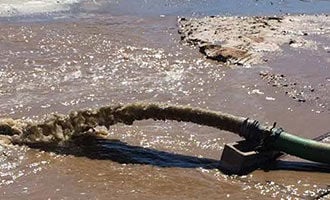
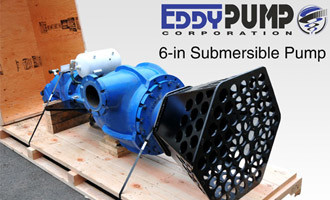
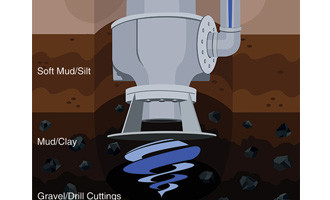
Due to the fact that in many cases, the proposed construction site of a cofferdam is over a body of water, this area must be dredged to ensure a flat foundation in which to build the cofferdam. Typically this is accomplished with submersible dredge pumps, which can be prone to clogging and wear and tear from the constant pumping of abrasive sand, mud, and silt.
After dredging and installation, pumping creates a dry environment within the cofferdam, enabling safe construction activities such as building dams, oil platforms, and bridge piers.
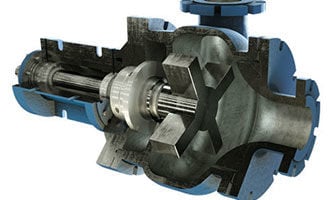
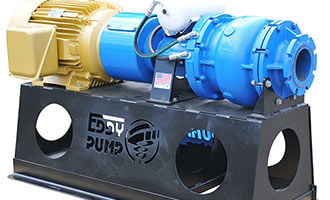
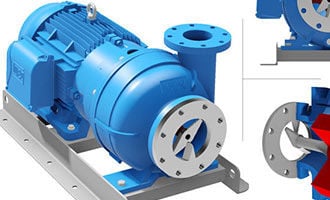
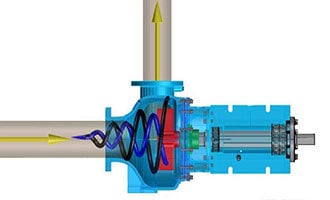
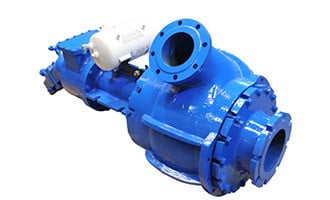
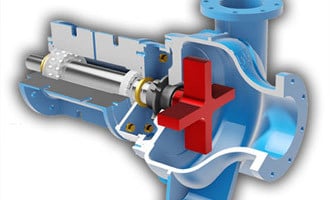
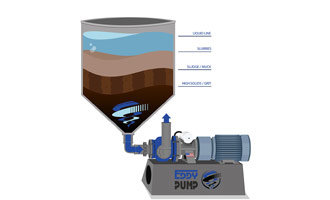
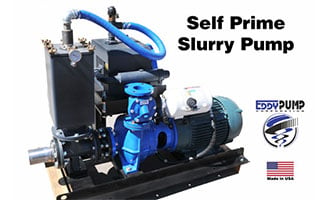
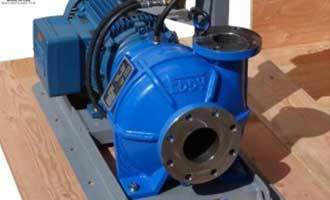
The EDDY Pump well-suited for a cofferdam dredge pump solution due to the ultra-recessed rotor which makes it highly resistant to abrasion and able to pump a much higher amount of solids than traditional dredge pumps. The result is faster construction and far less pump maintenance, saving companies ample amounts of time and money, faster completion times and the ability to end the project safely.
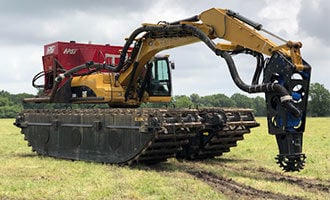
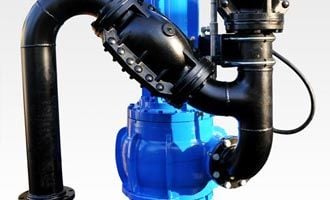
Depending on the project specifications, we have many dredging solutions to fit the needs of a cofferdam construction project including our Excavator Dredge Pump Attachment with Cutterhead, Diver-operated submersible dredge, or a cable deployed dredge that can be used from a barge or crane. Additionally, all of these units are completely modular, meaning the same unit can be used for multiple jobs if the scope of the project changes.
Best Applications – Industries Most Served
The EDDY Pump Corporation is a premier manufacturer of pumping and dredging equipment. If you are pumping or dredging slurry, high solids, extremely viscous material, paste, high abrasives (sand & gravel) and material filled with solids, then you found the best suited product for the job. Our equipment is also ideal for construction work involving water management and dewatering, such as projects that require creating dry environments for building over or under bodies of water.
Go to: https://eddypump.com/ or Call Us!
Mining, Fly Ash, Coal Ash, Oil, Fracking, Gas, Wastewater, Pulp and Paper, Chemical, Energy, Water Municipalities, Irrigation, and Dredging Companies.
For Access to Complete Product Line Go to: https://eddypump.com/products/
Dredging & Marine Construction
Mine Tailings Pumping
Oil & Gas
Chemical Pumping
Agricultural & Canal Pumping
Sand & Gravel Pumping
Sewage & Wastewater
Paper & Pulp Pumping
Call for sales or support
If you need assistance with pump selection, sales or engineering support, call 619-404-1916.
Why EDDY Pumps Are Better – Highlights
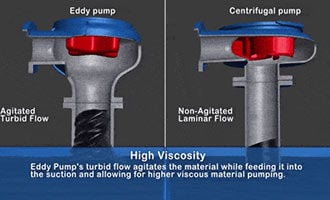
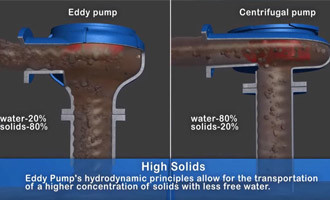
This video shows how EDDY Pump outperforms centrifugal pumps when pumping high solids abrasive, viscous or corrosive slurries.
HD (Heavy Duty) Slurry Pumps / Dredge Equipment
Related Products
For assistance Call 619-404-1916 and let us help match your project
with the right pump.