


- What Is a Slurry Pump and How It Works
- Types of Slurry Pumps
- How EDDY Pump Technology Differs
- Key Components of a Slurry Pump
- How to Select the Right Slurry Pump
- Common Applications of Slurry Pumps
- Maintenance and Common Issues
- Efficiency and Performance Optimization
- Latest Trends in Slurry Pump Technology
- Conclusion
- FAQs
A slurry pump moves a mixture of liquid and solid particles. It is used where standard pumps wear out too quickly, clog too easily, or lose efficiency because the material contains abrasive solids, higher density, or larger particles..
Industries use slurry pumps in mining, dredging, wastewater treatment, and industrial processing. In mining, they transport ore and tailings. In dredging, they move sand and sediment. In wastewater systems, they handle sludge. Each of these applications involves solids-heavy material that behaves very differently than clean water.
Slurry handling is different from standard fluid pumping. The presence of solids increases wear, reduces efficiency, and raises the risk of clogging. Pump components face constant impact and friction, which leads to faster degradation if the design is not suited for these conditions.
That is why slurry pump design matters so much. Some pump types perform well in lighter-duty slurry service, while others are better suited for high solids, large particles, abrasive mixtures, and non-clog performance. Systems from EDDY Pump are positioned specifically around those harder conditions.

What Is a Slurry Pump and How It Works
Definition and Core Function
A slurry pump moves a mixture of liquid and solid particles through a system. It is used when the fluid contains sand, ore, sludge, sediment, tailings, or other abrasive solids that standard pumps cannot handle reliably. .
These pumps are built for tough conditions. The materials they move are often dense, corrosive, and highly abrasive. That means the pump must resist wear while still maintaining flow and pressure.
Basic Working Principle
A slurry pump converts mechanical energy from a motor into hydraulic energy. This process creates the force needed to move the slurry through the system.
The flow follows a simple path. The slurry enters through the suction inlet, moves into the impeller, and then exits through the discharge outlet. As the impeller rotates, it increases the velocity of the mixture and pushes it forward.
This is where slurry service becomes more demanding than water pumping. Solid particles strike internal surfaces, increase wear, and can block tight internal passages. Over time, that reduces efficiency, increases maintenance frequency, and shortens pump life if the design is not matched to the material.
Types of Slurry Pumps
Centrifugal Slurry Pumps
Centrifugal slurry pumps are the most widely used type. They rely on a rotating impeller to move fluid and are suitable for applications with low to moderate solids concentration.
They are common in mining, processing plants, and general slurry transfer systems because they handle high flow rates efficiently and are relatively simple in design.
Their main limitation is wear.Solid particles come into direct contact with the impeller and casing, which leads to wear over time. Larger particles can also cause clogging, especially if the pump is not sized correctly.
Positive Displacement Pumps
Positive displacement pumps move slurry by trapping and pushing a fixed volume with each cycle. This makes them effective for thick, high-viscosity mixtures.
They are useful in high-pressure systems where steady flow matters more than maximum throughput. You’ll find them in applications that deal with dense sludge or paste-like materials.
The trade-off is complexity. These pumps often require more maintenance and are not ideal for handling large or highly abrasive solids.
Submersible Slurry Pumps
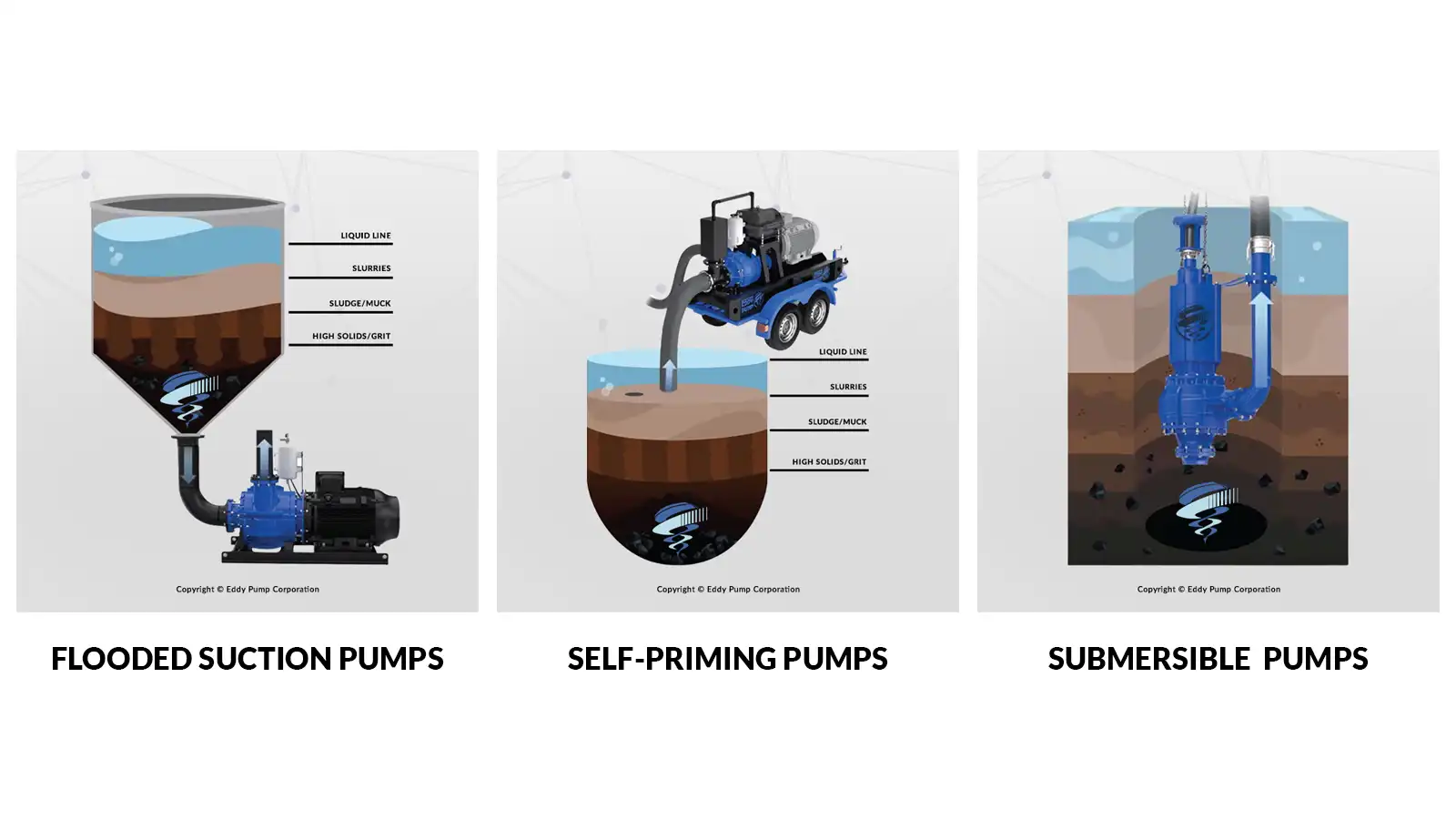
Submersible slurry pumps operate while fully submerged in the fluid. This setup removes the need for priming and allows direct pumping from pits, tanks, or underwater environments.
They are commonly used in dredging, dewatering, lagoons, mining pits, and submerged solids-handling applications. . Because they sit inside the slurry, they can handle solids more directly.
However, constant exposure to abrasive materials increases wear, so material selection and maintenance become critical.
Non-Clog and Vortex-Based Designs (Including EDDY Pump)
Non-clog and vortex-based pumps take a different approach. Instead of forcing solids through tight internal spaces, they create a vortex that keeps particles suspended in the fluid.
This reduces direct contact between solids and internal components. As a result, wear decreases and the risk of clogging drops.
These designs are especially well suited for handling larger particles, higher solids concentration, irregular material, and non-uniform slurry. They are often used in demanding applications where traditional centrifugal pumps struggle to maintain performance.
How EDDY Pump Technology Differs
Core Design Approach
EDDY Pump systems use a vortex-based pumping approach instead of relying on a traditional tight-clearance impeller path. Instead of forcing solids through tight internal clearances, the pump creates a rotating vortex that moves the slurry.
This approach keeps most solids away from direct contact with the impeller. As a result, the pump moves material more smoothly, especially when dealing with irregular or heavy particles.
Reduced Wear and Maintenance
Less internal contact means less friction. In standard pumps, solids grind against internal components, which leads to faster wear.
With EDDY Pump’s vortex-based design, reduced interaction between solids and key wear surfaces lowers the rate of damage. You end up replacing components less often and spending less time on maintenance. This also helps maintain more consistent performance over time.
Handling High Solids Content
This design is intended to handle dense slurry and higher solids content more effectively than conventional tight-clearance pump designs. High solids concentration often slows down or damages conventional pumps.
By keeping particles suspended in the flow, the system moves larger and heavier materials without the same level of resistance or blockage. It performs better in conditions where particle size and concentration would normally create problems.
Typical Use Cases
You’ll see this type of system in applications where standard pumps struggle:
- Dredging operations that move sand, silt, and sediment
- Mining systems handling tailings and ore slurry
- Oil and gas sites dealing with sludge and drilling waste
- Industrial processes that involve thick or abrasive waste materials
These environments demand solids handling, lower clogging risk, and better wear tolerance under harsh conditions, which is where this design approach stands out most.

Key Components of a Slurry Pump
Impeller Design
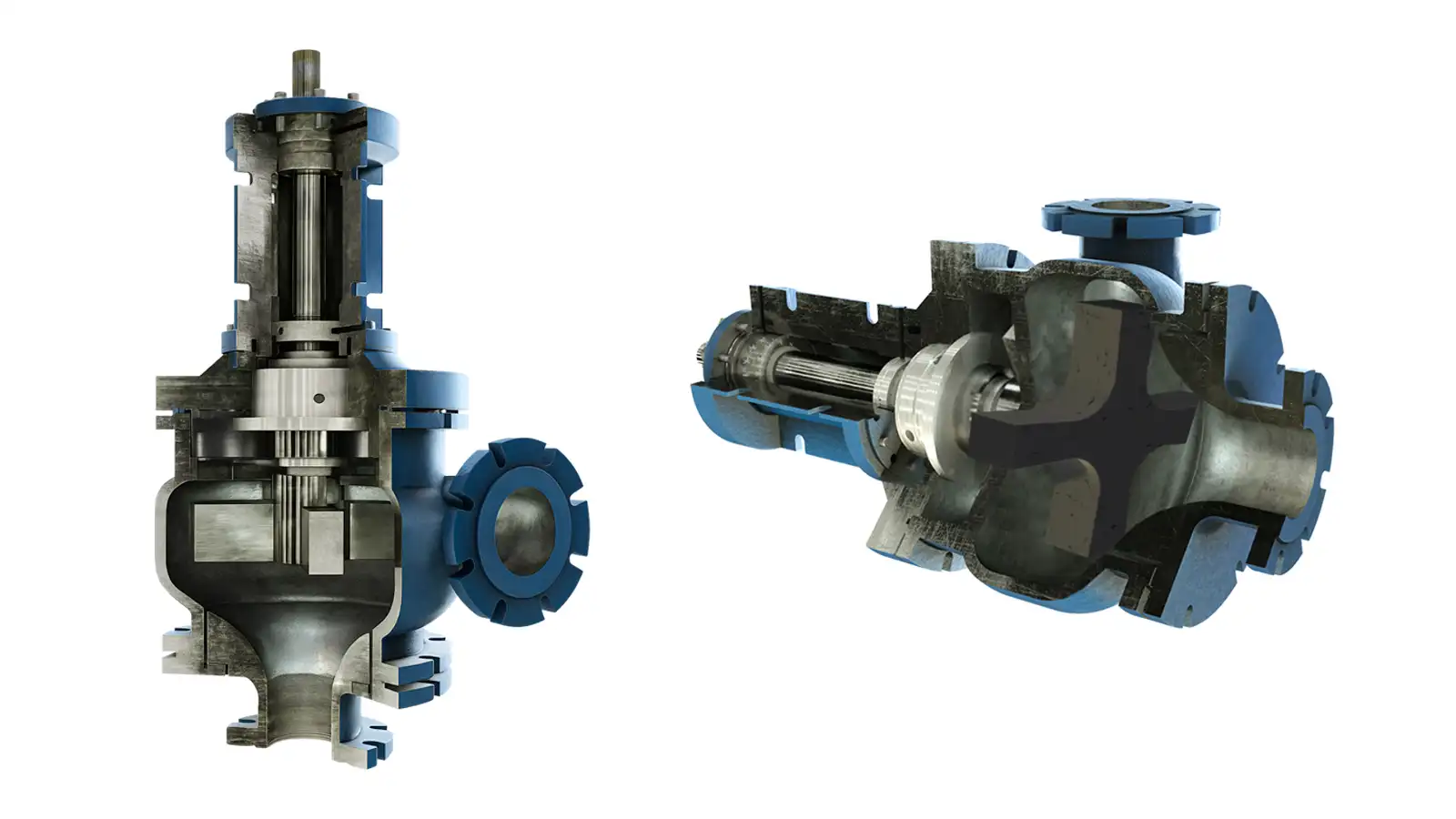
The impeller drives the movement of slurry through the pump. Its design directly affects how efficiently the pump operates and how quickly it wears down.
You’ll find three main types. Open impellers handle solids better but wear faster. Closed impellers offer higher efficiency but can clog more easily. Vortex designs reduce direct contact with solids, which helps limit wear in demanding conditions.
The choice depends on the type of slurry you’re handling. Larger or more abrasive particles require designs that reduce contact and resist damage.
Casing and Liners
The casing holds the internal components and directs the flow of slurry. It also absorbs much of the impact from moving particles.
Liners sit inside the casing and take the brunt of the wear. You can replace them without changing the entire pump.
Material selection matters here. Metal liners offer strength and durability in high-impact environments. Rubber liners resist corrosion and work better with finer, less aggressive particles.
Shaft, Bearings, and Seals
The shaft connects the motor to the impeller and transfers rotational energy. Bearings support the shaft and keep it aligned during operation.
Seals prevent slurry from leaking out of the pump. They also protect internal components from contamination.
These parts work together to keep the pump stable. Misalignment or seal failure can lead to leaks, vibration, and reduced performance.
Wear Parts
Slurry pumps include components designed to wear out over time. These typically include liners, the throat bush, and sometimes the impeller.
Instead of letting the entire pump degrade, you replace these parts at regular intervals. This keeps maintenance predictable and extends the overall life of the system.
How to Select the Right Slurry Pump
Start With the Slurry
Start with the material you need to move. The properties of the slurry determine everything that follows.
Look at particle size and distribution. Large or irregular particles increase the risk of clogging and impact damage. Finer particles behave differently and often require different materials.
Check the solids concentration. Higher solids content makes the mixture heavier and harder to move. It also increases wear on internal components.
Abrasiveness and corrosiveness matter just as much. Abrasive particles wear down surfaces quickly, while corrosive fluids can damage materials over time. You need a pump that can handle both without frequent failure.
Define Performance Requirements
Once you understand the slurry, define what the system needs to do.
Flow rate tells you how much material must move over time. Head and pressure define how far and how high the slurry needs to travel. These two factors must match your system layout.
Efficiency also plays a role. A pump that meets flow and pressure requirements but wastes energy will increase operating costs over time. The goal is to meet performance targets without overloading the system.
Match the Pump to the Material
Different pump designs suit different conditions.
Centrifugal pumps work well when solids concentration is low to moderate and particle size is manageable. They are efficient and widely used but wear faster in abrasive conditions.
Vortex-based systems, including those from EDDY Pump, are more suitable when dealing with high solids content, large particles, or materials that tend to clog. They reduce internal contact and handle difficult slurry more consistently.
The best pump type depends on how the material behaves in the system, not just on target flow rate.
Choose Materials for Wear and Corrosion Resistance
Material choice affects both performance and lifespan.
Metal components handle high-impact conditions and coarse particles. They provide strength and durability but can wear quickly in highly abrasive environments.
Elastomer materials, such as rubber, resist corrosion and work well with finer particles. They offer better flexibility but may not hold up under heavy impact.
You need to balance cost and durability. A lower upfront price often leads to more frequent wear-part replacement, while a more durable material package can reduce long-term maintenance.
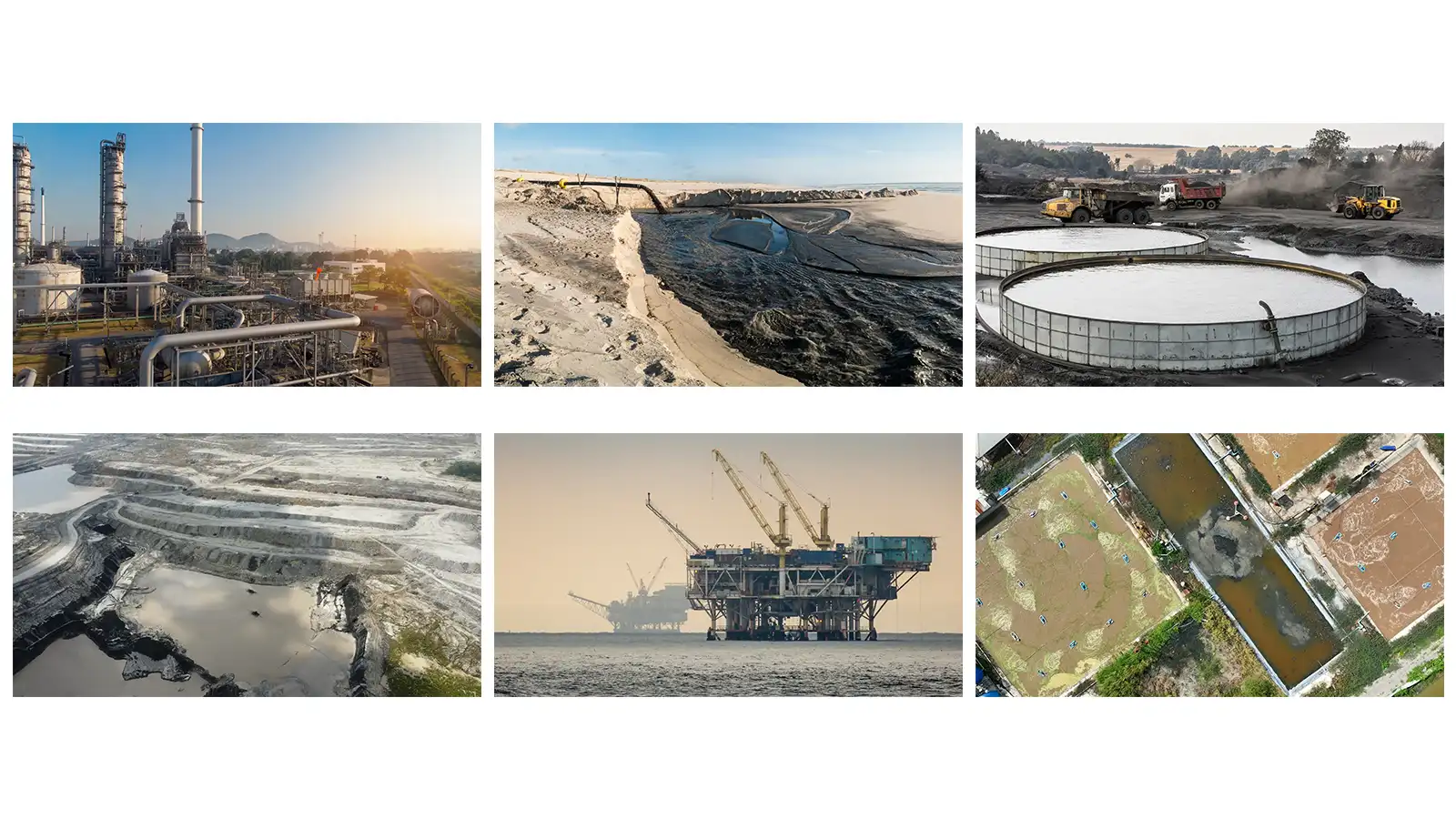
Common Applications of Slurry Pumps
Mining and Mineral Processing
Mining operations rely heavily on slurry pumps to move ore and waste material. After extraction, the ore is mixed with water to form slurry, which is then transported through pipelines for processing.
Slurry pumps also handle tailings, which are the leftover materials after valuable minerals are separated. These mixtures are often dense and abrasive, making pump durability critical for continuous operation.
Dredging and Sand Pumping
Dredging uses slurry pumps to remove sediment, sand, and debris from rivers, lakes, and coastal areas. This helps maintain waterways, ports, and channels.
Sand pumping is a similar process used in construction and land reclamation. The slurry often contains large particles and debris, which require pumps that can handle high solids content without clogging.
Oil and Gas
In oil and gas operations, slurry pumps move sludge, drilling mud, and waste materials. These mixtures can be thick, abrasive, and sometimes corrosive.
Reliable flow is important in this environment. Any blockage or failure can interrupt operations, so the pump must handle varying slurry conditions without frequent downtime.
Wastewater and Industrial Processing
Wastewater treatment systems use slurry pumps to move sludge between different stages of processing. This includes settling, thickening, and disposal.
Industrial processes also depend on slurry pumps for handling byproducts and chemical mixtures. These applications often involve corrosive materials, so both pump design and material selection play a key role in long-term performance.
Maintenance and Common Issues
Wear and Abrasion
Wear is the main reason slurry pumps fail. Solid particles move at high velocity and constantly hit internal surfaces. Over time, this removes material from the impeller, liners, and casing.
Particle size and solids concentration drive the rate of wear. Larger, sharper particles cause more impact damage. Higher solids content increases friction inside the pump. If the pump is not designed for these conditions, performance drops quickly.
Clogging and Blockages
Clogging happens when solids get trapped inside the pump or flow passages. This is common in traditional designs with tight internal clearances.
Blockages reduce flow, increase pressure, and can lead to shutdowns. Materials with large or irregular particles make this worse.
Vortex-based systems, including those from EDDY Pump, reduce this risk by keeping solids suspended instead of forcing them through narrow paths. This allows smoother flow in applications with high solids content.
Cavitation
Cavitation occurs when pressure drops below the fluid’s vapor pressure, forming vapor bubbles inside the pump. These bubbles collapse as pressure increases, causing small shockwaves.
This damages internal components and reduces efficiency. You may notice noise, vibration, or a drop in performance.
Cavitation often results from poor system design, incorrect pump sizing, or insufficient suction conditions. Fixing it requires addressing the root cause, not just the symptoms.
Routine Maintenance
Regular maintenance keeps the pump running reliably.
Set a clear inspection schedule. Check wear parts, seals, and bearings before they fail. Replace components like liners and throat bush at planned intervals instead of waiting for breakdowns.
Lubrication is also important. Properly maintained bearings reduce friction and prevent misalignment.
Consistent maintenance reduces downtime, extends equipment life, and keeps performance stable.
Efficiency and Performance Optimization
Proper Pump Sizing
Start with the right size. An undersized pump struggles to meet flow and pressure requirements, which increases strain on internal components. An oversized pump wastes energy and can cause unstable flow.
When you match the pump to the system, you reduce unnecessary load. This improves efficiency and slows down wear, especially in abrasive conditions.
System Design
The way you design the system affects how the pump performs.
Pipe layout should allow smooth flow with minimal resistance. Sharp bends and long runs increase friction and reduce efficiency. You should also maintain the right flow velocity. Too slow, and solids settle in the pipe. Too fast, and wear increases due to higher impact forces.
A balanced design keeps the slurry moving without adding stress to the system.
Energy Efficiency Matters
Pumping systems consume a significant share of industrial motor energy, which is why slurry pump efficiency should be evaluated at the system level, not just at the pump nameplate. The biggest gains usually come from matching the pump to real material behavior, reducing unnecessary friction loss in the pipeline, and keeping the system operating near its intended duty point. Where operating demand changes over time, variable speed pumping can improve efficiency by adjusting output to actual system requirements instead of forcing the pump to run at one fixed speed. That does not mean every slurry pump should automatically use a VFD, but it does mean buyers should evaluate controls, duty cycle, and total system resistance as part of pump selection. More buyers are also looking beyond purchase price and focusing on total cost of ownership. In slurry service, energy use, wear-part replacement, downtime, and maintenance frequency often outweigh initial pump cost over the life of the system. That makes efficiency a practical operating issue, not just a sustainability talking point.
Source reference:
Hydraulic Institute / Pump Systems Matter: https://www1.eere.energy.gov/manufacturing/tech_assistance/pdfs/variable_speed_pumping.pdf?utm_source=chatgpt.com
U.S. Department of Energy: https://www.energy.gov/cmei/ito/motor-systems?utm_source=chatgpt.com)
Monitoring and Automation
Modern systems rely on data to maintain performance.
Sensors track pressure, flow rate, vibration, and temperature in real time. This helps you detect issues early, before they lead to failure.
Predictive maintenance uses this data to plan service at the right time. Instead of reacting to breakdowns, you address wear before it affects performance.
Automation improves consistency. It keeps the pump operating within optimal conditions, which reduces downtime and improves overall efficiency.
Latest Trends in Slurry Pump Technology
Advanced Materials
Material improvements focus on reducing wear and extending service life. New alloys and reinforced elastomers resist both abrasion and corrosion more effectively than older materials.
This matters in slurry applications where components face constant impact and chemical exposure. Better materials reduce how often you replace parts and help maintain consistent performance over time.
Non-Clog Designs
Non-clog designs are becoming more common, especially in applications with high solids content. These systems avoid tight internal clearances that trap particles.
Vortex-based approaches, including those used by EDDY Pump, continue to gain traction. They keep solids suspended in the flow instead of forcing them through narrow paths. This reduces clogging and lowers internal wear.
Smart Monitoring Systems
Monitoring systems now track pump performance in real time. Sensors measure pressure, flow rate, vibration, and temperature.
This data helps you identify problems early. Instead of reacting to failures, you can plan maintenance based on actual conditions. This improves uptime and reduces unexpected shutdowns.
Automation also keeps the pump running within optimal limits. It adjusts operation based on system demand, which improves efficiency and stability.
Sustainability Focus
Energy efficiency is a key priority. Pumps that use less energy reduce operating costs and lower overall system load.
There is also more focus on reducing maintenance waste and extending wear-part life. Longer-lasting components mean fewer replacements and less material disposal.
These changes improve both cost efficiency and environmental impact, especially in large-scale operations where pumps run continuously.
Conclusion
Slurry pump performance comes down to two things: the material you are moving and how well the pump and system are matched to that material. Particle size, solids concentration, and abrasiveness all shape how a pump performs over time.
Different pump types fit different conditions. Centrifugal pumps work well in less demanding environments, while other designs handle higher solids and more abrasive mixtures.
Technologies from EDDY Pump address some of the limits found in conventional pumps. By reducing internal contact and handling difficult slurry more effectively, they offer an alternative for applications where standard designs struggle.
The practical takeaway is simple: slurry pump selection should not start with the pump alone. It should start with the slurry, the system, and the operating conditions. When those are aligned, wear becomes more predictable, downtime drops, and total operating cost improves.

FAQs
What is the difference between a slurry pump and a standard pump?
A slurry pump is built to handle liquids mixed with solid particles. It uses stronger materials and designs that resist abrasion and clogging.
A standard pump handles clean or lightly contaminated fluids. It wears out quickly if you use it with abrasive or high-solid mixtures.
When should you use a vortex-based slurry pump?
You should use a vortex-based slurry pump when the material contains large particles, high solids concentration, or debris that can clog traditional pumps.
These designs, including those from EDDY Pump, work better in conditions where reducing internal contact helps prevent wear and blockage.
What causes slurry pump wear?
Wear comes mainly from solid particles hitting internal components. Larger particles and higher solids concentration increase the rate of damage.
Abrasiveness also plays a role. Sharp or hard materials remove surface material faster, especially at higher flow velocities.
How do you select the right slurry pump?
Start with the slurry properties. Look at particle size, solids concentration, and abrasiveness. Then match the pump to your required flow rate and pressure.
You also need to choose the right pump type and materials based on operating conditions. A mismatch between the slurry and the pump leads to early failure and higher costs.
Which industries use slurry pumps the most?
Mining, dredging, oil and gas, and wastewater treatment use slurry pumps the most. These industries deal with dense, abrasive, or sludge-like materials that require specialized handling.
Industrial processing and chemical plants also rely on them for moving byproducts and waste mixtures.
How can you improve slurry pump efficiency?
You improve efficiency by selecting the right pump, sizing it correctly, and designing the system properly.
Maintaining proper flow velocity, reducing pipe resistance, and using monitoring systems all help. Regular maintenance also keeps the pump operating at its expected performance level.


