


See How EDDY Pumps Are Better
Fly Ash Similar to Agg Slurry
If you have questions about your farm application, contact us.
Typical Agriculture Pump Applications:
- Sediment Removal From Canals or Irrigation Systems
- Manure Handling & Transport
- Dairy Lagoon Maintenance
- General Desilting
- Containment Runoff Pond Cleaning
- Bagasse and Fly Ash Removal in Sugar Production
-
Agricultural pumps for versatile water management in irrigation and other agricultural needs support healthy crops
-
Irrigation pumps for efficient water management and crop yield reliability in modern agricultural practices
-
Self priming centrifugal pump models offer efficient water distribution in agricultural fields
-
Diesel engine in irrigation water pumps, contrasting with electric motors
-
Electric motor in modern irrigation water pumps, contributing to environmental sustainability

Agricultural Pumping Problems
Mud, manure, and sediment are difficult materials to pump due to their viscous and abrasive nature. Centrifugal pumps in the agriculture industry quickly get worn down and lose their tolerances and suction capabilities. This results in significant downtime and costly spare parts, even with a reliable pump. Ensuring the desired flow rate is crucial for maintaining an adequate and consistent water supply for crops. Agriculture relies on easily accessible clean water for strong crops, and irrigation.
Efficient irrigation practices are essential for conserving drinking water resources, which is vital for both environmental sustainability and livestock care.
CAT Excavator with 6-inch Excavator Dredge Pump Attachment removing material from a poly lined canal. Optional liner-safe wheels attached to ensure liner safety.
As unwanted sediment accumulates over time in various water sources used in agriculture, including rivers, lakes, streams and containment ponds, it leaves less room for water containment and must be cleaned out. Due to the nature of the material, it can often be very costly and time-consuming to remove. A self priming centrifugal pump plays a crucial role in enabling precise control over irrigation systems, optimizing water usage, and enhancing crop quality and yields. These water pumps operate often in remote locations, delivering water to crops and animals each and every day.
Suction lines in automated irrigation systems can enhance crop growth by ensuring precise water delivery and extending growing seasons, leading to improved water management and higher farm income. The durability of these suction lines, even under high pressure, is far superior to the piping contained within home plumbing systems.
Canals and containment ponds continuously need to be cleared of excess sediment to increase capacity. Finding the right water pumps and dredging equipment can often be a complicated process. Centrifugal pumps will only pump 10-20% solids by volume. This means that most of the discharge is water and very little sediment is coming out of the pipeline. In contrast, the EDDY Pump design can pump 40-70% solids by volume, allowing you to pump less water and more solids.
Furthermore, the abrasive nature of mud, manure, and other abrasive sediments will destroy the impeller of centrifugal pumps and cause pump failures, costly repairs, and spare parts. Our pump has a high tolerance ultra-recessed rotor that was originally designed to withstand the destructive nature of abrasive mud, sand, and rocks.
Manure management is an integral part of the livestock and agricultural industry. The EDDY Pump can be used for manure handling and transport from one point to another. The EDDY Pump is a non-clogging pump and can easily pass manure and other similar debris without clogging. Furthermore, since the EDDY Pump does not have an impeller (or require a flexible impeller), there is no issue with wearing down and losing tolerance.
The EDDY Pump can be run electrically or hydraulically and can be mounted stationary or to a trailer. The electric EDDY Pump can also be submersible if needed. In turn, the EDDY Pump will run continuously with significantly less spare parts needed, saving farms millions in total ownership cost over the life of the pumps.
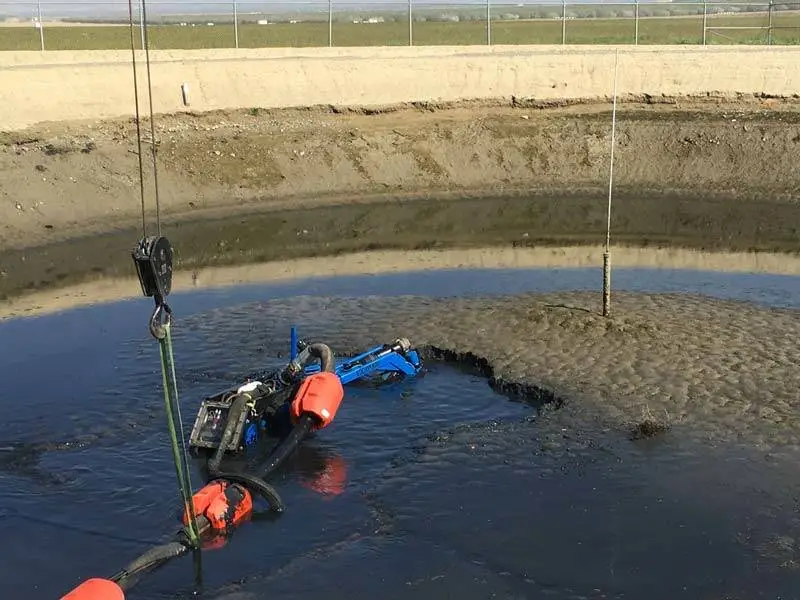
Large dairy lagoons or waste lagoons are designed to hold and contain manure and other abrasive sediments to aid with anaerobic respiration as part of the system to manage and treat animal manure. Manure must be efficiently pumped into the lagoons from the animal holding pens. The EDDY Pump can be submerged in the holding tank to pump the material directly back into the lagoons or holding ponds.
A reliable pump is essential for adapting to changing agricultural demands and ensuring optimal irrigation performance. The EDDY Pump’s durability and efficiency make it a valuable asset for various agricultural applications.
Some industries, such as sugar production, produce large quantities of by-products, in this case, bagasse. On burning the dry bagasse at the sugar factory, it decomposes into a different by-product called fly-ash. Fly ash is much preferred for removal compared to bagasse, as fly ash is only about 1%-4% of its original bagasse weight. In a global sense, approximately 24 million tons of bagasse fly ash are produced annually.
Fly Ash remediation is becoming a bigger and bigger issue in the sugar production industry. As regulatory standards increase, companies are looking to recycle and find more uses for their by-products. Companies are now using bagasse to aid with paper/pulp production, eliminating the need to burn it down to fly ash.
Equipment Options For Job:
- Canal Dredging: Excavator Pump Attachment, Subdredge
- Manure Handling & Transport: Submersible EDDY Slurry Pump, Self-Priming Pump
- River Cleanups: Excavator Pump Attachment, Autonomous Dredge, Cable Deployed Pump, Subdredge
- Containment Ponds: Excavator Pump Attachment, Subdredge, Submersible, Liner-Safe Dredges
Call for sales or support
If you need assistance with pump selection, sales or engineering support, call 619-404-1916.


Dredge Project Consulting
- Easier to install and maintain, the horizontal slurry pump, a type of dredge pump, allows for quick access to pump components, making repair jobs straightforward. During repair jobs, pumps are completely disassembled for thorough inspection. All components are carefully inspected, and any parts not meeting standards are replaced. After reassembly, the pump is tested to ensure reliable performance. These steps help extend the service life of the hydraulic pump and maintain equipment reliability. EDDY Pump can also provide dredging project managers to oversee sediment projects and remediation projects, ensuring that all aspects of the dredging project are managed efficiently and in compliance with environmental regulations.
- Requires more room, due to its larger footprint compared to vertical
- Implementing best management practices and evaluating management alternatives are essential for effective material management in any dredging project.

Vertical Slurry Pump
-
Less smaller footprint, allowing the dredge pump to be implemented in hard to reach jobs
-
More versatile, can be cable hung straight down and inserted directly into medium to pump target material. The vertical slurry pump can also be used in mechanical dredging operations where minimal water addition is required.
-
The vertical slurry pump is typically situated within the excavator or dredging system so that it is optimally positioned for efficient material handling and performance.
-
More difficult to repair and tougher maintenance
Irrigation Pump Benefits
The Benefits Of Irrigation Water Pumps
In modern agriculture, efficient water management is crucial for maximizing crop yields and ensuring sustainable farming practices. A high-quality irrigation pump (portable or not) plays a pivotal role in achieving these goals by providing consistent and reliable water supply distribution. Here are some key benefits of investing in a high-quality irrigation pump:

1. Enhanced Water Efficiency
Top-tier irrigation pumps operate efficiently to provide precise water delivery, reducing waste and optimizing water usage. This is especially vital in areas with limited water resources, such as small lakes or rivers or streams, where every drop counts. By delivering clean water directly to the root zone, a high-quality pump helps minimize evaporation and runoff, promoting better water conservation.
2. Increased Crop Yields
Consistent and adequate water supply is essential for healthy crop growth in agriculture. A high-quality irrigation pump delivers water evenly across the entire field, ensuring that all plants receive the necessary moisture. This uniformity in irrigation leads to improved crop health, uniform growth, and ultimately, higher yields.
3. Energy Efficiency
High-quality irrigation pumps are designed with energy efficiency pumping in mind. They often feature advanced technology that reduces power consumption, offering farmers lower operational costs. Efficient self priming centrifugal pumps also require less maintenance, which translates to reduced downtime and lower repair expenses.
4. Longevity and Durability
Investing in a high-quality irrigation pump means investing in durability and long-term reliability. These pumps are built with robust materials and superior craftsmanship, ensuring you can quickly employ these pumps knowing they can withstand harsh agricultural environments. Their extended lifespan reduces the need for frequent replacements, providing farmers with peace of mind and long-term savings.
5. Versatility and Adaptability
Modern high-quality irrigation pumps are designed to be versatile, accommodating various irrigation methods such as drip, sprinkler, and surface irrigation. This adaptability allows farmers to customize their irrigation systems depending on water source to meet the specific needs of different crops, soil types, and climate conditions.
6. Environmental Benefits
Efficient water use through high-quality irrigation pumps contributes to environmental sustainability. By reducing water waste and energy consumption, these pumps help lower the carbon footprint of agricultural operations. Moreover, they support responsible water management practices that protect local water resources, drinking water and ecosystems.
EDDY Pump Applications
EDDY Pump Agriculture Pump Equipment
The EDDY Pump can be deployed in various dredge configurations to optimize cleanup of sediment and manure transfer. Some of the ideal deployments for agricultural pumping are Excavator Pump Attachments, Self-Priming Pumps, Submersible Pumps, Liner-Safe Dredges, Cable-Deployed Pumps, Autonomous Dredges, and the Subdredge.

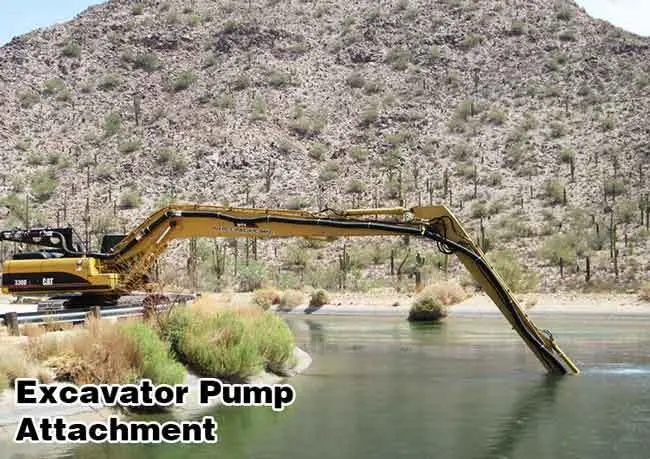
Excavator Dredge Pump Attachment
The EDDY Pump Excavator Dredge Pump Attachment is one of our most popular units.
It allows any power generation or contracting company with little or no experience in dredging to easily convert one of their existing excavators or a rental into a hydraulic dredge. An excavator operator can then easily learn to operate the Excavator Pump Attachment with only a few hours of training. The Excavator Pump gets pinned to the end of the excavator boom and can either be used with a cutterhead or a high-pressure jetting ring to agitate the material before pumping.
A slurry hose is then connected to the pump and run along the boom of the excavator over the back of the excavator and connected into the pipeline. The pump can easily move material at rates of up to 400 cubic yards over distances of over a mile at solids rates of 40-70%. This is all done creating little to no contaminant resuspension or detectable turbidity. This is the most environmentally friendly dredge on the market. Please click here to see more about the proper pump and excavator size for your application: Excavator Dredge Pump Attachment Info
Self-Priming Pump Benefits
Self-Priming Pump
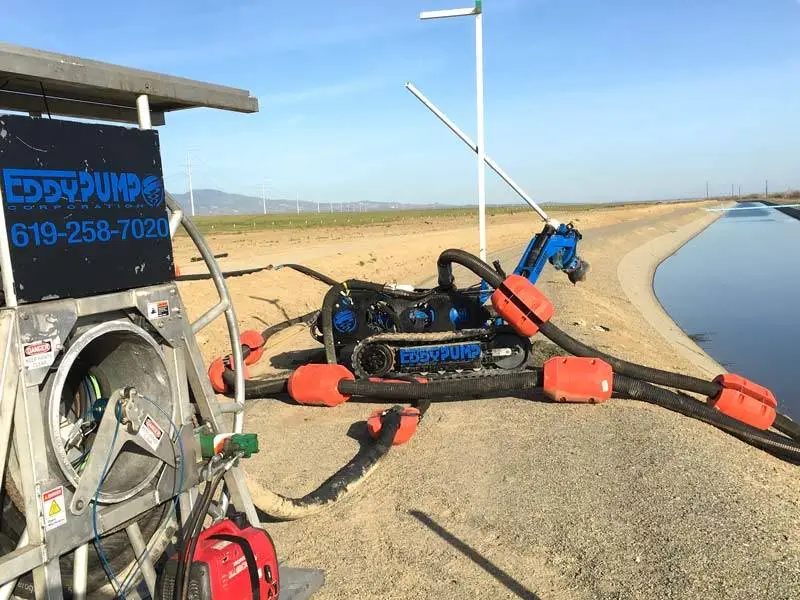
Most EDDY Pumps are submersible, with a self-priming unit, the pump and power unit are not submerged. The suction house goes into the slurry and the unit acts like a super-sized wet/dry vacuum. This type of pump can remove air on its own and continue operation without assistance, making it perfect for mounting on a trailer that can be wheeled from location to location. Becuase the pump is not submerged, both the operation and maintenance of self-priming pumps are economical and relatively easy.

Autonomous Dredge
For containment ponds and lagoons which need continuous dredging, the EDDY Pump Autonomous Dredge is a great solution that minimizes manpower and can run 24/7. This is a floating unit that is automated to run continuously without an operator. The pump is deployed from floats and can be powered by an electric or hydraulic power system. Autonomous Dredge Info Here.
Subdredge ROV Benefits
Subdredge ROV
The EDDY Pump Subdredge is ideal for dredging applications that call for great depths, precision dredging, unmanned operation, and liner dredging to name a few. This dredge costs a fraction of the cost of conventional dredges and can handle a larger variety of dredging applications. Increasing your ROI by design. Submersible Subdredge ROV Info Here.

Agriculture Pumping Scenario
Applications: Irrigation Systems Desilting, Canal Cleaning & Dredging, Manure Transport, Containment Pond Dredging
The purpose of this page is to identify your application and learn more about an equipment solution to meet your needs. These are the most common agriculture pump applications that we work with. We are the OEM for the tools shown.
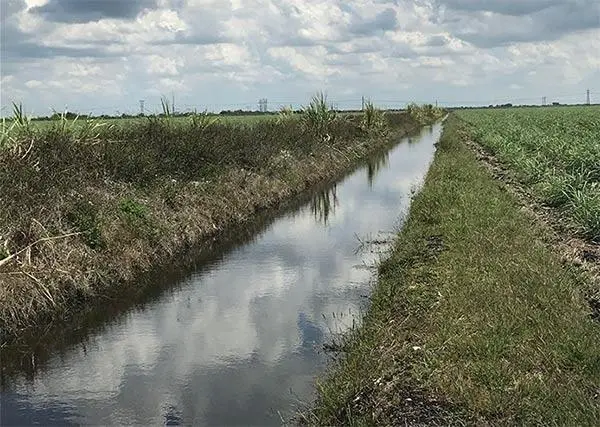
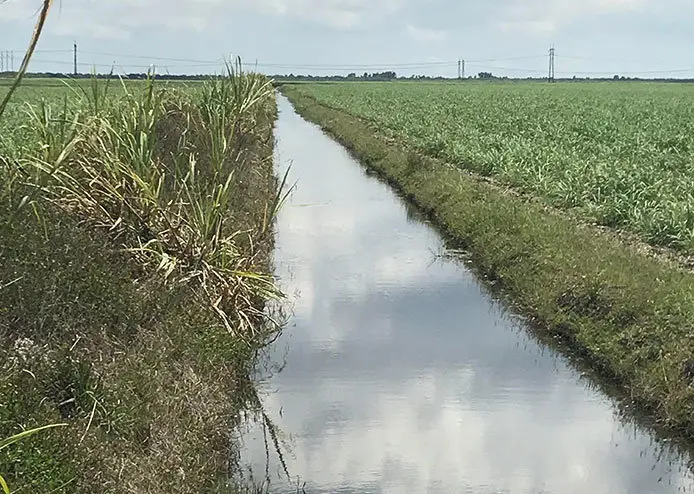
Application: Irrigation Canal Cleanout and Desilting. Removing excess sediment buildup and silt from irrigation canals.
Material: Mud. Viscous and Abrasive, in slurry form.
Common Mud Pumping Scenario:
The EDDY Pump Excavator Attachment is ideal for pumping excess sediment from canals, irrigation systems, rivers, lagoons or other ponds in a farm setting.
By attaching the EDDY Pump to a standard boom or long boom excavator you can get reach of up to 75-ft and handle the most difficult applications. The EDDY Pump allows you to pump mud at distances over 2-miles at production rates of up to 600 cubic yards of mud per hour or 5000 GPM.
Optional upgrade, add liner-safe rollers, it also gives you the ability to dredge poly-lined reservoirs.
Below are commonly distances we see, along with a pump curve to match the details. Contact us with your exact numbers.
Distance: 2500 ft
Vertical Rise: 30 ft
Production: 1414 GPM
Equipment Used: EDDY Pump 6 Inch Excavator Attachment. Cutter Head OR Roller Wheel setup for concrete-lined canals.
Excavator Type: Ten-ton or larger
Optional HPU: Excavator powered attachment OR a separate Hydraulic Power Unit (HPU) will power the pump attachment. The ideal option is based on your project requirements.
Agriculture Pumping Projects
Agriculture Pumping Photos
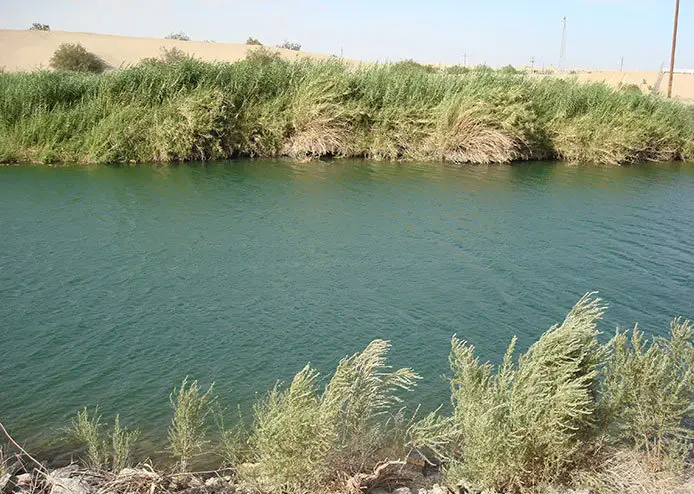
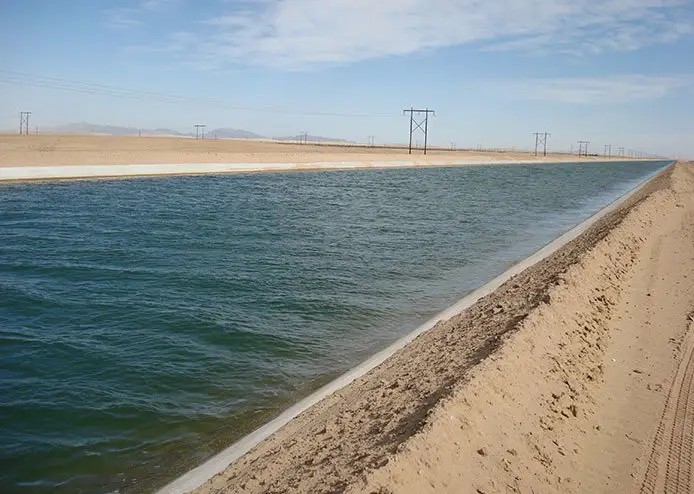
Photos of recent agriculture pumping and dredging projects. Canals & irrigation systems and agricultural slurry ponds are primary clients of EDDY Pump.
The Best Non-Clog and High Solids Slurry Pump on the Market. Since 1984.
We manufacture both pump and dredge equipment for maximum compatibility


Call for sales or support
If you need assistance with pump selection, sales or engineering support, call 619-404-1916.
HD (Heavy Duty) Slurry Pumps / Dredge Equipment
Related Products
For assistance Call 619-404-1916 and let us help match your project
with the right pump.