
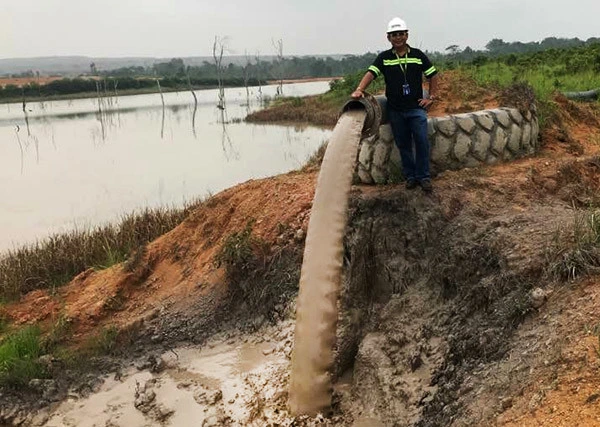
Ash Pumping Solutions
Fly Ash and Coal Ash Pumping Applications
- Tailing Ponds
- Poly-Lined Tailings Ponds
- River Cleanups
- Sumps
- Concrete Basins
- Process Pumps
- Fly Ash Transport, Mixing, and Remediation

Fly Ash Pumping Problems
Fly Ash or Coal Ash is a difficult material to pump due to its abrasive nature. Centrifugal pumps quickly get worn down and lose their tolerances and suction capabilities. This results in significant downtime and costly spare parts.
The fly ash accumulates in many stages of the power generation process and proves to be very costly and time-consuming to remove. The most troublesome stages are dealing with the lined and unlined tailings ponds, rivers, sumps, and concrete basins.
Tailings ponds and rivers continuously need to be cleaned out to increase capacity. Finding the right pump and dredging equipment can often be a complicated process. Centrifugal pumps will only pump 10-20% solids by volume. This means that most of the discharge is water and very little fly ash is coming out of the pipeline. In contrast, the EDDY Pump design can pump 40-70% solids by volume. Pump less water, more solids.
Furthermore, the abrasive nature of the fly ash destroys the impeller of the pump and causes pump failures, costly repairs and spare parts. Our pump has a high tolerance ultra-recessed rotor that withstands the destructive nature of fly ash.
Tailings ponds are often lined with plastic to minimizes the seepage of contaminants. This makes it more difficult for conventional equipment to dredge or mechanically remove the fly ash sediment without damaging the liner. We have a liner-safe wheel option for the excavator attachment.
Sumps are often the most difficult areas in a power generation plant to handle. Fly ash, coal chunks, rocks and other debris are washed into sumps and continuously need to be pumped out. Centrifugal pumps get clogged and constantly wear out because of the tolerances between the impeller and the volute.
The EDDY Pump is a non-clogging pump and can easily pass any piece of coal or debris without clogging. Furthermore, since the EDDY Pump does not have an impeller, there is no issue with wearing down and losing tolerance.
The EDDY Pump can be run electrically or hydraulically in the sump or even self-priming to move from sump to sump. The electric EDDY Pump can be submersible if needed and have sensors incorporated to automatically turn the pump on and off as the depth of the sump increases and decreases. In turn, the EDDY Pump will run continuously with significantly less spare parts needed and saving the power plant millions in total ownership cost.
Large concrete-lined basins will accumulate with fly ash and the only solution to deal with them has been slow and costly vacuum trucks. The EDDY Pump can be mounted on an excavator or deployed from a crane to pump the material directly back into the process or into tailings ponds. This saves the client tens of thousands of dollars on vacuum trucks and even more money in having to shut down operation.
There are many process pumps and conveyors in a power plant that deal with moving coal, fly ash, and other abrasive and caustic slurries and solutions. The EDDY Pump’s ability to move high solids allow it to replace the need for conveyors and save power plants millions of dollars in conveyor systems with constant maintenance issues. The low pH and abrasive nature of these slurries do not have the same negative effect on the EDDY Pump and in turn the EDDY Pump can last many years longer than centrifugal pumps while saving the power plant millions of dollars.
Fly Ash Remediation is becoming a bigger and bigger issue in the power generation industry. Utilizing the EDDY Pump, you can recirculate and mix the fly ash with cement or lime to create a homogenous mixture. After it is mixed the same pumps can then pump the material over distances of 5 plus miles where it can be utilized for construction or better disposal because of its stabilized nature.
Equipment Options For Job:
- Tailing Ponds: Excavator Pump Attachment, Autonomous ModDredge, Cable Deployed Pump, Subdredge
- Poly-Lined Tailings Ponds: Liner-Safe Dredges
- River Cleanups: Excavator Pump Attachment, Environmental Dredge, Autonomous ModDredge, Cable Deployed Pump, Subdredge
- Sumps: Submersible, Self-Priming Pump
- Concrete Basins: Submersible, Self-Priming Pumps, Liner-Safe Dredges
- Process Pumps: Electric Pumps, Self-Priming Pumps, Diesel Driven Pumps, Hydraulic Pumps, Vertical Pumps, Horizontal Pumps
- Fly Ash Mixing and Remediation: Electric or Diesel Driven EDDY Pump
Fly Ash Dredging
EDDY Pump Dredge Equipment
The EDDY Pump can be deployed in various dredge configurations to optimize cleanup of tailings ponds and rivers. Some of the ideal deployments for fly ash tailings ponds are Excavator Pump Attachments, Liner-Safe Dredges, Cable-Deployed Pumps, Autonomous ModDredge, Spud-Dredges, and the Subdredge.
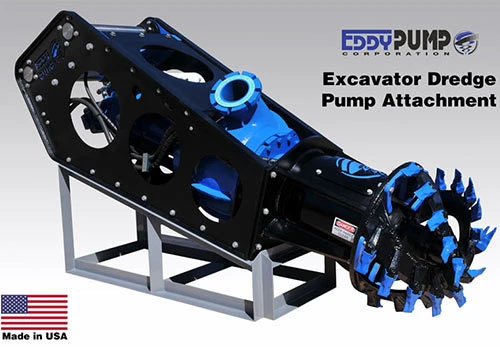
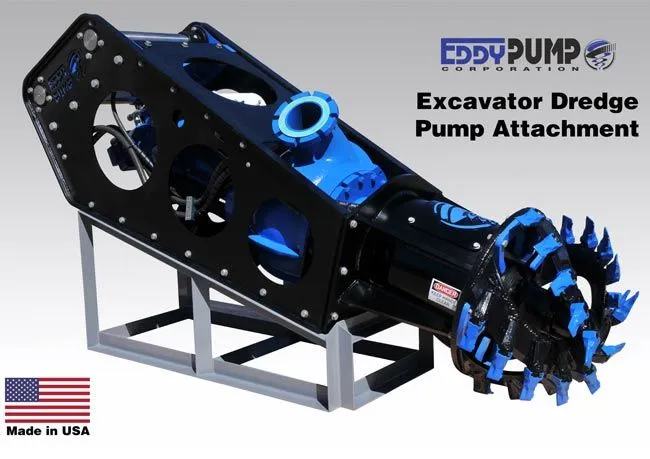
Excavator Dredge Pump Attachment
The EDDY Pump Excavator Dredge Pump Attachment is one of our most popular units.
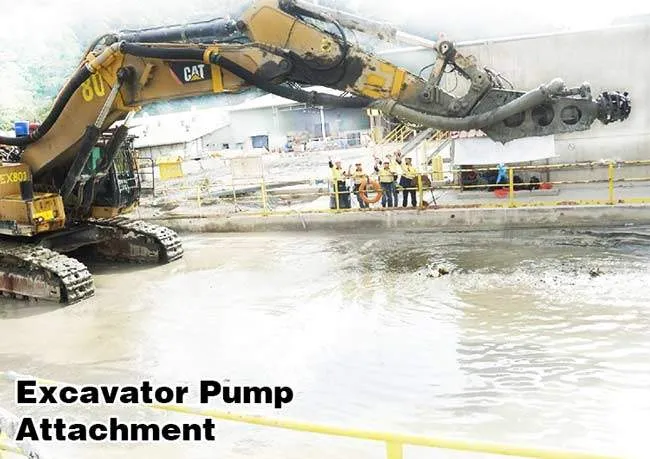
It allows any power generation or contracting company with little or no experience in dredging to easily convert one of their existing excavators or a rental into a hydraulic dredge. An excavator operator can then easily learn to operator the Excavator Pump Attachment with only a few hours of training. The Excavator Pump gets pinned to the end of the excavator boom and can either be used with a cutterhead or a liner safe rolling attachment. The liner-safe wheels allow the pump to easily glide over the liner without having any negative affect, but still removing all the fly ash.
Slurry hose is then connected to the pump and run along the boom of the excavator over the back of the excavator and connected into pipeline. The pump can easily move material at rates of up to 400 cubic yards over distances of over a mile at solids rates of 40-70%. This is all done creating little to no contaminant resuspension or detectable turbidity. This is the most environmentally friendly dredge on the market. Please click here to see more about proper pump and excavator size for your application: Excavator Dredge Pump Attachment Info
Cable Deployed Dredging
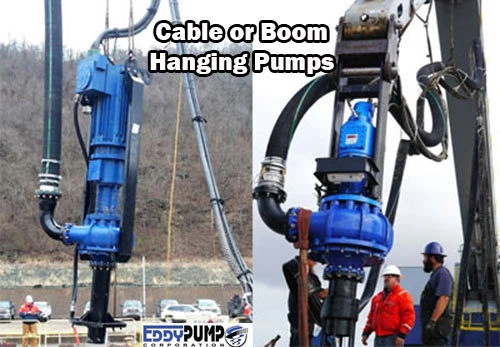
Cable-Deployed Dredge Pump
The EDDY Pump Cable-Deployed Pump with water jetting system is ideal for projects where a crane is available. The EDDY Pump can be run electrically or hydraulically and suspended from the crane on a cable. The water-jetting system breaks up the material and feeds the EDDY Pump. Cable Deployed Dredge info Here

Autonomous ModDredge
For tailings ponds lined or unlined which need continuous dredging, the EDDY Pump Autonomous ModDredge is a great solution that minimizes manpower and can run 24/7. This is a floating unit that is automated to run continuously without an operator. The pump is deployed from floats and can be powered by an electric or hydraulic power system. Autonomous ModDredge Info Here.
Spud Dredge
For ultimate precision dredging the EDDY Pump 4-spud self-advancing dredge is ideal for surgical digging. This 4-spud self-advancing dredge can dredge at depths of up to 30-ft and target fly ash at high solid contents.
Subdredge Remote Dredging
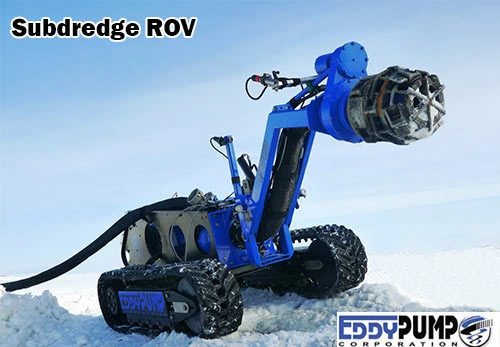
Subdredge ROV
The EDDY Pump Subdredge is a remote-operated submersible dredge that can dredge at depths of greater than 100-ft. The Subdredge has the smallest dredge footprint on the market. The Subdredge can be powered electrically or hydraulically and pump material at rates of up to 400 cubic yards of material an hour at pumping distances of over a mile. Submersible Subdredge ROV Info Here.
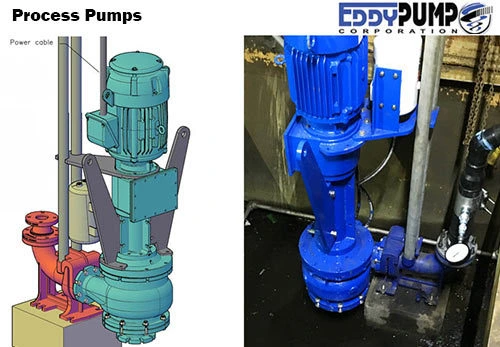
Custom Process Pumps
Process Pumps for Fly Ash Sumps and Custom Applications
The same EDDY Pump that powers all of the equipment shown can be used as a stand alone process pump. Mount it vertically, horizontally, submerged, dry, and power it electric or hydraulic. We specialize in matching the ideal setup to your application. Custom pumps are our specialty. Process Pump Info Here.
Fly Ash Solutions
Fly Ash Pumping Scenario
Fly Ash Pumping Applications in Power Generation and Coal-Fired Plants
The purpose of this page is to identify your application and learn more about an equipment solution to meet your needs. These are the most common fly ash applications that we work with. We are the OEM for the tools shown.
Application: Fly Ash Removal. Coal Ash and Fly Ash Pits at energy plants
Material: Ash. Fine and abrasive, in slurry form.
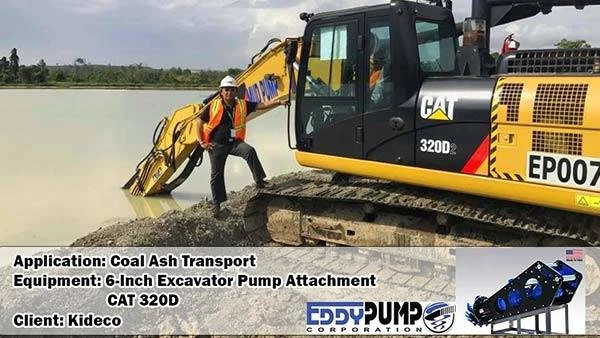
Common Fly Ash Scenario:
The EDDY Pump Excavator Attachment is ideal for pumping fly ash or coal ash from waterways, ash pits, lined ponds or other bodies of water.
By attaching the EDDY Pump to a standard boom or long boom excavator you can get reach of up to 75-ft and handle the most difficult applications. The EDDY Pump allows you to pump the fly ash at distances over 2-miles at production rates of up to 600 tons of ash per hour or 5000 GPM.
Optional upgrade, add liner-safe rollers, it also gives you the ability to dredge on concrete lined sumps or poly-lined reservoirs.
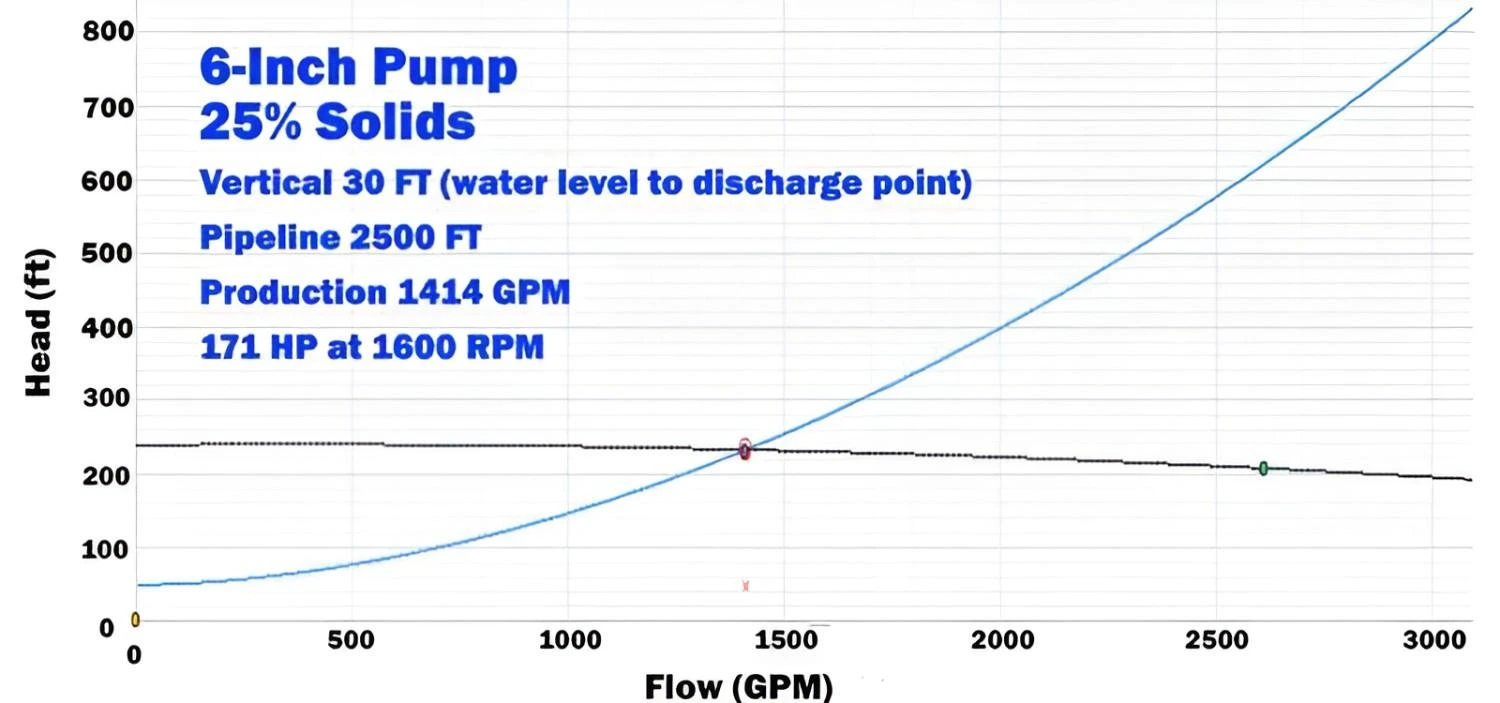
Below are commonly distances we see, along with a pump curve to match the details. Contact us with your exact numbers.
Distance: 2500 ft
Vertical Rise: 30 ft
Production: 1414 GPM
Equipment Used: EDDY Pump 6 Inch Excavator Attachment. Cutter Head OR Roller Wheel setup.
Excavator Type: CAT 320 or larger (or equivalent model excavator)
Optional HPU: Excavator powered attachment OR a separate Hydraulic Power Unit (HPU) will power the pump attachment. The ideal option is based on your project requirements.
Choosing the Right Pump
Why EDDY Pumps Perform Better for Fly Ash Slurries
Slurry and Fly Ash Video
If you have questions about your application, contact us.
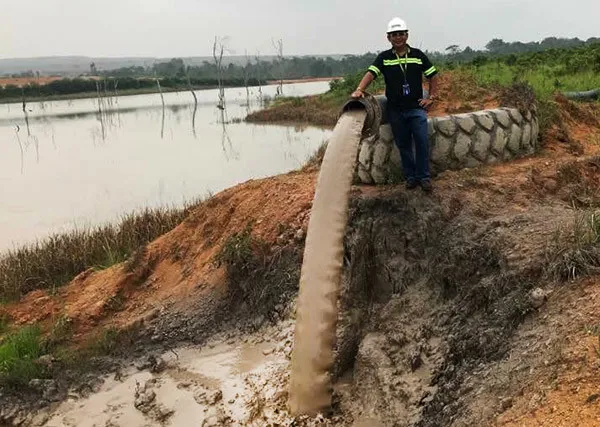
Fly Ash Images
Fly Ash Pumping Photos
Photos of recent ash pumping projects.
Power plans and ash slurry ponds are the primary clients of EDDY Pump.
Fly Ash Slurry Pumps for Ash Ponds and Power Plant Cleanout
Fly ash slurry pumps move ash suspended in liquid from collection areas, sumps, or ponds to a receiving location. In a power plant, the job can range from clearing one basin to supporting a long ash removal campaign. The useful starting point is the deposit itself: what it contains, how it has settled, and where the recovered material must go. Those details establish the pumping duty far more clearly than a request for the largest available pump.
Identify the Type of Ash in the Deposit
Fly ash and bottom ash are different coal combustion residuals. Fly ash consists of fine particles carried with flue gas, while bottom ash contains coarser material that collects in the furnace. A storage area may contain a mixture of residues, so the name on an old drawing does not necessarily describe everything the intake will encounter.
For coal ash handling, gather representative samples from the areas and depths included in the work. Record particle sizes, slurry density, liquid chemistry, and the amount of coarse material or debris. Compare those findings with the plant's disposal history. Where layers differ, allow for changing feed conditions instead of sizing the entire operation around one convenient surface sample.
Match the Pump Intake to Fresh or Settled Ash
Fresh ash slurry transfer and recovery of an old deposit need different intake arrangements. Material arriving through a process line may already be pumpable. Ash in a basin may require controlled agitation before it enters the pump, particularly where it has consolidated or mixed with other solids.
Define how the material will reach the intake throughout the removal sequence. An excavator attachment can position the pump over accessible deposits; a cable-deployed unit may suit locations served by lifting equipment. EDDY Pump offers these configurations for ash applications. Selection should account for access, depth, obstructions, and the method used to feed the pump. More agitation is not automatically better if it mainly adds water or disturbs material outside the intended cut.
Plan Ash Pond Dredging Around Plant Operations
Ash pond dredging needs an agreed excavation boundary, an equipment access plan, and a destination for the recovered slurry. Identify structures, buried services, slopes, and areas excluded from excavation before choosing a deployment. The site team should establish the removal sequence around the facility's condition and operating needs.
For a lined impoundment, confirm liner information and the proposed intake clearance. EDDY Pump offers liner-protection options, but their suitability still depends on the liner, deposit, and operating method. Treat liner protection as a project requirement that affects positioning and agitation, not simply an accessory on the equipment list. Include a way to check progress so completed areas can be distinguished from locations that still contain deposits.

Balance Ash Recovery With Downstream Water Handling
A high slurry flow rate does not necessarily mean a high fly ash removal rate. The discharge contains both liquid and solids. Compare production estimates on a consistent basis, such as dry solids mass delivered over the operating shift, and identify whether concentration is stated by weight or by volume.
The receiving system also has to manage the carrier liquid. Settling areas, dewatering equipment, storage, and haulage can each limit the rate at which ash can be accepted. Establish those limits before setting the pump output target. If operators must repeatedly stop because the receiving area is full, the site may gain more from improving that interface than from installing a larger pump. Include water return and temporary storage in the layout discussion.
Allow for Inspection and Changing Site Conditions
Ash slurry can expose the pump and discharge line to abrasive wear. Inspect the parts of the system that see concentrated flow or changes in direction, as well as the pump's wear components. Choose wetted materials against both the solids and liquid chemistry; an abrasion-resistant component is not automatically compatible with every process liquid.
Power plant sump cleanout introduces another challenge: the feed may change as the liquid level falls. A pump can initially draw a dilute mixture and later encounter a concentrated layer or coarse debris. Record that operating range when specifying the intake and controls. Provide practical access for inspection and equipment retrieval so routine service can be completed without dismantling an unnecessarily complicated installation.
Keep a simple operating record alongside inspections. Note the area being worked, observed feed consistency, flow and pressure readings, and the reason for each interruption. A declining delivery rate can have several causes, including a changing deposit or a restriction in the line. Comparing readings under similar conditions helps the team distinguish those changes from progressive wear. Use the findings to adjust inspection intervals and parts planning for the actual duty. This is more useful than assuming that service experience from another ash pond will transfer unchanged.
Define a Complete Fly Ash Pumping Specification
An ash basin cleanout specification should state the estimated deposit volume, target completion condition, working depth, material properties, and operating schedule. Add the proposed pipeline route, elevation changes, available power, and receiving-system capacity. Identify whether the same equipment will move between basins or remain installed for the full campaign.
Ask for production assumptions to be stated alongside the equipment selection. Useful questions include how the intake will be fed, how much dilution is expected, and what happens during a planned stoppage. Share that information with EDDY Pump to assess an ash pumping arrangement suited to the site. A clear specification helps the plant compare proposals against the same job and makes field performance easier to assess once pumping starts.

Fly Ash FAQs
Can a fly ash slurry pump transfer dry fly ash?
A slurry pump needs a liquid carrier. Dry fly ash requires an appropriate dry handling system or a separate stage that produces a pumpable mixture. Assess the added water and receiving process before converting a dry handling duty to slurry transfer.
Are fly ash and bottom ash the same material?
No. Fly ash is the fine material carried with combustion gas; bottom ash is the coarser residue that collects in the furnace. A pond can contain mixed residues. Use samples from the actual deposit to assess particle size and pumping requirements.
What determines the production rate during ash pond dredging?
The rate depends on how readily ash reaches the intake, the slurry concentration, the pumping system, and the receiving area's capacity. Track delivered solids as well as liquid flow. A high flow reading alone does not establish the amount of ash removed.
Can ash be removed from a lined pond?
Yes, where the equipment and removal method suit the liner and site conditions. Establish liner location, condition, intake clearance, and agitation limits. Review the proposed deployment with the facility team before selecting a liner-protection configuration.
Does pumping ash make it suitable for reuse?
No. Pumping transfers material; it does not establish its quality or suitability for a particular use. Reuse decisions require material testing and review against the receiving process or product requirements. Keep that assessment separate from pump selection.
What should a plant provide for a fly ash pump quotation?
Provide representative ash data, expected debris, deposit depth, removal quantity, and the required schedule. Include pipeline routing, elevation, power, and downstream water-handling capacity. Note liner restrictions and whether the equipment must serve several different locations.
LET’S PUT YOUR PROJECT IN MOTION
Tough material?
Bring it to EDDY.
Tell us what you’re pumping, where it needs to go, and what your
operation needs to achieve.
Talk it through
with our team.
Equipment selection, project planning, or an existing pump—we’ll help you find the right next step.
CALL SALES & ENGINEERING
+1 619-404-1916
EMAIL YOUR PROJECT DETAILS
info@eddypump.com