


Hydraulic Cable Deployed Pump With Water Jetting Agitator – 8 Inch
The JPH-8000 8-Inch Hydraulic Pump is built for high-production dredging in extreme conditions. Powered by EDDY Pump’s patented non-clog technology, it moves highly abrasive, viscous slurries with up to 40–70% solids. Compatible with excavator-mounted, cable-deployed, or dredge platform setups, it delivers strong suction, low maintenance, and continuous flow even in low-NPSH environments. Its open rotor design handles large solids while reducing wear and downtime, making it ideal for mining, tailings ponds, marine construction, barge unloading, and deep-water dredging.
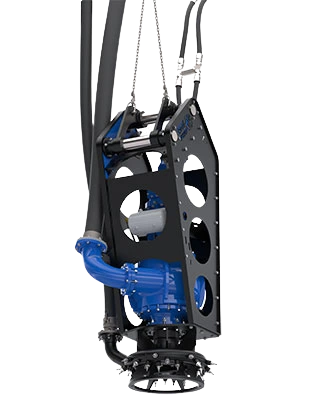
Key Features / Advantages
- Patented Non-Clog Technology: Open rotor design allows passage of large, abrasive solids without clogging, unlike centrifugal or vortex pumps.
- High Solids Handling Capacity: Efficiently pumps slurries with 40–70% solids by weight, reducing water usage and increasing production per hour.
- Versatile Deployment Options: Compatible with excavator-mounted, cable-deployed, floating dredge platforms and custom dredging systems.
- Superior Suction and High Throughput: Maintains high flow rates in low NPSH conditions, delivering consistent production in deep or dense material environments.
- Minimal Wear and Maintenance: Fewer moving parts and no critical tolerances between rotor and volute result in longer service life and lower operating costs.
- Handles Highly Abrasive and Viscous Materials: Ideal for pumping sand, silt, sludge, tailings, drill cuttings, and other heavy slurry mixtures.
- Hydraulic Power for Remote Operations: Compatible with hydraulic power units or excavator auxiliary circuits, enabling operation in remote and submerged job sites.
- Built for Harsh Environments: Rugged construction with corrosion- and wear-resistant materials ensures reliable performance in mining, marine, and industrial dredging applications.
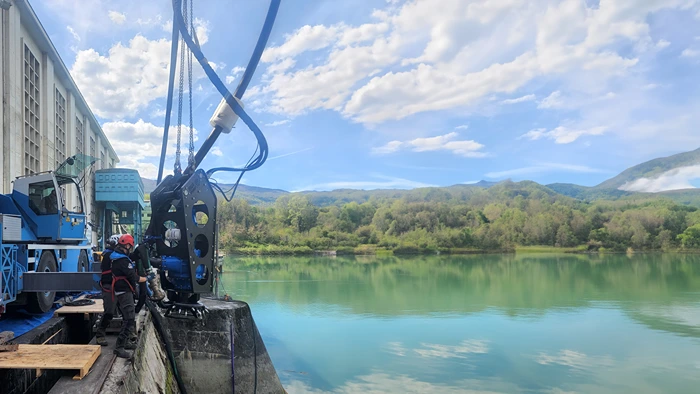
Gallery
Hydraulic Cable Deployed Pump With Water Jetting Agitator – 8 Inch
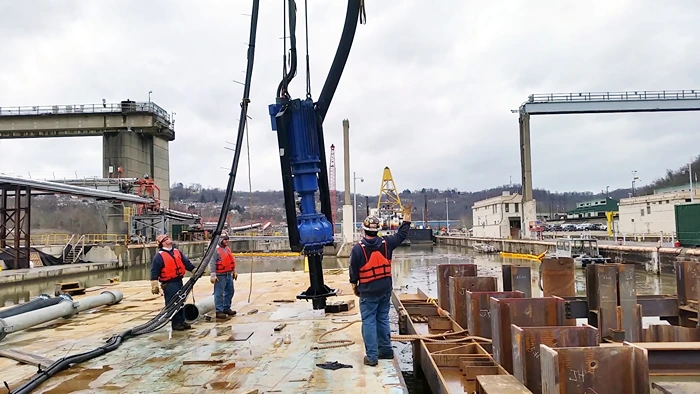
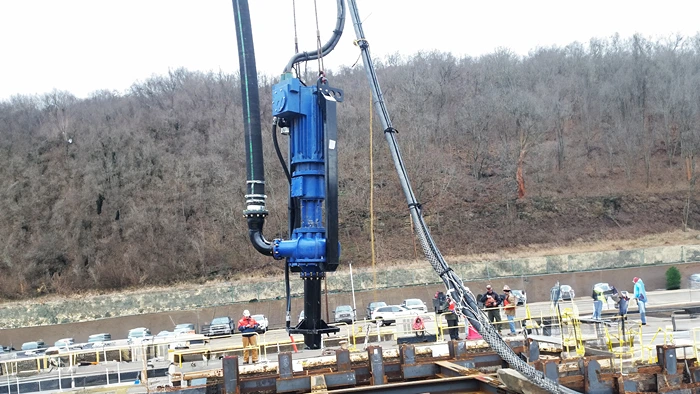
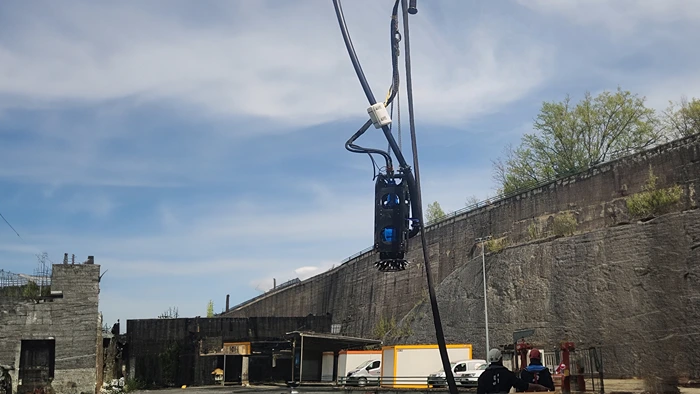
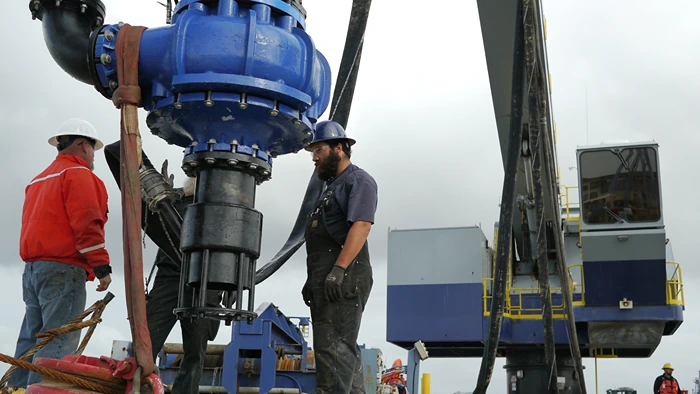
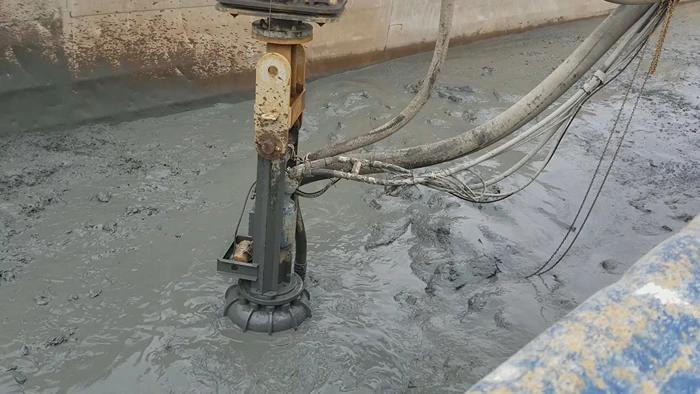
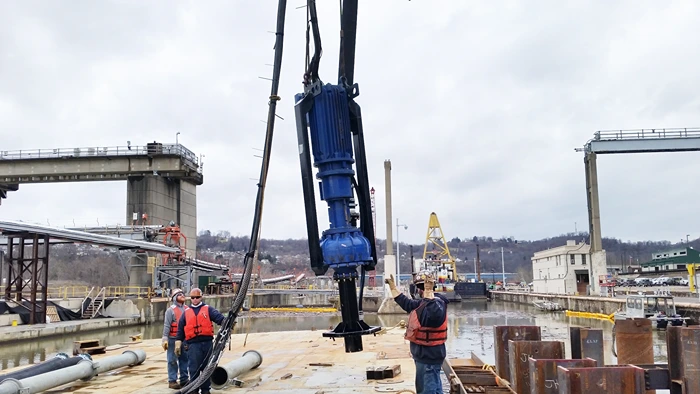
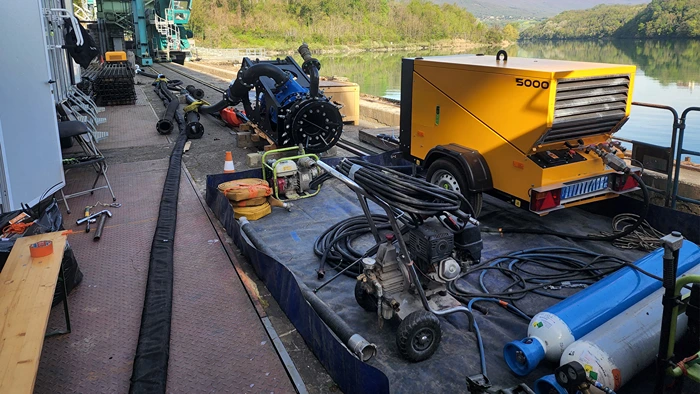
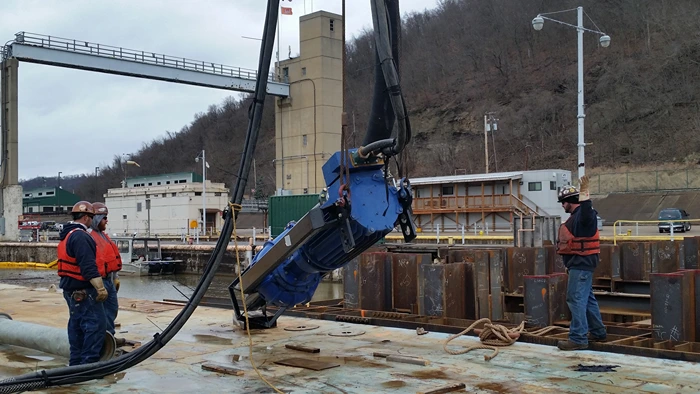
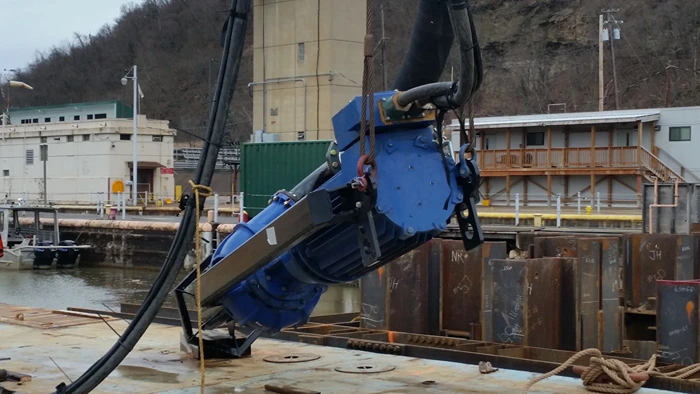
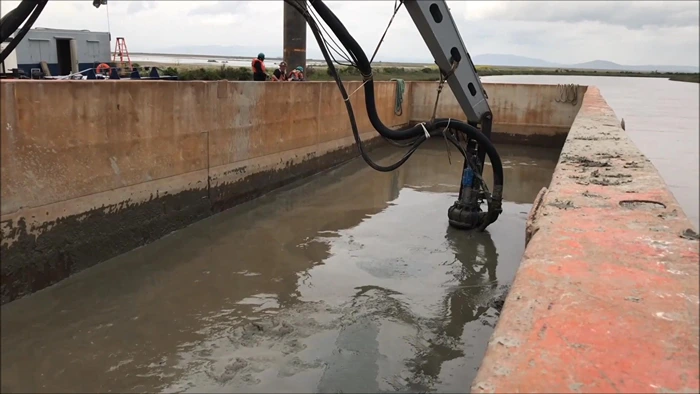
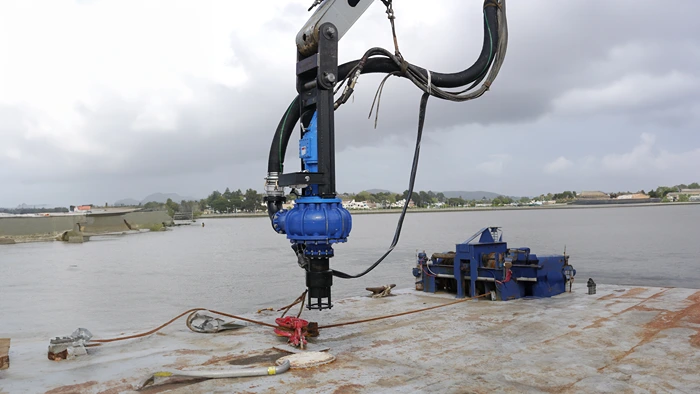
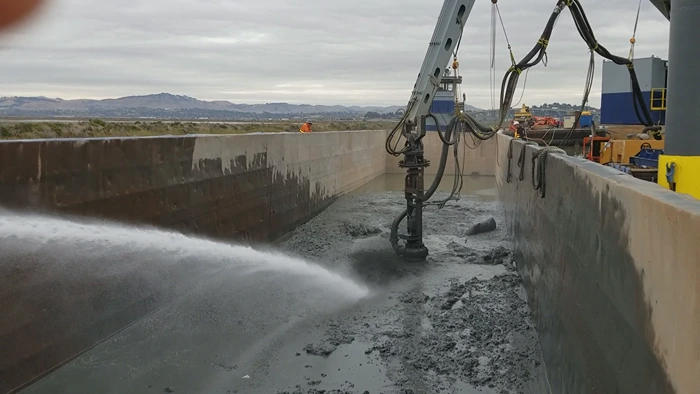
Technical Specifications

Performance Specifications
- Flow Capacity: Up to 1400-3600 GPM
- Head Range: Up to 230 ft
- Solids Handling: Up to 7 inches
- Slurry Concentration: Pumps 40–70% solids by weight
- Production Rate: 250-300 cubic yards of material per hour
- Max Speed: Up to 1,200 RPM
- Dredging Depth: Up to 100 ft

Physical Specifications
- Discharge Size: 8 inch
- Suction Size: 10 inch
- Overall Weight (w/o options): 6,800 lbs (3084 kg)
- Overall Length: 154 in (3.9 m)
- Overall Height: 48 in (1.2 m)
- Overall Width: 46 in (1.17 m) w/o discharge pipe; 57 in (1.45 m) with discharge pipe (right side)
- Carrier Weight Range: 60-94 tons (54,400-85,000 kg)
- Standard Jetting Ring Diameter: 36 in (0.91 m)
- Seal System: Double seal with sealed barrier fluid tank (allows dry run) — 3.5 in (89 mm)

Required Equipment
- Hydraulic Power Source: Excavator auxiliary circuit or HPU supplying 130-150 GPM at 5000 PSI to the pump circuit
- Jetting Ring Water Pump: 400–1,000 GPM at ≤150 PSI
- Hoses & Plumbing: 8″ material-handling discharge hose and hydraulic lines routed to boom tip
- Protection: Crossover check valve to protect the hydraulic motor and prevent rotor backspin/removal

Recommended Accessories
- Instrumentation: Hydraulic pressure gauge (0–6,000 PSI); magnetic flow meter for stable, plug-free pipeline flow
- Monitoring: Discharge line pressure gauge (0–150 PSI)
- Startup/Process Aids: “Quick Prime” valve (requires small 24 V air system); recirculation system for pre-mixing (requires small 24 V air system)
- Hose Management: Pivot-mounted discharge hose carrier (adaptable to most machines)
- Compatibility Options: Cable-hung unit convertible for liner-safe roller attachment and self-cleaning mud guard
Jetting Ring Specifications
| Jetting Ring Size | Number of Jets | Flow per Jet (GPM) | Total Flow (GPM) | Velocity (ft/sec) | Inlet Flange Size | Inlet Flange Bolts | Part Number |
| Small Ring | 16 | 47.5 | 760 | 108 | 3″ | 4 Bolt, 150# Class | EXF4K 16 16025 |
| Large Ring | 28 | 27 | 760 | 62 | 4″ | 8 Bolt, 150# Class | EXF6K/8K/10K 28 12882 |

EDDY Pump – 8 Inch HD 8000 Heavy Duty Slurry Pump – Pump Curve
PUMP CURVE
A pump curve charts flow against head to guide accurate pump selection. For the 8-inch Hydraulic Cable Deployed Pump With Water Jetting Agitator, matching the right curve ensures efficient solids handling, steady production, and reliable performance in heavy slurry, sludge, and dewatering conditions.
Technical Drawings & Resources
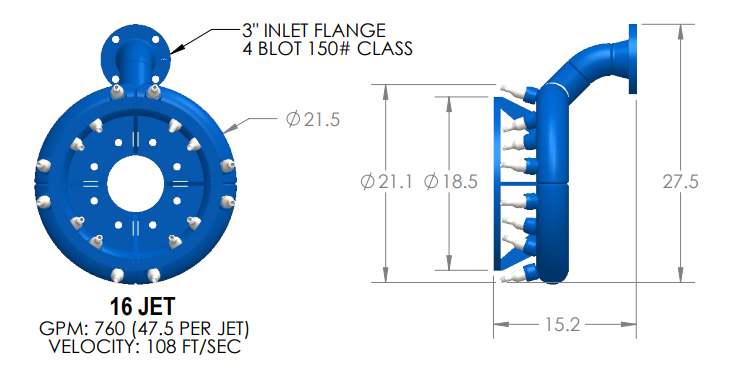
EDDY Pump – JETTING RING HEAD SPEC SHEET
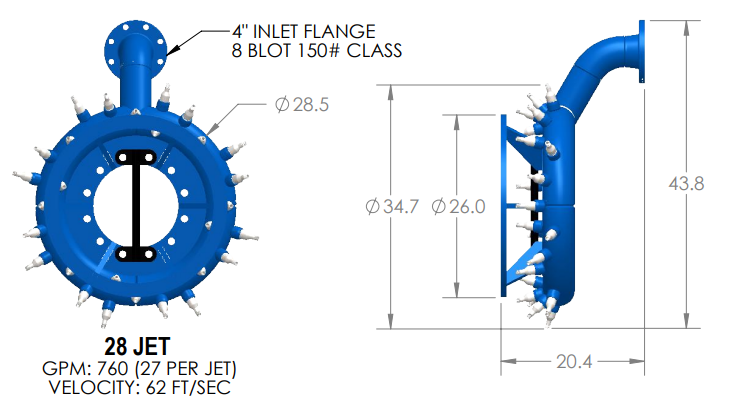
EDDY Pump – JETTING RING HEAD SPEC SHEET
Hydraulic Cable-Deployed Jetting Ring Pump
Comparison Table
| Model | Discharge Size | Flow Range (GPM) | Max Head (ft) | Solids Handling (inches) | Production Rate (yd³/hr) | Max Speed (RPM) | Percent Solids | Dredging Depth (ft) | Pump Weight (lbs) | Carrier Weight |
|---|---|---|---|---|---|---|---|---|---|---|
| JPH 4000 | 4 inch | 250–1200 | 160 | 3 | 75–150 | 1800 | 40–70% | 100 | 3,300 | 20–45 tons |
| JPH 6000 | 6 inch | 450–2500 | 200 | 5 | 150–200 | 1800 | 40–70% | 100 | 4,800 | 20–45 tons |
| JPH 8000 | 8 inch | 1400–3600 | 230 | 7 | 250–300 | 1200 | 40–70% | 100 | 6,800 | 60–94 tons |
| JPH 10000 | 10 inch | 1600–5000 | 240 | 9 | 300–350 | 1200 | 40–70% | 100 | 7,500 | 20+ tons |
| JPH 12000 | 12 inch | 2600–7300 | 180 | 11 | 500–600 | 900 | 40–70% | 100 | 9,500 | 30+ tons |
Industrial Sectors and Dredging Applications

Dredging and Marine Construction
Used for maintenance dredging of rivers, ports, canals, and naval bases, the JPH-8000 effectively handles sediment, silt, and sand without clogging. It is also deployed for land reclamation, barge unloading, shoreline stabilization, and deep-water dredging using cable-deployed or barge-mounted configurations.

Mining and Mineral Processing
Widely used for pumping mine tailings, mineral slurries, overburden, and abrasive waste materials. Its ability to process high-density solids with minimal water makes it suitable for tailings ponds, settling basins, and continuous material transport in harsh mining environments.

Oil, Gas, and Industrial Operations
Ideal for slurry transfer in drilling operations, refinery sludge removal, tank bottom cleanup, and process waste handling. It is commonly used in mud pits, frac ponds, containment basins, and heavy industrial wastewater systems.

Municipal and Environmental Projects
Deployed for wastewater lagoon dredging, biosolid removal, reservoir desilting, and restoration of lakes and ponds. The pump is well-suited for environmental remediation where contaminated or viscous material needs to be removed without excessive dilution.

Construction and Infrastructure
Supports underwater excavation, foundation dredging, bridge piling, cofferdam work, and pier construction. It efficiently transports sand, gravel, and silt from civil engineering sites and marine infrastructure projects.

Agriculture and Irrigation Canals
Used for desilting irrigation channels, farm ponds, and drainage canals to restore water flow and prevent blockages. The pump handles compacted soil, organic sludge, and crop residue deposits commonly found in agricultural waterways.

Power Generation and Ash Management
Applied in thermal and coal-fired power plants for removing fly ash, bottom ash, and slurry from ash ponds and cooling basins. It ensures continuous ash handling while reducing downtime and manual cleaning requirements.

Sand and Gravel Producers
Suitable for extracting and transferring sand, aggregate slurry, and dredged material during quarrying and sand mining operations. It handles coarse particles, high abrasives, and dense mixtures without clogging or rapid wear.
Reclaiming Usable Land from an Inactive Tailings Pond – High-Solids Mining Slurry Transfer
Case Study

Problem
A copper mine needed to reclaim land from an inactive tailings pond and recover process water, but the sediment was highly abrasive and contained over 60% solids. Conventional centrifugal pumps failed repeatedly due to clogging, excessive wear, and the need for dilution water. Building new slurry pipelines or draining the entire pond was costly and would halt production.

Solution
The JPH-8000 hydraulic pump was mounted on an amphibious platform and deployed directly into the tailings pond. Its non-clog rotor design allowed it to pump dense, abrasive slurry without adding water. The slurry was transferred straight into geotextile dewatering bags positioned on a containment pad, eliminating the need for permanent pipelines or mechanical excavation.

Result
The mine successfully reduced tailings volume, recovered thousands of cubic meters of process water, and restored usable land around the pond. The operation minimized downtime, reduced water consumption, and avoided the costs of mechanical dredging or pipeline construction — setting a new standard for tailings reclamation efficiency.
Call for sales or support
If you need assistance with pump selection, sales or engineering support, call 619-404-1916.
Talk To About Any Question?
Frequently Asked Questions
What kind of materials can the hydraulic cable-deployed pump handle in real-world applications?
This 8-inch hydraulic pump is built specifically for harsh industrial environments where materials are dense, abrasive, or highly viscous. It can process slurries containing sand, silt, gravel, mine tailings, drilling mud, sludge, and other heavy materials with up to 40–70% solids by weight. Even large solids up to 7 inches in diameter can pass through without clogging due to its open rotor design.
Is the 8-inch hydraulic pump limited to one setup, or can it be deployed in multiple ways?
The water jetting agitator pump is highly adaptable and can be configured for excavator-mounted work, cable-deployed operations, or installed on floating dredge platforms and barges. This flexibility allows businesses to use the same pump across different projects—whether dredging a riverbed, clearing tailings ponds, or unloading barges—without needing a separate pump for each application.
What hydraulic power is required to run the cable-deployed dredge pump efficiently?
To operate at full performance, the 8-inch hydraulic pump requires a hydraulic power source delivering approximately 130–150 GPM at 5000 PSI. This can be achieved using an excavator’s auxiliary hydraulics or a standalone hydraulic power unit (HPU). This setup makes the pump suitable for remote job sites where electric or diesel-powered centrifugal pumps might not be feasible.
How does this hydraulic cable-deployed pump reduce downtime and maintenance costs?
Unlike standard centrifugal pumps, it has fewer wear components and no tight tolerances between the rotor and volute. This means it doesn’t rely on close-clearance parts that wear out quickly. The non-clog rotor design also prevents frequent stoppages due to blockages, reducing the need for constant disassembly, cleaning, or replacement of wear parts.
What kind of production output can a contractor expect on-site?
Depending on the site conditions and material type, the jetting agitator dredge pump can deliver between 1,400–3,600 gallons per minute (GPM), translating to roughly 250–300 cubic yards of material per hour. This high throughput makes it ideal for large-scale dredging, mining reclamation, and industrial desilting projects where production targets and deadlines are critical.
Can the submersible hydraulic pump with agitator operate in deep water or environments with low NPSH (Net Positive Suction Head)?
Yes. This cable-operated hydraulic pump is engineered to work effectively in deep-water environments up to 100 feet and still maintain suction in low NPSH conditions where standard pumps typically lose prime or cavitate. This makes it useful for reservoirs, lagoons, marine construction zones, and remote tailings ponds.
What optional accessories help improve performance and monitoring?
Depending on the site’s complexity, accessories such as jetting rings, flow meters, hydraulic pressure gauges, priming valves, discharge hose carriers, and monitoring gauges can be added. These enhance operational control, help monitor performance in real-time, and reduce the risk of hydraulic overloads or material blockages during pumping.
How does the jetting ring assist in pumping compacted or sticky material?
The jetting ring directs high-pressure water around the suction intake to break apart compacted sediments, clay layers, or hardened tailings before they enter the pump. This pre-agitation process helps create a pumpable slurry, making material flow smoother, reducing clogging risks, and increasing production rates in hard-to-dislodge deposits.
Which industries commonly rely on this type of heavy-duty dredging pump?
This industrial dredging equipment is widely used in industries such as mining (for tailings and mineral slurry transport), dredging and marine construction, oil and gas (for drilling mud and refinery sludge removal), municipal wastewater and lagoon cleaning, environmental remediation, power plant ash removal, and agricultural canal or pond desilting operations.
Do you provide assistance with installation, setup, and training?
Yes. Support typically includes guidance on hydraulic connections, deployment methods, jetting system setup, hose routing, start-up procedures, and operator training. Whether it’s on-site, virtual, or through technical documentation, assistance is provided to ensure the system is installed properly and delivers the expected production output.
HD (Heavy Duty) Slurry Pumps / Dredge Equipment
Related Products
For assistance Call 619-404-1916 and let us help match your project
with the right pump.