
Barge Dredge – Remote Operated
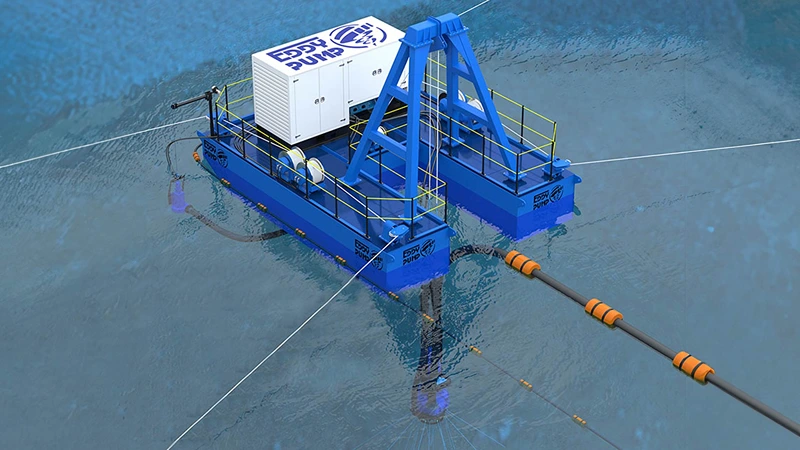
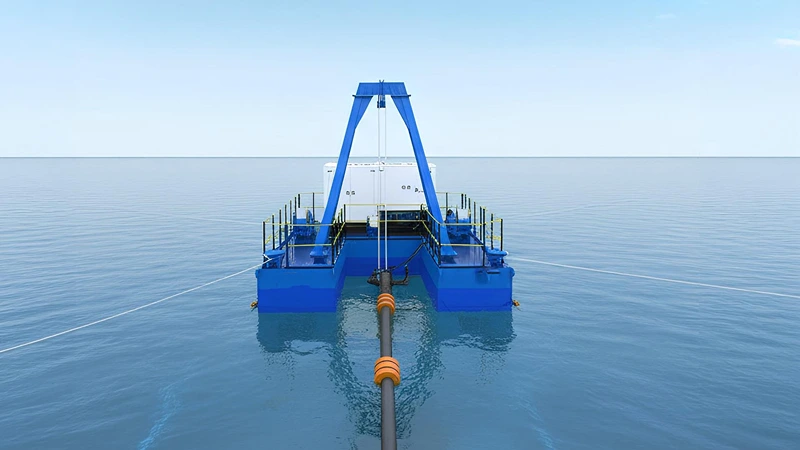
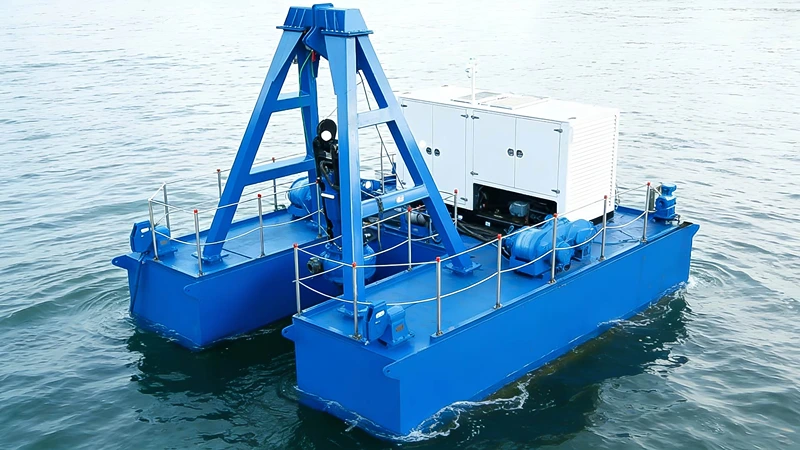
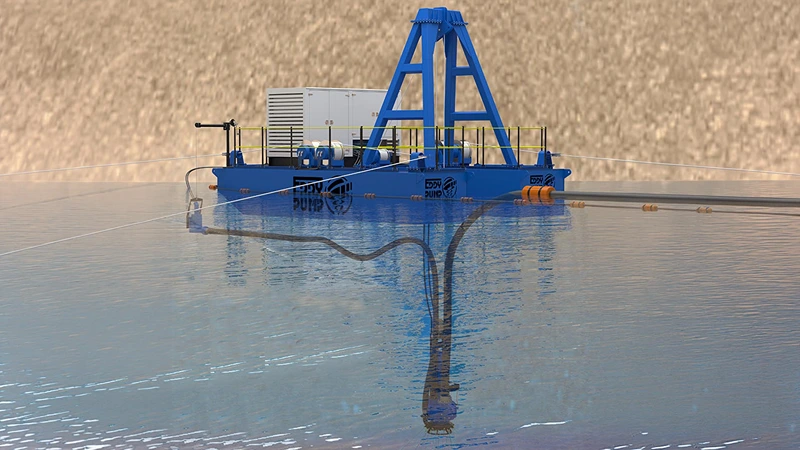
The EDDY Pump Barge Dredge is a compact, unmanned dredging system designed to efficiently remove sediment, slurry, and abrasive material in confined or shallow waterways. Powered by EDDY Pump's high-solids-handling technology, the system delivers reliable production with minimal operator intervention. The cable-operated pump deployment allows controlled dredging depths up to 100 feet while maintaining stable production rates. With multiple pump size options and flexible discharge configurations, the barge dredge adapts easily to changing site conditions, material types, and project demands, making it a practical solution for maintenance dredging, environmental cleanup, and industrial slurry removal.
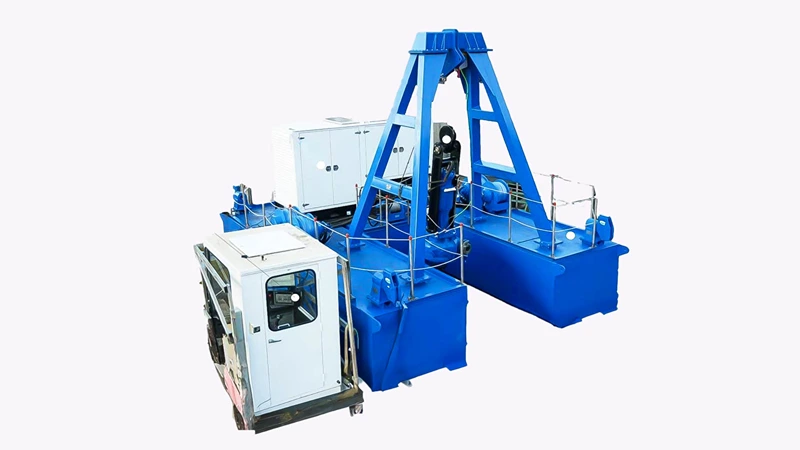
Barge Dredge System Advantages
- A high-solids-handling design allows the dredge to move dense, abrasive slurry without dilution, enabling higher material removal per pass and reducing rehandling on site.
- An unmanned, remotely operated configuration minimizes personnel exposure on the water while maintaining consistent production over long operating cycles.
- Cable-deployed pump system provides controlled vertical and lateral positioning, enabling accurate dredging depth control up to 100 feet without complex cutter mechanisms.
- A compact barge footprint enables deployment in narrow channels, ponds, and restricted waterways where conventional dredges are impractical.
- Multiple pump sizes allow the system to be precisely matched to material type, discharge distance, and production requirements.
- Non-clogging pump operation reduces downtime caused by debris, variable sediment sizes, or high solids concentrations.
- Flexible discharge layouts support floating pipelines, shore pipelines, and booster pump integration for extended discharge distances
- Simplified setup and relocation reduce mobilization time and overall project cost compared to mechanical cutterhead dredging systems.
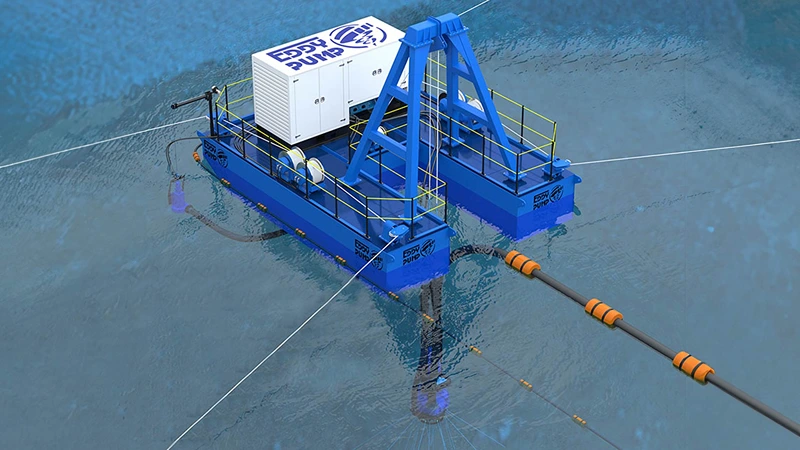
Gallery
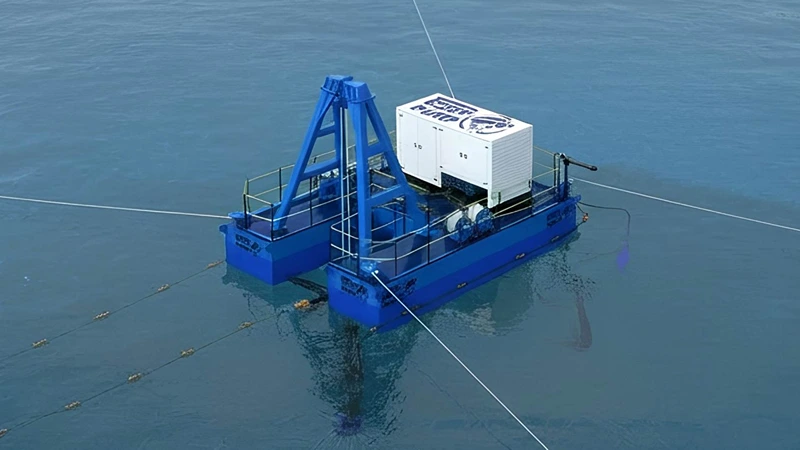
Barge Dredge Field Photos
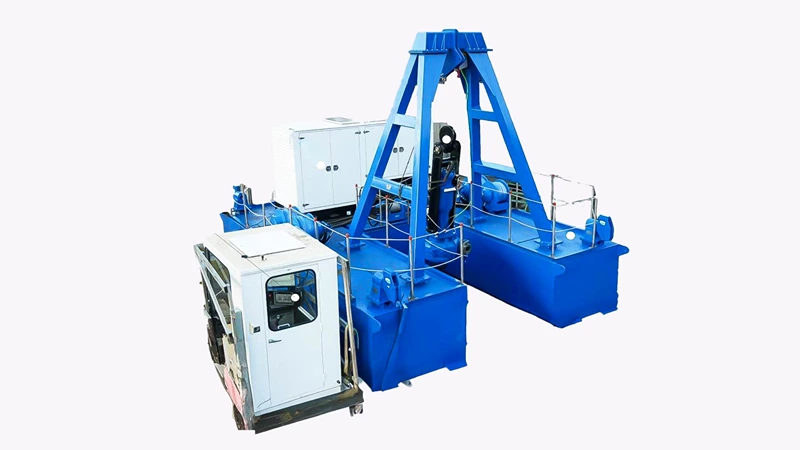
Technical Specifications

Performance Specifications
- Flow Range: Up to 7300 GPM, depending on pump size and configuration
- Head Range: Up to 200+ ft
- Solids Handling: High-solids slurry containing sand, silt, mud, sludge, and abrasive materials
- Percent Solids: Up to 40–70 percent by weight, depending on material and pump selection
- Typical Production Rate: Site dependent, commonly up to 500+ yd³ per hour
- Operating Speed: Variable based on power unit and pump size

Physical Specifications
- Available Pump Sizes: 4 inch, 6 inch, 8 inch, 10 inch, 12 inch
- Discharge Size: Matches selected pump size
- Suction Size: Oversized suction for improved solids intake
- Pump Orientation: Submerged deployment via cable system, vertical or angled positioning
- Maximum Dredging Depth: Up to 100 ft
- Barge Footprint: Approximately 650 sq ft

System & Operational Specifications
- Dredge Type: Cable-operated barge dredge
- Operation: Unmanned, remote-controlled
- Pump Positioning: Onboard winch system for vertical and horizontal movement
- Anchoring System: Three to four-point shore or barge anchoring
- Discharge Options: Floating pipeline, shore pipeline, booster compatible

Pump Material Construction
- Rotor: High Chrome 28 percent, Ductile Iron, Stainless Steel, Duplex Stainless
- Volute Casing: High Chrome 28 percent, Ductile Iron, Stainless Steel, Duplex Stainless
- Shaft: High-strength alloy steel or Stainless Steel
- Mechanical Seal: Heavy-duty seal arrangement designed for abrasive slurry service
- Bearing Housing: Ductile Iron or Stainless Steel
EDDY Pump Model Options for Barge Dredge
Select the pump model by aligning production targets with material density, maximum solids size, dredging depth, and discharge distance, ensuring efficient slurry movement, consistent flow, and reliable performance across varying site conditions.
| Model | Discharge Size | Suction Size | Flow Range (GPM) | Head Range (ft) | Max Solids Size | % Solids | Production Rate (yd³/hr) |
|---|---|---|---|---|---|---|---|
| 4 inch | 6 inch | 250 – 1200 | Up to 160 | 3 inches | 40–70% | 75–150 | |
| 6 inch | 8 inch | 450 – 2500 | Up to 200 | 5 inches | 40–70% | 150–200 | |
| 8 inch | 10 inch | 1400 – 3600 | Up to 230 | 7 inches | 40–70% | 250–300 | |
| 10 inch | 12 inch | 1600 – 5000 | Up to 240 | 9 inches | 40–70% | 300–350 | |
| 12 inch | 14 inch | 2600 – 7300 | Up to 180 | 11 inches | 40–70% | 500–600 |

Industries Served

Port and Harbor Maintenance
Barge dredges are essential for maintaining navigable depths in ports, marinas, and harbor basins. The system removes silt and compacted sediment in confined waterfront zones where large cutter dredges are impractical. Its compact footprint and precise depth control allow operators to work alongside docks, seawalls, and pilings without disrupting port operations or damaging surrounding infrastructure.

River and Canal Management
Rivers and canals continuously accumulate sediment, restricting flow and vessel movement. The barge dredge enables targeted removal in narrow waterways, bends, and shallow reaches where access is limited. Controlled pump positioning allows operators to restore channel depth while minimizing bank disturbance and preserving natural flow patterns.

Mining and Tailings Recovery
Mining sites use barge dredges in pits, ponds, and tailings basins to recover valuable material and manage waste. High-solids handling enables dense slurry transport without excessive dilution, improving recovery efficiency. The system supports continuous operation in abrasive environments common to mineral processing facilities.

Environmental Remediation
Contaminated sediments in lagoons, reservoirs, and industrial basins require careful removal. An unmanned barge dredge enables controlled extraction while reducing worker exposure. Remote operation and precise depth control support safe handling of sludge, ash, and hazardous material during remediation projects.

Industrial Process Ponds
Power plants, refineries, and manufacturing facilities rely on settling ponds and process basins to manage waste streams. Sediment buildup reduces capacity and can interrupt operations. The barge dredge maintains these systems in service by removing accumulated solids without draining or shutting down critical assets.
Flood Control and Drainage Systems
Retention basins, stormwater ponds, and drainage canals lose effectiveness as sediment accumulates. The compact barge dredge restores storage volume and flow paths in locations with limited access. This helps municipalities maintain flood protection systems and improve water movement during heavy rainfall events.

Municipal Water Infrastructure
Cities use barge dredges to maintain reservoirs, intake basins, and wastewater lagoons. The system supports routine maintenance while facilities remain online, avoiding service interruptions. Precise dredging protects intake structures and improves long term reliability of public water and wastewater assets.
Harbor Berth Restoration in a Constrained Marina
Case Study

Problem
A coastal marina begins to experience rapid shoaling after seasonal storms and increased tidal sediment transport. Berths along the inner basin lose depth first, especially near dock corners, seawalls, and slip entrances where flow slows, and fine sediment settles. Operators report prop strikes, limited access for maintenance boats, and restrictions on larger vessels during low tide. Conventional dredging options create major challenges because the work area is tight, vessel traffic is constant, and the marina cannot afford extended closures. The site also has strict turbidity and noise expectations due to nearby residences and ongoing waterfront activity.

Solution
The EDDY Pump’s Barge Dredge is mobilized and staged within the marina footprint, allowing targeted dredging without bringing in oversized equipment. The system is operated remotely, reducing personnel exposure to the water and allowing dredging to continue during extended shifts. A cable-deployed pump is positioned precisely along berth pockets and slip lanes to remove sediment using controlled-depth management rather than broad-cutting. This supports clean, selective removal around pilings and dock edges where overexcavation can threaten stability. Discharge is routed through a floating pipeline to an onshore containment area or geotextile tubes for dewatering, keeping the work zone organized and limiting resuspension around active slips.

Result
The marina restores navigable berth depth and reopens restricted slips without shutting down the entire facility. The targeted approach reduces disturbance to dock structures, minimizes unnecessary dredging volume, and shortens the time required to reach depth targets. Remote operation and compact positioning help maintain safer work practices in a congested environment. With consistent sediment removal and a repeatable maintenance plan, the marina stabilizes access throughout the season, reduces the need for emergency dredging, and improves scheduling for future maintenance cycles.
Call for sales or support
If you need assistance with pump selection, sales or engineering support, call 619-404-1916.
Questions? Talk to an Engineer
Frequently Asked Questions
What makes a barge dredge different from a traditional cutterhead dredge?
A barge dredge uses a high solids slurry pump rather than a mechanical cutterhead. This allows it to move dense material without aggressive agitation, making it better suited for confined spaces, environmentally sensitive areas, and projects requiring precise sediment removal.
How deep can the Barge Dredge operate?
The system can dredge to depths of up to 100 feet using a cable-deployed pump. Depth is controlled through onboard winches, allowing operators to position the pump accurately without complex mechanical arms or ladder assemblies.
What types of material can it handle?
The Barge Dredge is designed for sand, silt, mud, sludge, clay, tailings, ash, and other abrasive or high-density slurries. Its high solids-handling capability allows dense materials to be pumped without excessive dilution.
Is the system manned or unmanned?
The Barge Dredge is designed for uncrewed operation. It is controlled remotely, reducing the need for personnel on the water and improving safety in hazardous or confined environments.
What pump sizes are available?
The system supports multiple EDDY Pump sizes, typically ranging from 4 inches to 12 inches. Pump selection is based on production targets, material type, discharge distance, and site conditions.
How is the dredged material discharged?
Material can be discharged through floating pipelines, shore-based pipelines, or into booster systems over long distances. The layout is flexible and can be configured to match site constraints and disposal methods.
Can it operate in narrow or restricted waterways?
Yes. The compact barge footprint and cable-deployed pump make it ideal for canals, marinas, ponds, lagoons, and industrial basins where access is limited and large dredges cannot operate effectively.
How difficult is it to mobilize and relocate?
Compared to traditional dredges, the barge dredge is faster to mobilize and easier to relocate. It requires fewer support vessels and less site preparation, reducing setup time and overall project cost.
What level of operator skill is required?
The operation is straightforward and does not require specialized cutterhead dredging experience. Training focuses on remote controls, pump positioning, and monitoring flow and depth, allowing crews to become productive quickly.
Is the system suitable for long-term maintenance programs?
Yes. The Barge Dredge is well-suited for routine maintenance dredging. Its repeatable setup, controlled excavation, and low operational footprint make it practical for ports, canals, reservoirs, and industrial basins that require periodic sediment removal.
HD (Heavy Duty) Slurry Pumps / Dredge Equipment