


Amphibious Excavator – Pontoon Undercarriage
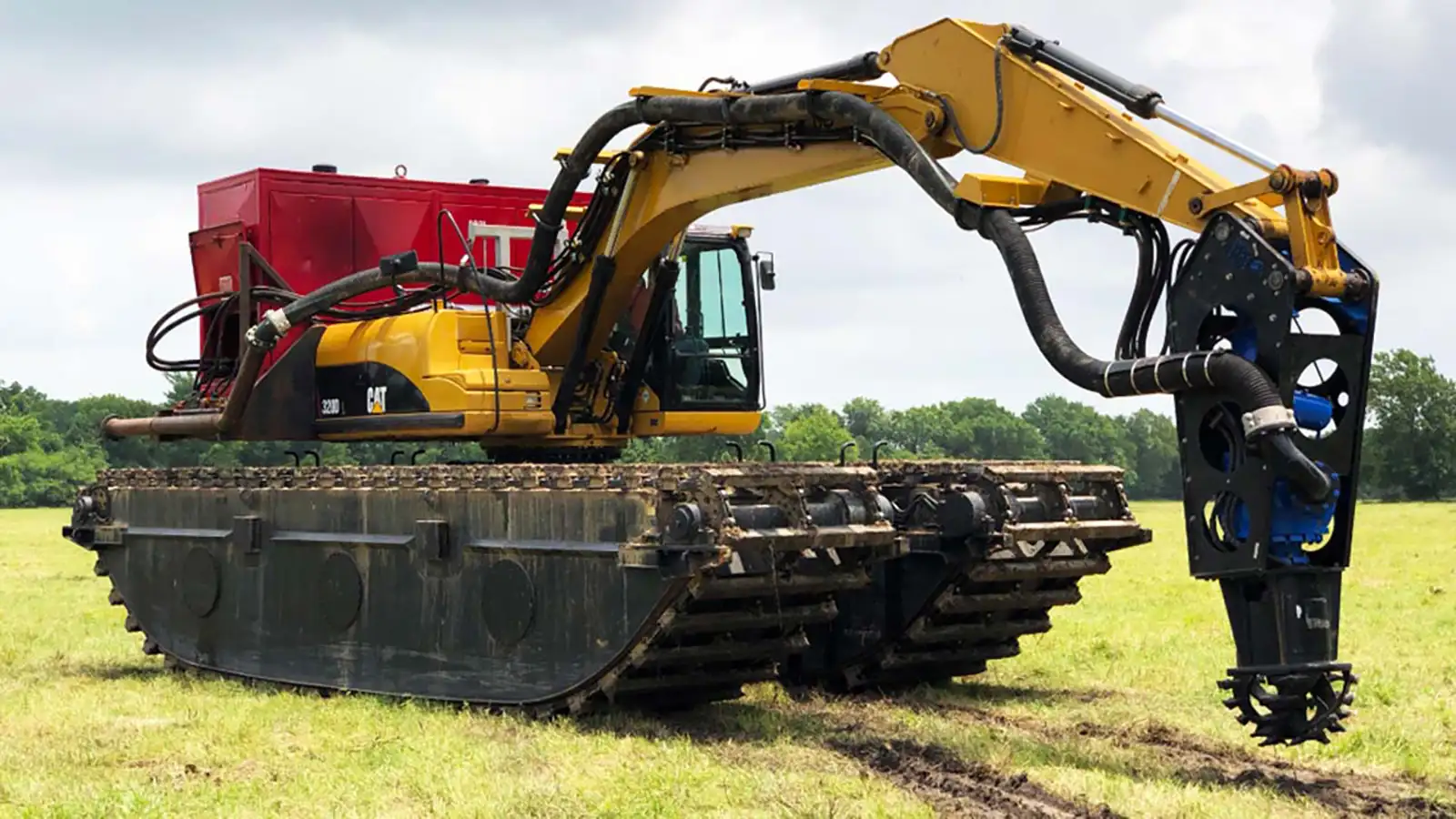
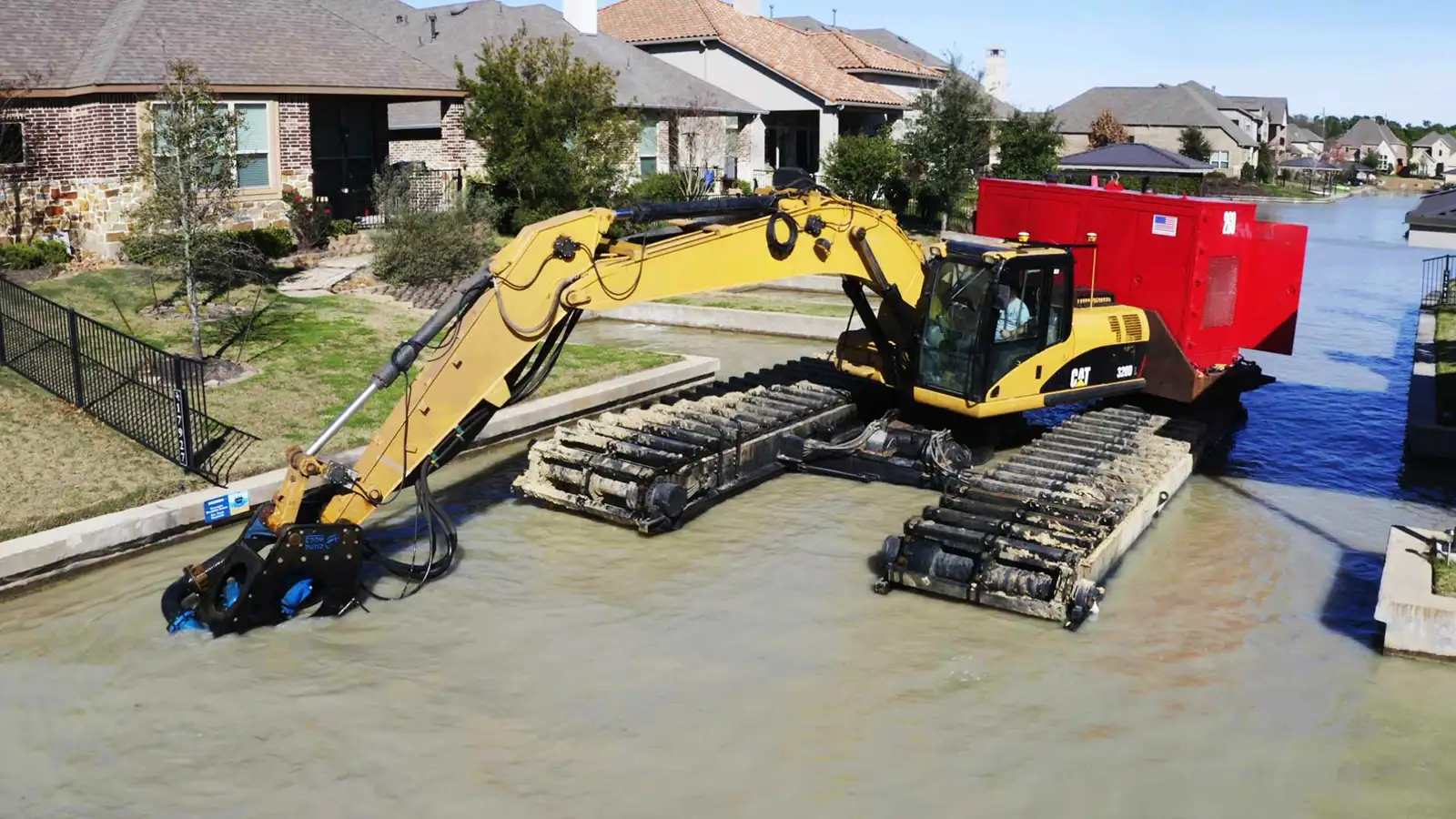
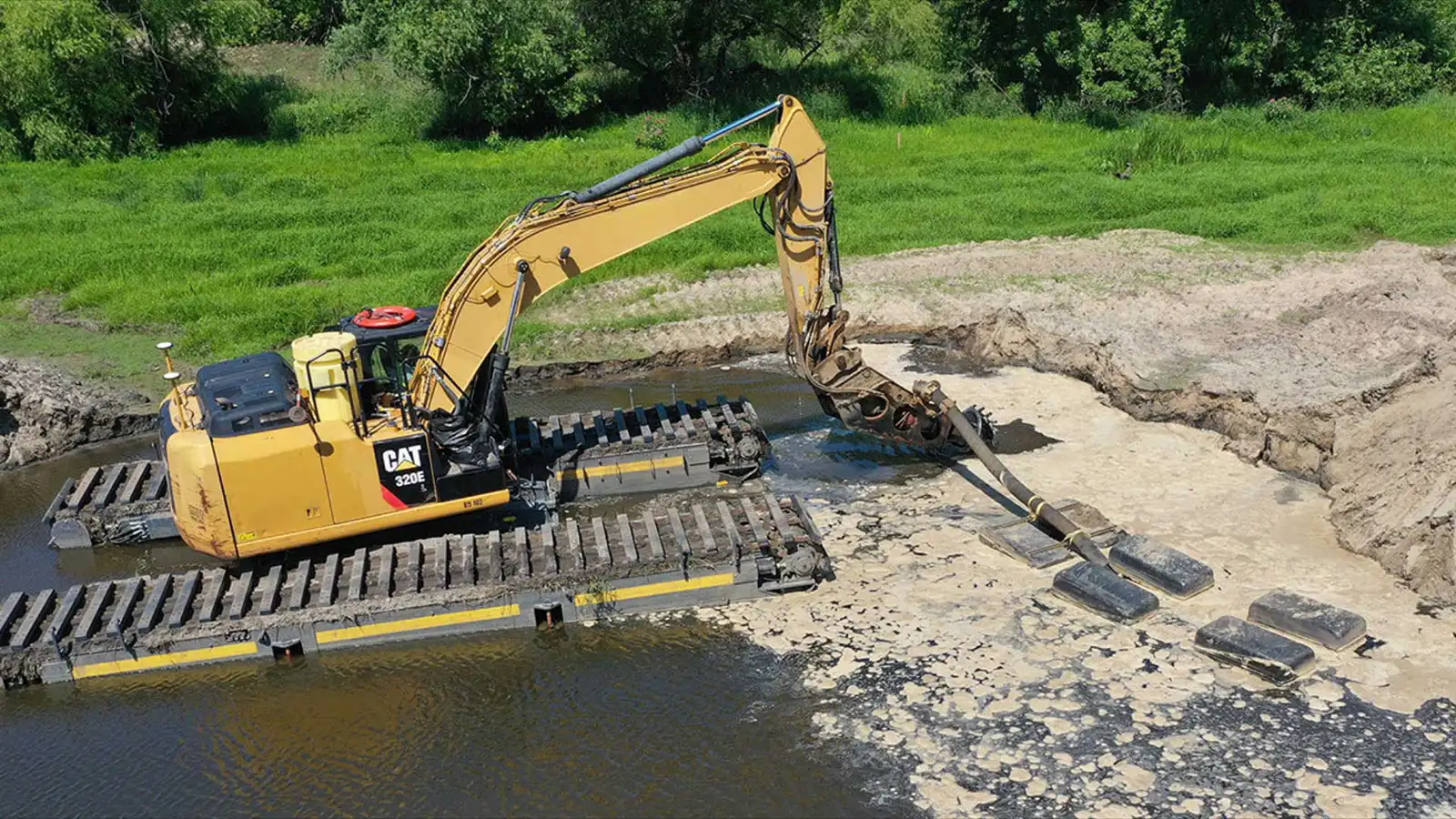
An amphibious excavator dredger, often referred to as a Super Dredger, is a floating excavator system that combines an amphibious excavator undercarriage with an excavator-mounted dredge pump attachment to perform efficient dredging in wetlands, swamps, and shallow waters where traditional dredges cannot operate. Built on a pontoon undercarriage for stability on soft terrain, it enables on-site sediment removal without barges or extensive support infrastructure. The integrated dredge pump handles mud, sand, and gravel for maintenance dredging, environmental restoration, and waterway clearance. Compared with traditional barge-based dredges, this Super Dredger is significantly more cost effective while delivering reliable productivity in demanding conditions.
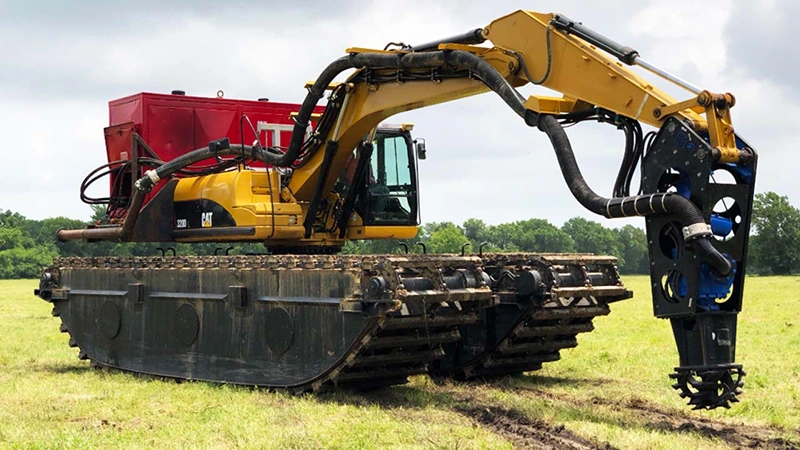
Amphibious Excavator Dredger Capabilities
- Amphibious pontoon undercarriage enables stable operation on soft ground, wetlands, marshes, and shallow water without additional flotation systems.
- Integrated excavator dredge pump attachments enable direct material removal without separate cutterheads or boosters for most applications, while allowing selective projects to add HPUs, booster pumps, or cutterheads when higher head, longer discharge, or compacted material conditions demand it.
- High solids-handling capability enables dredging of mud, silt, sand, clay, and debris without frequent clogging.
- Self-propelled mobility reduces reliance on barges, tugboats, or external support equipment, lowering mobilization time and costs.
- Precise positioning and reach make the system suitable for maintenance dredging, channel shaping, shoreline work, and environmental remediation.
- Modular configuration supports various pump sizes, discharge distances, and attachment options to meet project requirements.
- Reduced footprint and ground pressure minimize disturbance to sensitive environments and confined job sites.
- Proven durability for continuous operation in abrasive and demanding dredging conditions.

Gallery
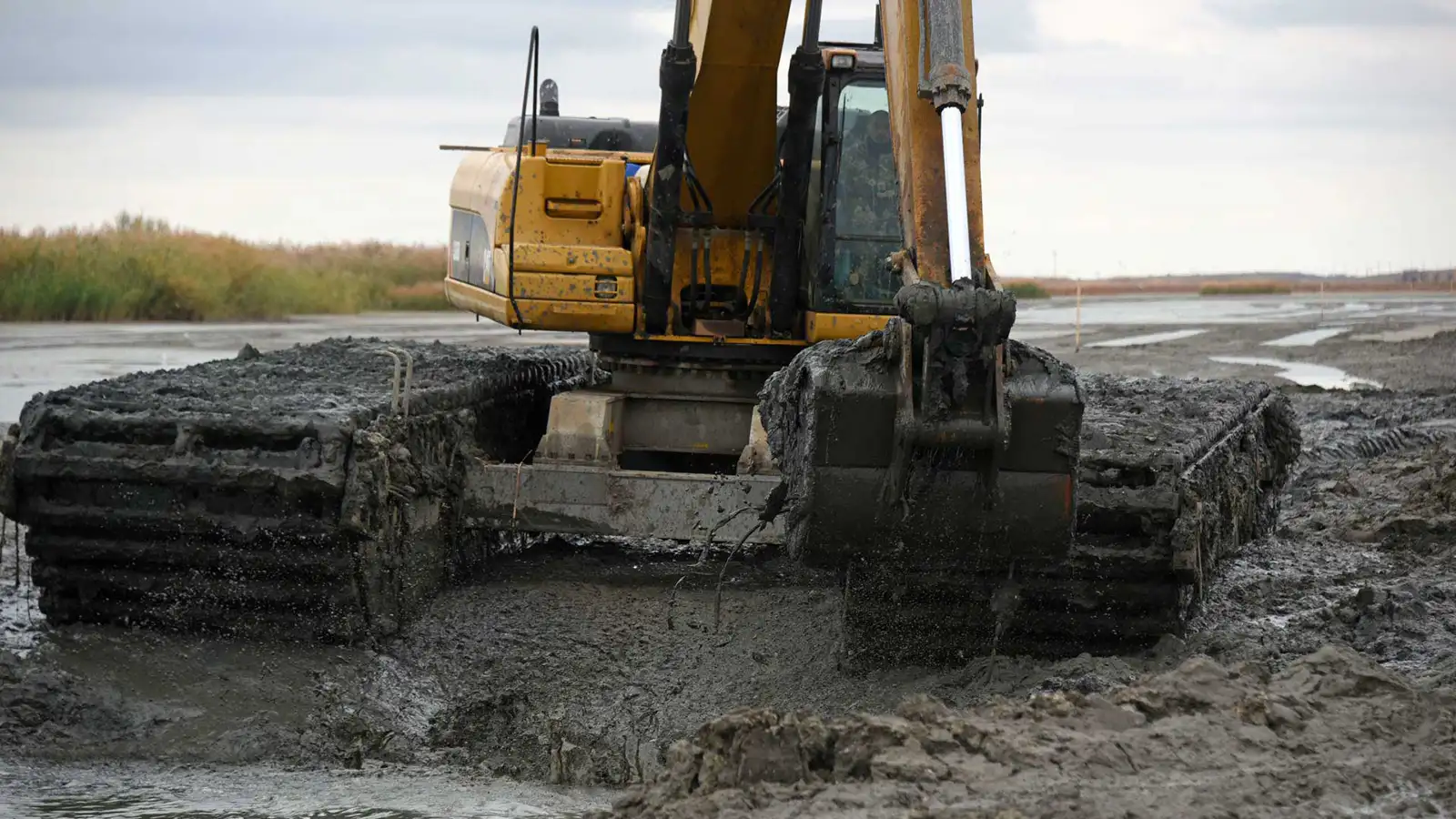
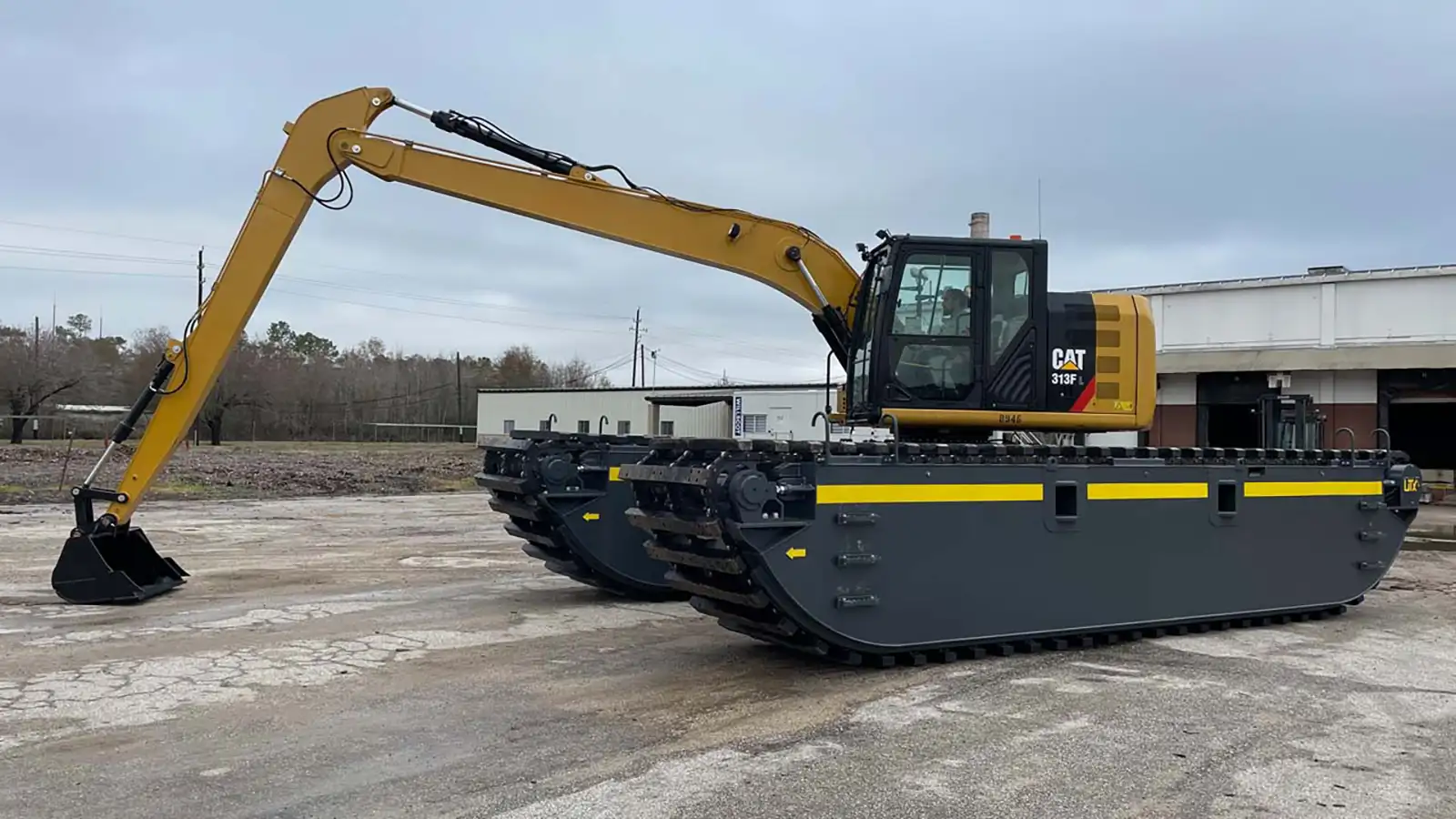
See Our Amphibious Excavators in Action
Industries Served

Environmental Remediation and Wetland Restoration
Amphibious excavator dredgers are widely used in sensitive wetlands, marshes, and protected waterways where traditional dredging equipment cannot operate effectively. Their low ground pressure and precise material removal capabilities support sediment cleanup, habitat restoration, and contaminated-soil removal while minimizing environmental disturbance.

Flood Control and Water Management
For flood channels, retention ponds, and stormwater systems, amphibious excavator dredgers provide reliable access to shallow and soft-bottom areas. They are commonly used to restore conveyance capacity, remove accumulated sediment, and maintain drainage infrastructure in both urban and rural settings.

Ports, Harbors, and Inland Waterways
These dredgers support maintenance dredging in shallow berths, navigation channels, and inland waterways where barge-mounted dredges are impractical. Their mobility enables targeted sediment removal around docks, quay walls, and restricted-access zones without requiring extensive marine support.

Mining and Industrial Operations
In mining ponds, tailings areas, and industrial settling basins, amphibious excavator dredgers enable efficient slurry removal and material transfer. They help maintain pond capacity, manage waste byproducts, and support ongoing operations without interrupting site workflows.
Municipal and Public Infrastructure
Municipal agencies use amphibious excavator dredgers for lake maintenance, canal cleaning, and reservoir sediment management. Their adaptability makes them suitable for routine maintenance projects as well as emergency response after heavy rainfall or sediment surges.

Agriculture and Irrigation Systems
Irrigation canals, drainage ditches, and agricultural reservoirs benefit from amphibious dredging solutions that operate in shallow, narrow environments. These systems help restore water flow, reduce blockages, and maintain reliable water delivery for agricultural operations.

Oil, Gas, and Energy Infrastructure
Amphibious excavator dredgers are used around pipelines, intake structures, and energy facilities located in wetlands or shallow water zones. Their controlled excavation and pumping capabilities support access maintenance, sediment removal, and infrastructure protection without heavy marine equipment.
Flood Channel Rehabilitation in an Urban Drainage Corridor – Case Study

The Problem
The municipality was experiencing frequent localized flooding after moderate to heavy rainfall, driven by long-term sediment accumulation in a concrete-lined, partially earthen flood channel. Access limitations from adjacent roads, underground utilities, and nearby residential areas prevented the use of barges, cranes, or large support equipment. Sediment removal had to be performed without undermining channel walls, disrupting traffic, or shutting down nearby services.

The Solution
The EDDY Pump’s Amphibious Excavator Dredger was selected for its ability to operate directly inside the channel without external flotation or access construction. The pontoon undercarriage provided stability in shallow water and soft deposits, while the excavator-mounted dredge pump enabled controlled, continuous sediment removal. Material was pumped through a pipeline to an off-site disposal location, eliminating the need for stockpiling or secondary handling within the urban corridor.

The Result
The dredging campaign restored the channel’s hydraulic capacity and improved stormwater conveyance during peak flow events. Flood risk in surrounding neighborhoods was significantly reduced, and the project was completed on schedule, ahead of conventional methods. Minimal surface disruption, reduced noise, and limited traffic impacts allowed the work to proceed without major public complaints, establishing a practical maintenance approach for future flood control operations.
Call for sales or support
If you need assistance with pump selection, sales or engineering support, call 619-404-1916.
Questions? Talk to an Engineer
Frequently Asked Questions
What is an amphibious excavator dredger used for?
An amphibious excavator dredger is designed to perform excavation and dredging in shallow water, wetlands, marshes, and soft ground where conventional excavators or barge-mounted dredges cannot operate. It combines a floating pontoon undercarriage with an excavator and dredge pump attachment to remove sediment directly from the water body or saturated terrain.
How does an amphibious excavator differ from a standard excavator?
Unlike standard excavators that rely on firm ground, amphibious excavator dredgers use pontoons to distribute weight and maintain stability on soft or submerged surfaces. This allows them to work in environments such as wetlands, canals, and flood channels without ground improvement, mats, or temporary access roads.
What types of material can an amphibious excavator dredger handle?
These dredgers can handle mud, silt, sand, clay, organic sediment, and debris commonly found in channels, ponds, and wetlands. When equipped with a high-solids dredge pump, they can move abrasive and viscous materials with minimal clogging compared to conventional pumping systems.
Is an amphibious excavator dredger suitable for environmental or sensitive areas?
Yes. Amphibious excavator dredgers are frequently used in environmentally sensitive zones because of their low ground pressure and precise excavation control. They minimize disturbance to surrounding soil and habitats, making them suitable for wetland restoration, sediment remediation, and regulated waterways.
How is dredged material transported after removal?
Dredged material is typically pumped through a discharge pipeline to a disposal site, containment area, or dewatering location. This eliminates the need for mechanical loading, trucking from the work zone, or multiple handling steps, which is especially important in confined or urban environments.
What water depth can an amphibious excavator dredger operate in?
Amphibious excavator dredgers are designed for shallow water applications and can operate in very low water depths as well as partially submerged conditions. The exact operating depth depends on the pontoon configuration, excavator size, and attachment setup, but the setup is optimized for areas inaccessible to traditional dredges.
Can amphibious excavator dredgers be customized for different projects?
Yes. These systems can be configured with different pontoon sizes, excavator models, pump capacities, and discharge setups. This flexibility allows the dredger to be tailored for specific flow rates, discharge distances, sediment types, and site constraints.
Are amphibious excavator dredgers cost-effective compared to traditional dredging methods?
In many projects, they reduce overall costs by eliminating the need for barges, tugboats, cranes, and extensive site preparation. Faster mobilization, reduced support equipment, and lower labor requirements often make them more cost-effective for shallow-water and restricted-access dredging projects.
What maintenance considerations are involved?
Routine maintenance focuses on the excavator, pump, and pontoon components. This includes inspection of wear parts, seals, hydraulic systems, and flotation integrity. Because the system operates in abrasive environments, regular monitoring helps maintain consistent performance and extend equipment life.
What types of projects are best suited for amphibious excavator dredgers?
They are best suited for flood channels, wetlands, canals, lakes, tailings ponds, stormwater systems, and shallow waterways where access is limited or ground conditions are unstable. Projects that require precise sediment removal with minimal disruption benefit most from this type of dredging solution.
HD (Heavy Duty) Slurry Pumps / Dredge Equipment
Related Products
For assistance Call 619-404-1916 and let us help match your project
with the right pump.