


Self-Priming Excavator Pump & Bucket
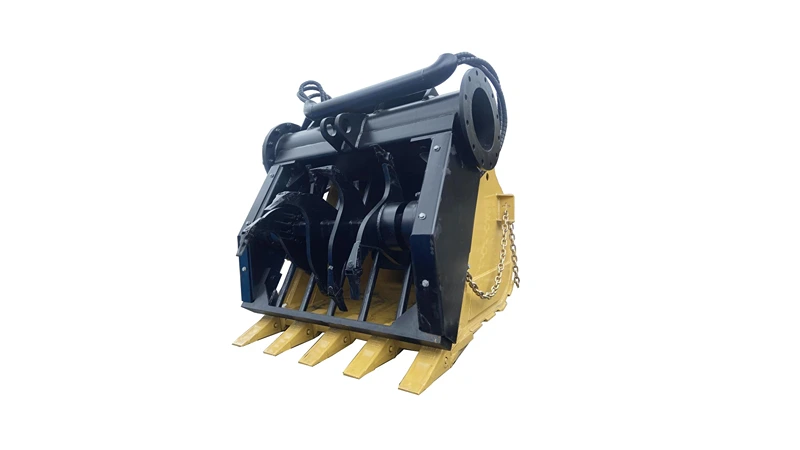
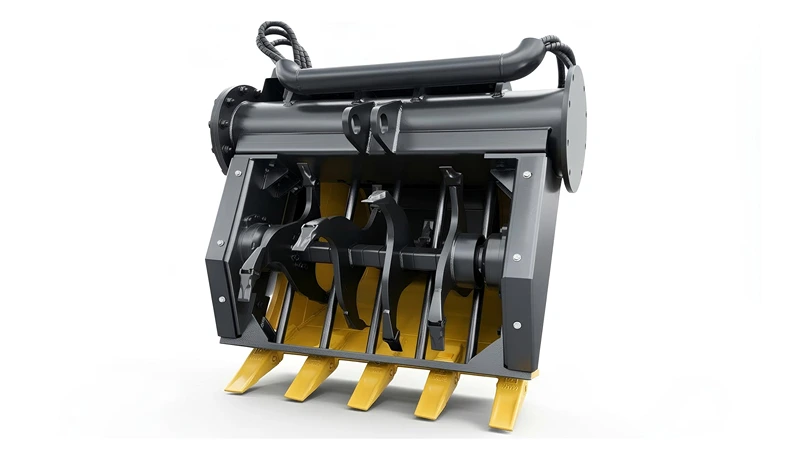
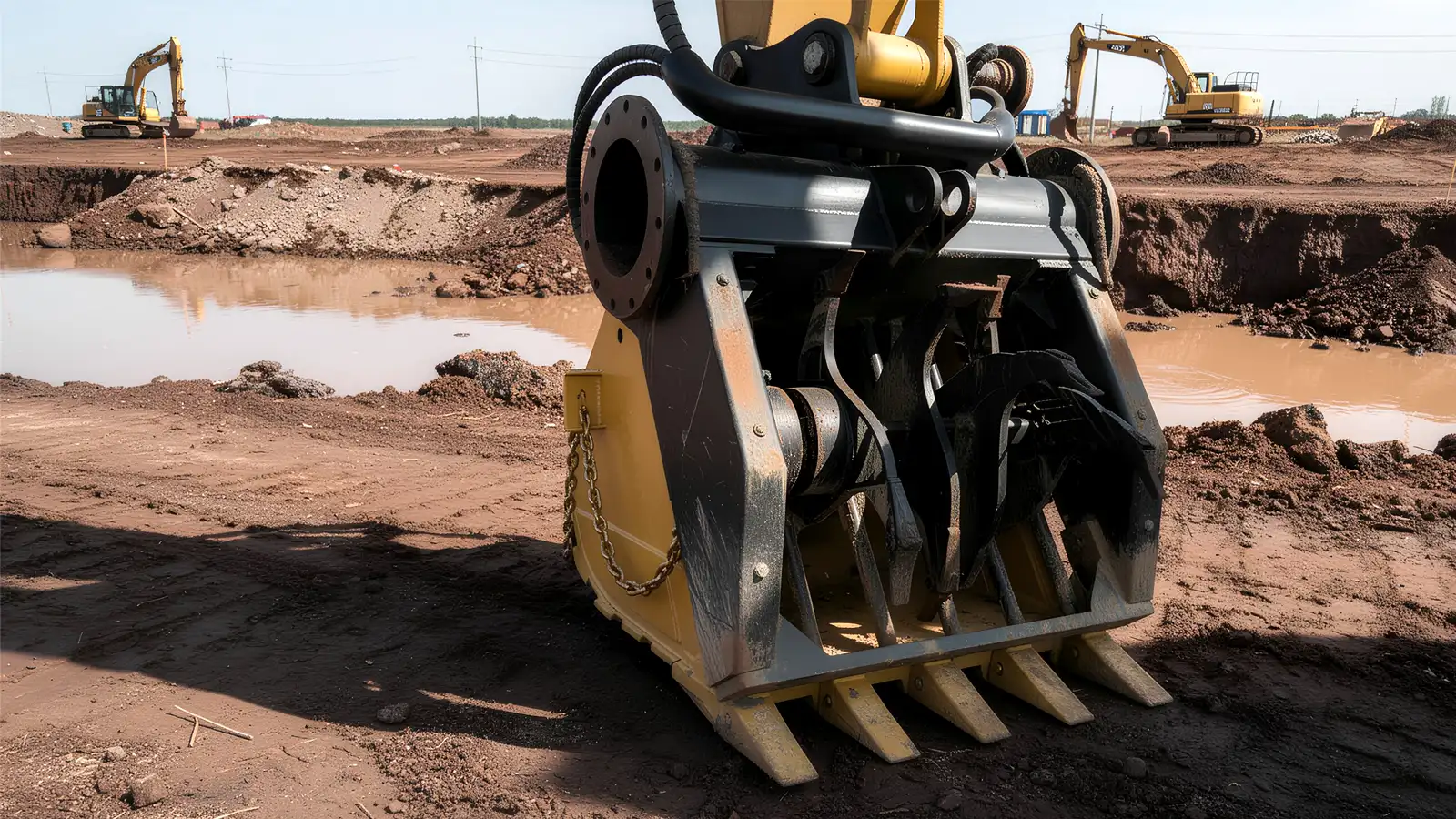
The Self-Priming Excavator Pump & Bucket integrates an excavator-mounted cutterhead with EDDY Pump’s self-priming slurry pump to create a single tool for excavation and material transfer. Across models, it delivers 250-7,300 GPM, raises the head to 240 ft, and handles solids up to 11 in. at 40–70% by volume. Production rates reach 75 to 600 cubic yards per hour, driven directly by excavator hydraulics. The system eliminates the need for external priming and separate dredge equipment, simplifying deployment and reducing downtime across dredging, mining, and sediment removal projects.
Design Advantages for Field Operations
- Combines a cutterhead, a bucket, and a slurry pump into a single attachment, enabling material to be cut, entrained, and transferred in a single continuous operation without support equipment.
- Operates as a true self-priming system, removing the need for vacuum pumps, flooded suction, or manual priming, and allowing fast restarts after shutdowns.
- Moves slurry at 40 to 70 percent solids by volume and handles particles up to 11 inches, enabling direct pumping of dense, abrasive material that conventional dredge pumps struggle to move.
- Covers a wide performance range from 250 to 7,300 GPM with heads up to 240 ft, giving engineers flexibility to match pipeline length, elevation change, and material type without oversizing.
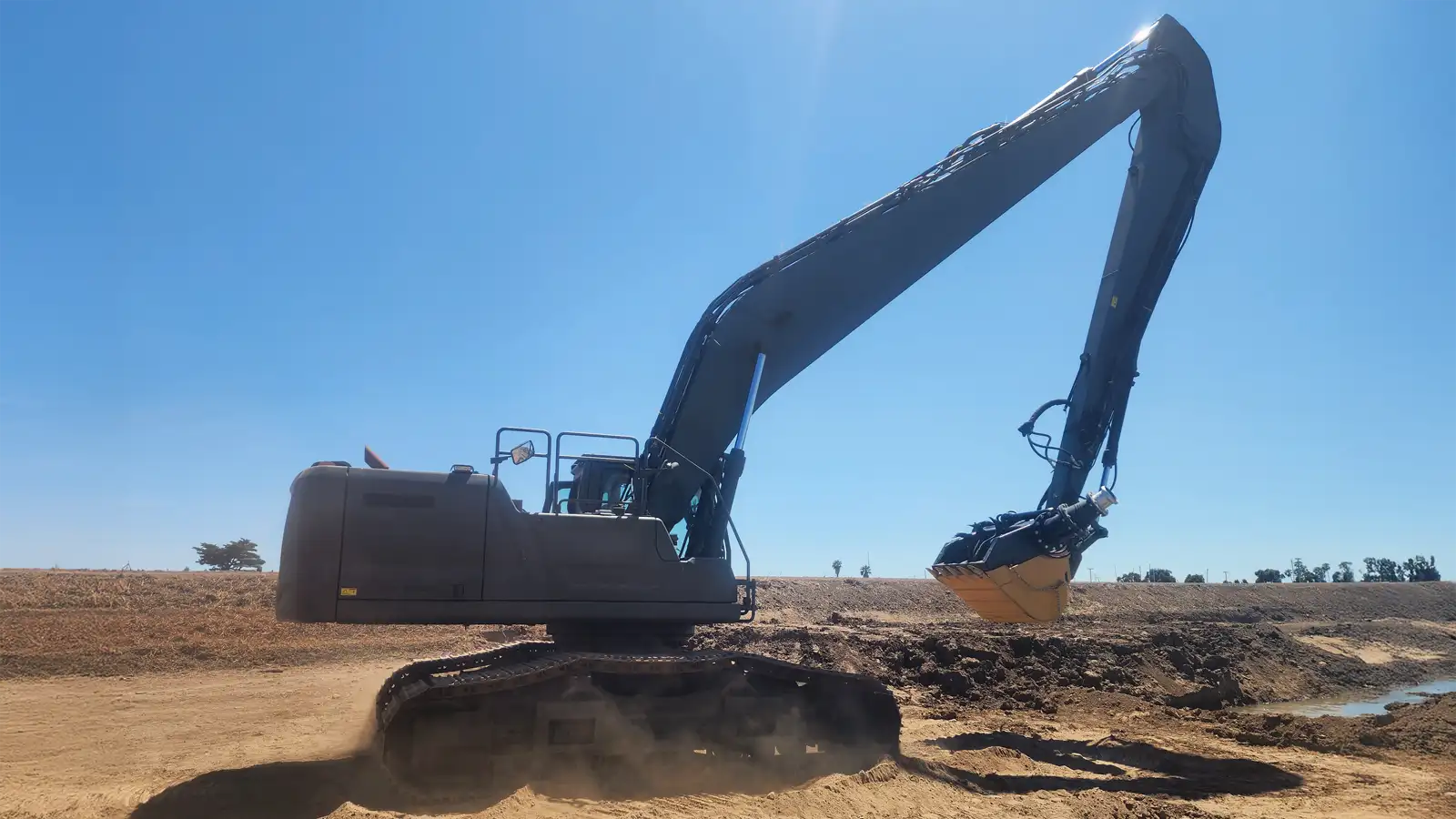
- Runs directly from excavator hydraulics, eliminating the need for dedicated dredge platforms, barges, or standalone pump packages on many projects.
- Replaces multi-component dredging spreads with a compact attachment, simplifying transport, mobilization, and site logistics in confined or remote environments.
- Maintains stable flow under high solids and fluctuating densities, reducing clogging events and minimizing production interruptions across long operating cycles.
Gallery
Self-Priming Excavator Pump Bucket in Action


Technical Specifications
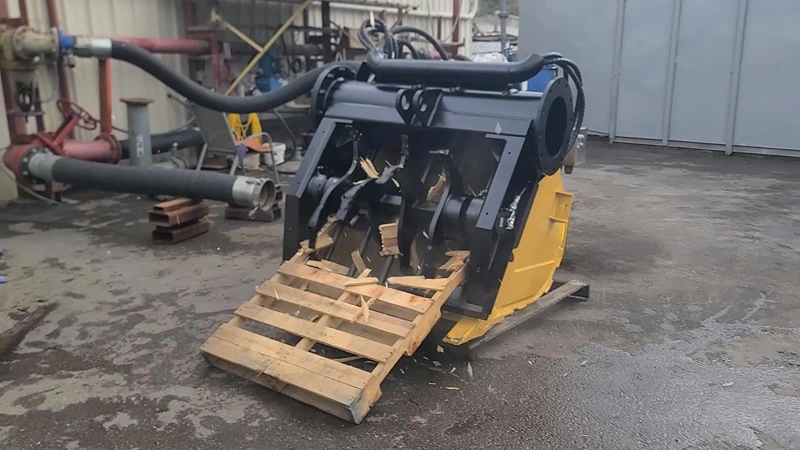
Performance Specifications
- Flow Rate: 250 to 7,300 GPM across the model range
- Head Range: Up to 240 ft, based on the model
- Maximum Speed: 900 to 1,800 RPM, depending on the model
- Solids Handling: Up to 11 inches, depending on the model
- Solids Concentration: 40 to 70 percent by volume
- Production Rate: 75 to 600 yd³ per hour, across the model range
Hydraulic Requirements
- EDDY Pump Circuit: 12 to 35 GPM at up to 4,250 PSI, depending on model
- Cutterhead Circuit: 12 to 35 GPM at up to 4,250 PSI, depending on model
- Operates from excavator auxiliary hydraulics or external hydraulic power unit
- Hydraulic lines and discharge hose are routed to the boom end
- Integrated protection for the pump motor and rotor under load
Excavator Compatibility
- Carrier Weight: Approximately 12 to 60+ tons, depending on model size
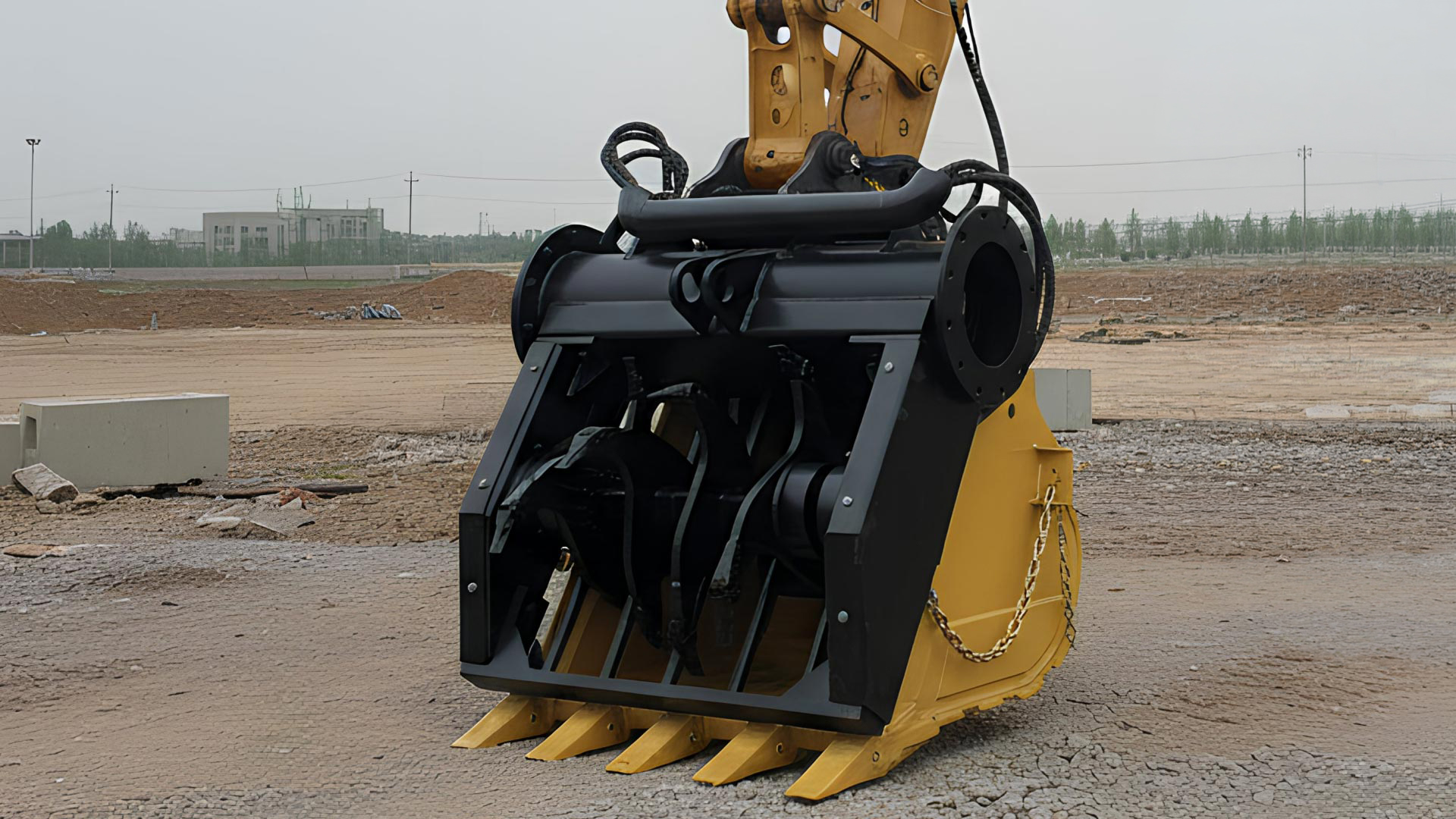
- Mounts directly to standard excavator couplers
- Operates via excavator auxiliary power or external hydraulic power unit
- Suitable for land-based, shoreline, and shallow-water operations
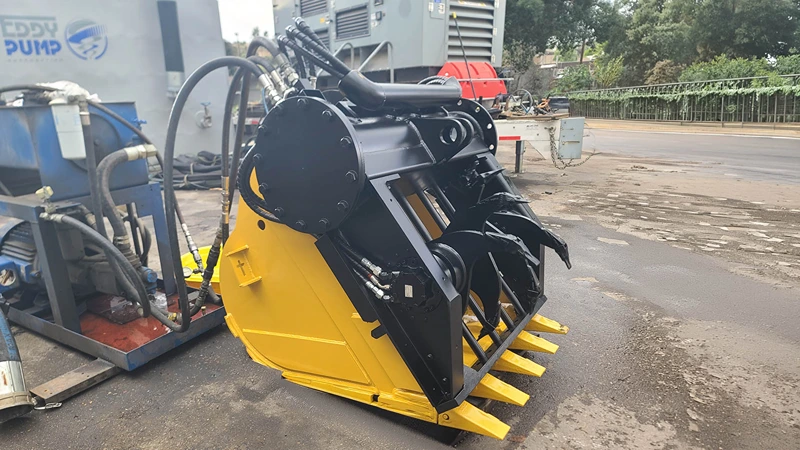
Dimensions and Construction
- Model Range: SPE-4000 through SPE-12000
- Overall Weight: 1,700 to 4,000 lbs, depending on model
- Suction Size: 6 inches to 14 inches
- Discharge Size: 4 inches to 12 inches
- Heavy-duty steel construction for high-abrasion slurry environments
- Deployable in vertical or horizontal orientation
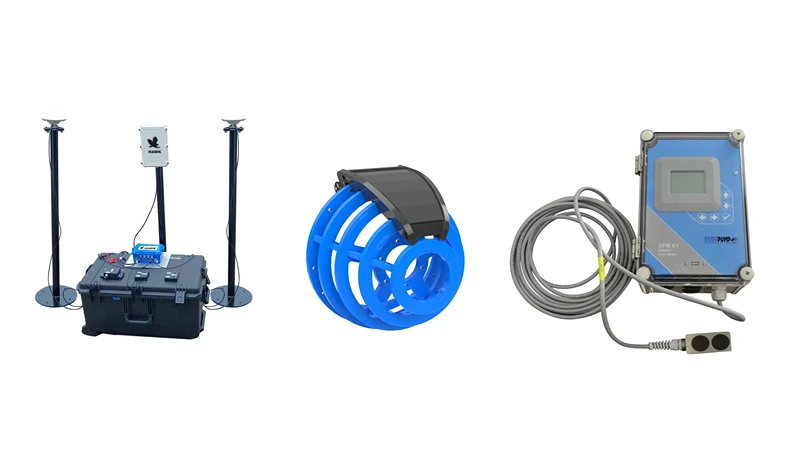
Optional Accessories
- Standard or extended cutterheads
- Liner-safe wheels and self-cleaning heads
- Water jetting ring and auger head options
- Wireless flow meters and RTK/GPS positioning systems
- Custom hose packages and discharge routing kits
Self-Priming Excavator Pump Attachment Comparison
| Specification | 4-Inch SPE-4000 | 6-Inch SPE-6000 | 8-Inch SPE-8000 | 10-Inch SPE-10000 | 12-Inch SPE-12000 |
|---|---|---|---|---|---|
| Model | SPE-4000 | SPE-6000 | SPE-8000 | SPE-10000 | SPE-12000 |
| Min Flow (GPM) | 250 | 450 | 1400 | 1600 | 2600 |
| Max Flow (GPM) | 1200 | 2500 | 3600 | 5000 | 7300 |
| Max Head (ft) | Up to 160 | Up to 200 | Up to 230 | Up to 240 | Up to 180 |
| Discharge Size | 4 in | 6 in | 8 in | 10 in | 12 in |
| Suction Size | 6 in | 8 in | 10 in | 12 in | 14 in |
| Solids Handling | Up to 3 in | Up to 5 in | Up to 7 in | Up to 9 in | Up to 11 in |
| Max Speed (RPM) | 1800 | 1800 | 1200 | 1200 | 900 |
| Solids by Volume | Up to 40–70% | Up to 40–70% | Up to 40–70% | Up to 40–70% | Up to 40–70% |
| Production Rate (yd³/hr) | 75–150 | 150–200 | 250–300 | 300–350 | 500–600 |
| Max Horsepower | 125 HP | 250 HP | 500 HP | 500 HP | 1000 HP |
| Overall Weight (lbs) | 1,700 | 2,200 | 3,000 | 3,000 | 4,000 |
| Spec Sheet | Download PDF | Download PDF | Download PDF | Download PDF | Download PDF |
Industries Served
Dredging and Marine Construction
Used for shoreline restoration, harbor maintenance, canal cleaning, and port expansion, where conventional dredges are impractical. The excavator-mounted format allows precise material removal in confined or shallow areas while pumping dense slurry directly to discharge lines without separate dredge spreads.

Mining and Aggregate Processing
Ideal for reclaiming tailings, cleaning settling ponds, and moving abrasive slurry in active mine sites. High solids handling and large-particle capability enable direct transfer of heavy materials without dilution, reducing water use and maintaining consistent production rates.

Environmental Remediation
Supports contaminated sediment removal, lagoon cleanup, and hazardous material recovery with controlled excavation and pumping. The system minimizes disturbance while maintaining continuous material transfer, making it suitable for regulated cleanup projects.
Flood Control and Waterway Maintenance
Used for river desilting, drainage channel restoration, and stormwater infrastructure maintenance. The attachment enables rapid mobilization after flooding events and sustained removal of compacted sediment without building permanent dredge platforms.
Industrial Waste and Sludge Handling
Applied in power plants, steel mills, and processing facilities for pit cleanout and sludge transfer. Capable of moving high-density waste streams that clog conventional pumps, maintaining uptime in critical operations.

Construction and Infrastructure Projects
Used for foundation excavation, cofferdam work, and dewatering in saturated soils. Combines excavation and pumping in a single operation, reducing equipment count and improving workflow on constrained job sites.

Ports, Harbors, and Coastal Works
Supports berth maintenance, sediment management, and nearshore dredging where precision and mobility are critical. Excavator deployment allows work alongside active infrastructure while maintaining high production with minimal setup.
Our Successful Case Study
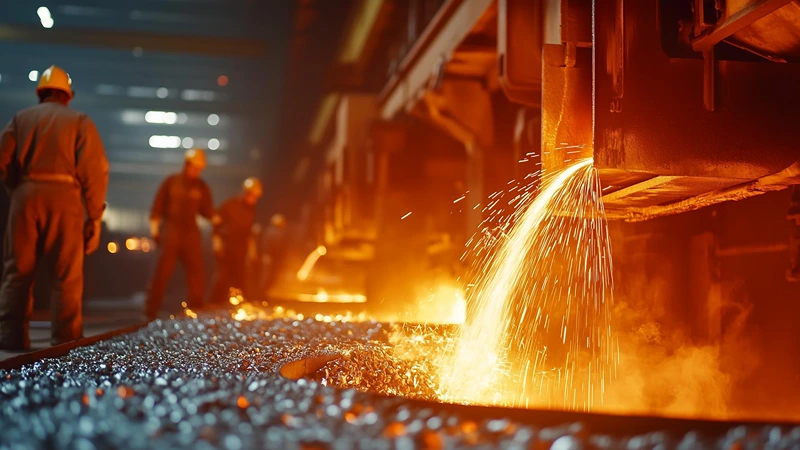
The Problem
A steel processing plant needed to remove decades of compacted sludge from a confined pit containing metal fines, scale, and highly abrasive byproducts. The material behaved more like wet concrete than slurry. Submersible and centrifugal pumps clogged within minutes, while mechanical excavation required repeated handling, stockpiling, and reloading. Each interruption increased labor exposure, extended downtime, and created safety risks in an already hazardous environment. The plant required a method that could both break up the material and move it continuously without draining the pit or shutting down nearby operations.
The Solution
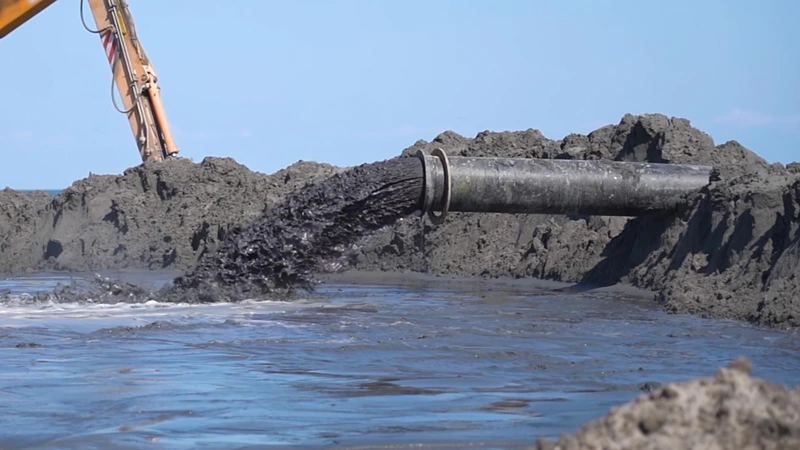
The facility deployed EDDY Pump’s Self-Priming Excavator Pump & Bucket directly into the pit. The excavator-mounted cutterhead fractured the compacted sludge while the EDDY Pump transferred the material at high solids concentration through a discharge pipeline to off-site treatment. The system operated without flooded suction or auxiliary priming equipment and maintained flow despite irregular particle sizes and extreme density. Engineers were able to control cut depth, material feed, and discharge rate from the excavator, turning the pit into a controlled production zone rather than a cleanup task.
The Result
Sludge removal became continuous, predictable, and safe. Clogging events were eliminated, and manual intervention dropped to near zero. The pit was fully rehabilitated in a fraction of the projected timeline, with adjacent plant operations remaining online throughout the project. What had been a disruptive, high-risk maintenance event became a repeatable process that the plant could schedule as routine infrastructure management rather than emergency cleanup.
Call for sales or support
If you need assistance with pump selection, sales or engineering support, call 619-404-1916.
Questions? Talk to an Engineer
Frequently Asked Questions
What differentiates the Self-Priming Excavator Pump & Bucket from a standard dredge pump?
This system combines excavation and pumping into a single attachment mounted on an excavator. Material is cut, entrained, and transferred in a single continuous process, eliminating the need for separate dredge heads, flooded-suction setups, or multi-component pumping spreads. It functions as both a digging tool and a high-solids slurry pump, simplifying system design and site logistics.
Can the Self-Priming Excavator Pump system start dry and recover after shutdowns?
Yes. The pump is truly self-priming and can start dry without flooded suction or vacuum assistance. It automatically recovers prime after air ingestion, shutdowns, or repositioning. This allows operators to stop and restart work without manual priming, which is especially valuable for intermittent excavation or staged projects.
What type of material can it handle?
The system is engineered for dense slurry, sludge, sediment, tailings, and debris. It moves 40-70% solids by volume and handles particle sizes up to 11 inches, depending on the model. This enables direct pumping of compacted or abrasive material that would clog conventional centrifugal or submersible pumps.
How much material can it move?
Across the model range, flow spans from 250 to 7,300 GPM, with production rates from 75 to 600 cubic yards per hour. Actual output depends on material density, excavation rate, pipeline length, and elevation change. Engineers can size the system to match both production targets and discharge constraints.
Does it require a barge or a floating platform?
No. The attachment mounts directly to an excavator and can operate in land, shoreline, or shallow-water environments. Many projects eliminate barges, pontoons, and dedicated dredge platforms, reducing mobilization time and enabling work in confined or inaccessible areas.
What self-priming excavator size is required?
Carrier size depends on the selected model. Smaller units pair with mid-size excavators, while larger pumps require heavy carriers. Typical applications range from approximately 12-ton machines up to 60-plus-ton excavators. Matching carrier capacity ensures stable operation, hydraulic performance, and safe handling.
How is the system powered?
It operates using excavator auxiliary hydraulics or an external hydraulic power unit. No electric motors or standalone diesel pump packages are required on most projects. This simplifies power management and allows the attachment to integrate directly into existing equipment fleets.
Can it pump long distances?
Yes. With a head capability of up to 240 ft, the system supports long pipeline runs and elevation changes. Material can be pumped directly to settling ponds, dewatering zones, barges, or processing plants without intermediate handling, reducing transfer steps and project complexity.
How does it perform in abrasive environments?
The pump is designed for high-wear applications and maintains stable flow under extreme abrasion and variable density. Its non-clogging design reduces stoppages, protects internal components, and keeps production predictable in environments where conventional pumps fail or require constant intervention.
What types of projects is it best suited for?
It is used in dredging, mining, environmental remediation, flood control, industrial sludge handling, and infrastructure construction. It is especially effective where access is limited, material is dense or abrasive, and continuous production is required without complex support equipment.
HD (Heavy Duty) Slurry Pumps / Dredge Equipment
Related Products
For assistance Call 619-404-1916 and let us help match your project
with the right pump.