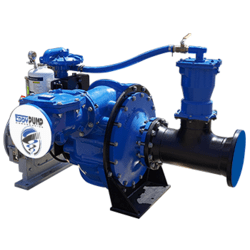
Marine Construction & Dredging Application
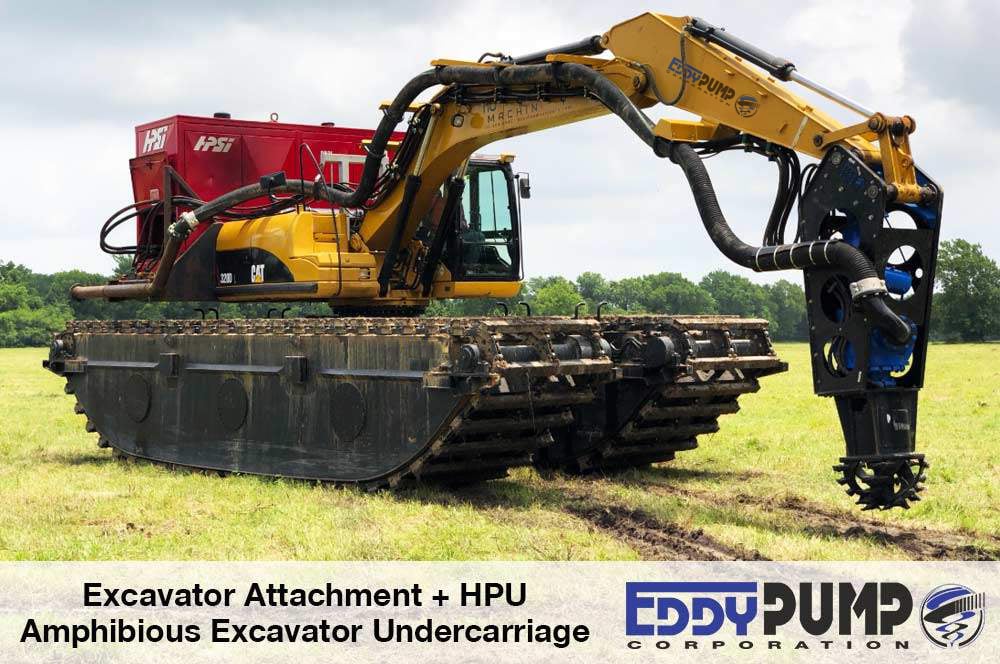
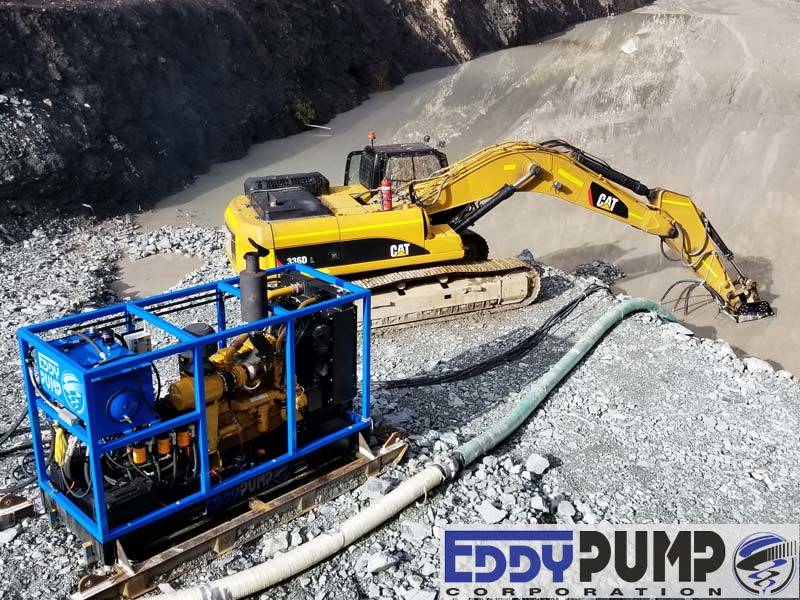
Most Common Dredging Applications
- Marine Dredging
- Coastal Protection
- Ecosystem Restoration
- Fly Ash Dredging
- Lake Dredging
- Land Reclamation
- Beach Restoration
- Mining Dredge
- Navigation Dredging
- Port and Harbor Dredging
- Reservoir Dredging
- River Dredging
- Sand & Gravel Dredging
- Mine Tailings Dredging
We are one of the few companies who manufactures both our pumps and dredging equipment to ensure optimal support.
What is Dredging?
Industrial dredging is the process of removing sand, silt, and other solid material from the bottom of large bodies of water by using any combination of dredge pumps and material agitators or through mechanical means such as clamshell buckets. Dredging is a major service component in many major underwater construction projects to create a flat and stable foundation on the seabed. In addition, dredging is also used to maintain harbors, canals, rivers, lakes, and other bodies of water to ensure boats and large ships are able to safely pass without getting stuck in sediment build-up which occurs as sand and silt wash downstream, eventually clogging up channels and harbors. Periodically, this accumulation of material must be excavated and transported away by dredging due to large ships requiring a certain depth of water to remain operable.
Dredging Highlight Video
Problems Facing the Dredging Industry Today
There are many problems that face the dredging industry ranging from equipment problems to environmental effects. The main challenges with traditional dredging are:
- The dredge pumps routinely get clogged with sand, silt, and other debris
- The dredge pump and impeller are quickly worn down by abrasive materials
- The dredge pumps fail more often
- Longer downtimes for pump maintenance which halts production and hurts your bottom line
- Ecosystem and environmental damage stemming from high turbidity or mechanical dredging

EDDY Dredge Pump Advantages
EDDY Dredge Pump Advantages
Marine Dredging Applications
Marine Construction
Marine construction can describe a wide variety of structures that are typically built on the shore such as piers or seawalls or offshore as with oil rigs and cofferdams. To be successful at marine construction, it requires the use of heavy-duty dredge pumps to efficiently remove sediment to ensure operation has a solid, even foundation on which to build from. Marine dredging is the most common way to excavate underwater.
Harbor and Canal Maintenance
Marine dredging also refers to harbor and canal management. Over time, sediment builds up in harbors, canals, rivers, and lakes. Canal management involves dredging sand from the ocean floor which ensures large ships can get pass safely without contacting the floor sediment. GPS positioning systems and slurry flow meters are typically used to ensure accuracy and optimal production rates. Since large container ships carry the bulk of the world’s trade goods, marine dredging is widely considered a critical cog in the global economy.
Lake Dredging
Lake dredging is the process of removing sediment from freshwater lakes. Lake dredging is typically performed due to siltation, nutrient buildup, and toxic contaminant problems found in the lake.
Siltation is when there is an excess amount of sediment buildup which can cause discolored, cloudy water. Siltation is typically caused by soil erosion or sediment spill. As a result, dredging is used to remove the excess sediment in order to restore the natural beauty of the lake.
Nutrient buildup describes the accumulation of certain nutrients such as Phosphorus (P) and Nitrogen (N). These nutrients are essential to plants and algae for strong growth. The amount of nutrients in lakes is heavily determined by the type of land, vegetation, and types of rock and bedrock. Excess buildup of nutrients (especially Phosphorus) can also promote unwanted growth or production of algae and plants.
Toxic containment is the process of removing toxic or hazardous sediment while being careful not to further contaminate the surrounding ecosystem in the process. Low-turbidity, hydraulic dredge pumps are most commonly used to safely remove contaminated material. GPS dredge positioning systems are used which allow operators to dredge with far more precision. Knowing where your pump is located beneath the water and knowing where you’ve dredged is critical in toxic containment scenarios.
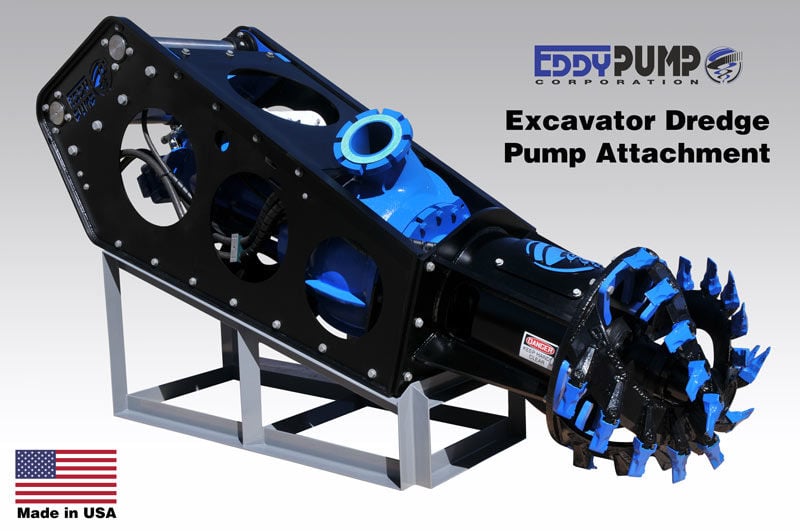
The Excavator Dredge Pump Attachment
Any excavator operator can be trained to operate the pump in just a couple of hours. In addition, this unit is completely modular and can be converted into a cable hung dredge or a diver operated dredge with little modification necessary.
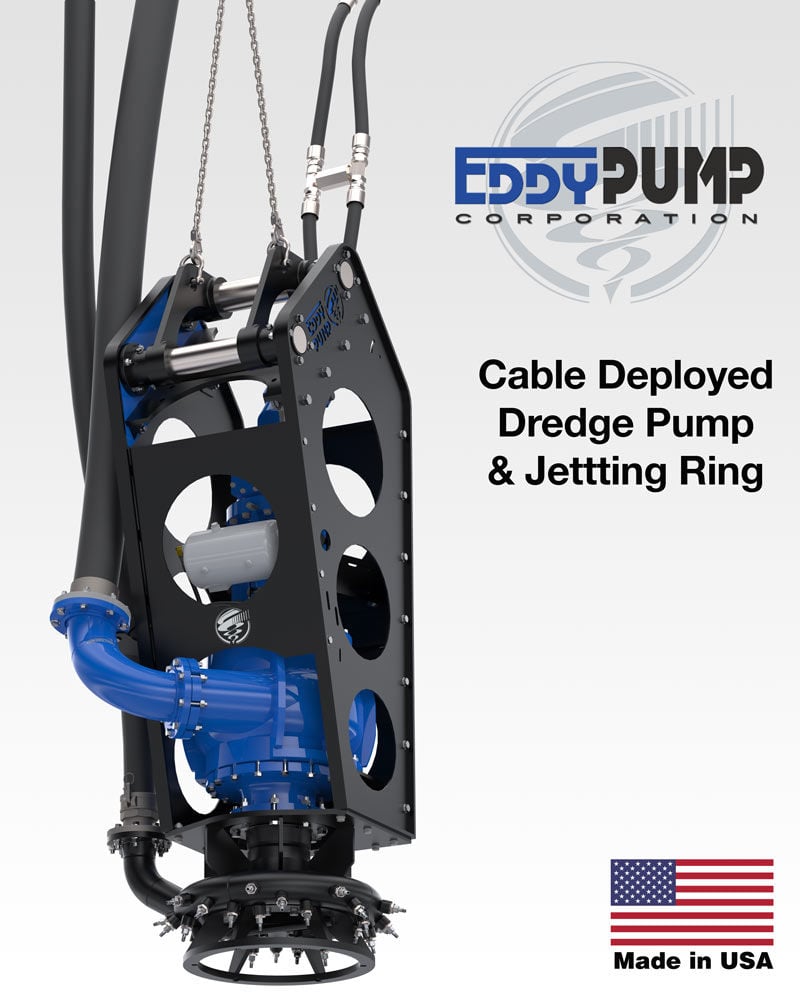
Cable-Deployed Dredge Pump
The pump can be mounted off a cable, hanging off a crane and the water jetting ring is attached to the pump. It can be dropped onto the seabed as a diver operated unit and also be pinned to an excavator to become the Excavator Pump Attachment.
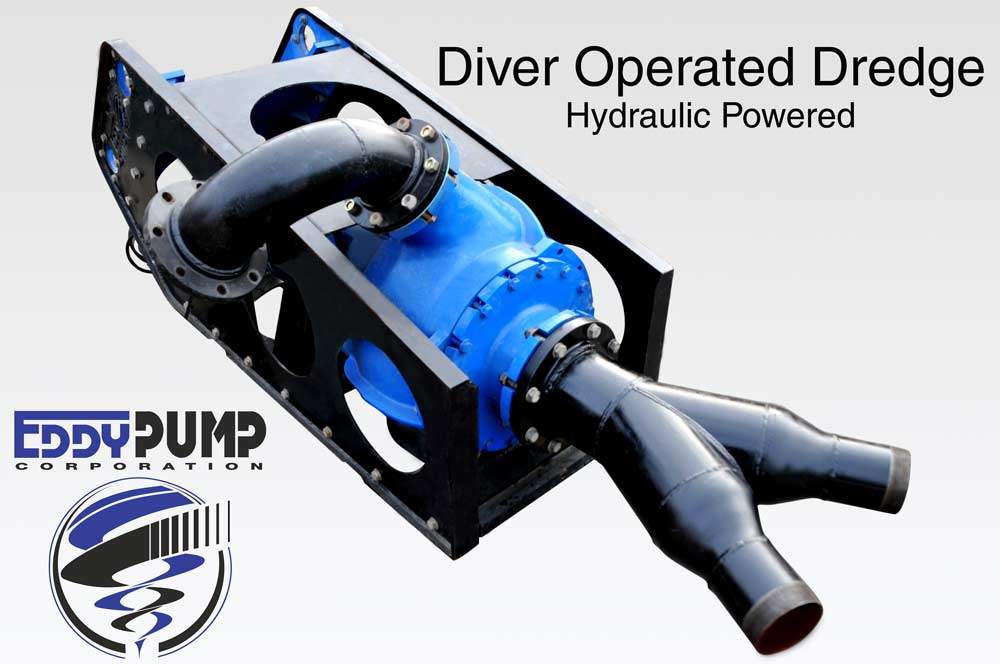
Diver Operated Dredge Pump
Our diver dredge comes equipped with over 300-ft of a suction hose that can be added to the suction inlet of the pump, providing increased versatility not commonly found in conventional diver operated dredges. This also allows for far more mobility, allowing for divers to dredge in precise locations without disrupting the pipeline. Additionally, this unit can be easily converted to a Cable-Deployed Dredge or an Excavator Pump Attachment with little modification.

Environmental Dredging and Remediation
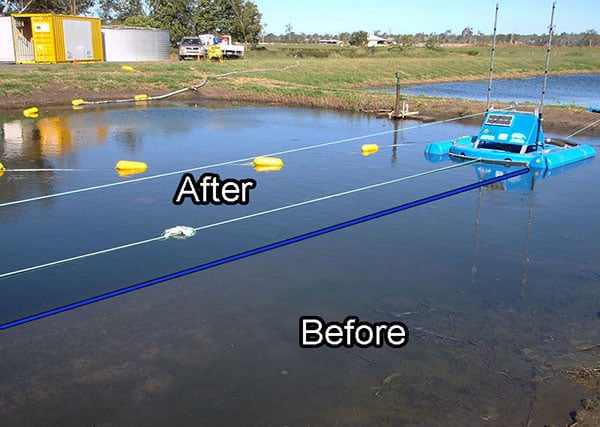
Maintenance Dredging
CALL FOR SALES OR SUPPORT
If you need help with Pump Selection, Sales or Engineering Support
Call 619-345-5446