

30–70%
SOLIDS BY WEIGHT

4 in to 16 in
SYSTEM SIZES

Remote & autonomous options
OPERATION

Electric · diesel · hydraulic
POWER
Dredging Systems Snapshot
PUMP SIZES
4 in to 16 in

FLOW RANGE
250–13,000 GPM*
% SOLIDS BY WEIGHT
30–70%

DEPLOYMENT
Modular · autonomous · submersible ROV · sled · cable · diver · barge/tracked

POWER
Electric · diesel · hydraulic/HPU

OPERATION
Remote-controlled & autonomous options
*Flow, head, and pumping distance are system- and material-dependent; see each product page for model specifics.
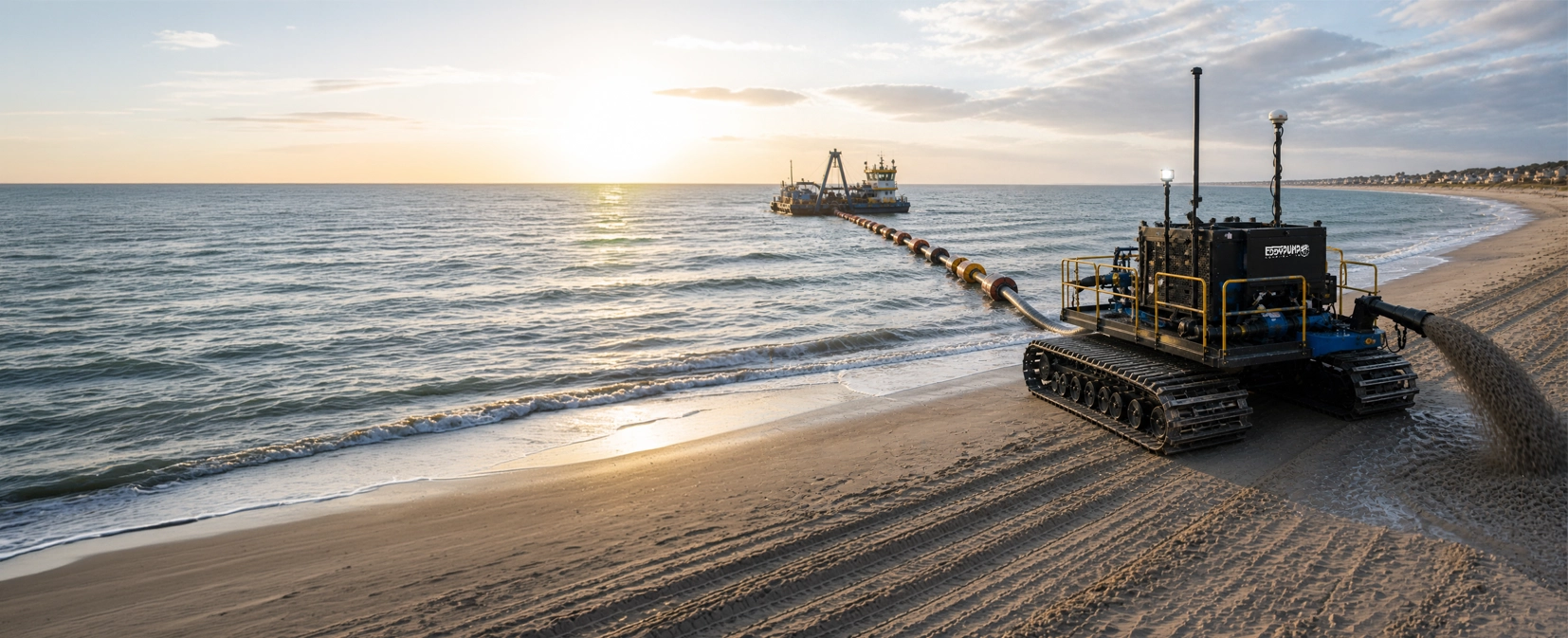
What is an EDDY Pump Dredging System?
A dredging system is a complete, deployable dredge, an EDDY Pump high-solids slurry pump matched to a purpose-built deployment platform, cutting/agitation head, power source, and control method, engineered to excavate and transfer sediment in a single continuous operation. Unlike a standalone pump or an excavator attachment, a system arrives ready to dredge.
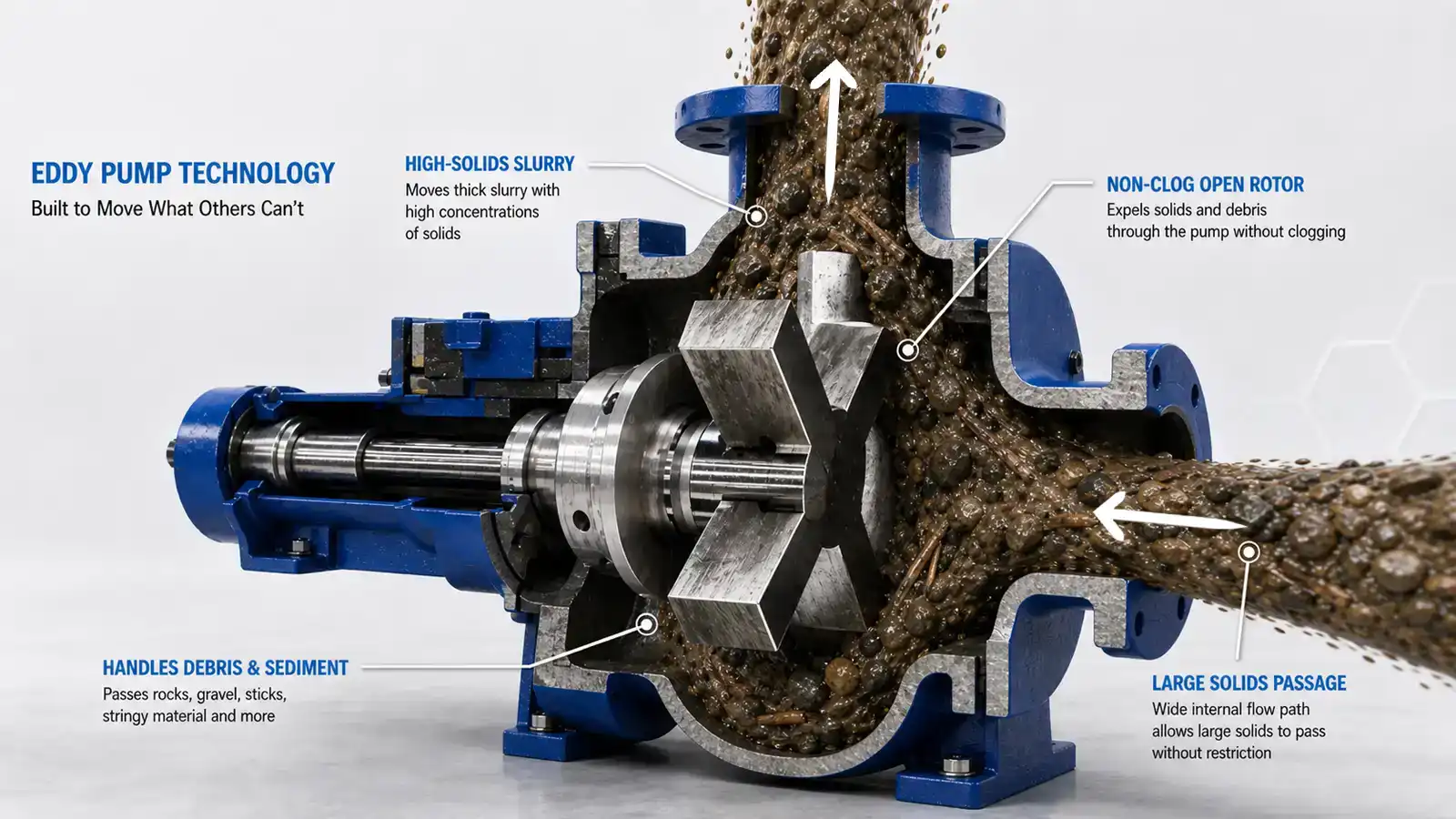
Every EDDY system is powered by the same patented open-rotor pump that passes solids up to 12 inches and moves 30–70% solids by weight. That means you handle far less water, and therefore fewer trucks, less storage, and less disposal, than conventional dredging systems, which often move only 10–20% solids. Because EDDY builds both the pumps and the dredges in-house in the USA, each system is matched to your material, depth, distance, and site access.
Dredging System vs. Dredge Pump vs. Excavator Attachment
Not every project starts with a full system. Use this to find the right starting point:
| Your Need | Best Starting Point |
|---|---|
| Complete dredging package with pump, platform, power, controls, and deployment method | Dredging System |
| Pump only, for slurry transfer or integration into an existing setup | Dredge Pumps |
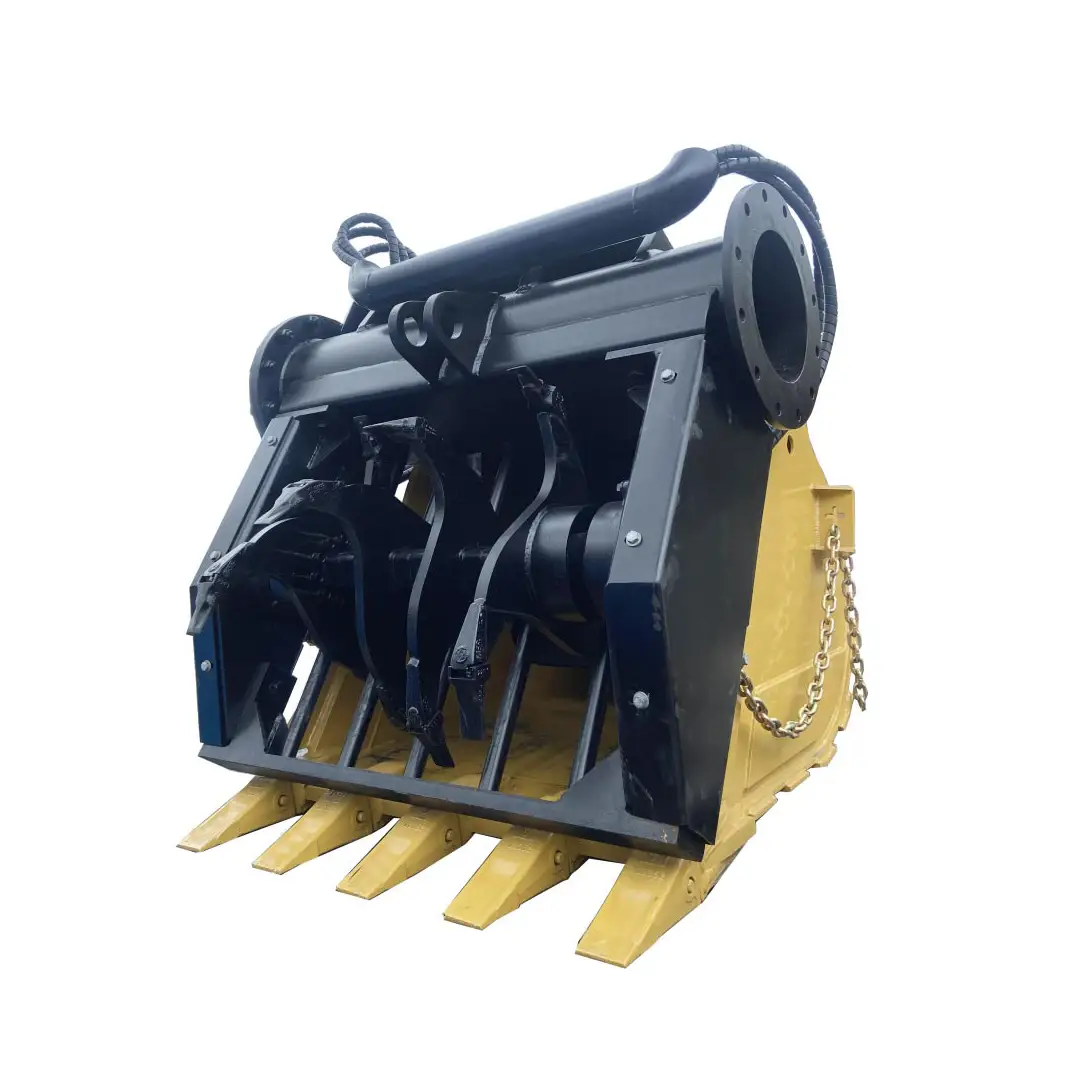
| Excavator-mounted dredging or pumping from shore | Excavator Pump Attachment |
| Short-term project without buying equipment | Dredge Equipment Rentals |
| Outsourced dredging work | Dredging Service |
How to Choose the Right System
| If your project is… | Start with |
|---|---|
| Compact, liner-sensitive, high-solids (lined ponds, lagoons, tailings, canals) | Mini Auger ModDredge |
| Large open water, unmanned, minimal onboard crew | Autonomous ModDredge |
| Deep, hazardous, or hard-to-reach — needs a submersible ROV dredge | Subdredge (Remote Operated) |
| Pond / lagoon sludge, muck, or paste removal along the basin floor | Dredge Sled |
| Deep vertical dredging, consolidated material (add a jetting ring) | Cable-Deployed Dredge |
| Precise, confined underwater work in harbors and marinas | Diver-Operated Dredge |
| Controlled placement of dredged material after dredging | Automated TLP System |
Available Dredging Systems
Choose the deployment that matches your site. Each card links to the full product page; no specification from those pages is lost in this rollup.
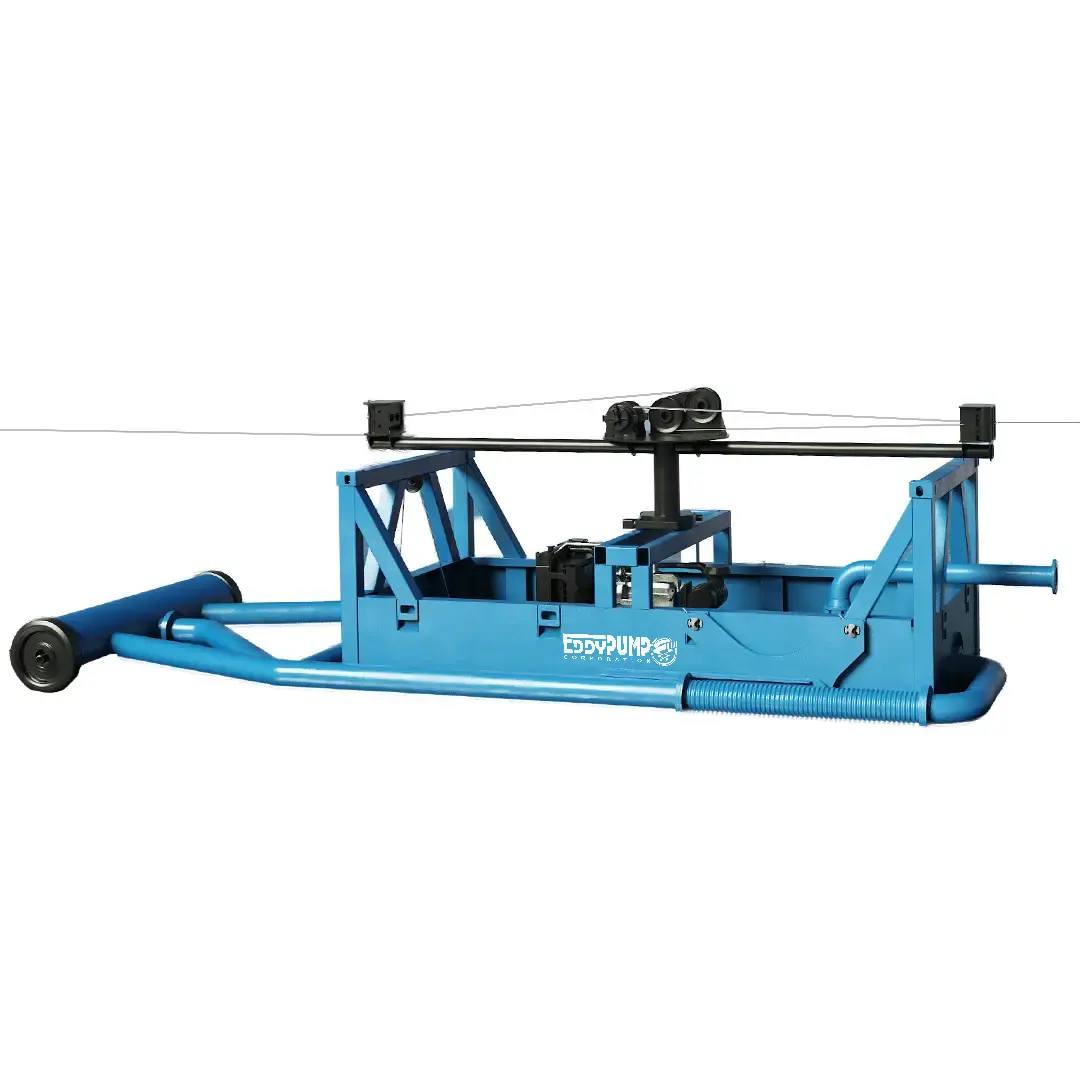
Mini Auger ModDredge
Best for compact, liner-safe, high-solids dredging in lined ponds, lagoons, tailings basins, and canals. 4–16 in, remote-controlled, one-truck mobilization.
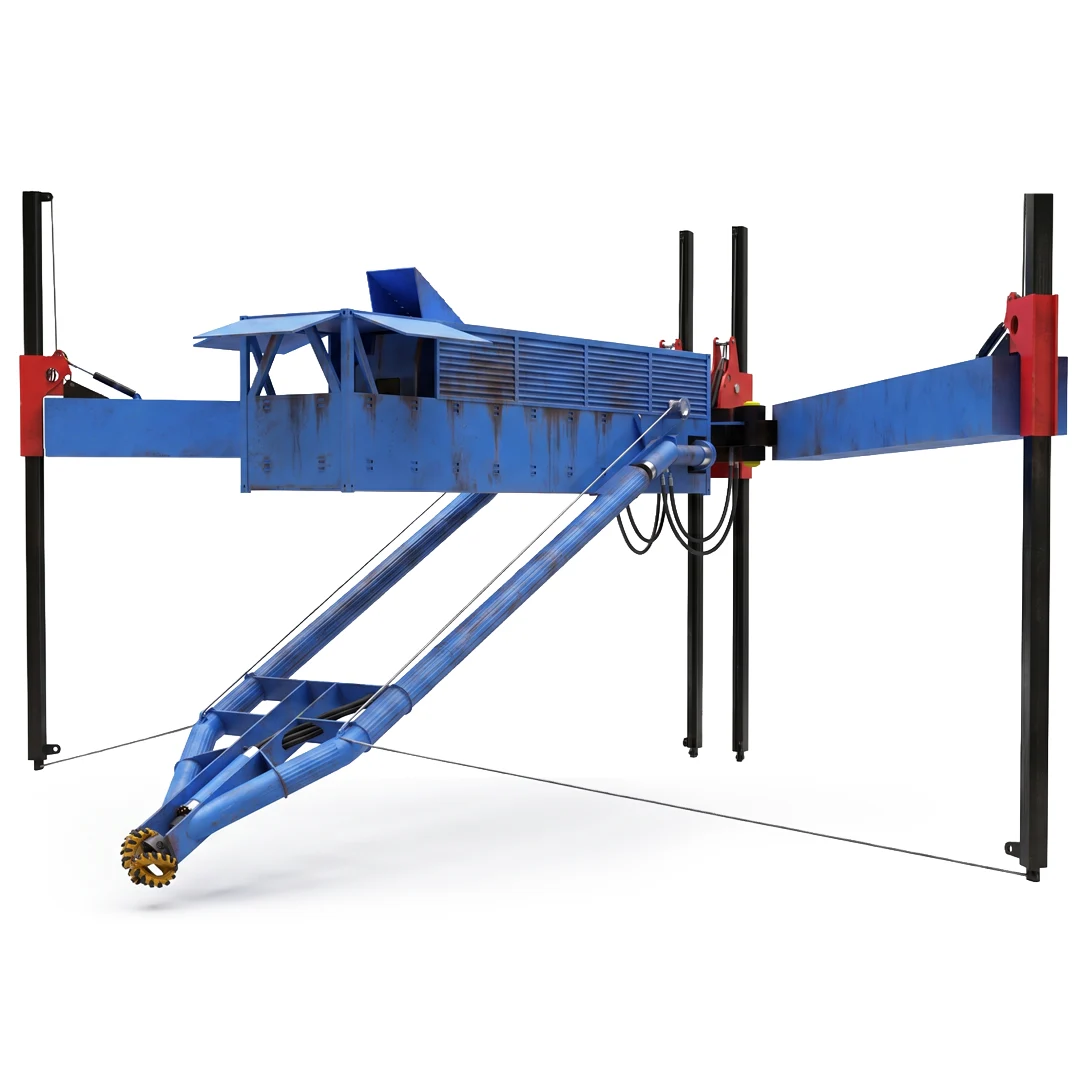
Autonomous ModDredge
Best for remote-operated, cable-anchored dredging of large open areas where customers need high production, reduced onboard labor exposure, and a compact dredging footprint.
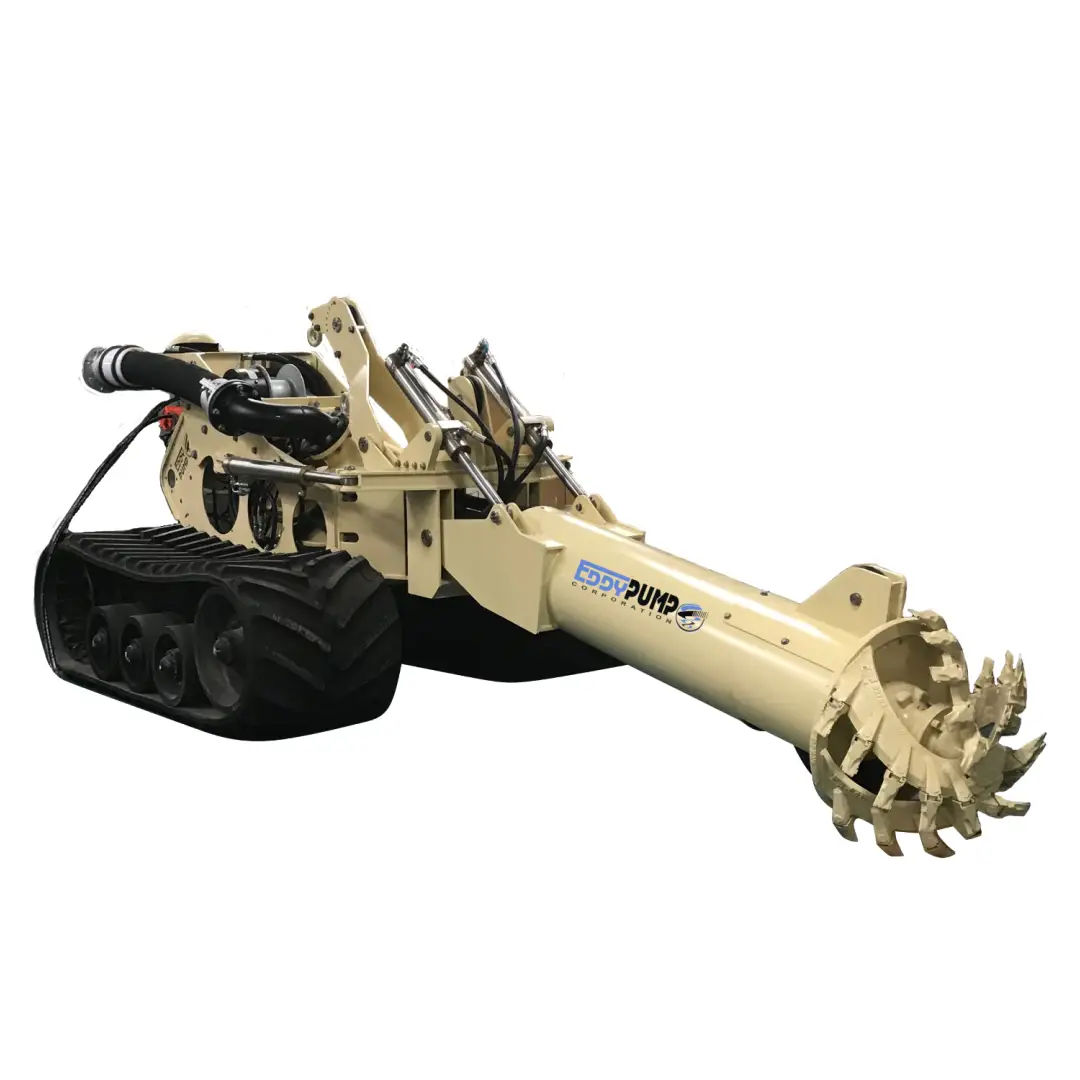
Subdredge — Remote Operated
Best for deep or hazardous sites needing a submersible ROV dredge. 4–10 in; up to ~4,500 GPM / ~400 yd³/hr; hydraulic or electric.
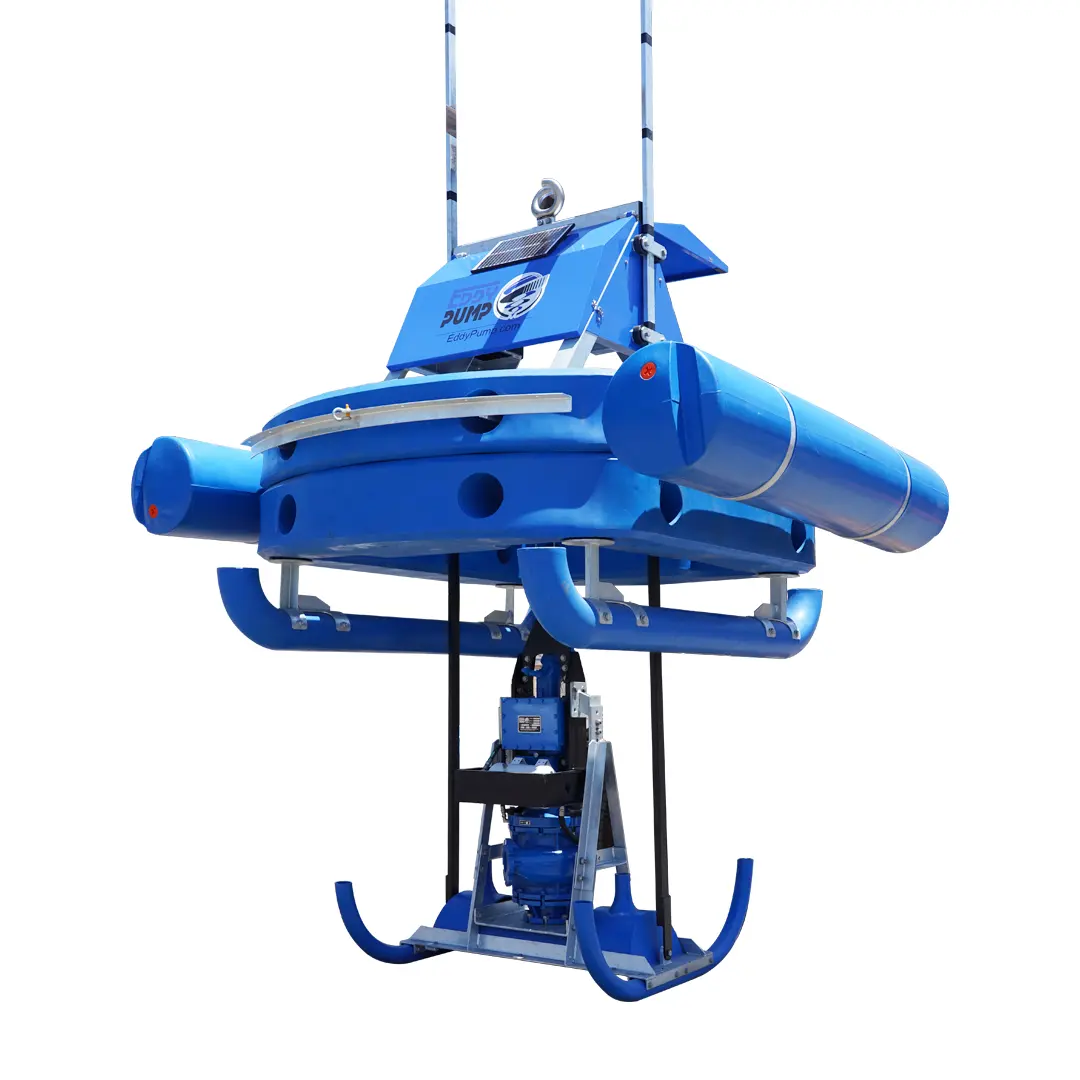
Dredge Sled
Best for pond and lagoon sludge, muck, and paste — the sled glides along the basin floor for steady, low-disturbance removal.
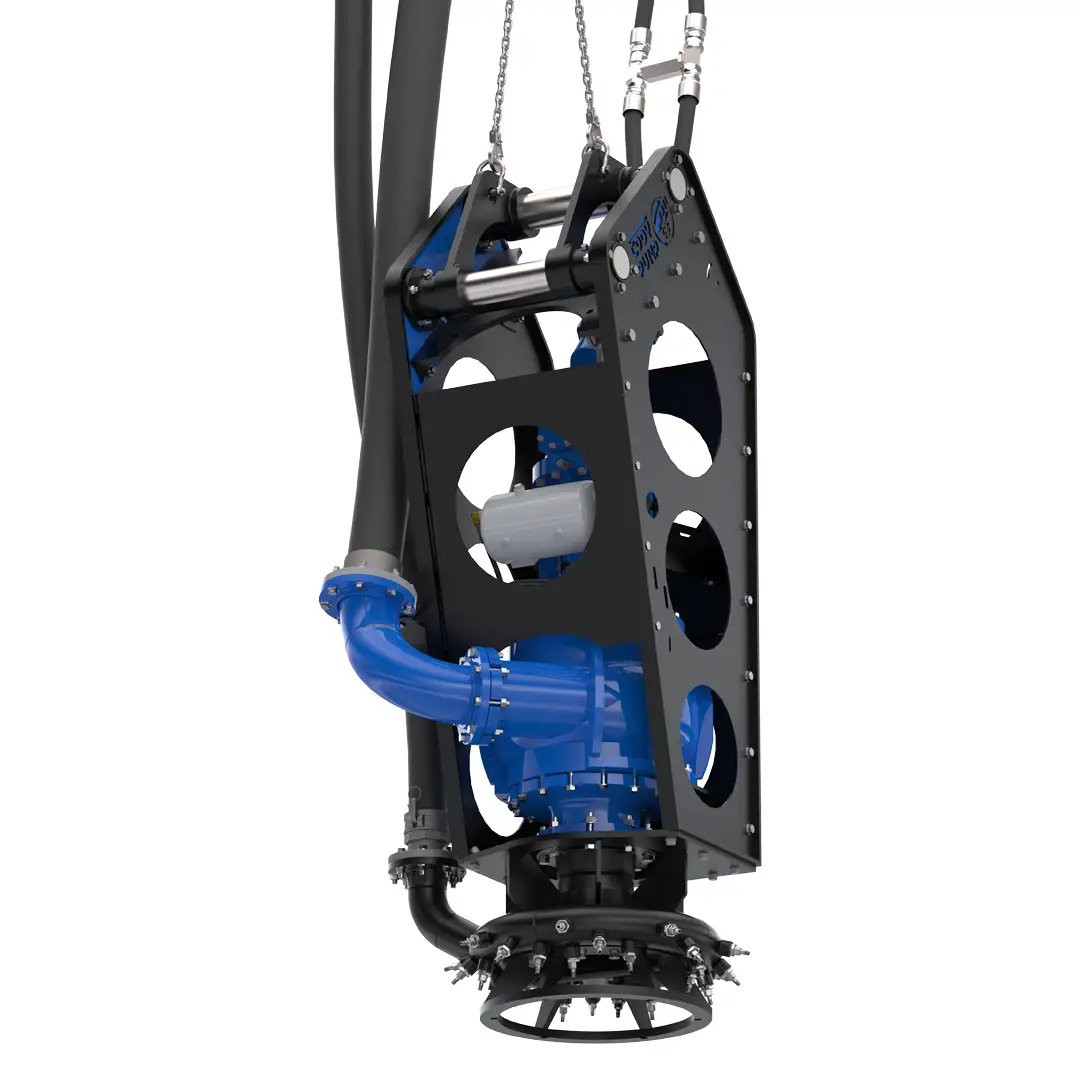
Cable-Deployed Dredge
Best for deep-water, vertical dredging; pair with a water-jetting ring to break up consolidated material.
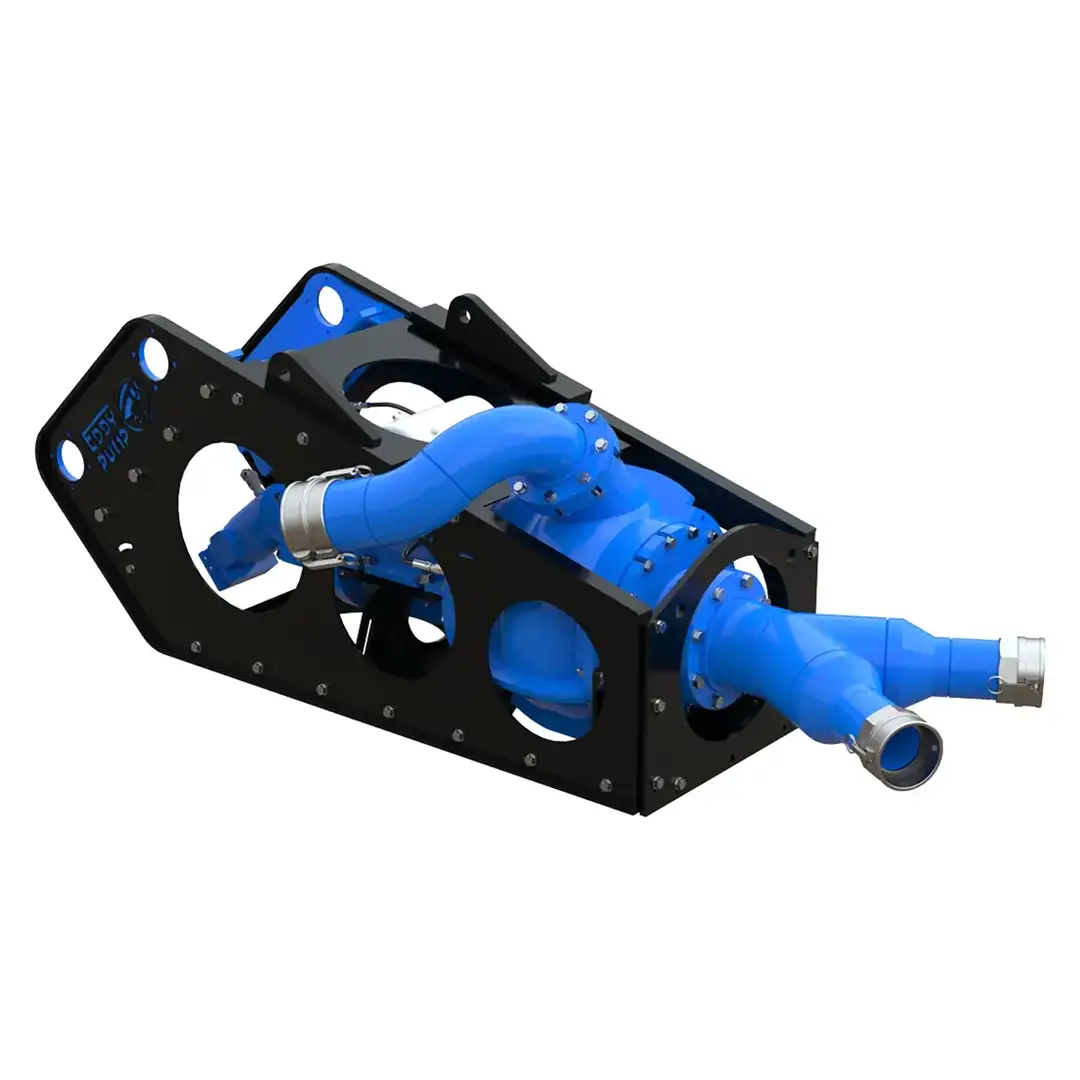
Diver-Operated Dredge
Best for precise, diver-guided sediment removal in harbors, marinas, and confined underwater sites — 75–150 yd³/hr.
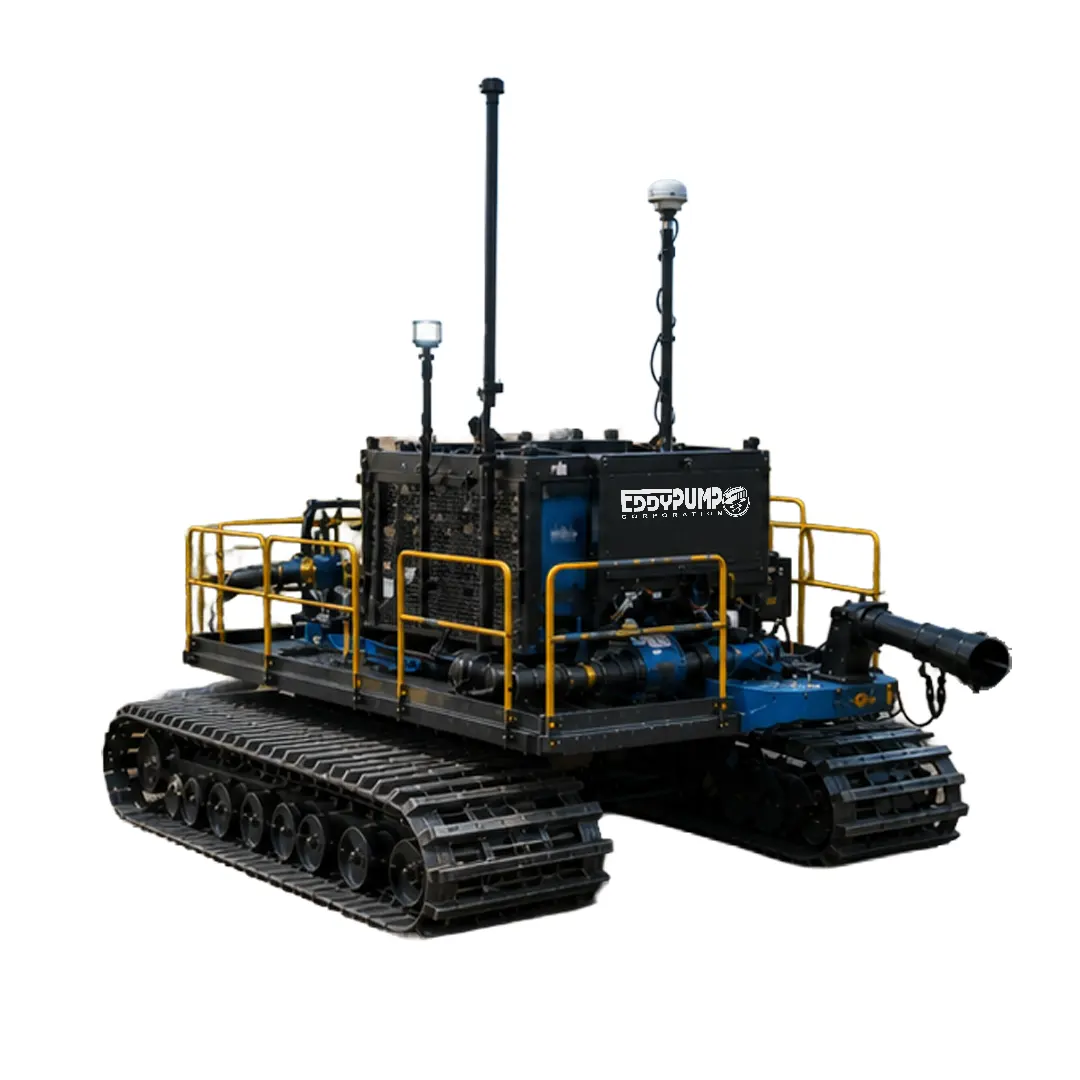
Automated TLP System
Best for controlled thin-layer placement of dredged slurry, sand, and capping material after dredging (barge or tracked).
Not sure which system fits?
Send us your material, site, distance, and production target and our engineers will match the right dredge.
What Makes Up a Complete Dredging System?
Deployment platform
The vessel, sled, frame, or crane-suspended arrangement that positions the dredge pump at the work area. The right platform depends on water depth, basin size, access, and whether crews can work on the water.
Dredge head or agitation arrangement
Loosens sediment and feeds it to the pump suction. Depending on the system, this may be an auger, cutter, or water-jetting arrangement chosen for the material and the sensitivity of the basin floor.
Slurry pump
Lifts the dredged material and pushes it through the discharge line. EDDY systems use EDDY's non-clog, open-rotor pump, sized to the required flow, solids concentration, and pumping distance.
Power supply
Drives the pump, dredge head, and positioning equipment. Systems may be configured for electric, diesel, or hydraulic (HPU) power, based on the power available at the site and how the dredge will be operated.
Controls and positioning
Let the operator steer the dredge, set cutting depth, and monitor operation. Depending on the system, operation can be remote-controlled or autonomous, with positioning by cables, winches, or anchors.
Discharge hose, pipeline, and floats
Carry slurry from the dredge to the discharge point. Line size, length, and floats are matched to the route, and longer runs or higher discharge elevations may require booster pumps.
Discharge or dewatering arrangement
Receives the slurry at the end of the line, such as a settling basin, geotextile containment, or mechanical dewatering. Confirm whether this equipment is in your scope or will be provided by others.
System scope depends on the selected configuration. Confirm which components, accessories, and site services are included in your quotation.
Why EDDY Pump Dredging Systems

Non-clog, open-rotor
pump
Passes solids from 1 to 12 in and handles rags, rope, rock, debris, and abrasives that stall conventional dredge pumps.

30–70% solids by
weight
Move material, not water — cutting hauling, storage, and disposal volume versus the 10–20% solids typical of conventional dredges.

Remote & autonomous operation
Keep crews on shore and away from hazardous slurry, unstable ground, and confined water bodies.

Long-distance
pumping
Move slurry thousands of feet, often without a booster; add skid-mounted boosters to extend range further.

Liner-safe options
Auger heads and controlled-contact designs protect HDPE, poly, clay, and concrete-lined basins.

One-source, USA-built
EDDY manufactures both the pumps and the dredges in El Cajon, CA — since 1984 — for seamless integration and support.

Buy or rent
Purchase outright or rent for shorter-duration projects, with applications engineering and startup support included.
Applications & Industries Served

Mining tailings & process ponds

Power-plant ash ponds & FGD basins

Municipal & industrial wastewater lagoons

Environmental remediation & contaminated-sediment removal

Canals & irrigation channels

Harbors, marinas & marine construction

Sand, gravel & aggregate operations

Wetland restoration & beneficial-use placement
Site Conditions That Determine Your System
Lined ponds and sensitive basin floors
Establish: liner type (HDPE, clay, or concrete), age and condition, any known damage, sludge depth above the liner, and the owner's rules for contact with the floor.
How it affects selection: liner condition sets how close the dredge can work to the floor, what agitation is acceptable, and how tightly cut depth must be controlled.
EDDY options: the Mini Auger ModDredge and auger-head designs are offered for liner-sensitive work, and the Dredge Sled for sludge along the basin floor. Liner protection depends on site conditions and operation, so confirm suitability with EDDY engineering.
Industrial lagoons and wastewater sludge
Establish: sludge consistency and solids content; rags, plastics, and other debris; total volume; and where the slurry will go, such as a dewatering setup, treatment process, or another basin.
How it affects selection: debris and viscosity influence pump and head selection, while the discharge destination sets the required flow, pressure, and target solids concentration.
EDDY options: the Dredge Sled is offered for pond and lagoon sludge, muck, and paste, and the Mini Auger ModDredge for compact, high-solids lagoon work. Confirm the fit for your material with EDDY engineering.
Mine tailings and abrasive sediment
Establish: particle size range, specific gravity, abrasiveness, how consolidated the deposit is, the production target, and the discharge distance and elevation.
How it affects selection: dense, abrasive material drives pump size, power, and wear considerations. Consolidated deposits may need cutting or jetting to feed the pump, and long or uphill lines may need booster pumps.
EDDY options: the Mini Auger ModDredge is offered for tailings basins, and the Cable-Deployed Dredge can be paired with a water-jetting ring for consolidated material. Skid-mounted booster pumps can extend range. Production depends on material and line conditions.
Deep or difficult-access locations
Establish: maximum water depth, sediment thickness, shoreline access and launch points, crane or excavator availability, conditions that should keep crews off the water, and the power available on site.
How it affects selection: depth and access decide whether the pump works from a floating platform, is suspended from a crane, excavator, or barge, or runs as a submersible unit. Available power decides electric, diesel, or hydraulic drive.
EDDY options: the Subdredge remote-operated submersible dredge is offered for deep or hard-to-reach sites, the Cable-Deployed Dredge for deep vertical dredging, and the Diver-Operated Dredge for confined underwater work. Use in hazardous environments requires engineering review.
These factors guide selection; they do not guarantee results. Liner protection, production, pumping distance, and suitability for hazardous sites depend on actual conditions and require review by EDDY engineering.
What Affects the Cost of a Dredging System?
System cost is set by the configuration your site requires, not by pump size alone. The factors below shape each quotation, which EDDY prepares after reviewing your material, site, and production goals.
Pump and platform configuration
Pump size, deployment platform, and dredge head type form the core of the system. A compact modular dredge, a submersible ROV dredge, and a cable-deployed unit carry very different equipment scopes.
Material and production requirements
Solids concentration, particle size, abrasiveness, debris, and the target production rate determine pump size, wear considerations, and how much power the system needs.
Working depth and site access
Deeper digging, limited shoreline access, or sites where crews should not work on the water can call for specialized platforms, remote operation, or lifting equipment.
Power and control options
Electric, diesel, or hydraulic drive, and remote-controlled or autonomous operation, change both the equipment list and the site services the system needs.
Discharge pipeline and booster requirements
Pipeline length, diameter, floats, and discharge elevation affect hose and pipe quantities and whether booster pumps are needed to reach the discharge point.
Mobilization, commissioning, and training
Transport, setup, startup support, and operator training vary by system and project location. Confirm which of these services are included in your quotation.
Purchase or rental: buying generally suits long-term or recurring dredging programs, while renting can suit shorter projects or a trial before purchase, and EDDY also offers a rent-to-own program. Rental depends on equipment availability, and pricing for either option is provided by quotation.
Documented Project Results
Each summary below is drawn from a published EDDY Pump case study. Results reflect the conditions of that project and are not a guarantee of performance at another site.

Mare Island Dry Dock
Application: hydraulic offloading of dredged material from flat-bottom barges in Vallejo, California.
System used: a rented cable-deployed submersible EDDY pump with a water-jetting ring, discharging through 10-inch HDPE.
Site challenge: new disposal-site permits required hydraulic offloading in place of a clamshell bucket.
Documented outcome: roughly 100,000 cubic yards offloaded with a single pump over about two years, pumped about 650 ft to the disposal pond.

Cresta Reservoir Desilting
Application: reservoir desilting on the North Fork Feather River, California, in a 1994 demonstration.
System used: a purpose-built submersible EDDY Pump dredge with a 10-inch discharge and a 224 kW variable-speed electric drive.
Site challenge: turbidity was limited to 25 NTU above background while moving large volumes of sediment.
Documented outcome (measured): sustained production above 230 m³/hr, with the downstream plume peaking at 12 NTU over ambient. Slurry was pumped 610 m upstream without booster pumps.

St. Clair River Cleanup
Application: contaminated-sediment removal along the St. Clair River shoreline in Sarnia, Ontario, for Dow Chemical Canada.
System used: a custom Tornado II EDDY Pump dredge with an articulated head.
Site challenge: remove contaminated layers on slopes up to 45 degrees without disturbing the soft clay beneath.
Documented outcome: 98–100% of the depositional sediment removed, 28,000 cubic yards across three phases (2002–2004), pumped 3,500 ft up a 70-ft rise.
Frequently Asked Questions
What is a dredging system?
A dredging system is a complete, deployable dredge that pairs a high-solids slurry pump with a deployment platform, cutting or agitation head, power source, and controls to excavate and transfer sediment in one continuous operation — unlike a standalone pump or an excavator attachment, which are components.
What dredging systems does EDDY Pump offer?
EDDY Pump offers the modular Mini Auger ModDredge, the Autonomous ModDredge, the Subdredge remote-operated submersible dredge, the Dredge Sled, the Cable-Deployed Dredge, the Diver-Operated Dredge, and the Automated TLP placement system — each powered by EDDY’s patented non-clog pump.
How is a dredging system different from a dredge pump or an excavator attachment?
A dredge pump or attachment is one component; a system is the full package — pump plus deployment, head, power, and controls — matched to your site so it is ready to dredge on arrival.
Can EDDY Pump dredging systems be operated remotely?
Yes. Several systems are remote-controlled or automation-ready, allowing operators to work from shore and reduce exposure to hazardous slurry, unstable ground, or confined water bodies.
What materials and solids concentrations can these systems handle?
EDDY dredging systems are built for 30–70% solids by weight and pass solids up to 12 inches, handling abrasive, high-viscosity, and debris-laden slurry that clogs conventional dredge pumps.
How far can a dredging system pump?
Depending on the system, material, and configuration, EDDY systems move slurry long distances — frequently without a booster — and skid-mounted booster pumps extend range further for long pipelines.
Can I rent a dredging system instead of buying?
Yes. EDDY Pump offers dredge-equipment rentals for projects where purchase is not practical, with engineering and startup support included.
Related Products
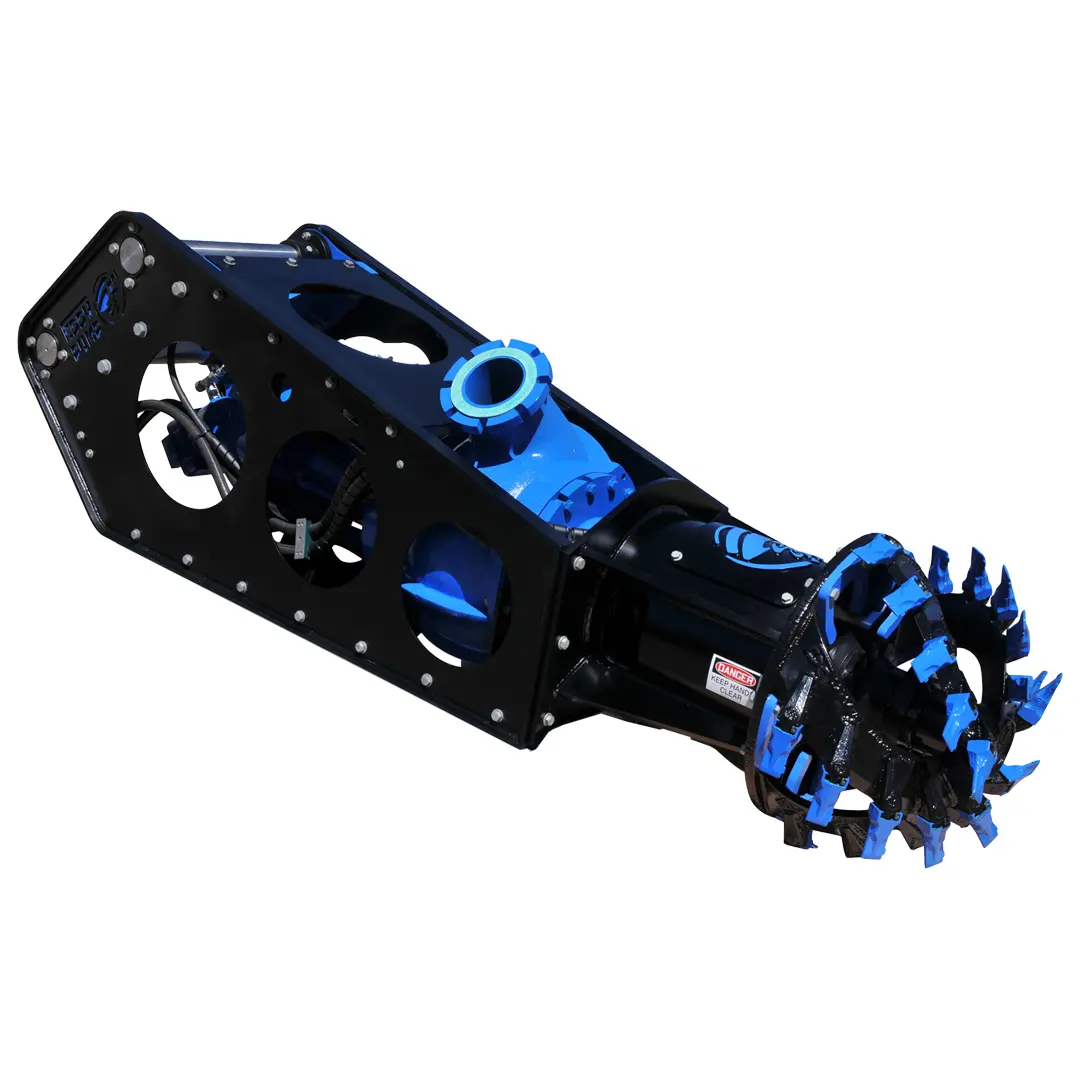
Excavator Pump Attachment
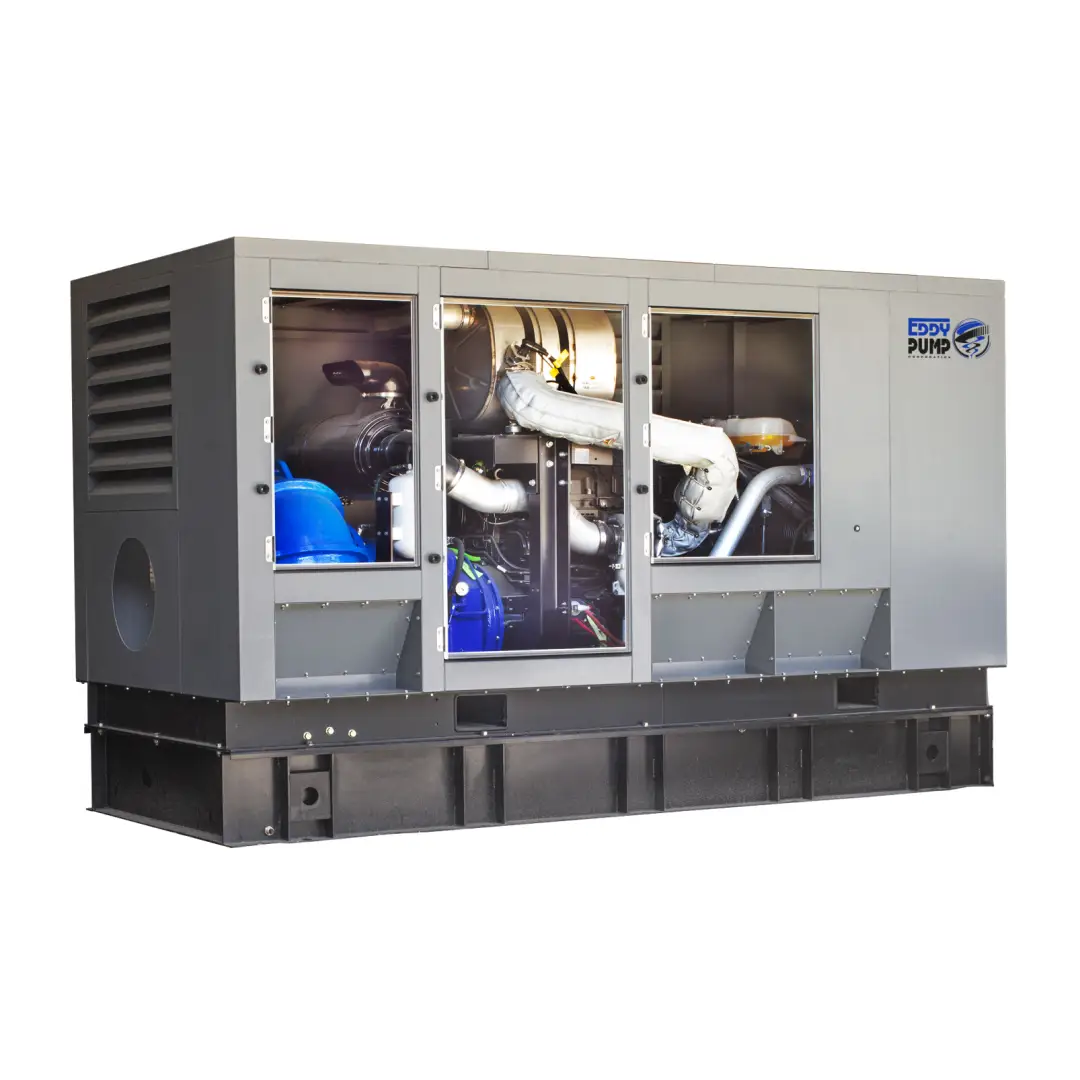
Self-Priming Pump & Bucket
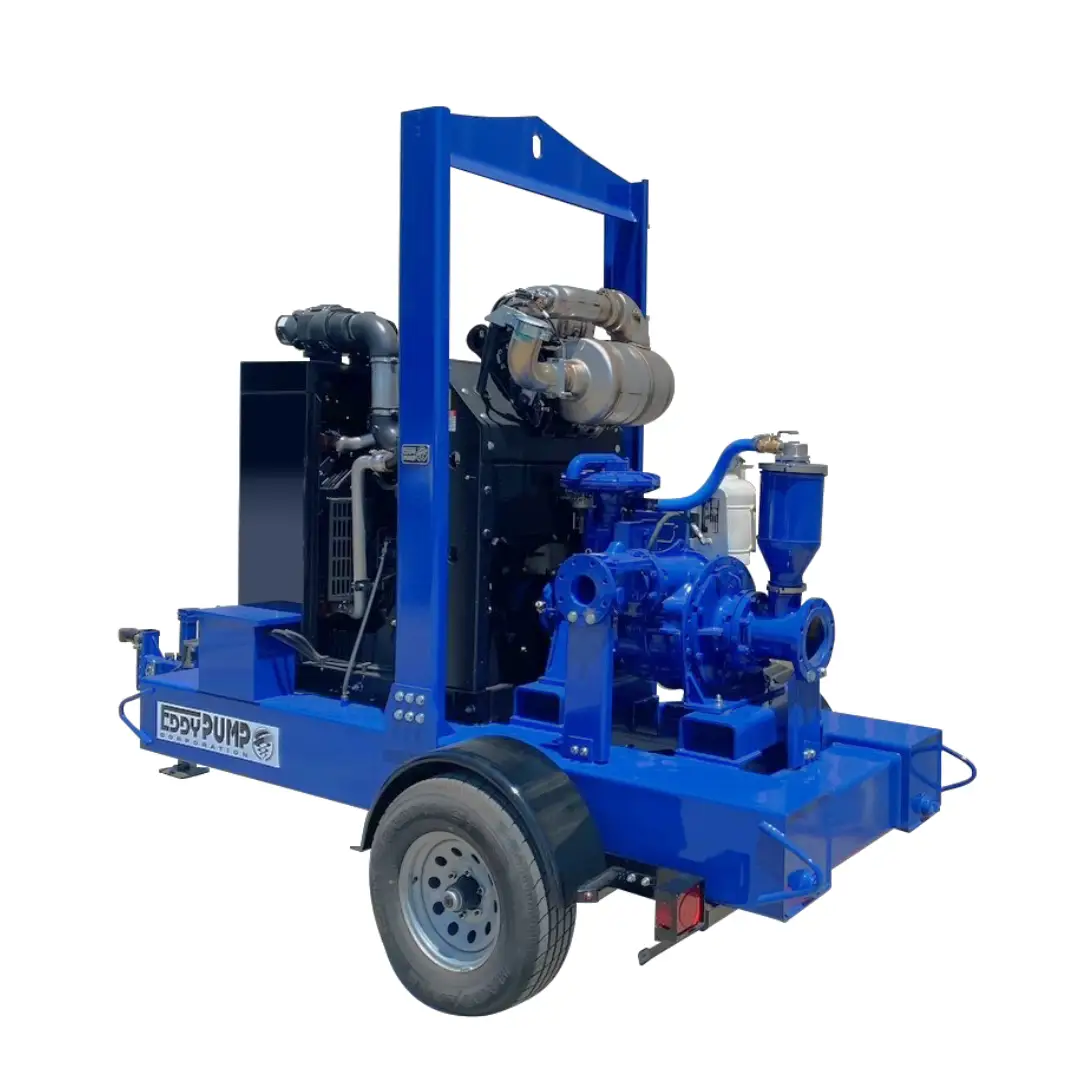
Skid-Mounted Booster Pumps
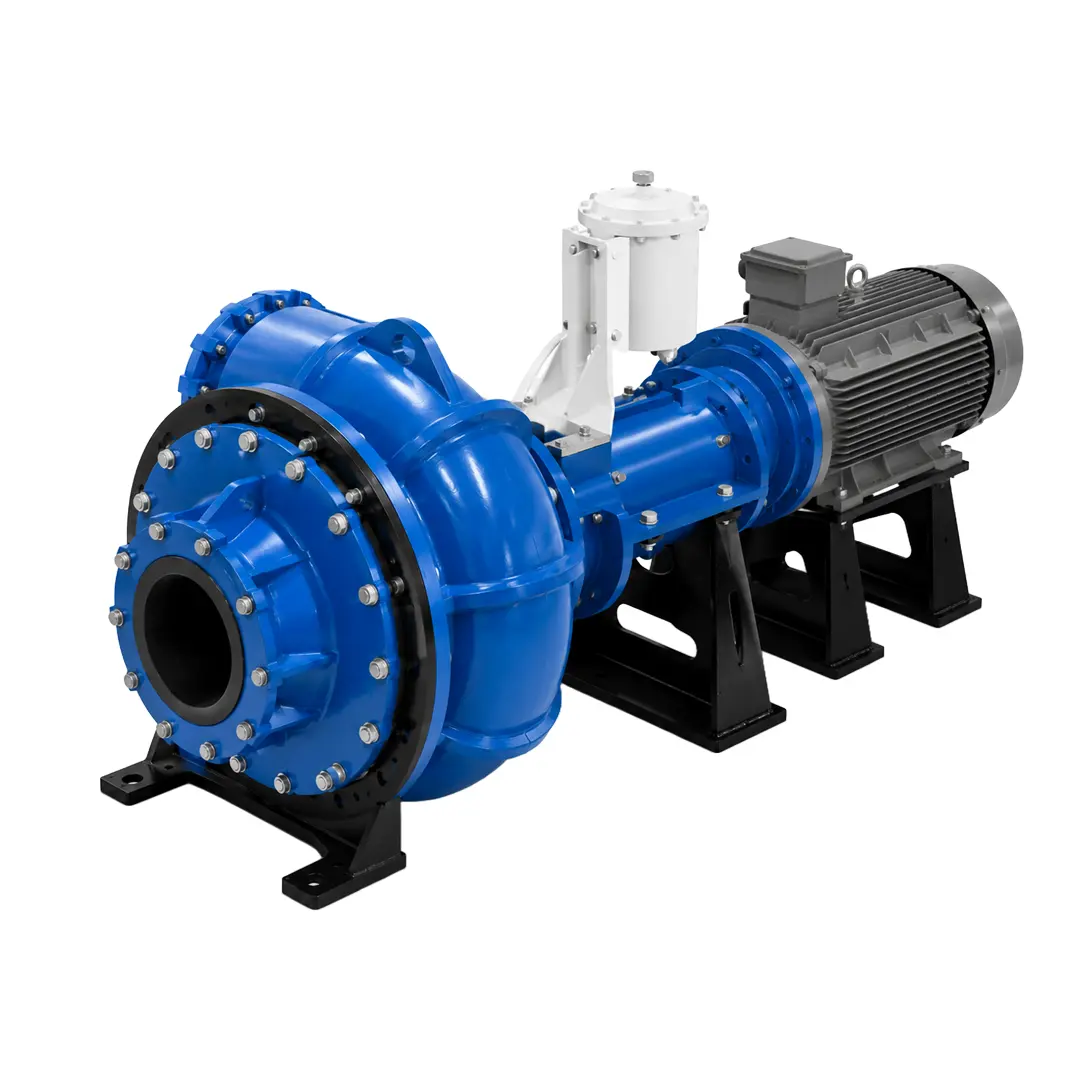
Slurry Pumps (all)
Dredge Equipment Rentals
Prepare Your Dredging Project Details
Having these details ready helps EDDY engineering assess a suitable system configuration for your site. Share what you know; estimates are fine where measurements are not yet available.
✓ Material type and sample information
Describe the material (sludge, sand, silt, tailings, or mixed sediment) and note any lab analysis, particle-size data, or samples available.
✓ Solids concentration
Give the in-situ or target solids percentage and state whether it is by weight or by volume, since the two values differ significantly.
✓ Water depth and sediment thickness
Note the maximum water depth to the sediment and the thickness of material to be removed. A bathymetric survey or soundings help if available.
✓ Material volume and production target
Estimate the total volume to remove and the production you need, such as cubic yards per hour or per day, along with any deadline for the work.
✓ Discharge distance, elevation, and pipe
Provide the distance from the dredge to the discharge point, the elevation change, and any existing pipe size, type, or route constraints.
✓ Site access, power, and liner restrictions
Describe launch and road access, the power available on site, and any liner type or owner rules that limit contact with the basin floor.