“Fleet Maintenance Symposium 2009”
Achieving the Quest for Zero Maintenance
Tornado Principle Eddy Effect EDDY PUMP Systems at Fifteen Years
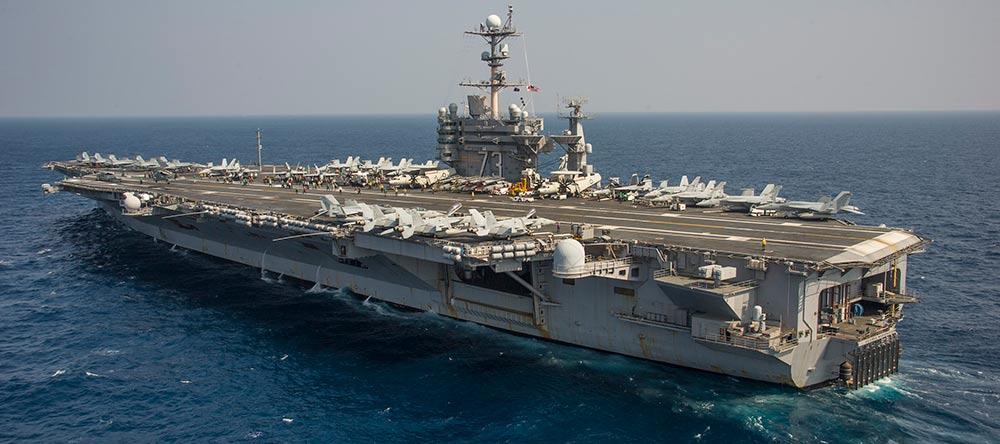
Since 1994, the tornado principle Eddy Effect EDDY Pump System has been installed on CVs, CVNs, LHAs, LHDs, LCCs, LPDs, LSDs, CG-47s, AGFs and MSC in various sizes, configurations and applications. The transformational tornado principle of the EDDY Pump System has been proven in these applications to vastly exceed the performance and reliability of the centrifugal pumps which they replaced.
Prior to EDDY PUMP System installation, ships had been experiencing centrifugal pump failure rates just weeks to months after installation and dealing with the maintenance actions caused by seal leakage and spraying. Since installing the EDDY PUMP System, ships have experienced multi-year, trouble-free, minimal maintenance, zero-leak operation. Our earliest installations, in 1994, on CVNs have been trouble free for over fifteen years. Due in part to our unique ZeroLeak™ seal developed in accordance with the EDDY Pump System’s transformational tornado principle.
Previous papers on the EDDY PUMP System have been presented at ASNE events, the 1995 Fleet Maintenance Symposium, ASNE Day 2000, and published for ASNE Day 2005. From 1994 to 2000, approximately a hundred pump systems were installed on CVs and CVNs. Since 2000, over 300 hundred installations have been made on other ship classes. This paper provides an updated status report on fleet installations, including operating results and impact on system maintenance since the ASNE Day 2005 paper.

System Design
The EDDY Pump operates on the tornado principle, not the centrifugal principle. It is not a centrifugal pump or a vortex pump variant. The patented and proven design creates and harnesses a dynamic tornado and fluid eddy effect within the pump housing and inlet. This effect is similar to that which occurs in a tornado.
The tornado generates a high velocity rotating air mass with a central column of increasingly higher pressure reaching toward the ground, surrounded by peripheral low-pressure eddies. As the lower tip of the tornado touches down on the ground, objects are drawn into the low-pressure peripheral eddy. This effect enables the tornado to pulverize, pick up and carry objects into the rotating air masses.
Likewise, in the EDDY Pump, a very strong, synchronized central column flow develops from the pump rotor to the pump inlet and creates a low-pressure reverse eddy flow from the pump inlet to the pump discharge. This action also results in a region of negative pressure in the vicinity of the pump seal. The negative pressure enables the pump to achieve zero leakage with a very simple seal design. The seal design allows one-way passage of externally supplied low-pressure air through the shaft seal toward the pump casing (volute) to oppose the ingress of the material being pumped.
EDDY Pump Components
Dr. Harry Weinrib, the inventor of the EDDY Pump, describes the operation of the tornado principle EDDY Pump as follows:
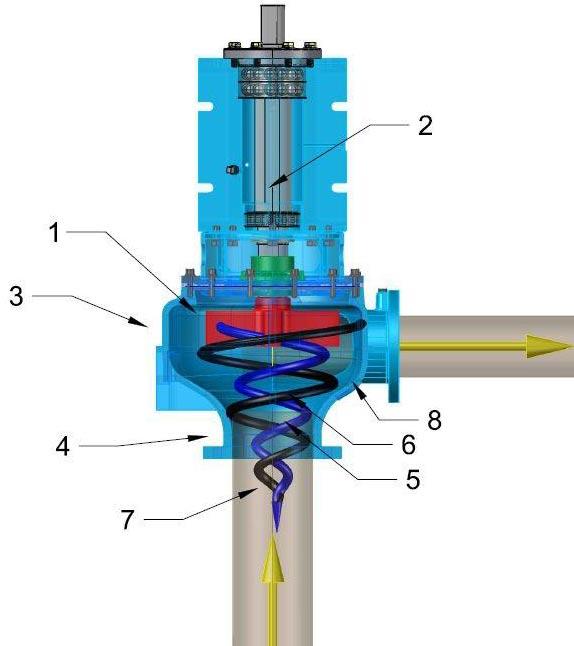 “The EDDY Pump consists of an energy generating rotor (1) attached to the end of a drive shaft (2) and placed within a volute (3). As the rotor begins to spin, it sets into motion the ambient fluid present within the volute and adjoining intake chamber (4). At normal operating speed, this spinning fluid is forced down, into the hollow center of the intake chamber where it creates a high speed, swirling synchronized column of fluid (5) which agitates the material (6) to be pumped (sludge, sand, clay etc.) This swirling column of fluid creates a peripheral “eddy” effect (7) which causes the agitated material to travel by reverse flow, up along the sides of the intake chamber, into the volute. Here the material, under pressure from below, is forced into the discharge pipe (8).”
TORNADO PRINCIPLE PUMP VS. CENTRIFUGAL PRINCIPLE PUMP
Most conventional centrifugal-type impellers incorporate front and back shroud enclosed vanes and a center suction “eye” configuration. They discharge the solids by centrifugal force. In order to prevent fluid recirculation, critical tolerances are necessary between the wetted parts of the pumps. As wear occurs, these critical tolerances increase and the pumps progressively lose their hydrodynamic efficiency. The only way to keep these pumps functioning at an acceptable level of performance is to replace the various components based on a regular maintenance program.
Vortex type pumps are conventional centrifugal pumps with the suction end of the impeller shroud removed to expose the vanes. This type of impeller configuration enables the pump to create a unidirectional swirling column of liquid (vortex) in addition to the centrifugal force. The turbulence created within the suction opening draws the material into the low-pressure area within the pump casing and discharges it by centrifugal force.
The EDDY Pump rotor uses an open cruciform configuration without any impeller shrouds. When in motion, it contains and re-circulates an axially solid, progressively concentrated nucleus of energy. This energy is released in the form of a synchronized swirling column transmitted to the center of the pump intake opening by creating a negative pressure, or “eddy” effect, in the intake throat area. This “eddy” current carries the material along the low-pressure periphery of the swirling column of fluid to the discharge. Table 1 compares characteristics of the tornado principle EDDY Pump versus the centrifugal principle pump.
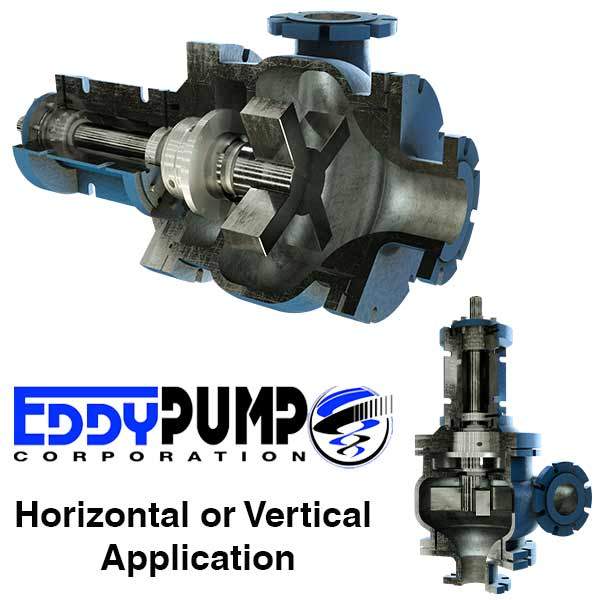
EDDY Pumps incorporate a “pull back” design to allow minor and major overhauls without removing the pump from the space in which it is installed. The motor, bearing house (or connector), shaft and rotor “pull back” from the volute. The intake and discharge piping do not need to be disconnected. Pumps installed in a vertical position have a telescoping frame with jacking points to facilitate this procedure.

System Installations
With the implementation of the EDDY Pump System, maintenance costs for the CHT / VCHT and Brine pump applications have been greatly reduced. The cost savings are effective on a ship’s deployment (real-time) and life cycle due to the:
- Multi-year longevity of the non-mechanical pump seal
- Non-casualty pump status
- Pump seal’s low air pressure
- Automatically controlled pump seal greaser
- Pump motor controllers
- Extremely low PMS requirements
- Pump’s natural ability to create flow using the material being pumped.
With the EDDY Pump, the creation of flow using the material is very different from all other pumping methods. This is key to the longevity and lack of wear of the pump components. It also provides a very strong suction lift and effective discharge pumping over variable and or steady discharge head pressures and varying material viscosities while in operation. With the reverse tornado and eddy effect created inside the pump volute, the material, even if very abrasive or a solid object, is cradled in the flow effect and carried out. Due to this, the material being pumped does not get the chance to rub against the pump’s internal components, creating less wear over long periods of time. To the EDDY Pump company’s knowledge, an EDDY Pump has never been discarded or fully replaced. There have been a few pump components here and there over the past fifteen years, and pump seal changes at an average of 3-5 years per pump.
Aplikasi Air Garam
Cc-6000 EDDY Pump telah dikembangkan untuk aplikasi air garam, air laut dan pompa pakan. Sejak tahun 1999, CC-6000 L-class 6-class 6-inch suction / 7-inch discharge, 40 HP motor brine pump telah digunakan untuk aplikasi air garam LHD-3. Sejak memasang pompa air garam Pompa EDDY, kapal-kapal tersebut tidak mengalami downtime dan operasi berkelanjutan dan atau kesiapan hanya dengan dua perubahan segel saat berada di pelabuhan. Motor tidak memerlukan PMS untuk segel pompa karena disegel tugas laut dan menggunakan pelumas otomatis. Karena LP-air ke segel dan desain internalnya, tidak ada kebocoran cairan air garam setiap saat. Silakan merujuk ke makalah ANSE sebelumnya pada tes pompa CVN Brine dan penghematan biaya siklus hidup.
CHT/VCHT Applications
The NF-4000 is currently used for CHT and VCHT discharge applications. It is installed on all CV, CVN and large L-class ships. The NF-4000 features a 5-inch suction / 4-inch discharge, 40 HP motor and has been in service on the US Navy fleet for fifteen years.
The CC-3000 is currently used for CHT and VCHT discharge applications on all L-class ships, new LPD-class and the VC/MDS system on CVN-77 and CVN-78. The CC-3000 features a 3-inch suction / 3-inch discharge and a 20 or 30 HP motor. As of 2009, 8 of the 22 CG-47 class ships have had the CC-3000 installed as part of the HM&E upgrade package. The installation has begun on the MSC submarine tenders as of mid-2009.
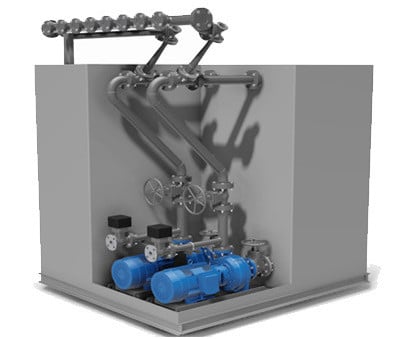
The CC-2000 pump is currently designed in for the MSC T-AKE MSD CHT system in place of the existing submersible pumps with built-in grinders. The pump features a 2- or 3- inch suction / 1.5 or 2-inch discharge and a 10 HP motor.
The CC-3000 is currently used for CHT and VCHT discharge applications on all L-class ships, new LPD-class and the VC/MDS system on CVN-77 and CVN-78. The CC-3000 features a 3-inch suction / 3-inch discharge and a 20 or 30 HP motor. As of 2009, 8 of the 22 CG-47 class ships have had the CC-3000 installed as part of the HM&E upgrade package. The installation has begun on the MSC submarine tenders as of mid-2009.
The CC-2000 pump is currently designed in for the MSC T-AKE MSD CHT system in place of the existing submersible pumps with built-in grinders. The pump features a 2- or 3- inch suction / 1.5 or 2-inch discharge and a 10 HP motor.
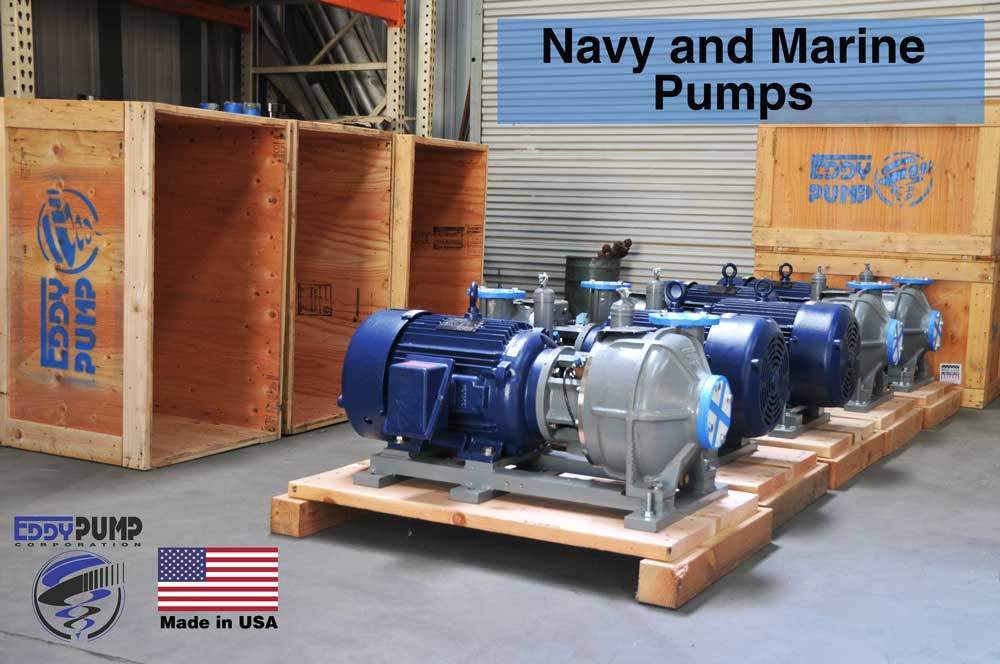
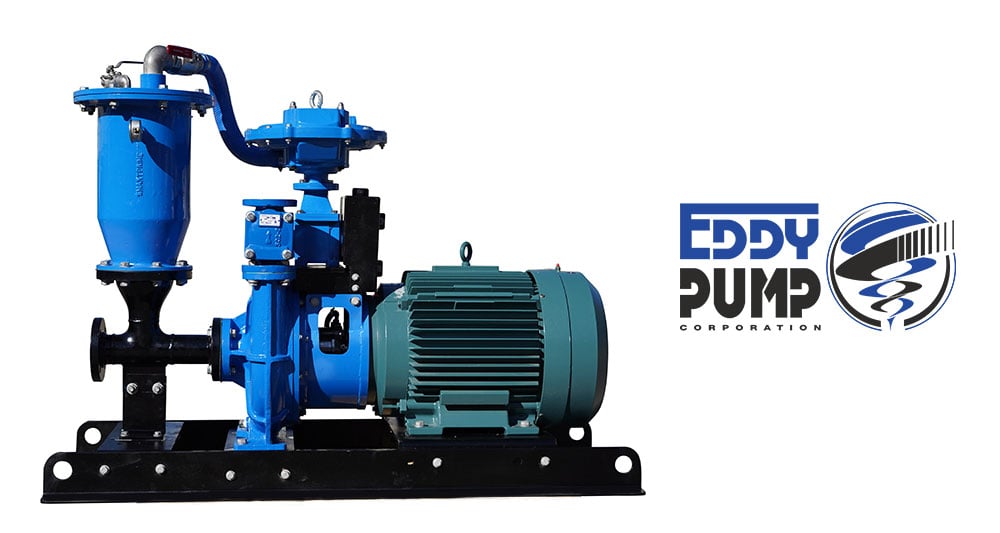
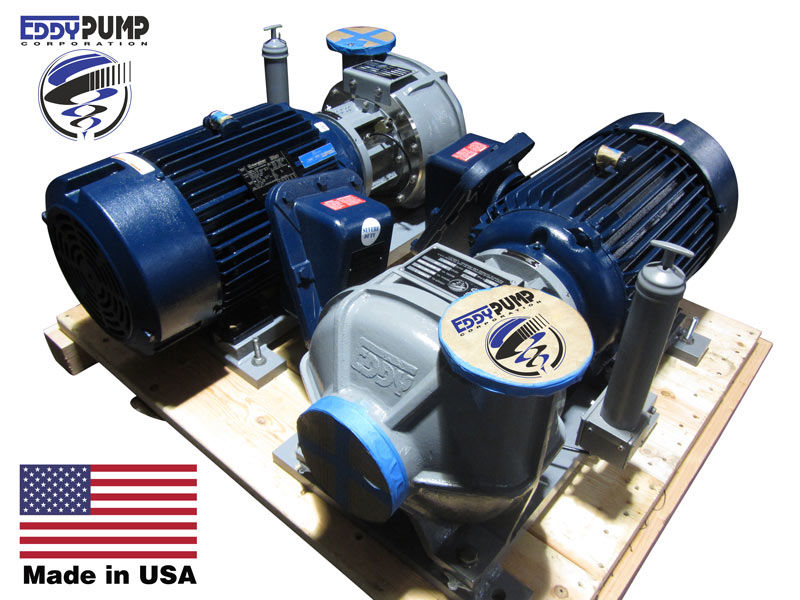
The Below Chart Shows the Current EDDY Pumps Approved for Installation:
| CC‐6000 Brine Pump |
|
| CC-2000 |
|
| CC-3000 CHT Pump |
|
| NF-4000 CHT Pump |
|
NOTE: All Eddy Pumps can change PSI and GPM with a motor and/or rotor change. The Eddy Pump is designed for use in any application that requires pumping any fluid with or without suspended solids, sea salts, barnacles, small sea creatures, light or heavy slurry and abrasive material.
Cost Savings Comparisons
The system, as currently designed, has held up very well in arduous environments. Corrective and planned maintenance data for seven aircraft carriers collected on the EDDY Pump to May of 1998 was compared to corrective and planned maintenance data for the previously installed centrifugal pump. The comparison shows that the installation of the EDDY Pump would provide life cycle savings of $3,000,000 per ship. The comparisons are still valid as of 2009. Please refer to previous ANSE papers for analysis data.
In 2007, a life cycle cost analysis was done for 25 of the USCG ships, comparing their current pump versus an EDDY Pump. An estimated $17,717,000 in savings was discovered. Much of these savings are related to the absence of overhauling costs associated with the EDDY Pump, along with the minimal corrective maintenance costs.

The table shows the maintenance and overhaul of the EDDY Pumps along with dates and reasons:
| Pump Type | Ship | Date Pump Built | First Repair | Overhaul Date | Cause |
|---|---|---|---|---|---|
| CC-3000 | LHD-2 | 1/20/2000 | 10/6/2003 | N/A | Normal Wear |
| CC-3000 | LHD-2 | 1/20/2000 | 3/18/2007 | N/A | Normal Wear (Worn Seal) |
| CC-3000 | LPD-17 | 10/14/2004 | None | N/A | N/A |
| CC-3000 | LPD-7 | 3/11/2002 | 2/17/2006 | N/A | Normal Wear (Worn Seal) |
| CC-3000 | LHD-9 | 8/11/2004 | 3/14/2008 | N/A | Normal Wear (Worn Seal) |
| CC-3000 | LSD-51 | 7/6/2002 | 11/15/2007 | N/A | Normal Wear (Worn Seal) |
| CC-3000 | LSD-51 | 7/6/2002 | 3/11/2008 | N/A | Seal worn due to air shut-off to auto greaser |
| NF-4000 | CVN-70 | 7/17/1997 | 5/18/2002 | N/A | Normal Wear (Worn Seal) |
| NF-4000 | CVN-70 | 7/17/1997 | 5/18/2002 | 1/29/2007 | Ship in Shipyard |
| NF-4000 | CVN-69 | 3/15/1996 | N/A | 9/30/2002 | Ship in Shipyard |
| NF-4000 | CVN-69 | 3/15/1996 | 8/12/2008 | N/A | Normal Wear (Worn Seal) |
| NF-4000 | CVN-67 | 11/14/1997 | N/A | 10/2/2003 | Ship in Shipyard |
| NF-4000 | CVN-76 | 9/8/1996 | 7/18/2002 | N/A | Normal Wear (Worn Seal) |
| NF-4000 | CVN-76 | 9/8/1996 | N/A | 8/16/2007 | Ship in Shipyard |
| NF-4000 | LHA-2 | 4/11/2001 | 2/9/2006 | N/A | Normal Wear (Worn Seal) |
| NF-4000 | LHA-3 | 3/17/2001 | 5/16/2005 | N/A | Normal Wear (Worn Seal) |
Masalah dan Solusi Pemeliharaan
1. Kami telah merekomendasikan perubahan segel di kapal karena tingkat CFM terdeteksi pada pengontrol dari pompa. Itu dijadwalkan untuk minggu berikutnya. Perlu dicatat bahwa segel pompa tidak akan mencegah operator memompa, bahkan dengan segel yang aus. Itu hanya membutuhkan prime manual. Sebuah teknologi. Perwakilan dipanggil pada pukul 7:00 pagi hari Minggu pagi untuk melakukan bantuan perubahan segel karena tangki penuh dan levelnya tidak turun. Ini pada dasarnya adalah kondisi darurat dan semua kekuatan kapal berada di atas kapal. DCA menyebutkan pompa telah berjalan sejak malam sebelumnya selama sekitar 7 jam berturut-turut, masih tanpa pengurangan tingkat tangki. Diperkirakan bahwa, karena pompa membutuhkan perubahan segel, pompa tidak benar-benar memompa cairan. Ini bukan penilaian yang akurat, karena desain pompa dan segel pompa. Setelah kekuatan kapal dapat melihat bahwa pompa telah beroperasi sepanjang waktu, mereka menemukan katup pelepas tekanan rusak dan menembakkan api utama ke dalam tangki pada tingkat yang mengkhawatirkan menyebabkan tangki terisi meskipun pompa bekerja dengan benar. Setelah katup relief diamankan, level tangki segera turun.
2. Banjir ruang pompa terjadi dari waktu ke waktu. Pompa EDDY telah dilakukan sesuai dengan spesifikasi kontrak pelanggan bahkan ketika pompa telah dibanjiri. Telah dilaporkan oleh kekuatan kapal beberapa kali bahwa membilas motor atau memundurkannya, menghubungkannya kembali ke pompa dan memompanya tanpa perawatan apa pun ke pompa adalah umum dengan Pompa EDDY. Prosedur ini sangat mengurangi masalah pemeliharaan selama penyebaran. Sebagian besar waktu kartrid auto-greaser diganti dan setiap kerusakan air pada minyak segel dari banjir didorong keluar dengan minyak baru. Ini membuat segel tidak dipakai bahkan setelah membanjiri pompa. Situasi lain melibatkan kapal kelas CG-47 yang membanjiri ruang pompa hingga pompa dengan air tawar. Ruangan itu dikeringkan, motor dikeringkan dengan pistol panas dan perwakilan EDDY Pump Tech dipanggil untuk memeriksa sistem. Segel baik-baik saja dan rekomendasi dibuat untuk menggantikan mekanisme auto-greaser dan mengganti tabung gemuk. Sepengetahuan EDDY Pumps, satu-satunya perawatan yang dilakukan adalah penggantian tabung pelumas otomatis oleh perwakilan teknologi tanpa biaya. Ini adalah 1,5 tahun yang lalu pada 06/2009. Belum ada perubahan segel yang diperlukan.
3. Hanya dua tahun setelah OP menguji kapal kelas CG-47, kami dipanggil untuk memecahkan masalah sistem karena HTs asli yang dilatih tidak lagi ada di kapal, karena pergantian awak yang besar. Meskipun tidak ada perubahan segel pada pengetahuan EDDY Pumps pada CG-47 sejak pemasangan asli 3 tahun sebelumnya, kapal ini membutuhkan dua perubahan segel di ruang pompa AUX2. Mengapa perubahan segel diperlukan begitu cepat? Setelah pemeriksaan, diketahui bahwa kartrid greaser otomatis asli masih dipasang dan tidak pernah diganti, sebagaimana mestinya, setiap 5 hingga 6 bulan. Greaser otomatis dan segel pompa kosong dan kering.
Inilah sebabnya mengapa segel perlu diganti; tidak ada lemak selama lebih dari setahun!
4. Terlalu banyak tekanan balik sedang dibuat di salah satu pompa di kapal kelas-L. Pengontrol dengan benar terus masuk ke kondisi saat ini untuk melindungi pompa dan motor dari kerusakan apa pun. Ditemukan bahwa kunci mekanis dipompa melalui pompa dan terjebak dalam siku pipa 90 deg debit. Setelah dihapus, masalah telah teratasi. Tidak ada perbaikan yang diperlukan untuk pompa dan tidak ada perubahan segel yang diperlukan.
5. Setelah penyebaran yang lama, kapal kelas CVN membersihkan tangki mereka. Menurut HR, jumlah bahan yang tersisa di dalam tangki sangat ringan: satu tong sampah dari bahan yang tersisa dibandingkan dengan lima sebelum Pompa EDDY dipasang. Hal ini disebabkan oleh tekanan vakum hisap yang sangat kuat yang dihasilkan oleh Pompa EDDY saat material tersedot ke dalam volute pompa dan dibuang. Semakin banyak bahan atau benda yang ditimbang, semakin ditarik ke pompa, ini sebagian mengapa benda-benda seperti alat dan barang-barang pribadi terjebak dalam siku pipa pembuangan.
6. Pelatihan OEM di atas kapal dengan kekuatan kapal saling menguntungkan. EDDY Pump dengan bangga menawarkan kunjungan gratis ke kapal Angkatan Laut AS kembali dari penyebaran tergantung pada waktu dan ketersediaan. Seorang perwakilan teknis mengunjungi kapal, pergi ke ruang pompa dan memberikan pemeriksaan seluruh sistem pompa, pengontrol dan katup, menjawab pertanyaan apa pun, melewati sistem untuk pelaut baru dan mengganti kartrid gemuk. Biasanya, perwakilan teknis mengamati prosedur pemeliharaan kekuatan kapal, kemudian, mengirimkan laporan observasi dan kondisi ke kapal dan kapal PE. Ini membantu kekuatan kapal dengan pemahaman rinci dan terkini tentang sistem Pompa EDDY, pemecahan masalah, jika diperlukan, dan integrasi sistem ke dalam tangki kapal mereka, TLI dan sistem perpipaan. Dengan perubahan kru dan kebutuhan akan lebih banyak “ketersediaan Jam Berawak”, kunjungan gratis semakin mengurangi siklus hidup dan biaya pemeliharaan penyebaran waktu nyata.
Peningkatan Kinerja
Desain pompa EDDY Pumps tidak berubah sejak diperkenalkan ke armada Angkatan Laut AS lima belas tahun yang lalu. Pompa terus diterapkan pada aplikasi pompa baru menggunakan desain aslinya. Dua peningkatan besar telah dilakukan sejak diperkenalkannya pompa:
- Pengontrol Otomatis (PLC)
- Greasers Otomatis
Ini dirancang dan diimplementasikan untuk mendukung kontrol “Smart Ship”, intuisi sistem, dan alarm cerdas untuk pengetahuan operator yang lebih baik tentang masalah pemompaan secara real-time. Peningkatan telah membantu dalam menciptakan lebih sedikit “Jam Berawak” yang dibutuhkan per sistem pompa.
Pengontrol Otomatis (PLC)
Menggunakan pengontrol otomatis memberikan kemampuan beradaptasi dan integrasi yang lebih mudah ke dalam sistem kontrol dan pemantauan kapal sambil menyediakan fungsi kontrol dan penyesuaian cerdas jika perlu. Memanfaatkan kecerdasan pengontrol telah memungkinkan kekuatan kapal untuk memecahkan masalah sistem EDDY Pump mereka dengan lebih baik dalam format operasi real-time. Selain alarm yang berlebihan untuk memantau titik set operasional yang benar, pengontrol, baru dan lama, memantau kinerja ampere motor pompa. Dengan Pompa EDDY, tidak ada aliran pompa yang sama dengan ampere motor rendah. Ampere motor rendah akan mengaktifkan alarm Under-Current. Ini memberi operator indikasi real-time bahwa pompa tidak menggerakkan cairan, dan mengambil dugaan dari bertanya-tanya apakah cairan memompa atau tidak. Ini sangat membantu ketika alat pengukur hisap dan pembuangan PSI kapal tidak berfungsi. Perlu diingat bahwa kemampuan khusus EDDY Pump untuk memompa material atau cairan berpasangan dengan baik dengan ampere motor. Apakah tangki kosong, pipa hisap dicolokkan atau kelaparan, pipa pembuangan dicolokkan atau mati, katup ditutup atau koneksi sisi dermaga dikukus atau dicolokkan, pengontrol akan mendeteksi ini, melindungi pompa dan motor dengan mematikan, dan menunjukkan alarm secara lokal atau jarak jauh ke operator untuk perhatian segera. Jika operator mendapat alarm Under-Current, ia dilatih untuk memeriksa priming pompa, tingkat tangki, penyelarasan katup, koneksi sisi dermaga, pengukur PSI hisap dan pelepasan untuk menentukan apakah itu adalah masalah hisap (vakum) atau pelepasan (tekanan kepala), tergantung pada indikasi pengukur. Ini telah sangat mengurangi jumlah jam berawak yang diperlukan untuk memecahkan masalah sistem dan perpipaan kapal.
Greaser Otomatis
Auto greaser adalah upgrade yang signifikan karena dapat mengurangi jam pemeliharaan selama jangka waktu yang lama. Auto-greaser EDDY Pump sangat efisien dalam memberikan pelumasan pada segel pompa. Setiap 72 jam pengontrol akan secara otomatis melumasi segel pompa. Ini melepaskan operator dari keharusan meluangkan waktu untuk melumasi segel selama seluruh penyebaran. Minyak greaser otomatis hadir dalam format tipe tabung dan diubah rata-rata 5 hingga 6 bulan hanya dengan mengganti tabung minyak; itu menggunakan proses yang sama dengan pistol gemuk standar. Tidak diperlukan pengepakan tangan, sehingga sangat bersih dan cepat dilakukan, terutama dibandingkan dengan semua metode pelumasan segel pompa sentrifugal dan non-sentrifugal lainnya.
Kesimpulan
Kesimpulannya, POMPA EDDY dirancang lima belas tahun yang lalu untuk memenuhi persyaratan Angkatan Laut AS untuk kinerja superior selama siklus hidup yang panjang – penyebaran setelah penyebaran, tahun demi tahun. Pompa EDDY untuk kapal Angkatan Laut AS memastikan penghematan biaya dengan membutuhkan perawatan yang lebih sedikit, pengadaan dan penyimpanan suku cadang yang rendah atau tidak ada di kapal, lebih sedikit jam kerja untuk melayani atau mengoperasikan sistem, dan PMS minimal, penyebaran panjang. Pompa EDDY telah terbukti sangat andal, memberikan jaminan dan ketenangan pikiran bahwa pompa akan menyelesaikan pekerjaan dan membantu pelaut kita dalam menjaga negara kita tetap aman.
Produk Terkait
Pompa Lumpur HD (Tugas Berat)
Why EDDY Pumps Are Better – Highlights
This video shows how EDDY Pump transports high slurry and abrasive materials. Featured dredge pump equipment includes the Remote Operated Subdredge, Diver Operated Pump and a Excavator Attachment Dredge Pump.

Pesan atau Dapatkan Bantuan Pilihan
Let our sales or engineering support help in your grit pump and wastewater equipment selection. Call (619) 258-7020